Specification
| Product |
Ultrasonic Doppler Flow Meter |
| Model |
MIK-FSD300 |
| Parameter |
| Measured variable |
Flow rate,liquid,temperature |
| Measuring range |
Bidirectional flow but no identification of flow direction, absolute value of flow rate flow rate |
Flow rate: (0~10) m/s
Liquid level: (0~10) m |
| Bidirectional flow and identification of flow direction, flow rate flow with plus or minus sign |
Flow rate: (-10~10) m/s
Liquid level: (0~10) m |
| Temperature |
(-5~60)°C |
| Accuracy |
Flow rate: 1.0%±0.01m/s
Liquid level: 0.2%±0.01m
Temperature: ±1℃ |
| Resolution |
Flow rate: 1mm/s
Liquid level: 1mm |
| Response time |
10s~60s
Note: Set the smoothing coefficient through the communication protocol, the larger the value the faster the response of smoothing flow rate. |
| Operating frequency |
2MHz |
| Firing power |
1W |
| Protection level |
IP68 |
| Output |
| Transformer output |
Output type |
(4~20)mA(0~5)V |
| Output accuracy |
0.5% F.S |
| Output load |
250Ω |
| Communication output |
Output type |
RS485 |
| Communication specification |
MODBUS |
| Relay output |
Relay type |
Dual SPDT / Dual SPDT+Dual SPST |
| Power supply |
| Power supply |
AC: 220V
DC: 24V |
| Power consumption |
≤4W |
| Over-voltage protection |
36V |
| Electrical interface |
M20*1.5 cable plugs |
| Process conditions |
| Type of waterway |
Pipelines, channels, natural streams, rivers |
| Measured medium |
pH value between 6 and 8, non-corrosive to the sensor |
| Medium temperature |
(0~60)°C |
| Environmental conditions |
| Ambient temperature |
(0~60)°C |
| Storage temperature |
(-20~60)°C |
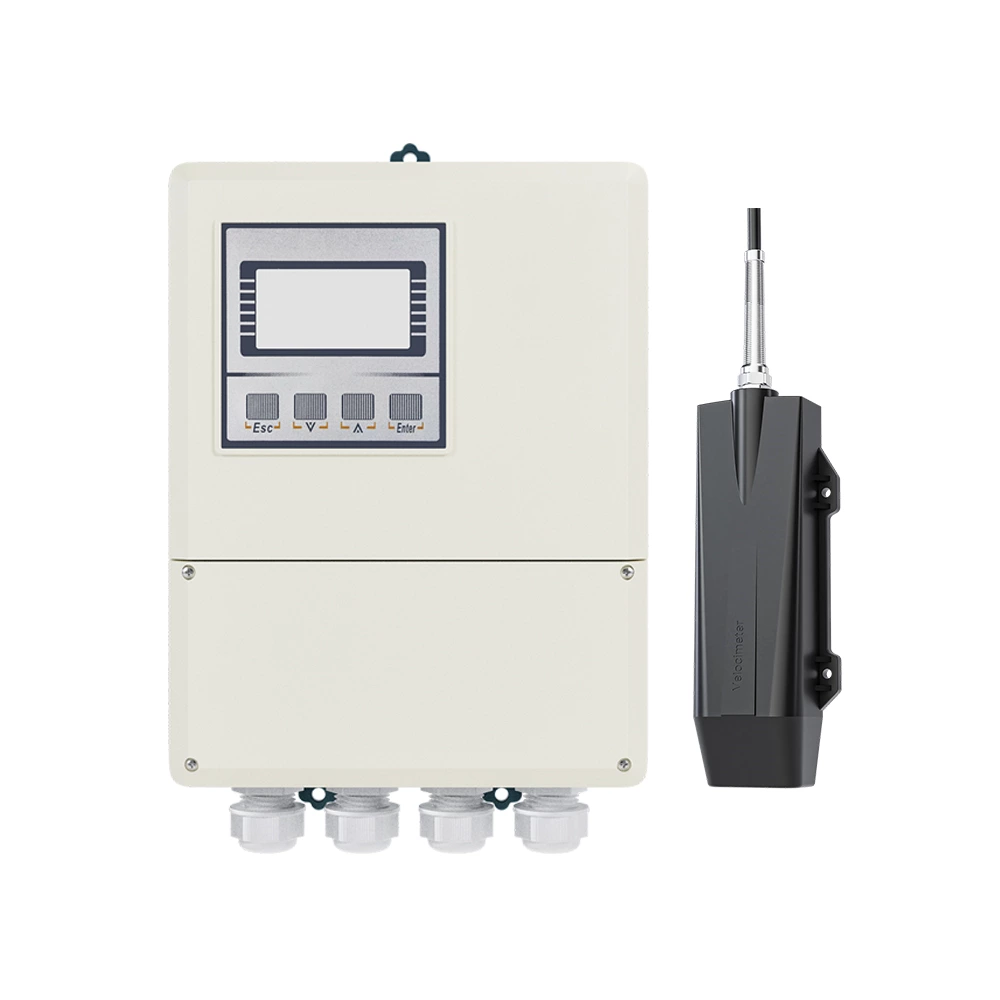
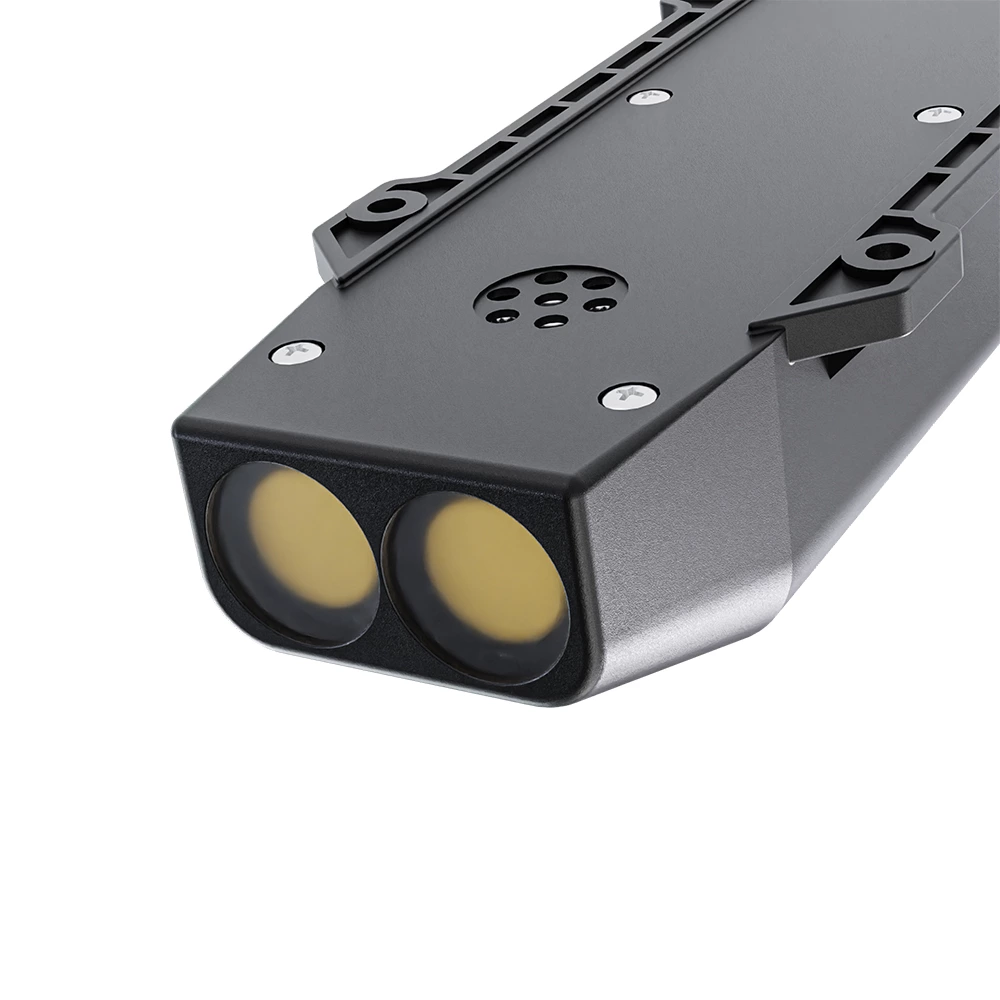
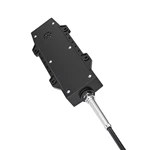
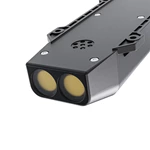
Ultrasonic Doppler flowmeter is an instrument to measure the flow rate and flow of water in natural waters or channels and pipelines.
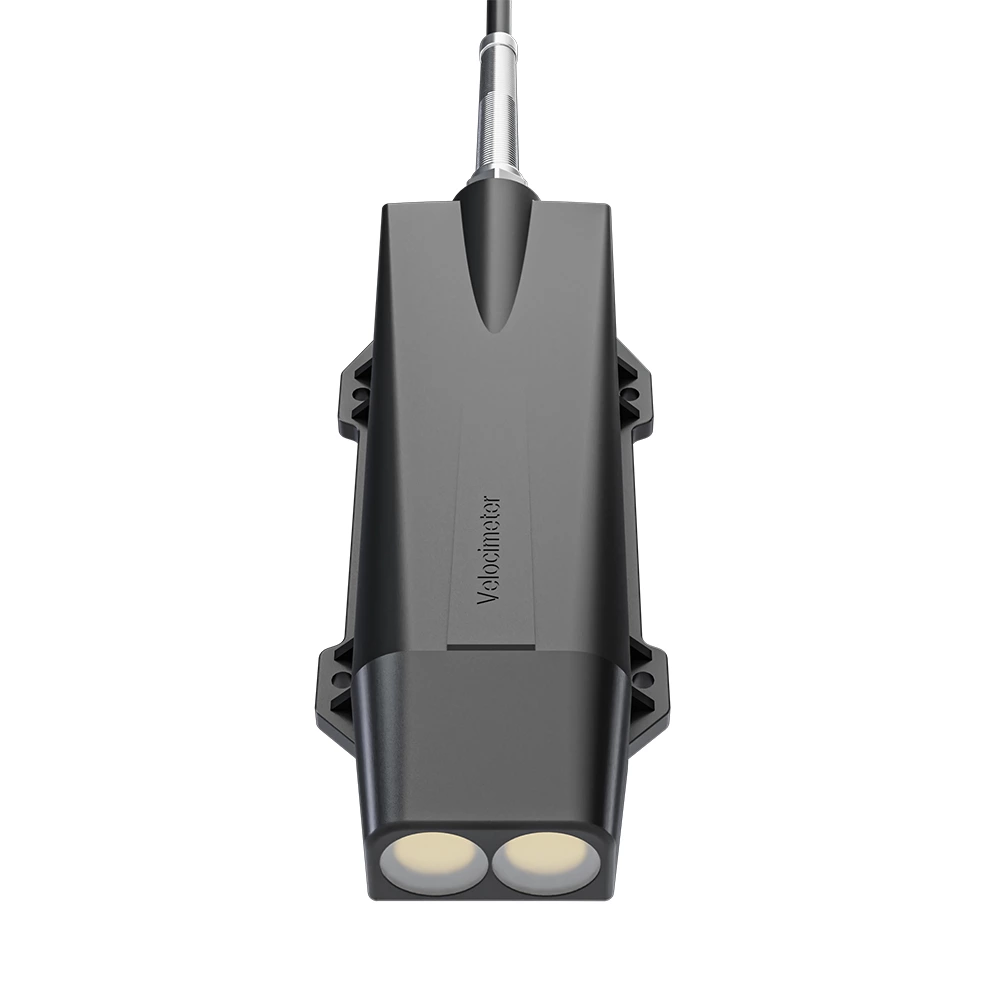
The use of ultrasonic technology to detect the flow rate, the measurement point in front of the body, does not destroy the flow field; high precision measurement, flow measurement linearity, can measure the instantaneous flow rate, but also can measure the average flow rate; no rotating parts, do not fear of sediment clogging and water grass entanglement, the probe is rugged and durable, there is no problem of sediment clogging or water grass, weeds, debris entanglement, etc., is the most suitable for the high content of suspended sediments, water grass and other floating objects and extremely harsh ice age occasions of the river The most suitable for rivers with high content of suspended sediments, many floating objects such as water plants and extremely severe ice age.
*High measurement accuracy, wide range, can measure weak flow or strong flow.
*Sensitive sensing, high resolution, not limited by the starting flow rate.
*Response speed is fast, can measure instantaneous flow rate, also can measure the average flow rate.
*Measurement linearity, there is no correction curve K, C value.
1. What is the MIK-FSD300 ultrasonic Doppler flow meter?
The MIK-FSD300 is an ultrasonic Doppler flow meter for measuring the flow velocity and flow of water in natural waters, channels and pipelines. It also measures water level and temperature, and provides analog, RS485 and relay outputs.
2. How does the MIK-FSD300 work?
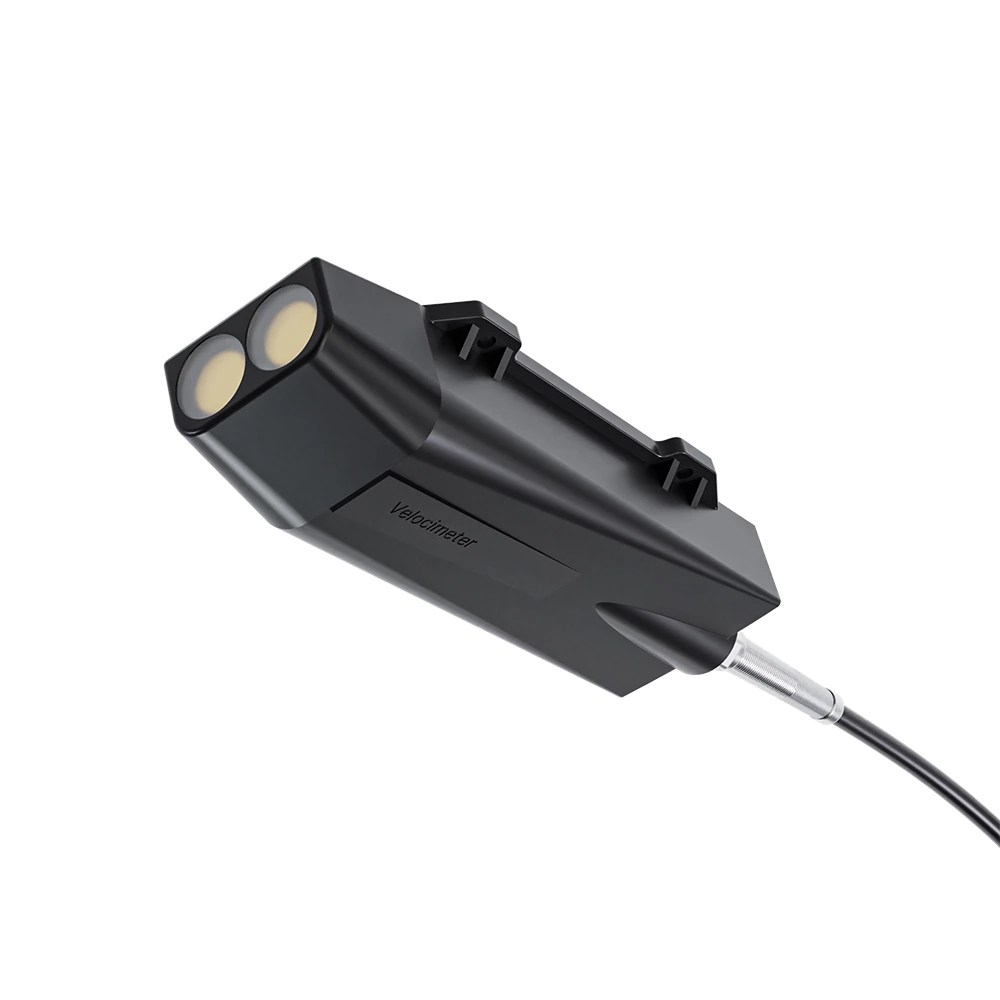
The probe emits ultrasonic signals (2 MHz) into the water. Particles and bubbles moving with the water reflect the signal, and the frequency of the reflected signal shifts in proportion to their speed (the Doppler effect). The meter calculates the flow velocity from this frequency shift. The measurement point is in front of the probe body, so the flow field is not disturbed.
3. What does the MIK-FSD300 measure?
- Flow velocity
- Water level
- Water temperature
It can measure both instantaneous and average flow velocity. Combined with the water level and the cross-section of the channel or pipe, the flow can be calculated.
4. Where can the MIK-FSD300 be used?
It can be used in pipelines, channels, natural streams and rivers. It is especially suitable for rivers with high suspended sediment, many floating objects such as water plants, and severe icing conditions.
5. What flow velocity range does it cover?
- Version without flow direction identification: 0–10 m/s (absolute value of velocity)
- Version with flow direction identification: -10 to +10 m/s (velocity with plus or minus sign)
Choose the version with direction identification if the flow may reverse, for example in tidal or backflow conditions.
6. What water level range can it measure?
The water level measuring range is 0–10 m.
7. How accurate is the MIK-FSD300?
- Flow velocity: 1.0% ±0.01 m/s
- Water level: 0.2% ±0.01 m
- Temperature: ±1 °C
8. What is the resolution?
- Flow velocity: 1 mm/s
- Water level: 1 mm
The high resolution allows it to measure weak flows as well as strong flows, without being limited by a starting flow velocity.
9. What is the response time?
The response time is 10 to 60 seconds. It can be adjusted by setting the smoothing coefficient through the communication protocol.
10. What water conditions are required?
- pH between 6 and 8, and non-corrosive to the sensor
- Medium temperature: 0 °C to 60 °C
As a Doppler instrument, it relies on particles or bubbles in the water to reflect the ultrasonic signal. Please describe your water quality so we can confirm suitability.
11. Can it be used for wastewater?
Suitability depends on the water chemistry: the medium must have a pH between 6 and 8 and must not be corrosive to the sensor. Please send us your wastewater characteristics so we can confirm.
12. Will sediment or weeds block the sensor?
No. The MIK-FSD300 has no rotating parts, and the rugged probe is not affected by sediment clogging or entanglement by water grass, weeds or debris.
13. Does it need a calibration curve?
No. The measurement is linear, so no correction curve or K and C coefficients are required.
14. What output signals are available?
- Analog output: 4–20 mA or 0–5 V; output accuracy 0.5% F.S.; load 250 Ω
- Communication: RS485 with Modbus protocol
- Relay output: dual SPDT, or dual SPDT plus dual SPST
15. What power supply does it require?
220 VAC or 24 VDC. Power consumption is ≤4 W, and over-voltage protection is 36 V.
16. What is the protection level and electrical connection?
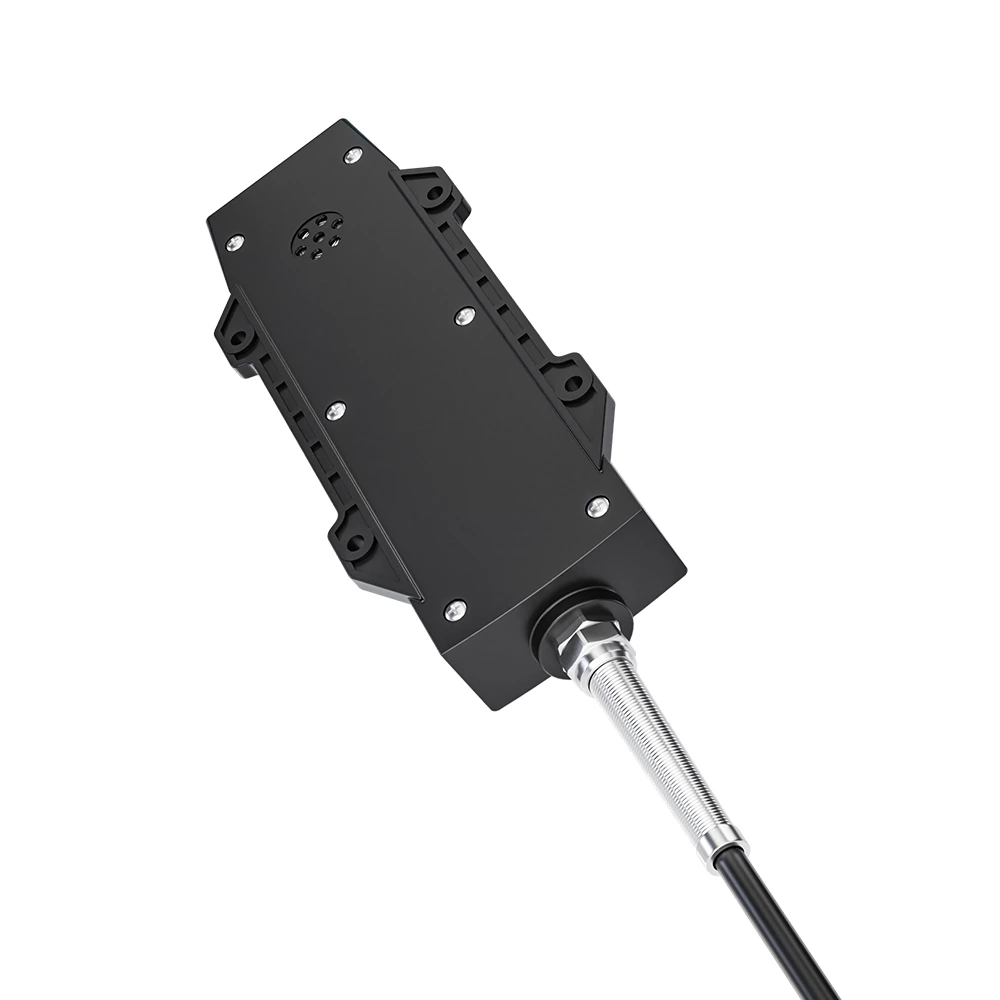
The protection level is IP68, suitable for submerged installation. The electrical interface uses M20×1.5 cable plugs.
17. What ambient and storage temperatures are allowed?
- Ambient temperature: 0 °C to 60 °C
- Storage temperature: -20 °C to 60 °C
For sites with freezing ambient conditions, please tell us your climate so we can confirm installation measures.
18. How is the probe installed?
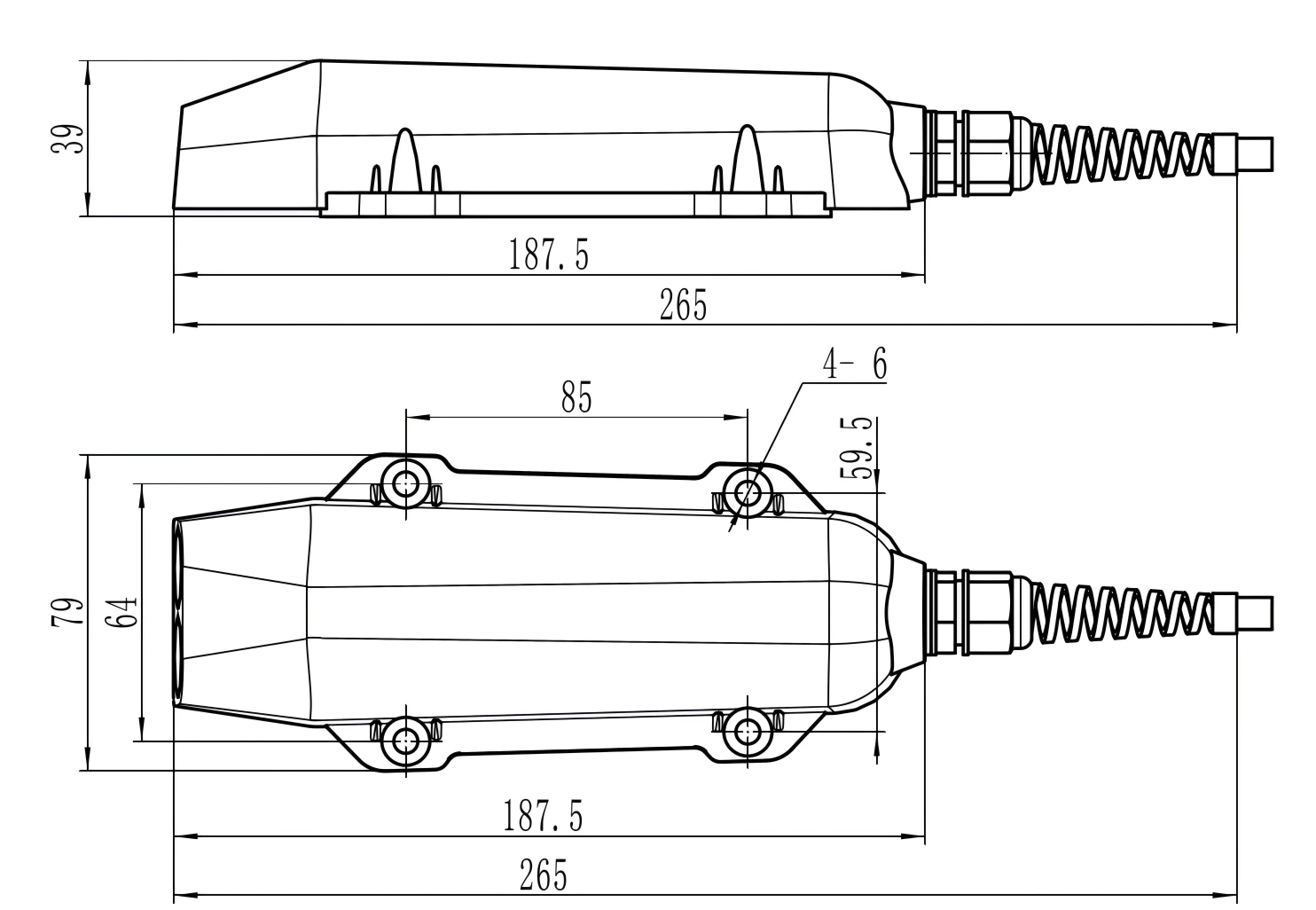
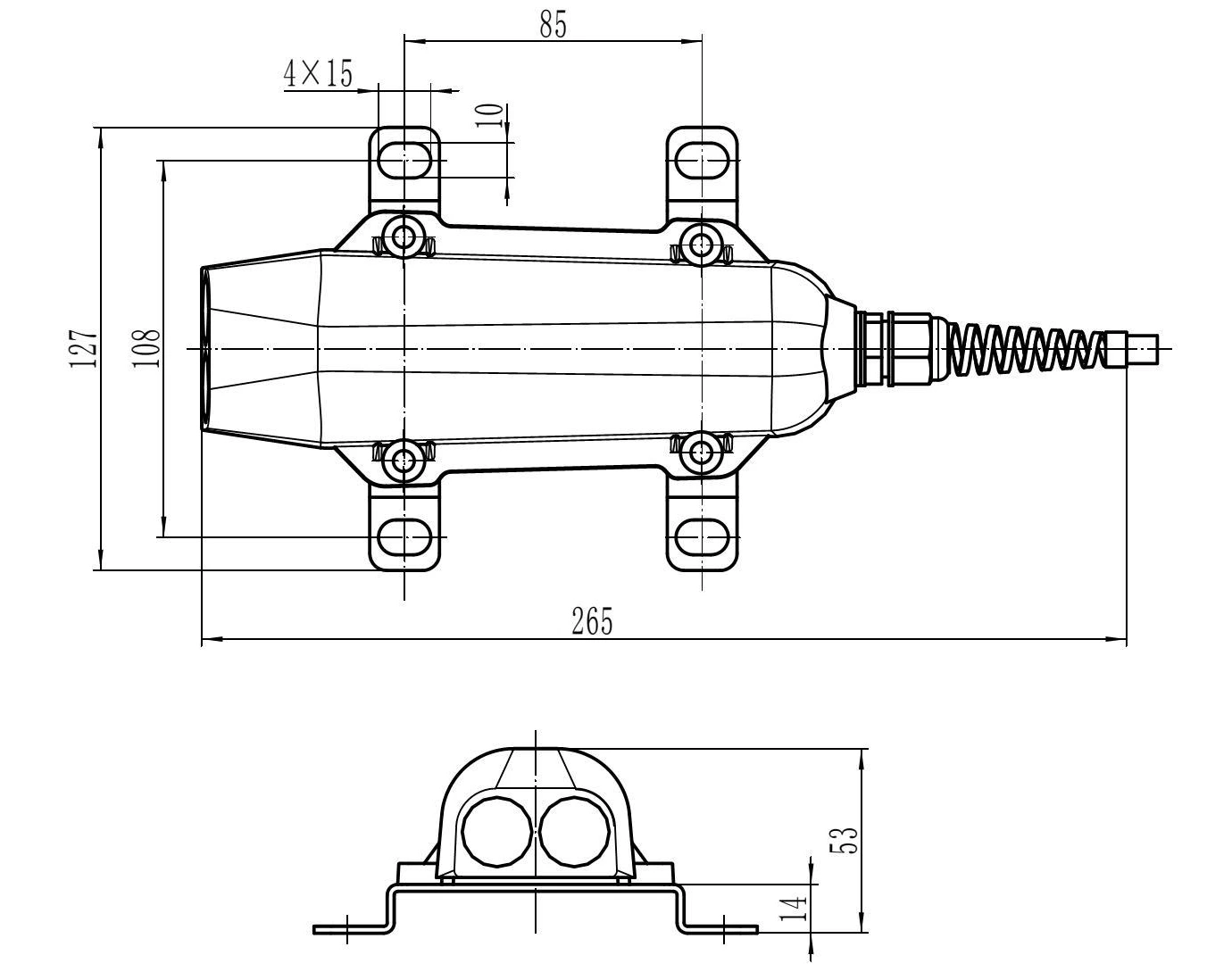
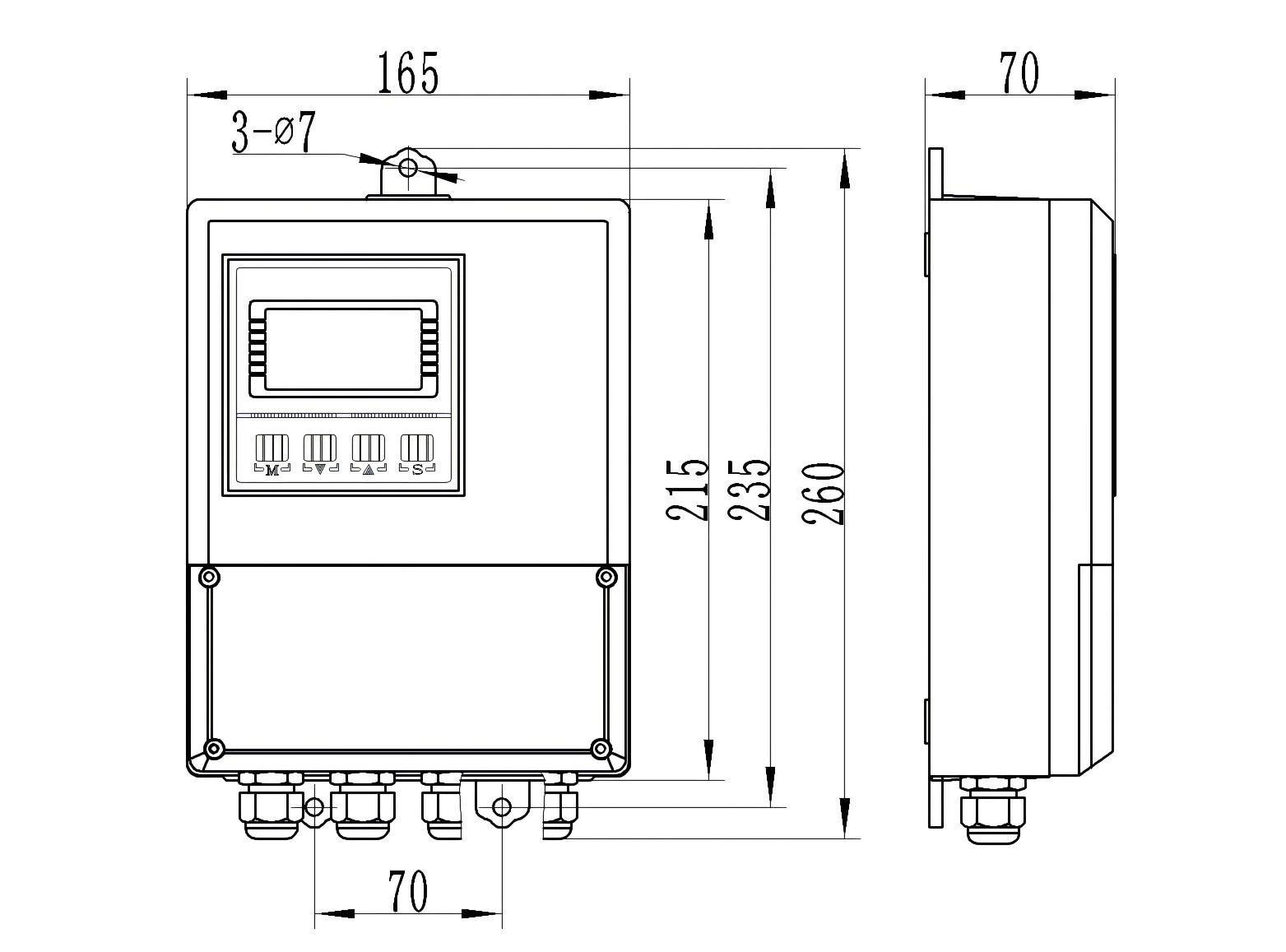
The probe is generally mounted underwater, facing the flow, at a stable position on the channel bed or pipe wall where it stays submerged. The exact mounting method depends on the waterway type and cross-section; please refer to the dimension drawings and installation manual, or send us your site information.
19. What information should I provide to get a quotation?
To help us select the correct configuration, please provide:
- Waterway type (pipeline, channel, stream or river)
- Cross-section shape and dimensions
- Water level range and flow velocity range
- Whether flow direction identification is needed
- Water quality (pH, sediment, corrosive components) and temperature
- Output requirements (4–20 mA, 0–5 V, RS485, relays)
- Power supply (220 VAC or 24 VDC) and cable length
- Quantity
Send your requirements to info@asmik.com or contact us via WhatsApp at +86 13325716921.