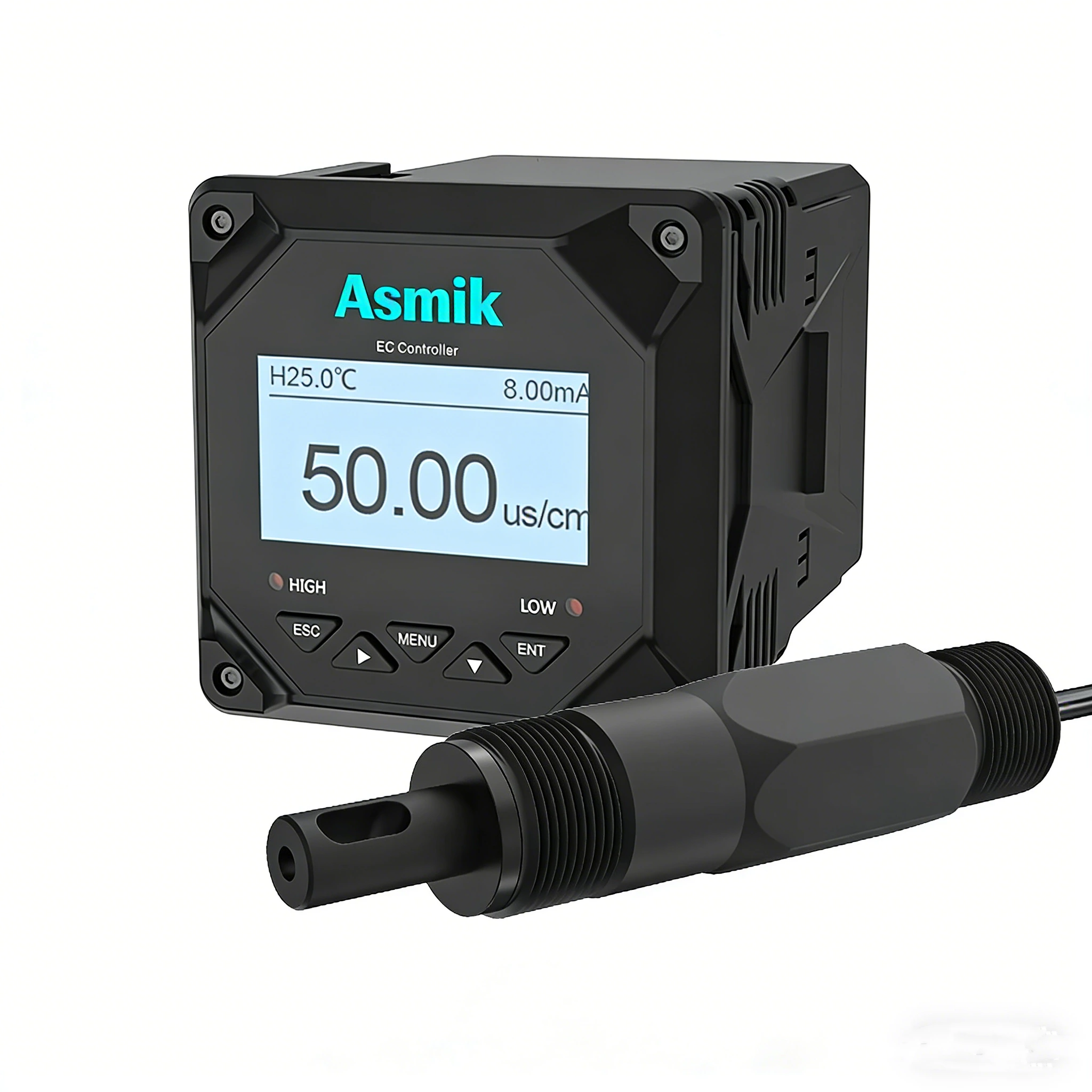
Turbidity Sensor And Transmitter

Turbidity Sensor And Transmitter: suitable Wastewater treatment and environmental monitoring

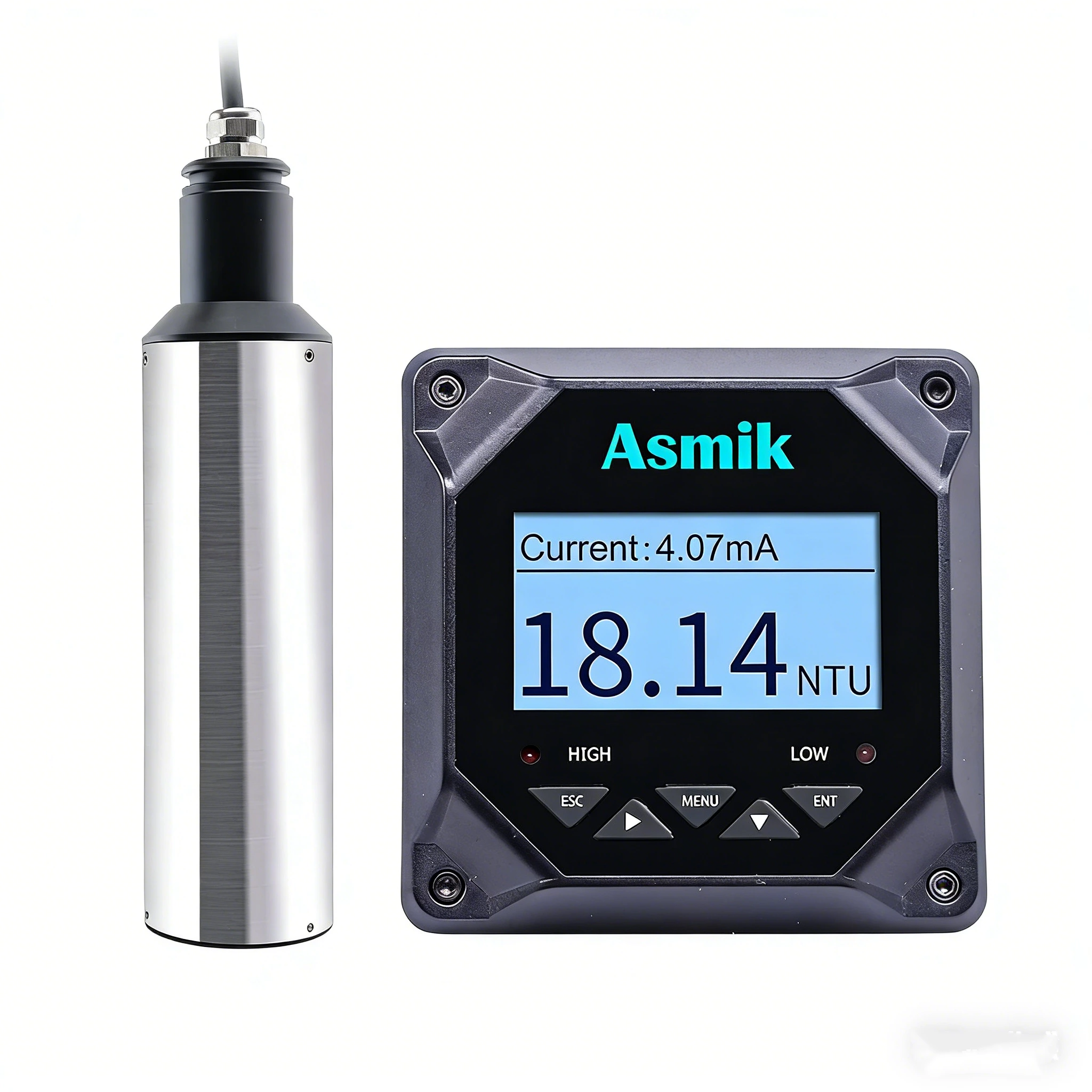
Digital analyzer monitor

MIK-DC2000 Liquid analyzing meter turbidity transmitter

Nephelometers and turbidimeters work by shining a light source, usually a laser or LED, through a sample of water and measuring the amount of light that is scattered or absorbed by the particles in the water. ...
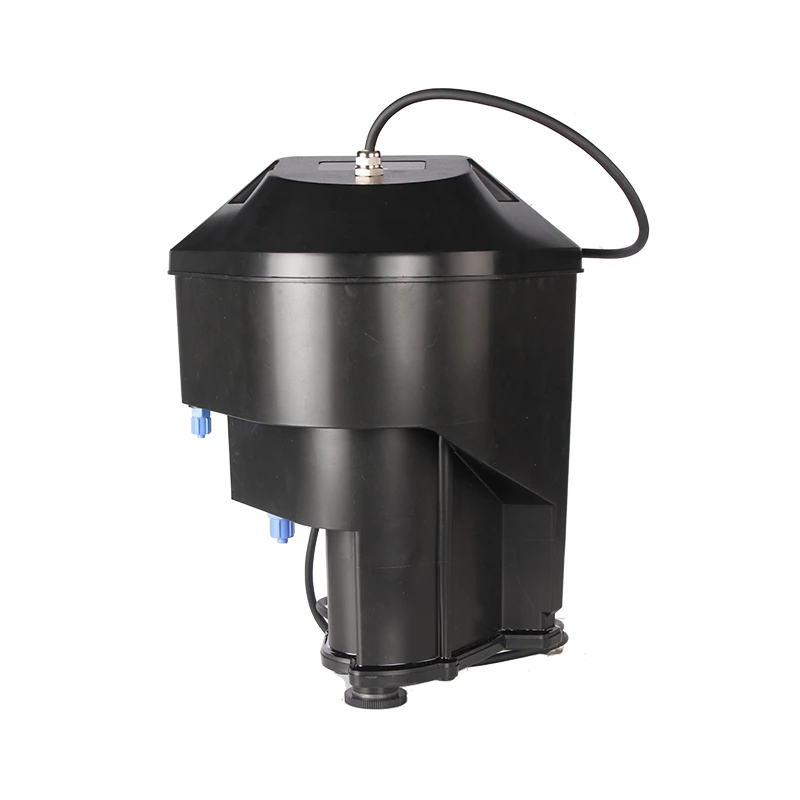
Low turbidity sensor

MIK-PTU8012 Low turbidity sensor

MIK-PTU-8012 widely used in such fields as sewage plants, Drinking water plants, water stations, surface water, and industries for inspecting the turbidity. ...
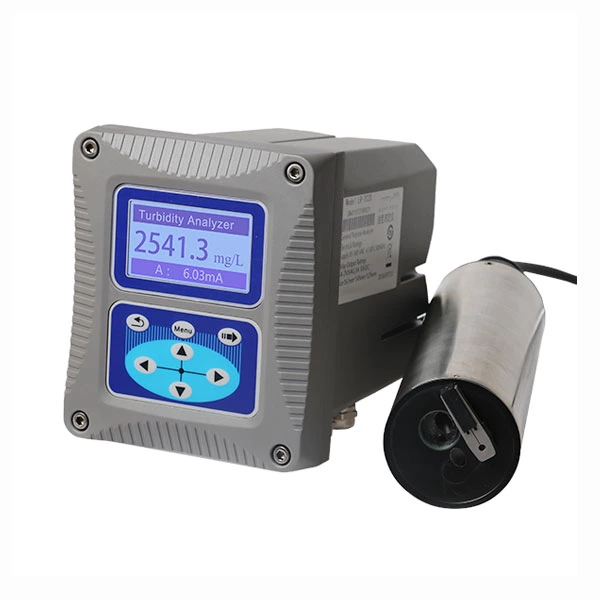
Turbidity meter

MIK-PTU200 Turbidity meter

MIK-PTU200 turbidity meter based on the infrared absorption scattered light method and combined with the application of ISO7027 method, can guarantee the continuous and accurate detection of turbidity. Based on ISO7027, infrared double scattering light technology will not be affected by chroma for t ...
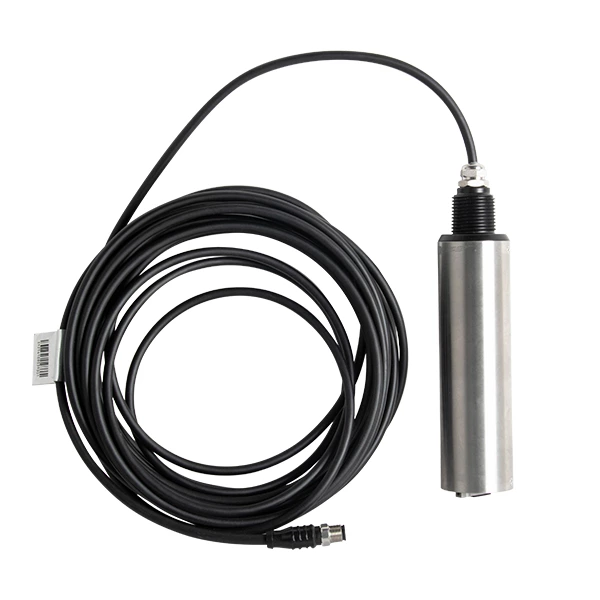
online Turbidity Sensor

MIK-PSS9010 Turbidity Sensor

The MIK-PSS9010 turbidity sensor measures suspended solids concentration through infrared light scattering, offering high accuracy and long-term stability. It features a self-developed optical path, real-time compensation algorithm, and optional cleaning brush for continuous online monitoring. Suita ...
supmea Turbidity Sensor

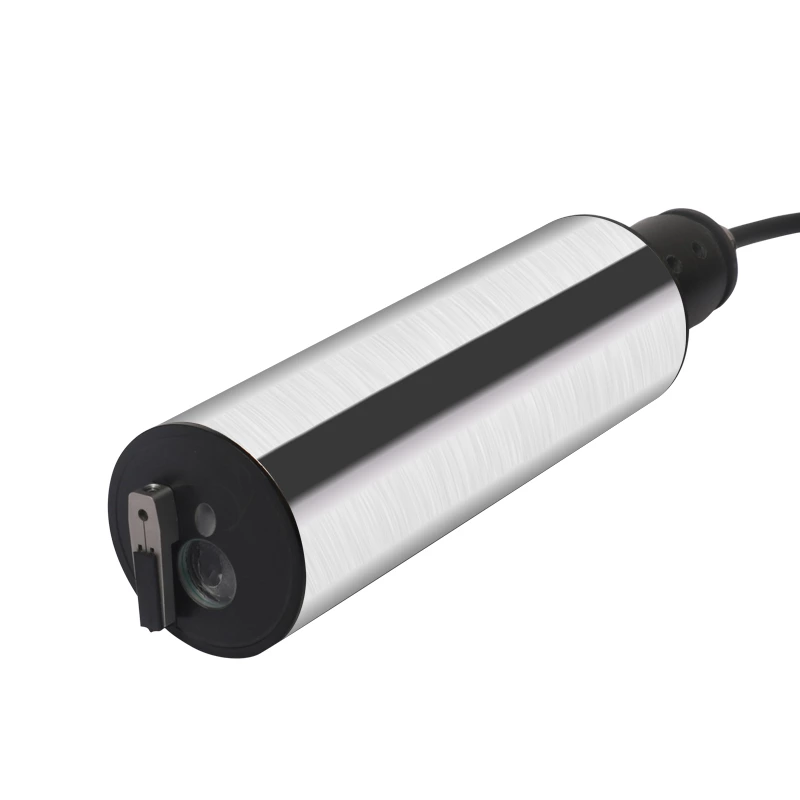
MIK-PTU-8010 Turbidity Sensor

The MIK-PTU-8010 turbidity sensor uses infrared scattered light technology for accurate, stable, and repeatable measurements. With self-cleaning, digital output, and plug-and-play installation, it suits water treatment, industrial, and aquaculture applications. ...
Turbidity Sensor

MIK-PTU-8011 Turbidity Sensor

MIK-PTU-8011 turbidity meter based on the infrared absorption scattered light method and combined with the application of ISO7027 method, can guarantee the continuous and accurate detection of turbidity. Based on ISO7027, infrared double scattering light technology will not be affected by chroma for ...
low turbidity meter

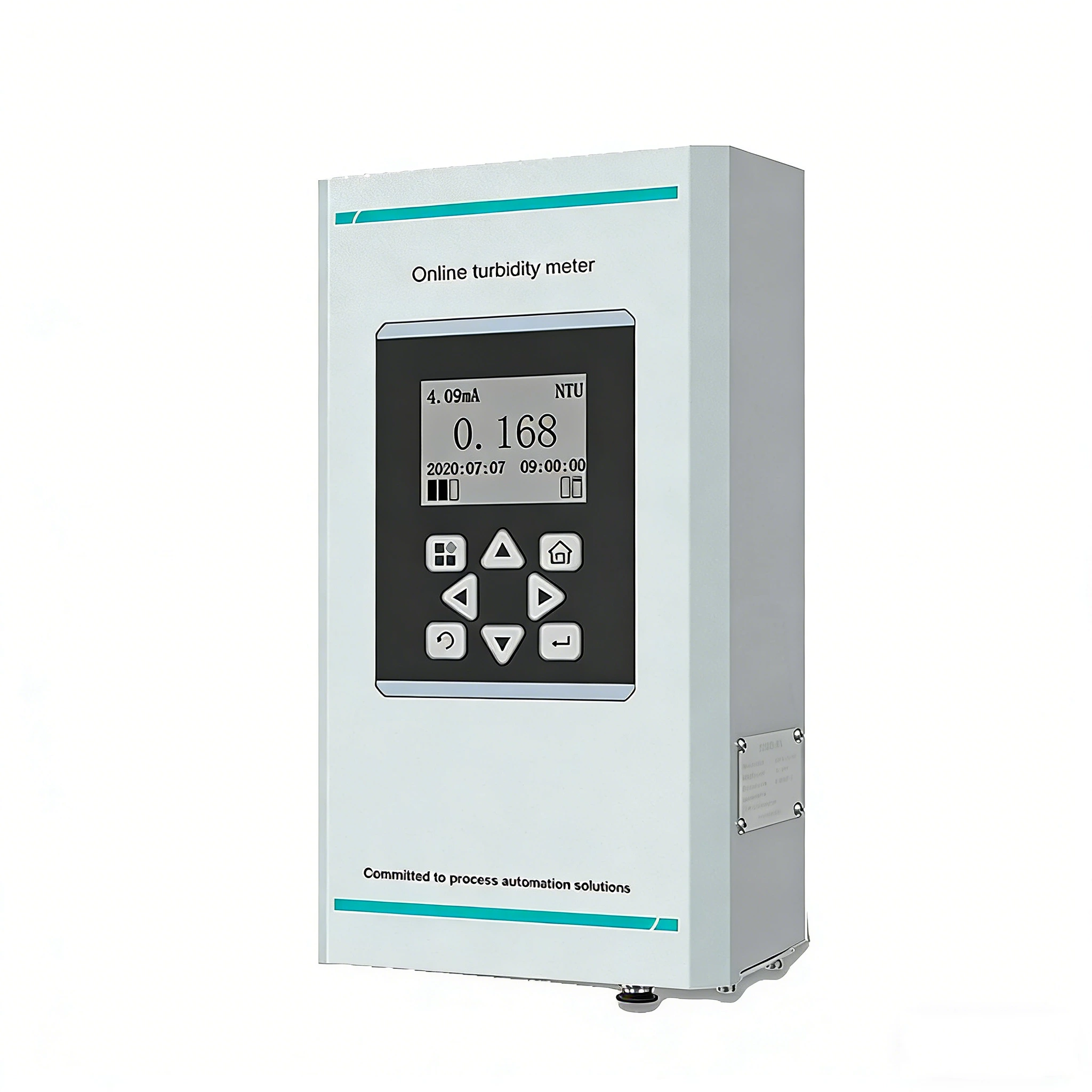
MIK-PTU300 Turbidity meter

Laser light source, with ultra-high noise ratio, high monitoring accuracy. Small size, easy system integration water consumption is small, saving daily operation cost. It can be applied to the turbidity measurement of drinking water after membrane-type clean water. Automatic discharge, long time mai ...

Turbidity Sensor And Transmitter measuring principle

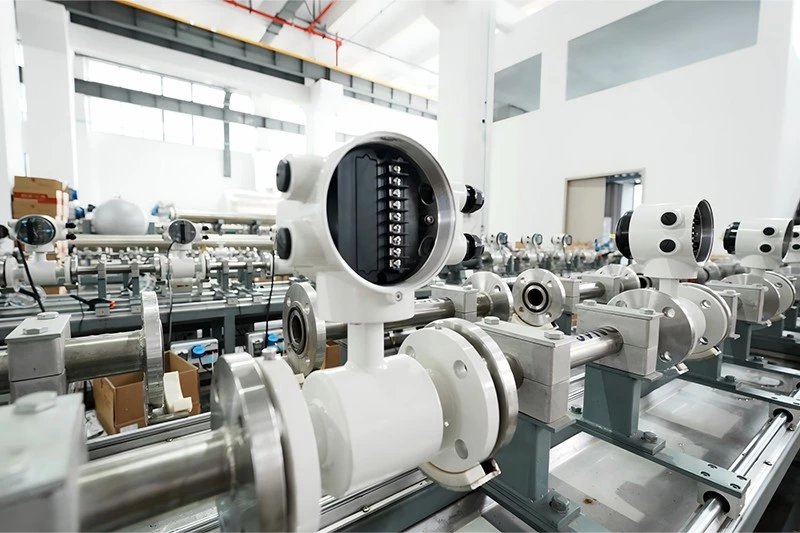
Based on the principle of light scattering (infrared/90° scattering), this method continuously monitors the turbidity caused by suspended particles in water online, and is widely used in waterworks, sewage treatment, environmental monitoring, industrial process water and drinking water quality control.

  • FAQ

1. What is turbidity, and why measure it?

Turbidity describes how cloudy water is, caused by suspended particles. Online turbidity monitoring is widely used in waterworks, sewage treatment, environmental monitoring, industrial process water and drinking water quality control.

2. How does a turbidity sensor work?

Asmik turbidity sensors are based on the light scattering principle (infrared, 90° scattering). A light source shines into the water, and a detector measures the light scattered by suspended particles; the amount of scattered light is related to the turbidity.

3. What is the ISO 7027 method?

ISO 7027 is an international standard for turbidity measurement using near-infrared light. Because infrared light is not absorbed by dissolved colors in the water, the measurement is not affected by chroma. The MIK-PTU200 and MIK-PTU-8011 use infrared double scattering light technology based on ISO 7027.

4. What units are used for turbidity?

Turbidity is commonly expressed in NTU (nephelometric turbidity units) or FNU (formazin nephelometric units). FNU is typically associated with infrared measurement according to ISO 7027. Please check each product page for its units and range.

5. Which Asmik turbidity product should I choose?
  • MIK-DC2000: liquid analyzing meter and turbidity transmitter
  • MIK-PTU200: turbidity meter using infrared scattered light and ISO 7027
  • MIK-PTU300: laser low-turbidity meter for drinking water, including membrane-treated water
  • MIK-PTU8012: low turbidity sensor for sewage plants, drinking water plants, water stations and surface water
  • MIK-PTU-8010: infrared turbidity sensor with self-cleaning and digital output
  • MIK-PTU-8011: infrared turbidity sensor based on ISO 7027
  • MIK-PSS9010: infrared scattering sensor for suspended solids, with optional cleaning brush

If you are unsure, send us your application details and our engineers will recommend a model.

6. Which product is suitable for low turbidity drinking water?

The MIK-PTU300 uses a laser light source with a very high signal-to-noise ratio and high monitoring accuracy, and can be used for drinking water after membrane treatment. Its water consumption is small and it features automatic discharge. The MIK-PTU8012 low turbidity sensor is also used in drinking water plants and water stations.

7. What is the advantage of a laser light source?

A laser light source provides a very high signal-to-noise ratio, which improves sensitivity and accuracy at very low turbidity levels, such as in treated drinking water.

8. What is the difference between turbidity and suspended solids (TSS)?

Turbidity is an optical property that describes how much light is scattered by particles, while TSS (total suspended solids) is the mass concentration of particles, usually in mg/L. The two are related but not identical, since particle size, shape and color also affect light scattering. For suspended solids and sludge concentration, see our TSS/SS sensors and the MIK-PSS9010.

9. Do the sensors have self-cleaning?

Yes. The MIK-PTU-8010 features self-cleaning, and the MIK-PSS9010 offers an optional cleaning brush for continuous online monitoring. Self-cleaning helps keep the optical window clean in dirty water.

10. Do air bubbles affect turbidity readings?

Yes. Air bubbles scatter light and can cause falsely high readings. Install the sensor where bubbles are minimal, and for low-turbidity measurement use a flow-through or debubbling arrangement where recommended.

11. How is a turbidity sensor calibrated?

Turbidity sensors are generally calibrated with standard solutions such as formazin, or checked with secondary standards, following the procedure of the selected instrument.

12. How much maintenance do turbidity sensors need?

Asmik turbidity sensors are designed for easy maintenance and low operating costs. The main task is keeping the optical window clean; self-cleaning models reduce manual cleaning. Periodic verification against a standard is recommended.

13. What outputs are available?

Asmik turbidity sensors and transmitters offer strong compatibility with standard outputs, and models such as the MIK-PTU-8010 provide digital output with plug-and-play installation. Available outputs depend on the model; please check the product page or tell us your requirements.

14. How should a turbidity sensor be installed?
  • Install the sensor where the water is representative and well mixed.
  • Avoid locations with many air bubbles or direct sunlight on the optical window.
  • Keep the optical window away from walls and the bottom to avoid reflections.
  • For low-turbidity drinking water, use a flow-through meter such as the MIK-PTU300.
  • Make sure the sensor can be removed easily for cleaning.

Please follow the installation manual of the selected model.

15. Which industries use turbidity sensors?

Typical applications include waterworks and drinking water plants, sewage treatment, environmental and surface water monitoring, industrial process water and aquaculture.

16. What information should I provide to get a quotation?

To help us select the correct model, please provide:

  • Application (drinking water, sewage, surface water, process water, aquaculture)
  • Expected turbidity range
  • Installation method (immersion or flow-through)
  • Fouling conditions and need for self-cleaning
  • Output requirements and power supply
  • Whether a display transmitter is required
  • Quantity

Send your requirements to info@asmik.com or contact us via WhatsApp at +86 13325716921.

Benefits

  • Fast response and stable measurement
  • High accuracy and wide measuring range
  • Strong compatibility with standard outputs
  • Rugged structure, suitable for field installation
  • Easy maintenance and low operating costs
  • Wide range of applications

Why Choose Asmik

why
  • Product Diversity: Over 200 products to meet various measurement and control needs, providing one-stop solutions.
  • Stable supply: The factory covers 45,000 ㎡ and is equipped with fully automated production lines, with an annual output of over 600,000 units.
  • Strict quality control: Products have passed multiple certifications such as ISO, CE, and UL, and internal quality control involves 24+ processes.
  • High-quality materials: possess excellent corrosion resistance, wear resistance, and long-term stability.
  • Efficient delivery: Possesses a well-established logistics system, ensuring timely shipments and efficient delivery.
  • Customer-centric: From consultation to after-sales service, we provide excellent professional services to ensure a great working experience.

Industries

Professional industry solutions: With a comprehensive instrumentation system, customized solutions, professional technology and services, we help you meet every challenge.

Need more information?

Contact us for more details about our solutions and services

This site uses cookies

We use cookies to collect information about how you use this site. We use this information to make the website work as well as possible and improve our services.








