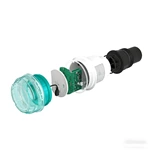
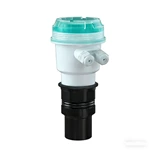
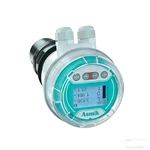
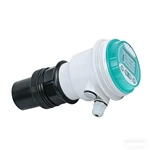
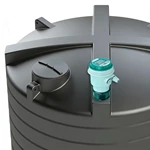
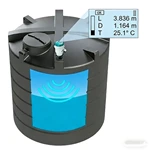
Specification
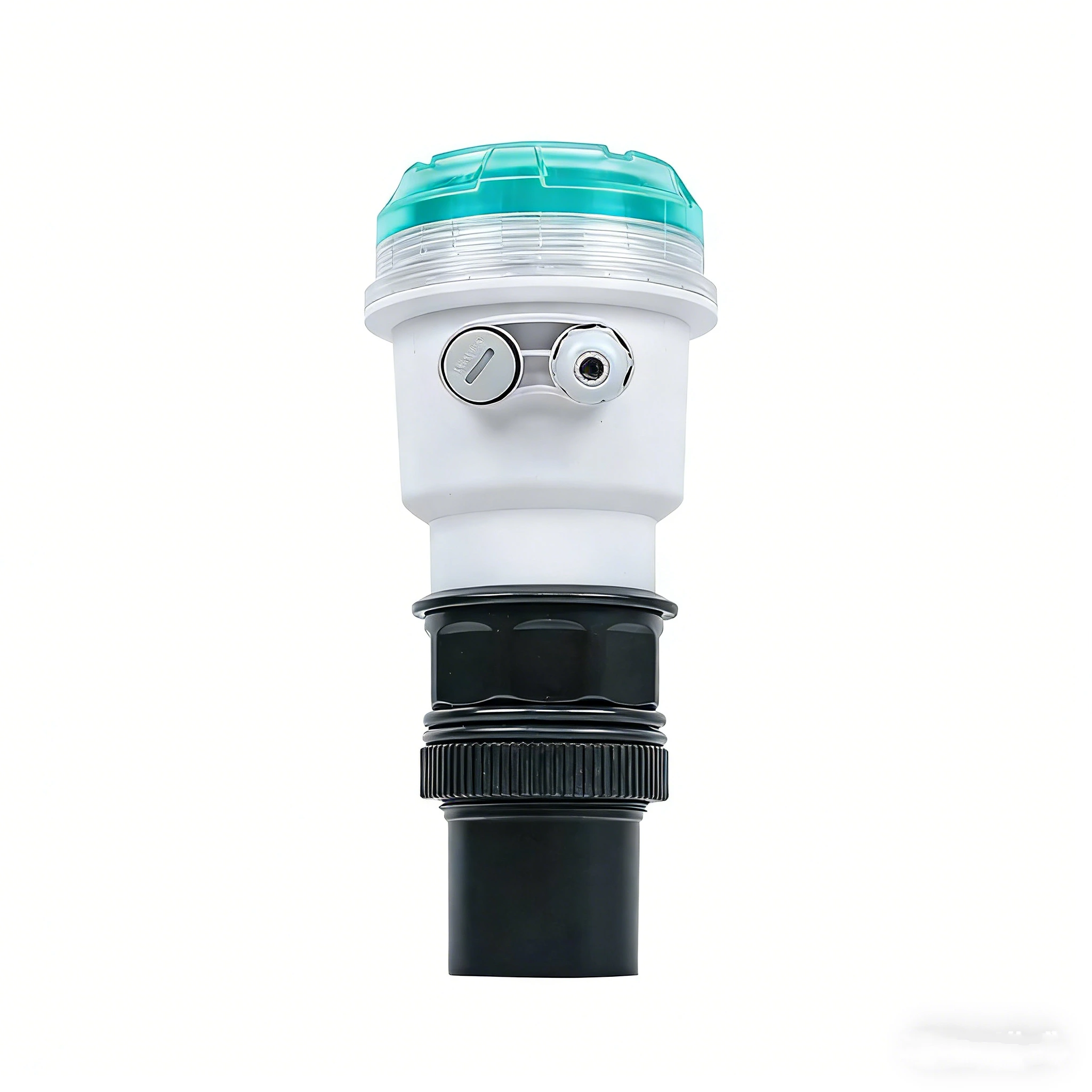
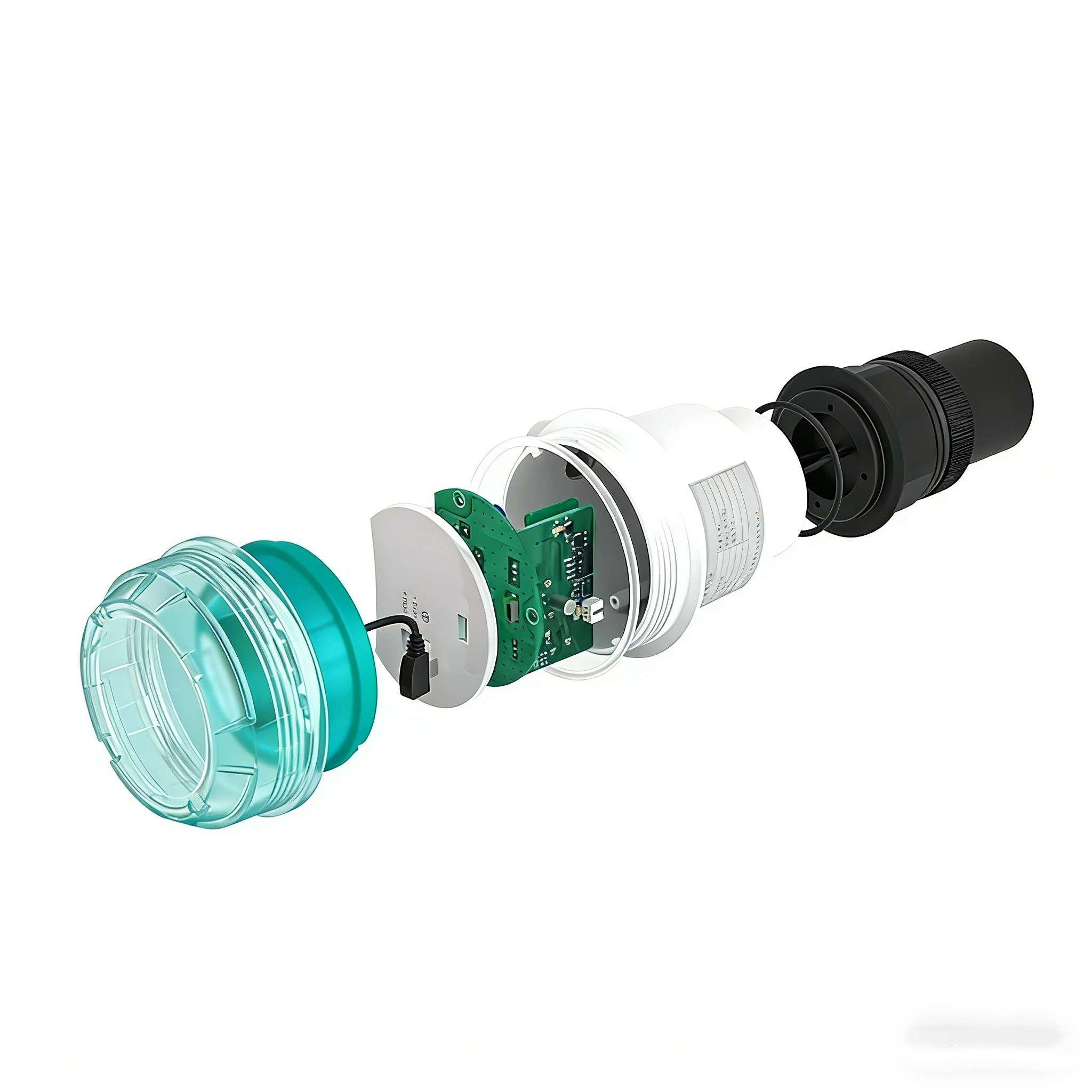
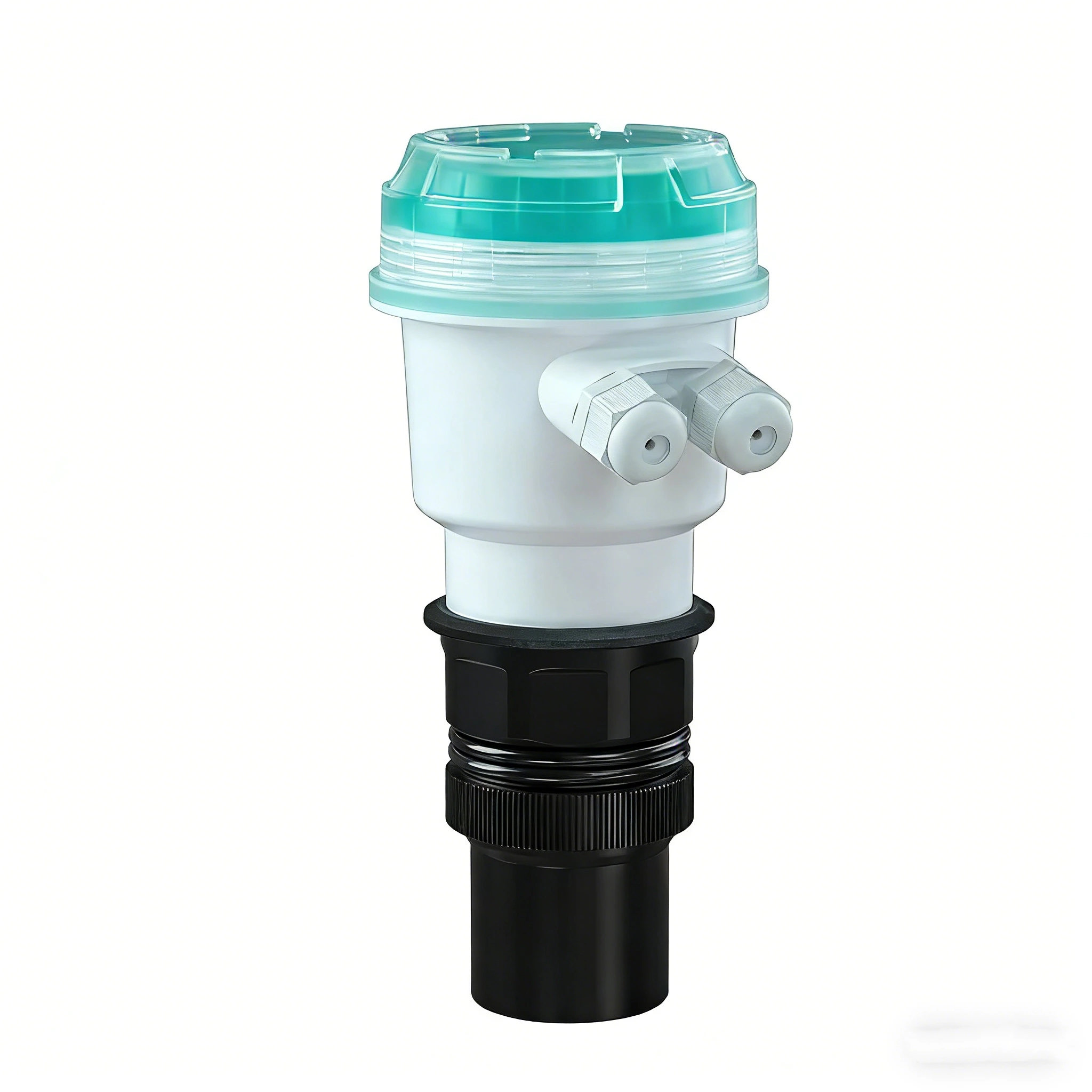
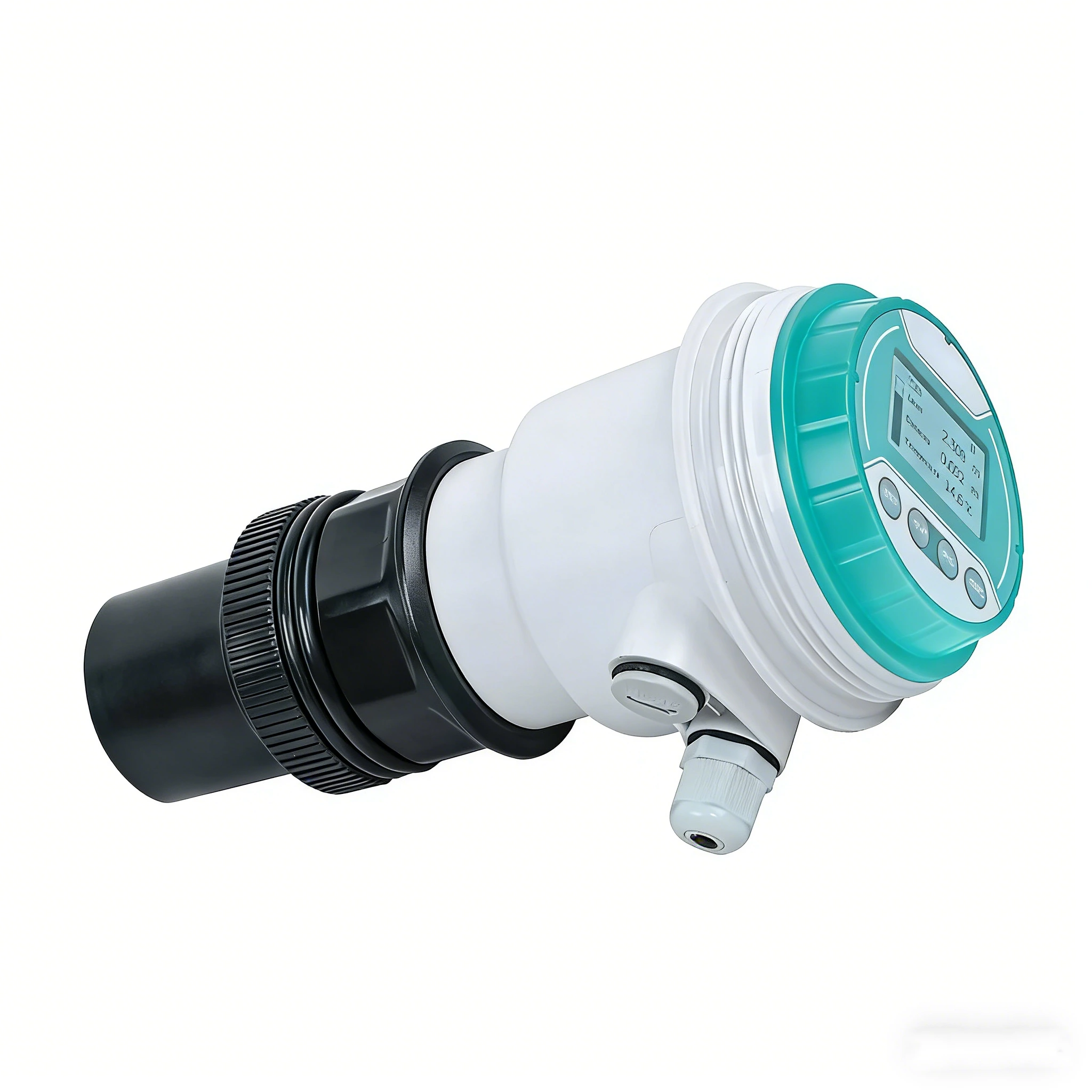
The SUP-MP ultrasonic level transmitter has perfect functions, including monitoring, data transmission, and man-machine communication. It is featured with strong anti-interference performance; free setting of upper and lower limits, online output regulation, and on-site indication.
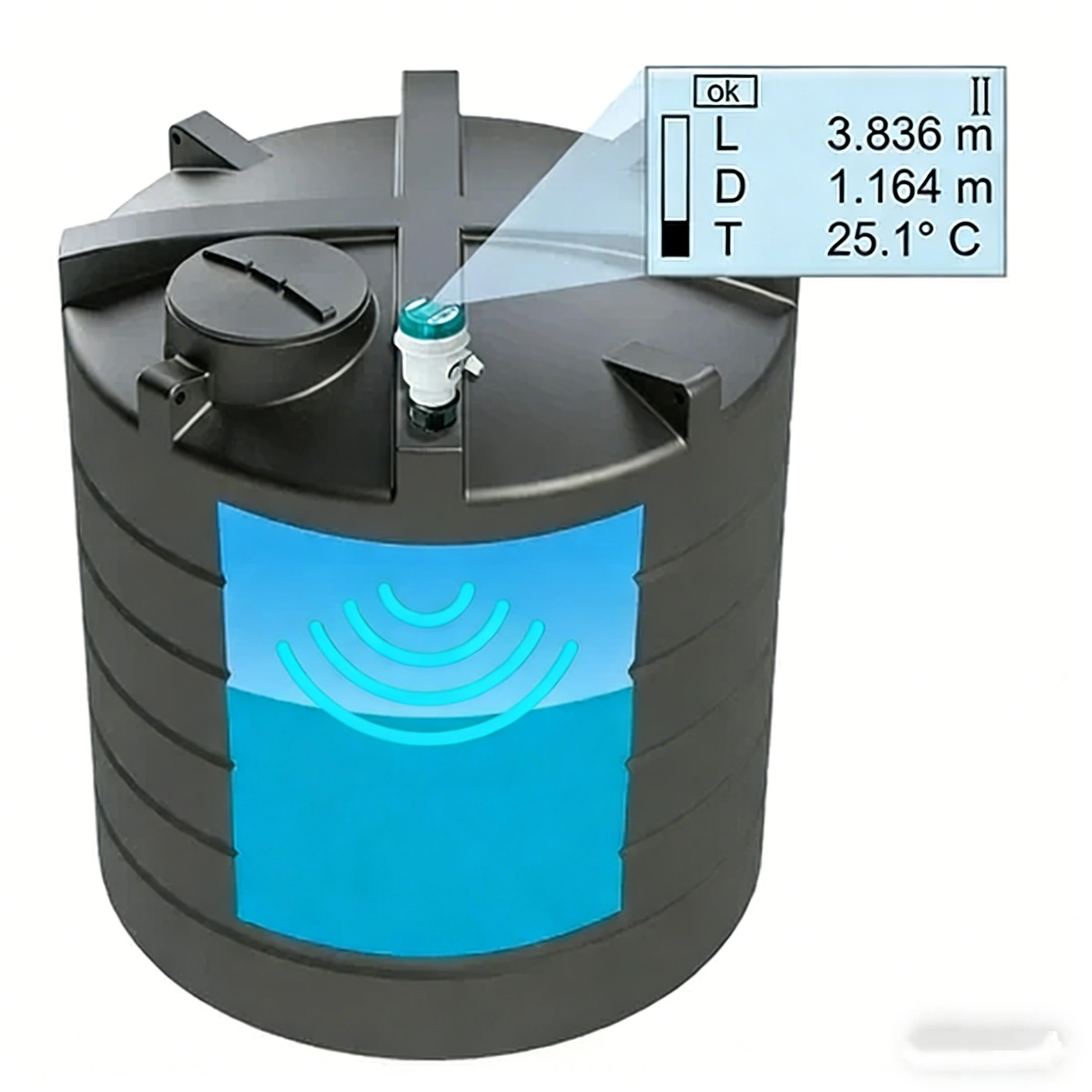
Ultrasonic level measurement is a non-intrusive and accurate method used to measure the level of liquids and solids in tanks, vessels, and pipes. This technique works by emitting high-frequency sound waves that travel through the medium being measured and reflect to the sensor. The time it takes for the sound waves to travel back and forth is used to determine the distance between the sensor and the surface of the medium.
This information is then processed by a digital signal processor to provide an accurate reading of the level.
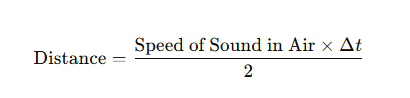
The Distance value can be calculated in this ultrasonic level transmitter formula: (Note that the division by 2 accounts for the round trip: out and back)
Ultrasonic level measurement is commonly used in applications where traditional level measurement technologies may not be suitable, such as corrosive or hazardous environments, or where the medium being measured is highly viscous or prone to foam.
| Product |
Ultrasonic level transmitter |
| Model |
SUP-MP |
| Measure range |
0~5M/ 0~10M/ 0~15M/ 0~20M/ 0~30M
|
| Blind zone |
0.35m |
| Accuracy |
±0.5% FS (optional ± 0.2% FS)
|
| Display |
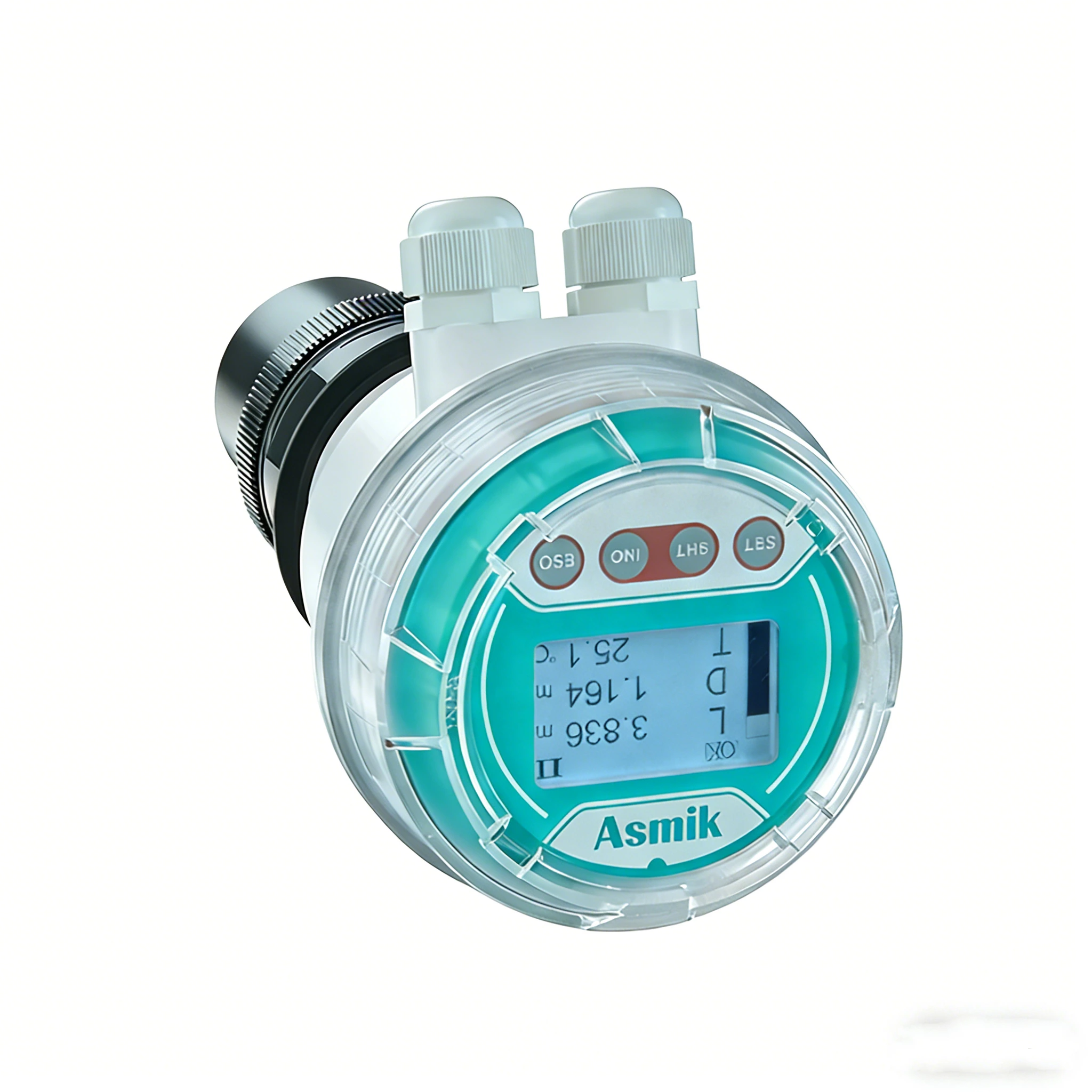
2-inch black and white LCD with 128*64 resolution |
| Output (optional) |
4-20mA RL<500Ω |
| RS485 |
| 2 relays |
| Measuring variable |
Level/Distance |
| Power supply |
14~28VDC
85~305VAC,5W Max,50/60Hz (optional) |
| Power consumption |
<1.5W |
| Protection degree |
IP65(others optional) |
Extremely accurate measuring and reading ability
Available for data backup and recovery
Free adjustment of the range of the analog output
Custom serial port data format
Optional increment/difference distance measurement to measure air space or liquid level
1-15 transmitted pulse intensity based on working environments
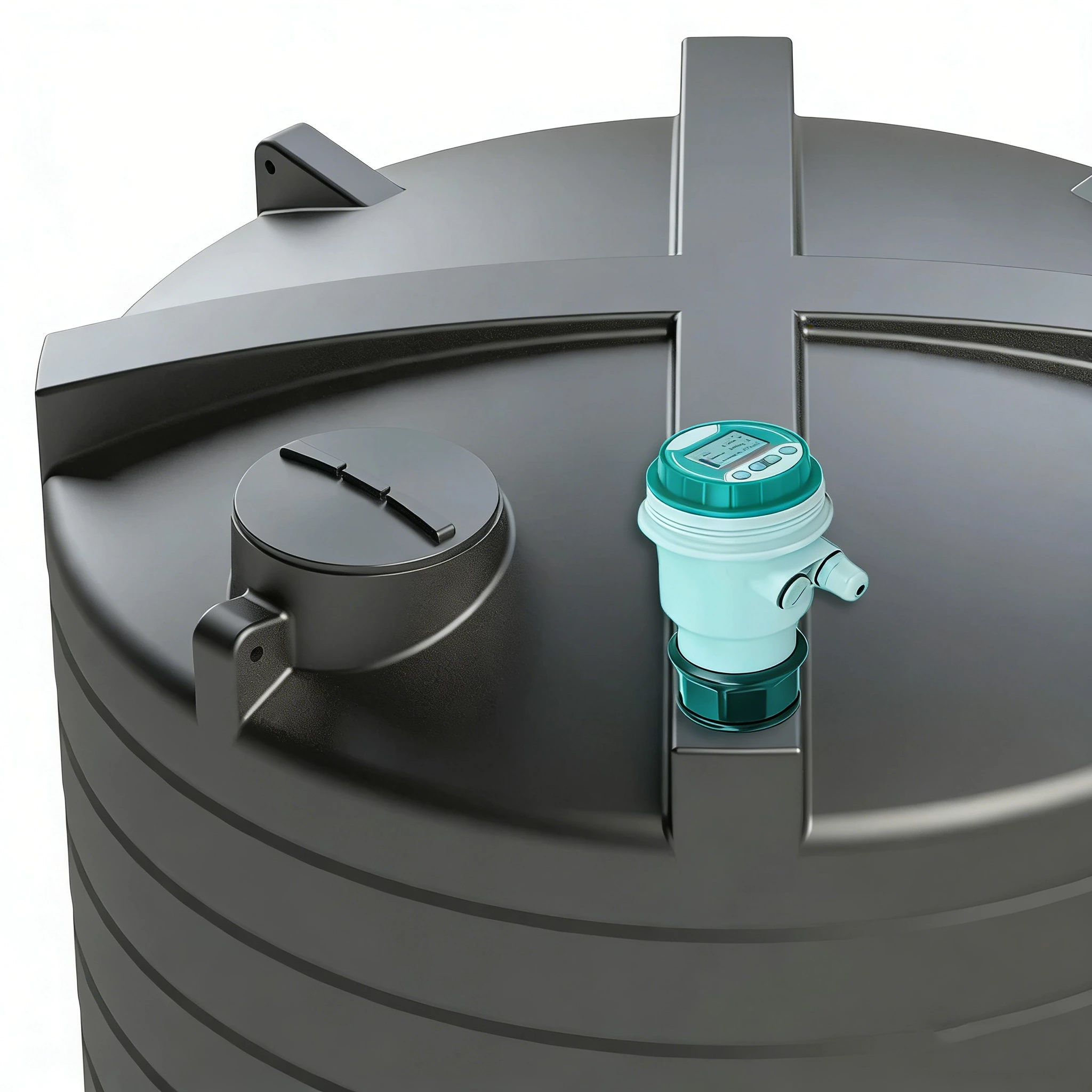
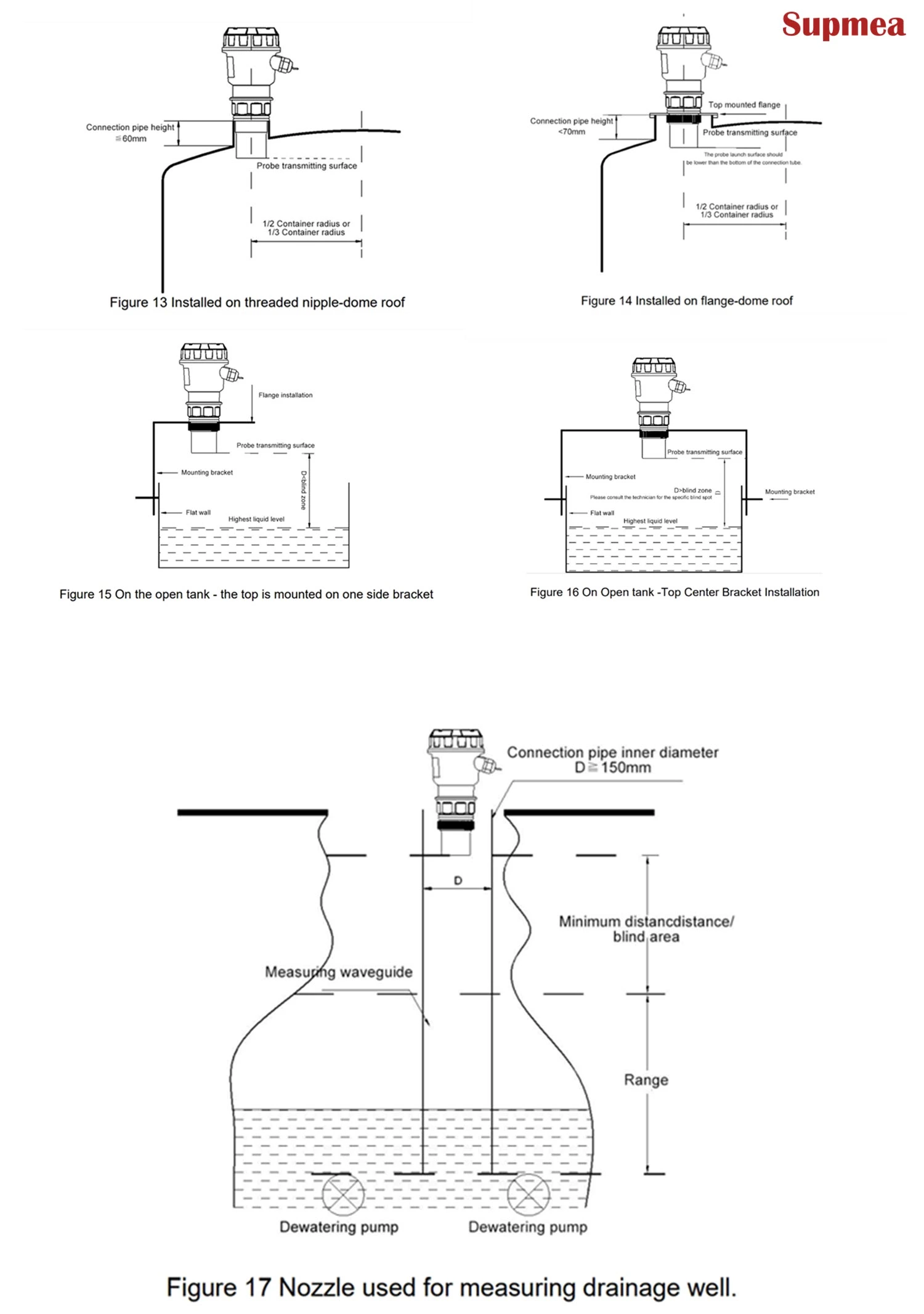
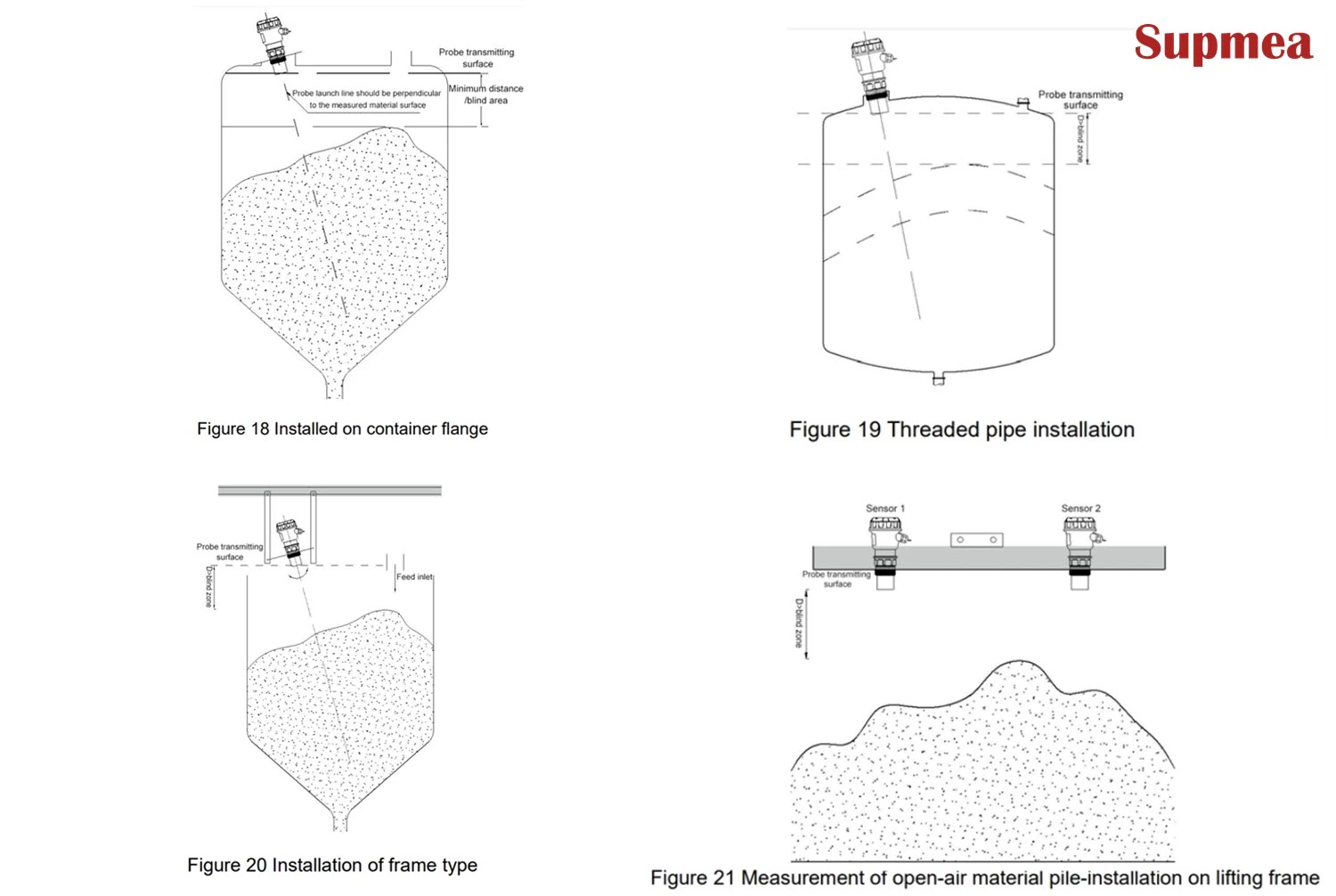
Based on the differences of measured targets and working environments, the installation methods vary as well. Here are the common installation ways:
Installation for measuring the liquid level
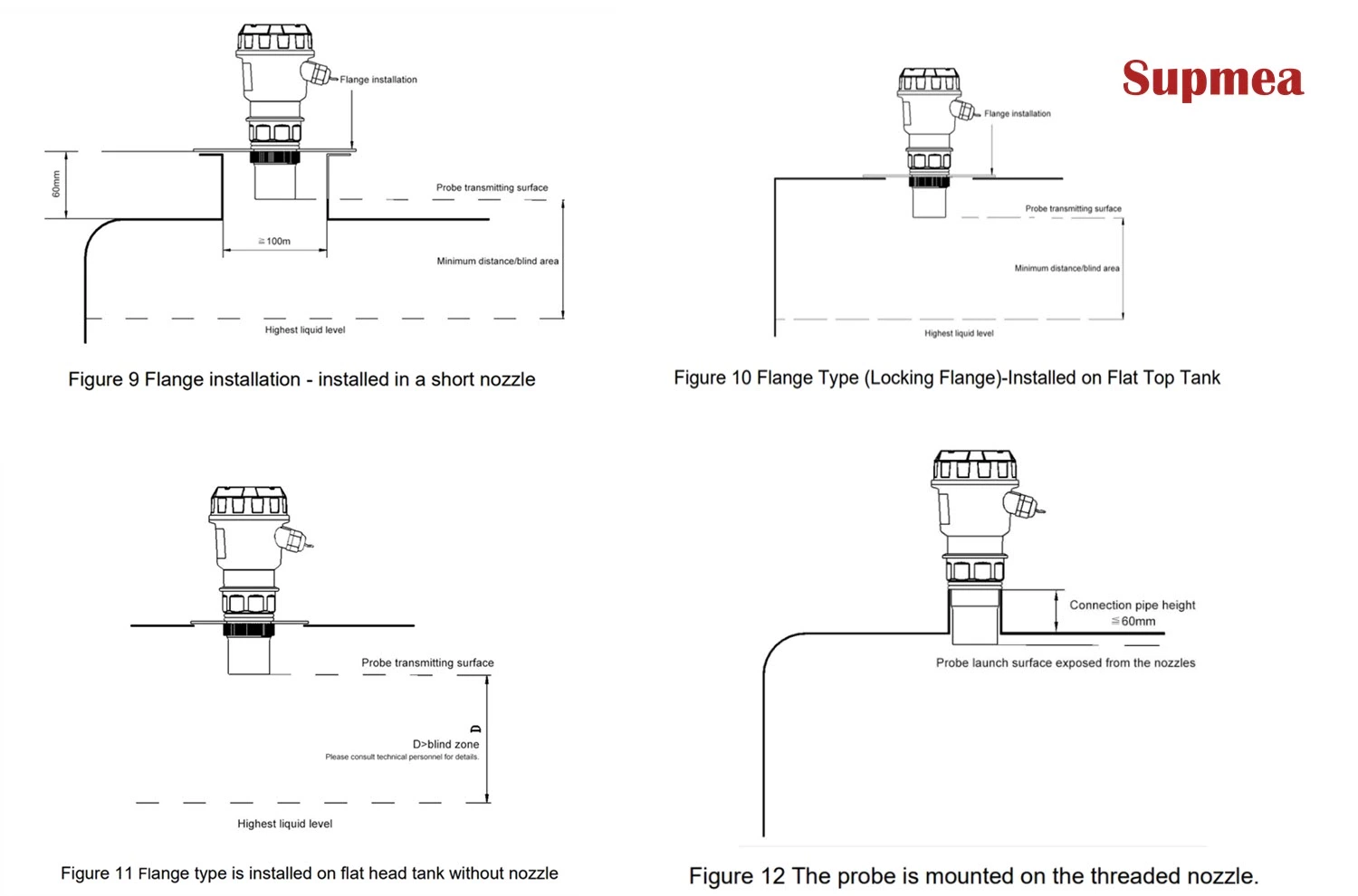
Installation for measuring the solid level
1. What is the MIK-MP ultrasonic level transmitter?
The MIK-MP is a non-contact ultrasonic level transmitter with a digital design, offering level monitoring, data transmission and man-machine communication for most solid and liquid surface measurements. It is used in chemical, mining, aggregate, power generation, pulp and paper, iron and steel, wastewater, food and beverage and quarry applications.
2. How does the MIK-MP measure level?
The sensor emits high-frequency sound waves toward the product surface. The waves are reflected back to the sensor, and the transmitter measures the round-trip travel time. The distance is calculated as the speed of sound multiplied by the travel time and divided by 2 (for the out-and-back path), and the level is derived from this distance.
3. What measuring ranges are available?
Ranges of 0–5 m, 0–10 m, 0–15 m, 0–20 m and 0–30 m are available. Please tell us your vessel height so we can confirm the right range.
4. What is the blind zone?
The blind zone is 0.35 m. This is the area directly below the sensor where level cannot be measured, so the maximum level must stay below it.
5. How accurate is the MIK-MP?
Accuracy is ±0.5% FS, with ±0.2% FS optional.
6. What can it measure: level or distance?
Both. The measuring variable can be level or distance. An optional increment/difference distance measurement is available to measure air space or liquid level.
7. What outputs are available?
- 4–20 mA (load RL <500 Ω)
- RS485, isolated, Modbus-RTU protocol
- 2 relays
Outputs are optional; please tell us which ones you need. The analog output range can be freely adjusted, and the serial port data format can be customized.
8. What power supply is required?
14–28 VDC, with 85–305 VAC (50/60 Hz, 5 W max) optional. Power consumption is below 1.5 W.
9. What display does it have?
A 2-inch black and white LCD with 128 × 64 resolution provides on-site indication.
10. What is the protection degree?
IP65 is standard, and other ratings are optional. Please tell us your installation environment.
11. Can the transmitted pulse intensity be adjusted?
Yes. The transmitted pulse intensity can be set from 1 to 15 according to the working environment, which helps when the echo is weak or when there is interference.
12. What functions help with commissioning and maintenance?
- Free setting of upper and lower limits
- Online output regulation
- On-site indication
- Data backup and recovery
- Strong anti-interference performance
13. Can it measure solids as well as liquids?
Yes. The MIK-MP is used for most solid and liquid surface measurements. For solids, the surface angle, dust and particle size affect the echo, so please send us your material details for confirmation.
14. Do foam, vapour or dust affect the measurement?
Thick foam can absorb the sound signal, and heavy vapour, dust or strong turbulence can weaken or scatter the echo. Adjusting the pulse intensity helps in some conditions; for difficult applications, a radar level transmitter may be more suitable. Please describe your process conditions.
15. Does temperature affect ultrasonic measurement?
Yes. The speed of sound changes with air temperature, so ultrasonic transmitters use temperature compensation to correct the distance calculation. Large temperature gradients in the vapour space can still affect accuracy.
16. Can it be used in hazardous areas?
The measuring range of the MIK-MP is specified for non-explosive fluids. If your application is in a hazardous area, please tell us the area classification so we can confirm a suitable solution.
17. How should the MIK-MP be installed?
- Mount the sensor perpendicular to the medium surface.
- Keep the maximum level below the 0.35 m blind zone.
- Avoid inlets, agitators, ladders and other obstacles in the sound path.
- Keep a suitable distance from the tank wall.
- Avoid direct sunlight and strong vibration where possible.
Please follow the installation manual or contact our engineers for site-specific requirements.
18. Ultrasonic, radar or hydrostatic: which should I choose?
- Ultrasonic (MIK-MP): non-contact and cost-effective for most liquids and solids; affected by foam, vapour and dust.
- Radar: non-contact and less affected by vapour, dust, temperature and pressure.
- Hydrostatic: submersible contact measurement based on liquid pressure; not affected by surface conditions.
19. How much maintenance does it need?
Measurement is non-contact and virtually maintenance-free. For media that build up on the sensor face, periodic inspection and cleaning is recommended.
20. What information should I provide to get a quotation?
To help us select the correct model, please provide:
- Medium (liquid or solid) and its properties
- Measuring range and tank or pit dimensions
- Process conditions (foam, vapour, dust, temperature)
- Mounting connection and installation position
- Output requirements (4–20 mA, RS485, relays)
- Power supply (DC or AC) and protection degree
- Quantity
Send your requirements to info@asmik.com or contact us via WhatsApp at +86 13325716921.