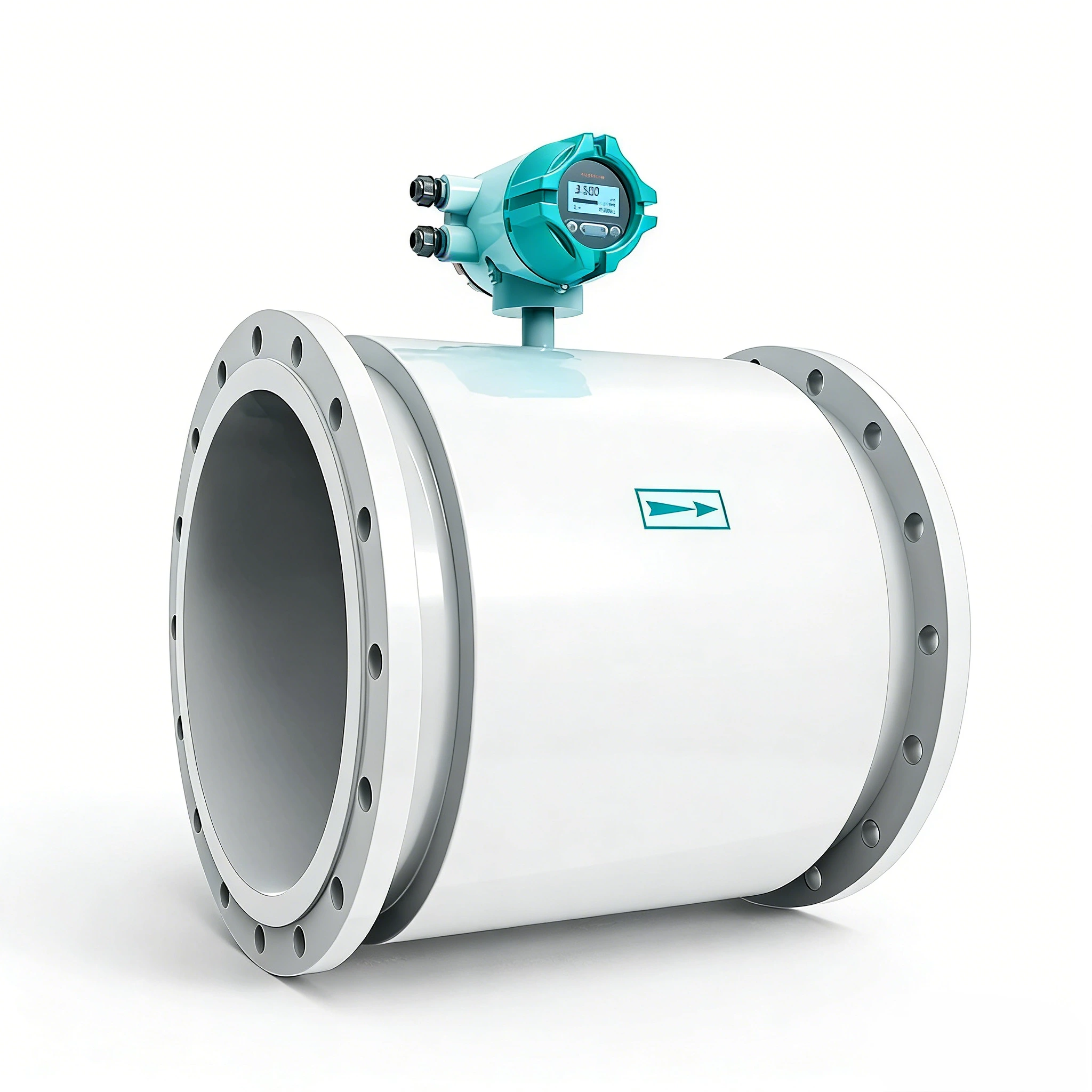
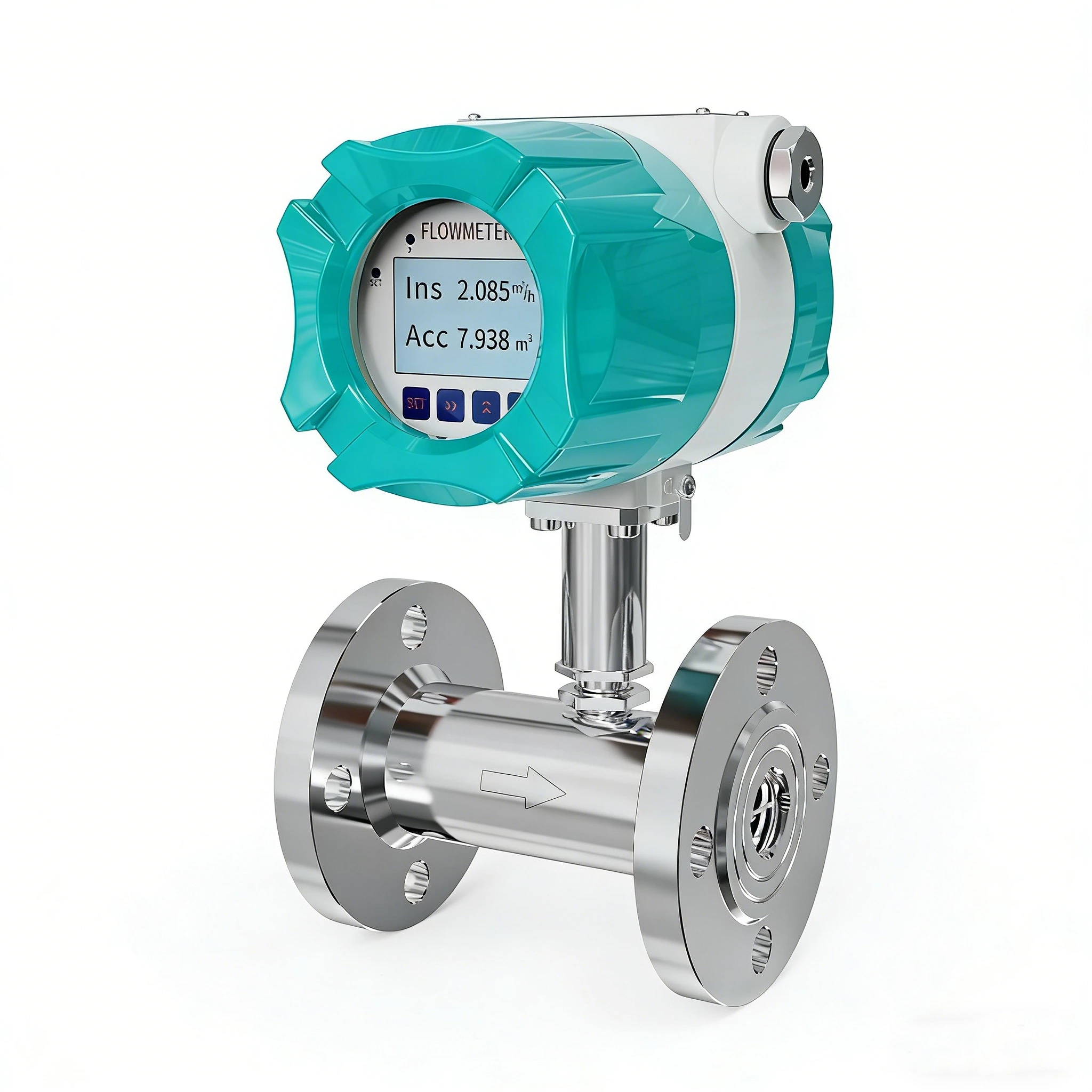
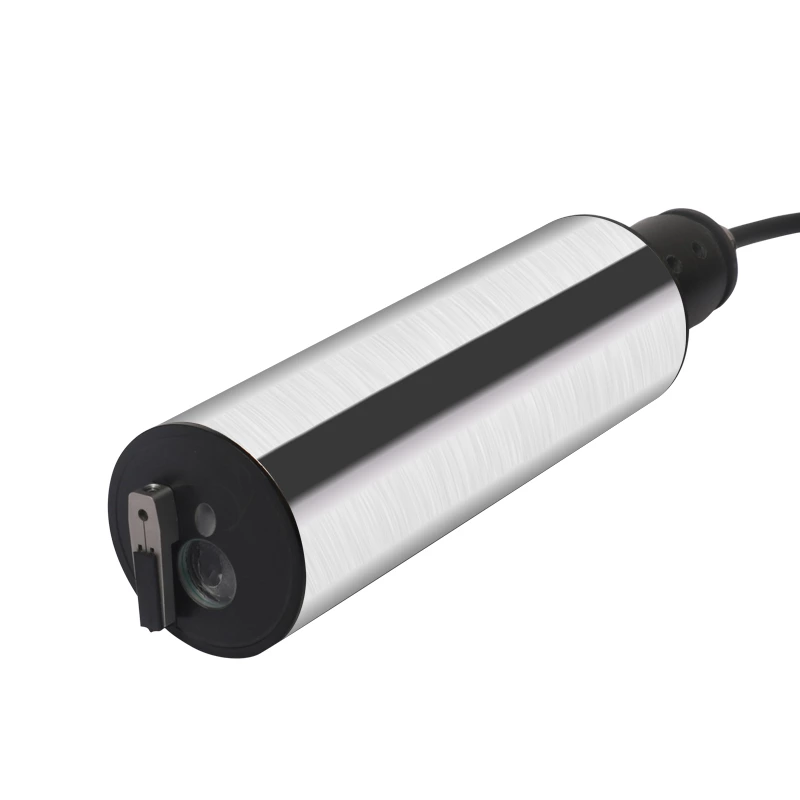
MIK-LDG Insertion type electromagnetic flowmeter

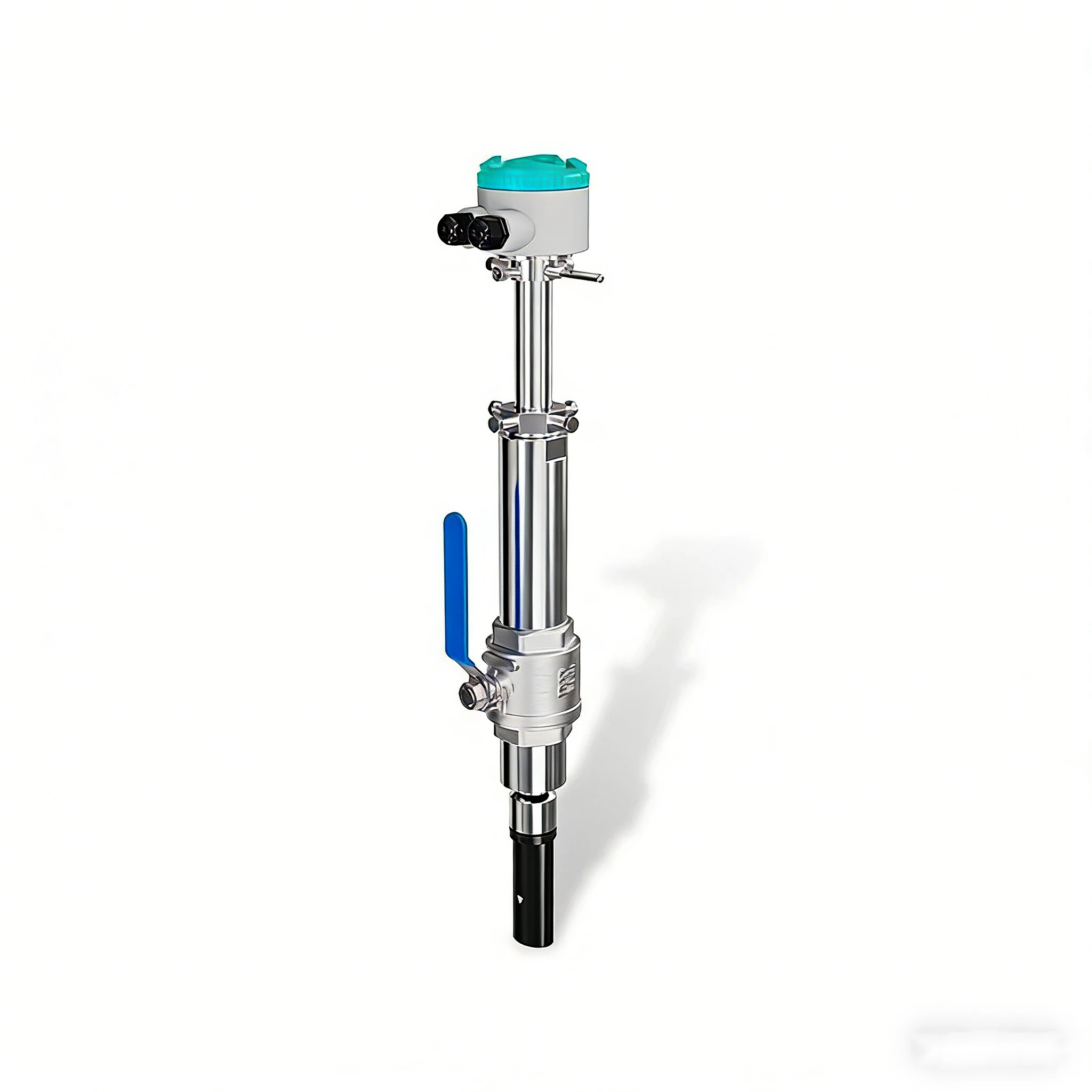
Asmik Insertion type electromagnetic flowmeter is based on Faraday's law of electromagnetic induction. In the electromagnetic flowmeter, the conductive medium in the measuring tube is equivalent to the conductive metal rod in the Faraday test, and the two electromagnetic coils at the upper and lower ends generate a constant magnetic field.

Characteristics

Size: DN100mm-DN2000mm
Nominal Pressure: 1.6MPa
Accuracy: 1.5%
Probe: ABS, Polyurethane
Electrode: SUS316L, Hastelloy B, Hastelloy C
Specification

  • Specification

Size DN100mm-DN2000mm
Nominal Pressure 1.6 Mpa
Accuracy 1.5%
Probe ABS, Polyurethane
Electrode SUS316L, Hastelloy B, Hastelloy C

Structure Type  Integral type, remote type
Medium Temperature -20~+80degC
Ambient Temperature -20~+60degC
Ambient Humidity  5~100%RH(Relative humidity) 
Measuring Range Max 15m/s
Conductivity >5us/cm
Protection Class IP65(Standard); IP68(Optional for remote type)
Process Connection 2'' Thread(Standard), 2'' Flange(Optional)
Output Signal 4-20mA/Pulse
Communication RS485(Standard), HART(Optional), GPRS/GSM(Optional)
Power Supply AC220V(Can be used for AC85-250V)
DC24V(Can be used for DC20-36V)
DC12V(Optional), Battery powered 3.6V(Optional)
Power Consumption <20W
Alarm Upper Limit Alarm / Lower Limit Alarm
Self-diagnosis Empty Pipe Alarm, Exciting Alarm
  • FAQ

1. What is the MIK-LDG insertion type electromagnetic flowmeter?

The MIK-LDG insertion type is an electromagnetic flowmeter with a probe that is inserted into the pipe through a 2" process connection. Based on Faraday's law of electromagnetic induction, it measures the flow of conductive liquids in large pipes from DN100 to DN2000.

2. How is an insertion flowmeter different from a full-bore electromagnetic flowmeter?

A full-bore flowmeter replaces a section of pipe and measures across the entire pipe cross-section. An insertion flowmeter uses a probe mounted through a small connection on the existing pipe. For large pipes, this generally means a lighter instrument, lower cost and easier transport and installation, while a full-bore meter such as the MIK-LDG Carbon Steel Body offers higher accuracy.

3. Can the insertion flowmeter measure gases?

No. Like all electromagnetic flowmeters, it measures only conductive liquids. It cannot measure gases, steam or non-conductive liquids such as oils.

4. What liquids can it measure?

It measures conductive liquids with a conductivity greater than 5 μS/cm, such as raw water, tap water, wastewater, cooling water and other industrial liquids.

5. What pipe sizes is it suitable for?

The MIK-LDG insertion type is suitable for pipe sizes from DN100 to DN2000.

6. How accurate is the insertion type?

The accuracy is 1.5%. For applications that require higher accuracy, a full-bore electromagnetic flowmeter such as the MIK-LDG Carbon Steel Body (±0.5%) may be more suitable.

7. What flow velocity can it measure?

The maximum measurable flow velocity is 15 m/s.

8. What is the nominal pressure?

The nominal pressure is 1.6 MPa.

9. What probe and electrode materials are available?
  • Probe: ABS or polyurethane
  • Electrodes: SUS316L, Hastelloy B or Hastelloy C

Send us the liquid name and concentration so we can recommend a suitable combination.

10. What process connection does it use?

A 2" thread connection is standard, and a 2" flange connection is optional.

11. What temperature and humidity conditions can it handle?
  • Medium temperature: -20 °C to +80 °C
  • Ambient temperature: -20 °C to +60 °C
  • Ambient humidity: 5% to 100% RH
12. Is it available in integral and remote versions?

Yes. Both integral and remote types are available. The protection class is IP65 as standard, and IP68 is optional for the remote type, which is suitable for pits and locations that may be flooded.

13. What output signals and communication are available?
  • Output signals: 4–20 mA and pulse
  • Communication: RS485 (standard), HART (optional), GPRS/GSM (optional)

With the GPRS/GSM option, flow data can be transmitted wirelessly to a remote monitoring platform.

14. What power supply options are available?
  • AC220V (usable from 85 to 250 VAC)
  • DC24V (usable from 20 to 36 VDC)
  • DC12V (optional)
  • 3.6 V battery power (optional)

Power consumption is less than 20 W.

15. Can it be used where there is no mains power?

Yes. The optional 3.6 V battery-powered version can be used at sites without mains power. Combined with the optional GPRS/GSM communication, it is suitable for remote monitoring points. Please tell us your required data transmission interval so we can confirm the configuration.

16. What alarm and self-diagnosis functions does it have?
  • Alarms: upper limit alarm and lower limit alarm
  • Self-diagnosis: empty pipe alarm and excitation alarm
17. How is the insertion flowmeter installed?
  • Install a 2" threaded or flanged connection on the pipe.
  • Insert the probe to the depth specified in the installation manual.
  • Make sure the pipe is always completely full of liquid.
  • Provide sufficient straight pipe upstream and downstream of the measuring point.
  • Align the probe correctly with the flow direction.

Please follow the installation manual or contact our engineers for site-specific requirements.

18. What information about the pipe do you need?

Because the meter is inserted into an existing pipe, we need the pipe's outer diameter, wall thickness (or inner diameter) and pipe material. This information is used to set the insertion depth and configure the flow calculation.

19. Where is the insertion type typically used?

It is commonly used on large-diameter pipelines where a full-bore meter would be heavy or costly, such as water supply mains, wastewater pipelines, cooling water systems and irrigation networks.

20. Does the insertion flowmeter need much maintenance?

It has no moving parts, so routine maintenance is minimal. For liquids that may form deposits, periodic inspection and cleaning of the probe and electrodes is recommended. The empty pipe and excitation alarms help identify problems early.

21. What information should I provide to get a quotation?

To help us select the correct model, please provide:

  • Liquid name and conductivity
  • Pipe outer diameter, wall thickness and material
  • Flow range (min / normal / max)
  • Liquid temperature and working pressure
  • Integral or remote type, and IP rating
  • Process connection (thread or flange)
  • Power supply (AC, DC or battery)
  • Output and communication requirements (e.g., 4–20 mA, RS485, GPRS/GSM)
  • Quantity

Send your requirements to info@asmik.com or contact us via WhatsApp at +86 13325716921.

Features

Benefits

  • Almost unaffected by fluid properties, it can perform stable measurements under a variety of complex operating conditions
  • Utilizing a full-bore structure, it has no moving parts and no throttling components
  • Long-term operation can achieve near-maintenance-free operation
  • Suitable for measuring pipes from small to large diameters (covering DN2–DN3000 levels)
  • Bidirectional measurement and strong adaptability
  • Widely applicable and highly compatible with various industries

Automated &factory

Need more information?

Contact us for more details about our solutions and services

This site uses cookies

We use cookies to collect information about how you use this site. We use this information to make the website work as well as possible and improve our services.