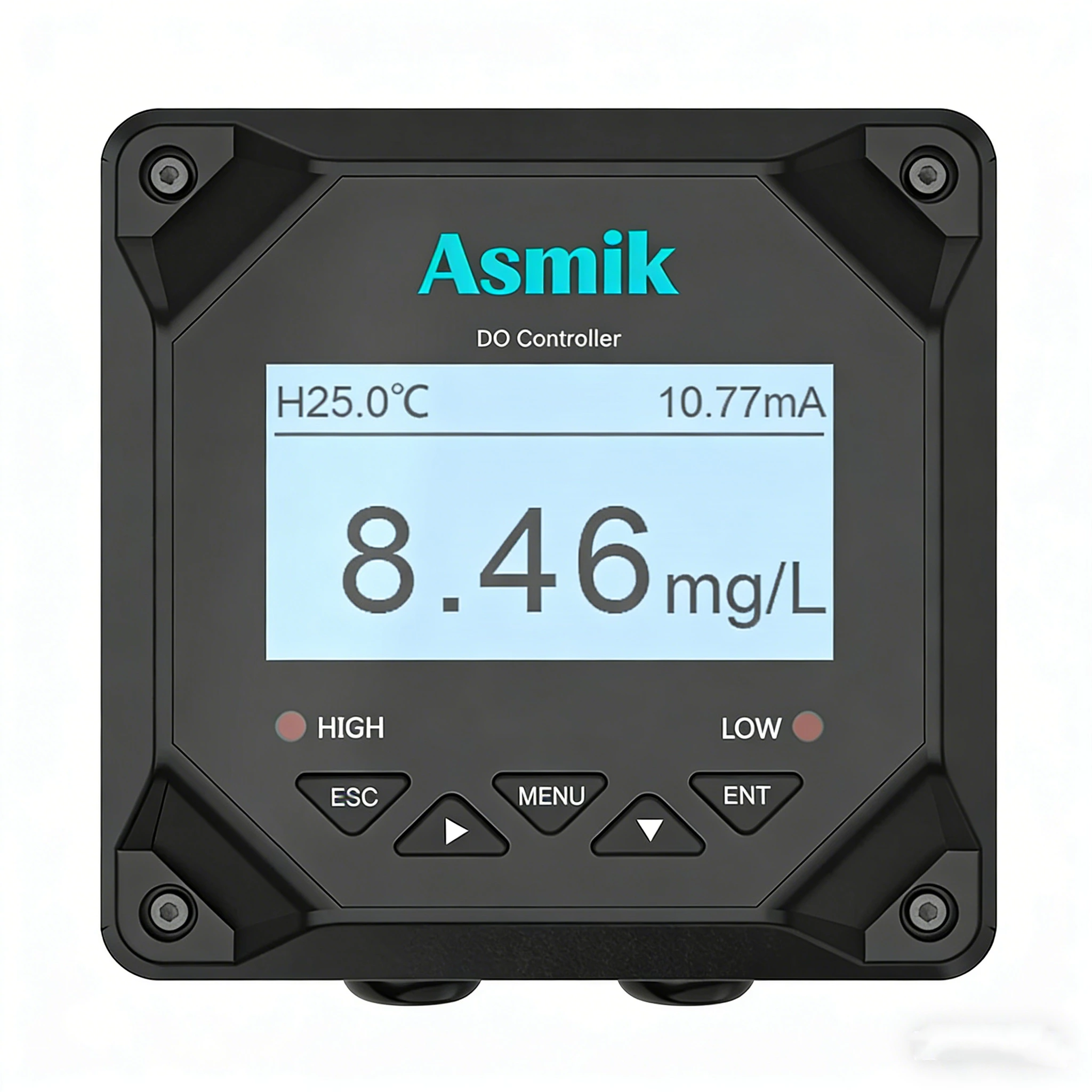
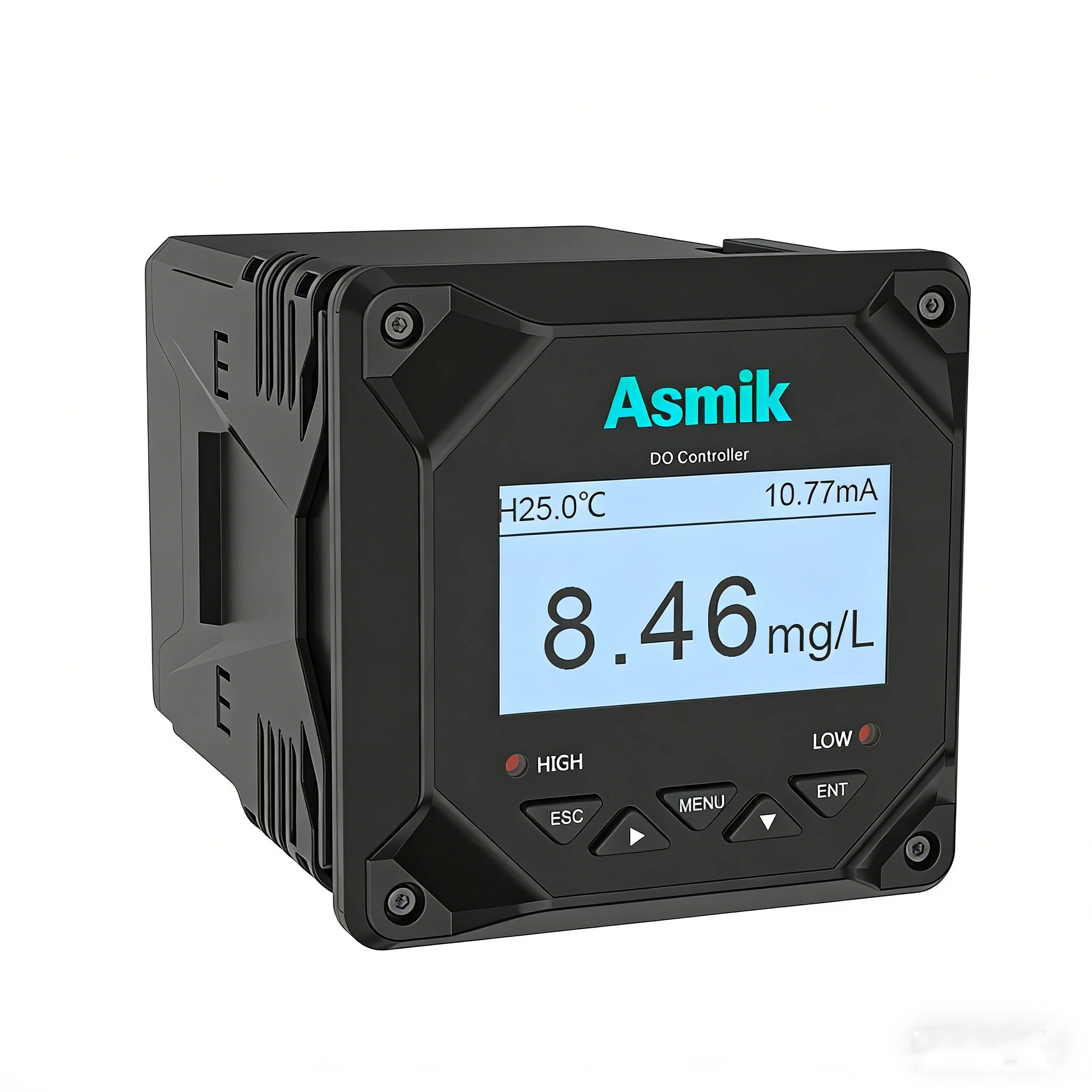
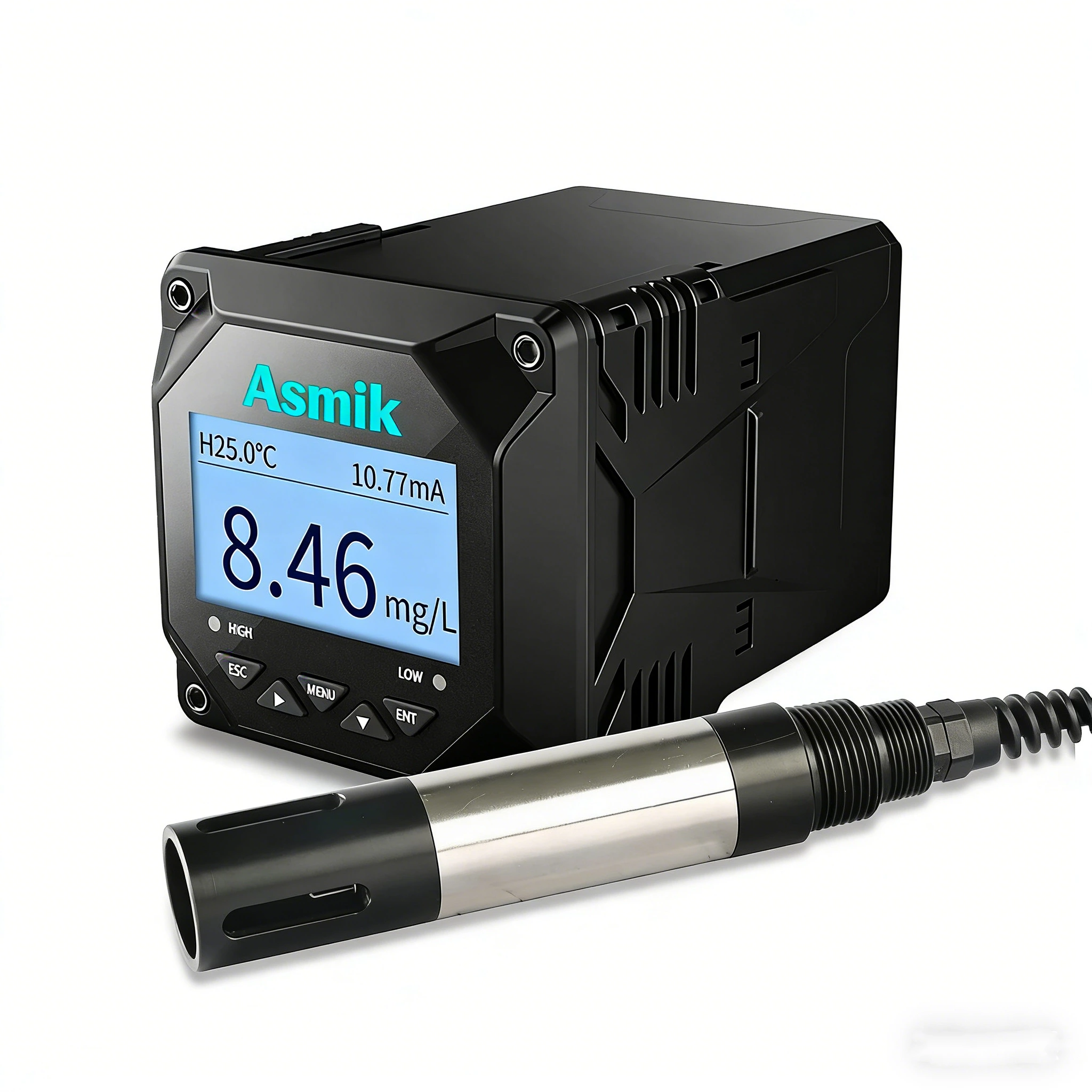
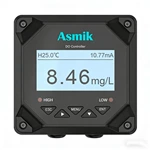
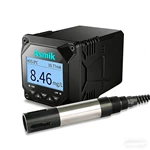
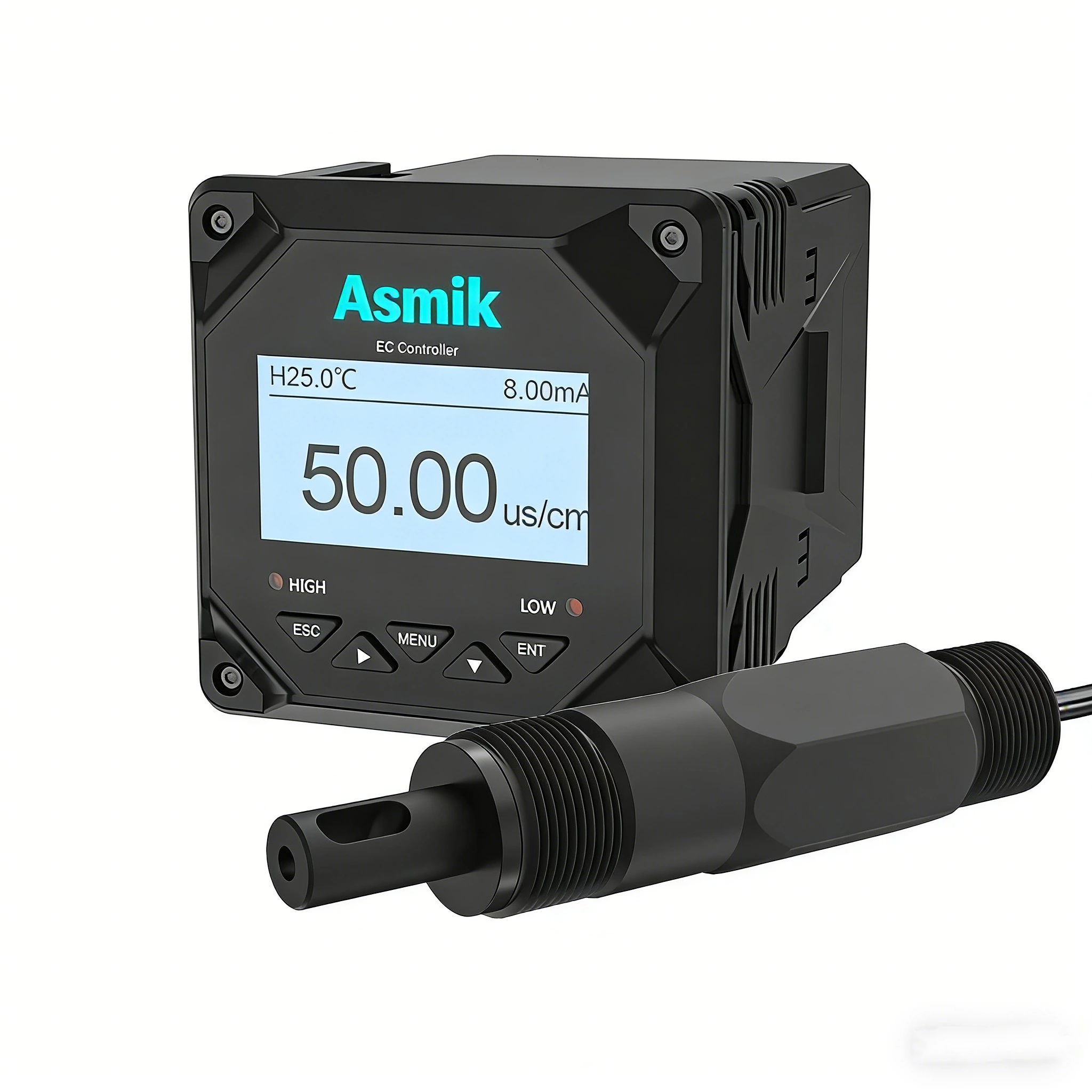
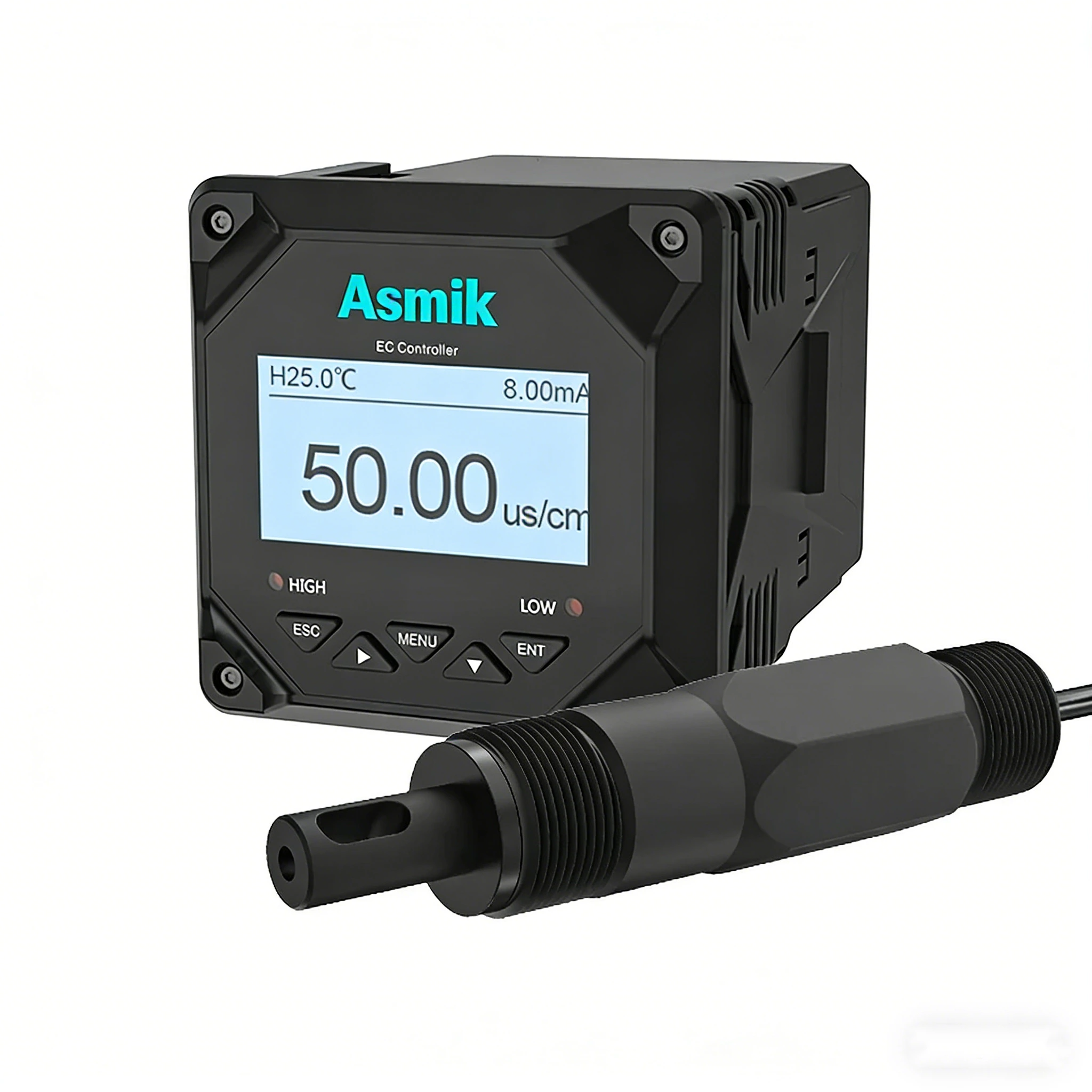
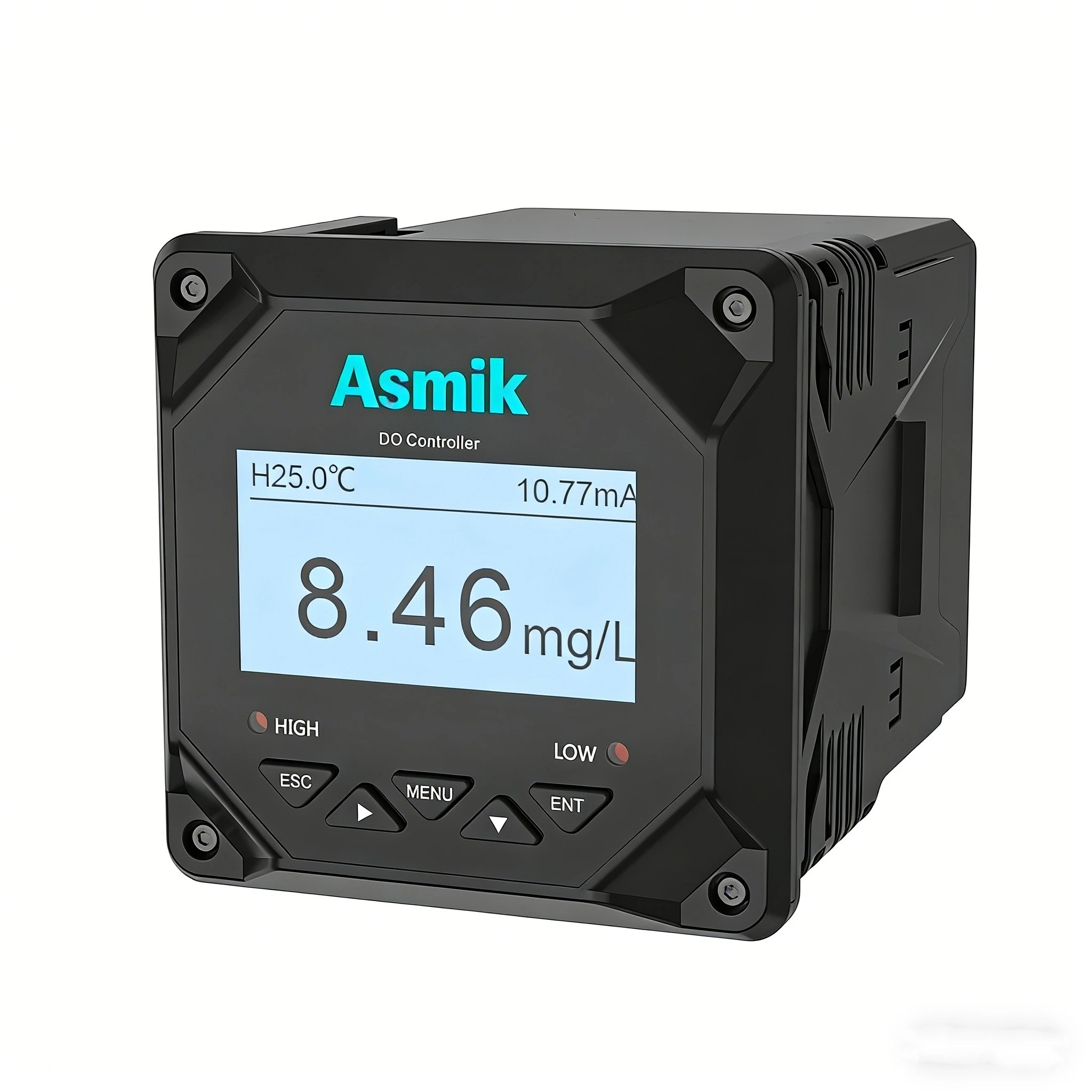
MIK-DM2800 Membrane dissolved oxygen meter

MIK-DM2800 Membrane type dissolved oxygen is the measure of oxygen dissolved in an aqueous solution. Polarographic measurement principle, the dissolution value depends on the temperature of the aqueous solution, pressure and salinity in solution. The meter uses a liquid crystal display for measuring and displaying DO and medium temperature values, with analog and digital signal outputs and control functions.

Characteristics

Range: 0-20mg/L,0-200%,0-400hPa

Resolution: 0.01mg/L,0.1%,1hPa

Output signal: 4~20mA; Relay; RS485

Power supply: AC220V±10%; 50Hz/60Hz
Specification

  • Specification

  Product  Dissolved Oxygen meter(Membrane type)
  Model MIK-DM2800
  Measure range 0-20mg/L,0-200%,0-400hPa,-10~60℃
  Resolution 0.01mg/L,0.1%,1hPa
  Accuracy ±1.5%FS
 Temperature Type NTC 10k/PT1000
 Auto A/manual H -10-60℃ Resolution; 0.1℃ Correction
 Correction accuracy ±0.5℃
 Output Type 1 4-20mA output
 Max.loop resistance 750Ω
 Repeatblitiy ±0.5%FS
 Output Type 2 RS485 digital signal output
 Communication protocol Standard MODBUS-RTU(customizable)
 Power supply AC220V±10%50Hz/60Hz 5W Max 50Hz/60Hz
 Alarm relay AC250V,3A
 Relative humidity  (10~85)%RH
 Operation temperature  0~60℃
 Storage condition  Temperature:15~65℃  Relative humidity:(5~95)%RH
 Dimension 100mm*100mm*150mm(H*W*D)
 Ingress protection IP54
 Weight 0.65kg


  • FAQ

1. What is the MIK-DM2800 dissolved oxygen meter?

The MIK-DM2800 is an online dissolved oxygen (DO) meter for membrane-type (polarographic) DO sensors. It uses a liquid crystal display to show DO and medium temperature, and provides 4–20 mA, RS485 and relay outputs with control functions.

2. How does membrane (polarographic) DO measurement work?

Oxygen from the water diffuses through a gas-permeable membrane into the sensor, where it is reduced at the cathode. The resulting current is proportional to the oxygen partial pressure, which the meter converts into a DO value. Because oxygen solubility depends on temperature, pressure and salinity, these factors affect the reading.

3. What are the measuring ranges?
  • Dissolved oxygen: 0–20 mg/L
  • Saturation: 0–200%
  • Oxygen partial pressure: 0–400 hPa
  • Temperature: -10 to 60 °C
4. What are the resolution, accuracy and repeatability?
  • Resolution: 0.01 mg/L, 0.1%, 1 hPa; temperature 0.1 °C
  • Accuracy: ±1.5% FS
  • Repeatability: ±0.5% FS
  • Temperature correction accuracy: ±0.5 °C
5. What temperature sensors and compensation modes are supported?

The meter supports NTC10K or PT1000 temperature sensors, with automatic or manual temperature compensation from -10 to 60 °C.

6. Does it compensate for salinity and atmospheric pressure?

Oxygen solubility depends on salinity and pressure as well as temperature. Please tell us your water salinity and site altitude so we can confirm the compensation settings for your application.

7. What outputs are available?
  • Analog output: 4–20 mA, maximum loop resistance 750 Ω
  • Digital output: RS485, standard Modbus-RTU (customizable)
  • Alarm relay: AC 250 V, 3 A
8. Can it control aeration?

Yes. The alarm relay can switch a blower or aerator at set points, and the 4–20 mA output can be used by a PLC or VFD for continuous aeration control, which helps save energy in wastewater treatment.

9. What power supply is required?

AC 220 V ±10%, 50/60 Hz, 5 W max.

10. What are the dimensions, weight and protection rating?
  • Dimensions: 100 × 100 × 150 mm (H × W × D)
  • Weight: 0.65 kg
  • Ingress protection: IP54
11. What environmental conditions are required?
  • Operating temperature: 0–60 °C
  • Relative humidity: 10%–85% RH
  • Storage: 15–65 °C, 5%–95% RH
12. Which sensor should I use with the MIK-DM2800?

The MIK-DM2800 is designed for membrane-type DO sensors, such as the MIK-DO7011 membrane dissolved oxygen sensor. Please confirm sensor compatibility with us before ordering.

13. Membrane or optical DO meter: which should I choose?

A membrane (polarographic) system is a proven, cost-effective technology, but requires periodic membrane and electrolyte maintenance and a minimum water flow at the membrane. An optical system such as the MIK-DO700 consumes no oxygen, has no flow requirement and needs less maintenance.

14. What maintenance does a membrane DO system need?
  • Clean the membrane regularly and replace the membrane and electrolyte as needed.
  • Allow a polarization period after installation or maintenance before taking readings.
  • Recalibrate after maintenance, for example in air or a zero-oxygen solution.
  • Make sure there is sufficient water movement across the membrane.
15. How is the meter calibrated?

DO systems are generally calibrated in water-saturated air (100% saturation) and, if required, in a zero-oxygen solution. Please follow the calibration procedure in the manual.

16. Where is the MIK-DM2800 used?

Typical applications include aeration tanks and effluent monitoring in wastewater treatment, water plants, aquaculture and industrial water.

17. What information should I provide to get a quotation?

To help us select the correct configuration, please provide:

  • Application and installation point
  • DO range, water temperature and salinity
  • Whether a sensor is required
  • Output and relay requirements
  • Installation environment
  • Quantity

Send your requirements to info@asmik.com or contact us via WhatsApp at +86 13325716921.

Features

Benefits

  • Optical/fluorescence measurement technology, oxygen-free
  • Automatic temperature compensation and stable output
  • Good communication compatibility (Modbus, standard signals)
  • Strong adaptability to field environments
  • High accuracy and fast response
  • Low maintenance cost and easy to use

Automated &factory

Need more information?

Contact us for more details about our solutions and services

This site uses cookies

We use cookies to collect information about how you use this site. We use this information to make the website work as well as possible and improve our services.