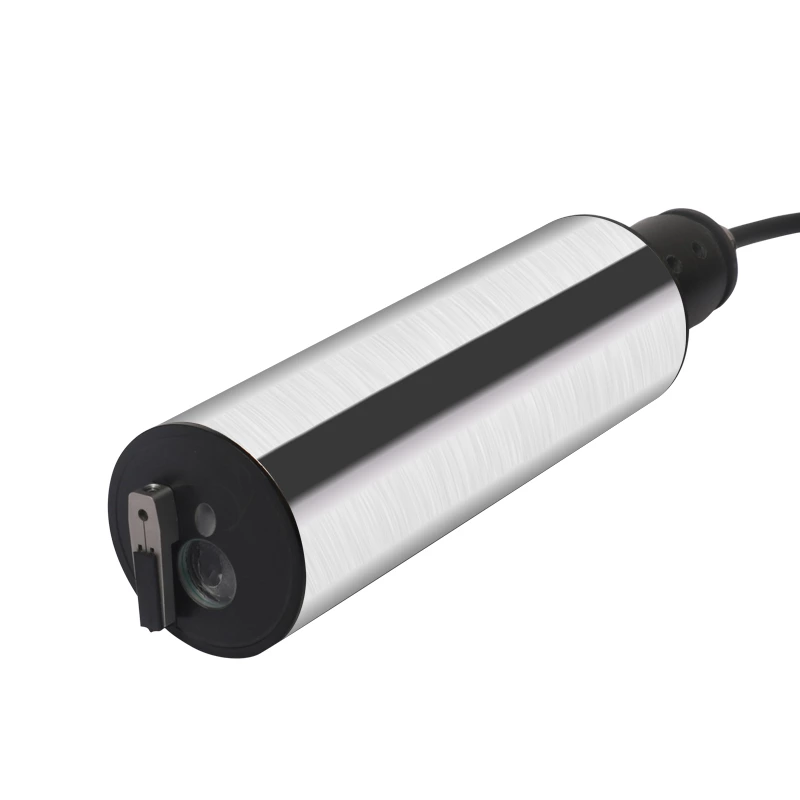
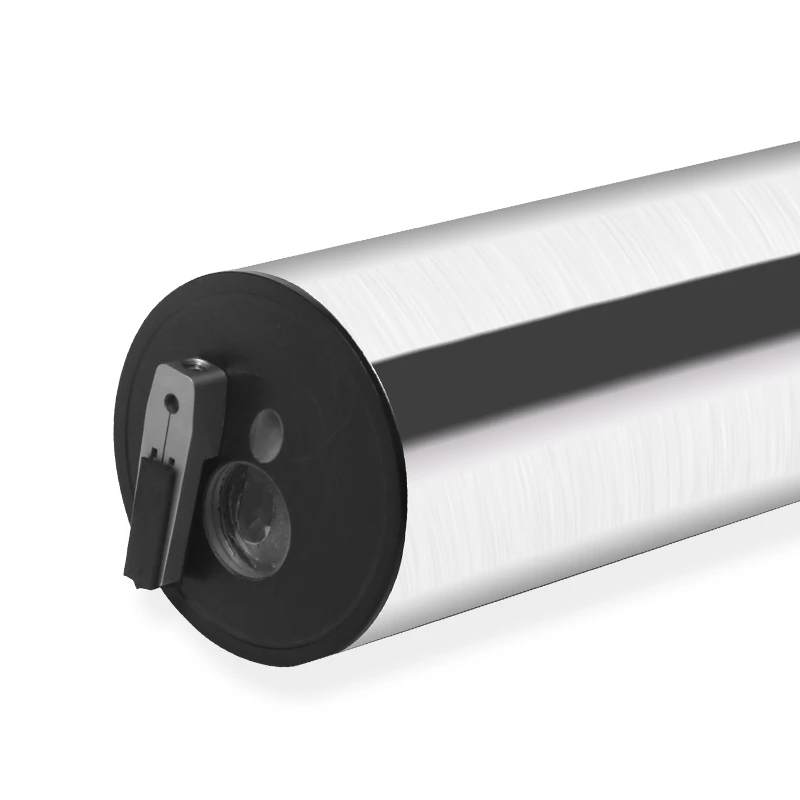
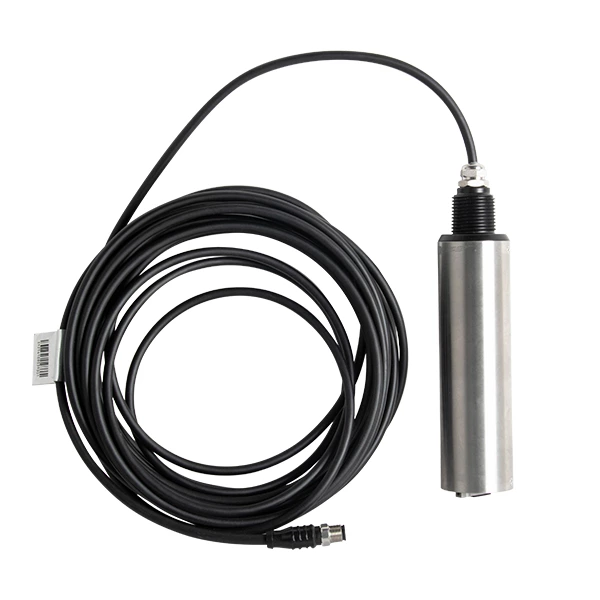
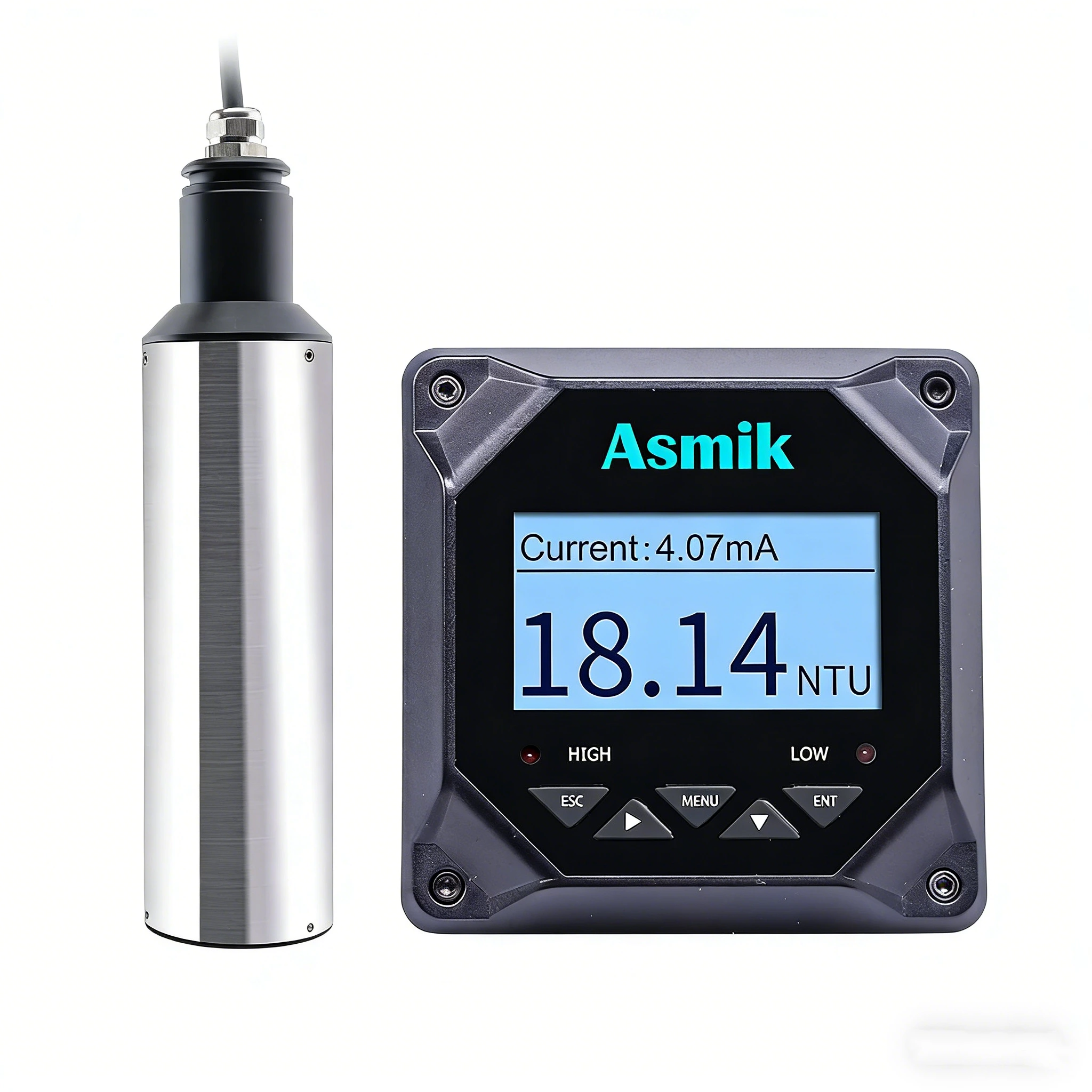
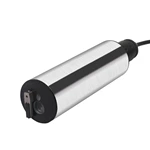
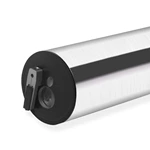
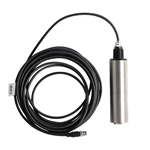
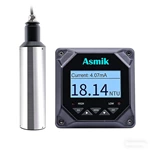
Specification
| Product |
Turbidity sensor |
| Model |
MIK-PTU8011 |
| Measure range |
0.01-4000 NTU |
| Indication resolution |
Less than ± 2% of the measured value, |
| |
or ± 0.1 NTU Maximax criterion |
| Pressure range |
≤0.4 MPa |
| Flow velocity |
≤2.5m/s, 8.2ft/s |
| Environment temp |
0~45℃ |
| Calibration |
Sample Calibration, Slope Calibration |
| Cable length |
Standard 10-Meter Cable, Max Length: 100 Meters |
| High voltage baffle |
Aviation Connector, Cable Connector |
| Main materials |
Main Body:SUS316L (Ordinary Version) |
| |
Titanium Alloy (Seawater Version) |
| |
Upper and Lower Cover: POM; Cable: PUR |
| Ingress protection |
IP68/NEMA6P |
| Weight |
1.65 KG |
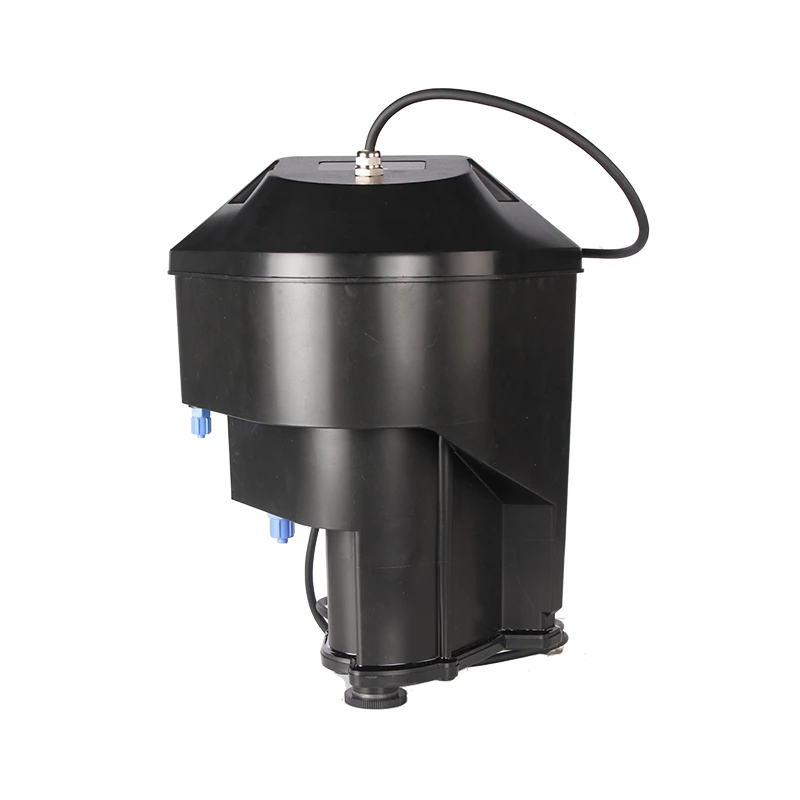
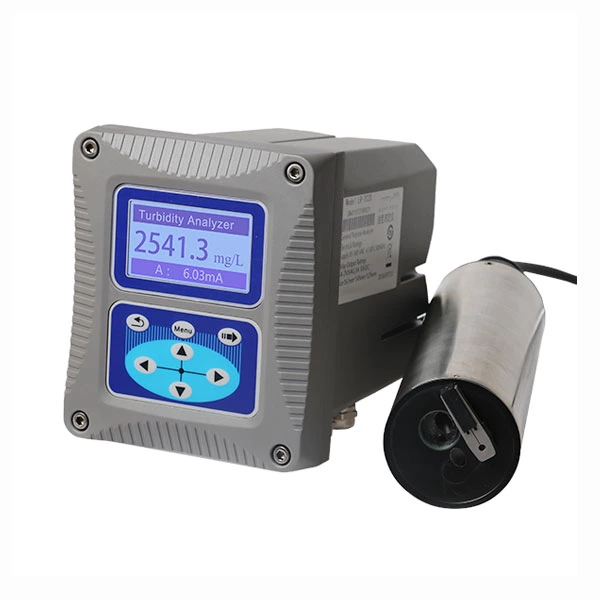
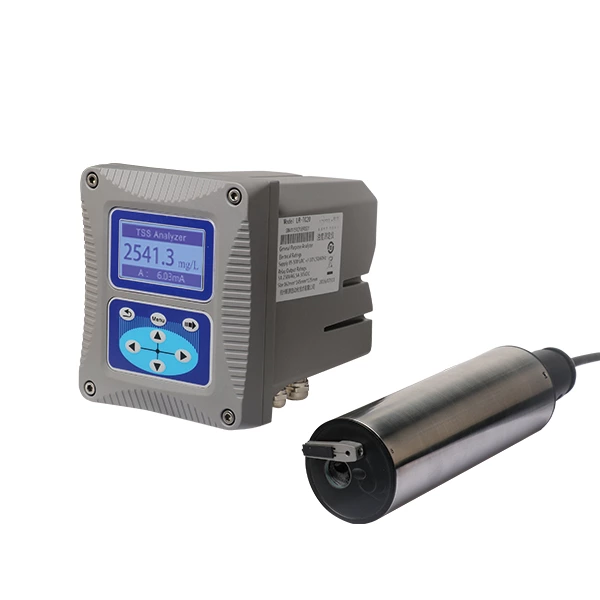
The MIK-PTU-8011 turbidity sensor is a type of process control instrument used to measure the degree of cloudiness or haziness of a liquid sample. It is commonly used in water treatment plants, food and beverage processing, and other industrial applications where water quality is critical. The key features of a turbidity sensor include its ability to detect minute particles and suspended solids in the liquid sample, and its high accuracy and sensitivity.
The main advantage of a turbidity sensor is its ability to provide real-time measurements of water quality, allowing for immediate corrective actions to be taken if the turbidity levels exceed acceptable limits. This helps to ensure that the water is safe and suitable for its intended use. Turbidity sensors also require minimal maintenance, making them a cost-effective solution for long-term monitoring of water quality.
Turbidity sensors are commonly used in water treatment plants to monitor the effectiveness of the treatment process and ensure that the water meets regulatory standards. They are also used in food and beverage processing to monitor the clarity of liquids and ensure that they are free from contaminants. In addition, turbidity sensors are used in industrial applications such as mining, where they are used to monitor the clarity of process water and ensure that it is suitable for use in the production process.
1. What is the MIK-PTU-8011 turbidity sensor?
The MIK-PTU-8011 is an online turbidity sensor based on the infrared absorption scattered light method combined with ISO 7027. It measures from 0.01 to 4000 NTU and is used in water treatment plants, food and beverage processing, mining and other industrial applications.
2. How does it measure turbidity?
It uses infrared double scattering light technology based on ISO 7027. Infrared light is directed into the water, and the light scattered by suspended particles is measured. Because infrared light is used, the turbidity measurement is not affected by the color (chroma) of the water.
3. What is the measuring range?
The measuring range is 0.01–4000 NTU, covering clean water through to heavily loaded wastewater and process water.
4. How accurate is the MIK-PTU-8011?
The deviation is less than ±2% of the measured value or ±0.1 NTU, whichever is greater.
5. What pressure and flow velocity can it handle?
- Pressure: ≤0.4 MPa
- Flow velocity: ≤2.5 m/s (8.2 ft/s)
6. What environmental temperature is allowed?
The environment temperature range is 0–45 °C.
7. Is a self-cleaning function available?
Yes. Depending on the usage environment, the MIK-PTU-8011 can be equipped with a self-cleaning function to keep the optical window clean.
8. Does it have self-diagnosis?
Yes. The built-in self-diagnosis function helps ensure that accurate data is delivered and supports stable, reliable performance.
9. How is the sensor calibrated?
Sample calibration and slope calibration are supported. Installation and calibration are designed to be simple.
10. What materials are used?
- Main body: SUS316L (ordinary version) or titanium alloy (seawater version)
- Upper and lower covers: POM
- Cable: PUR
11. Can it be used in seawater?
Yes. Choose the titanium alloy seawater version for seawater and other corrosive applications.
12. What cable and connector options are available?
- Cable: 10 m standard, up to 100 m
- Connection: aviation connector or cable connector
13. What are the protection rating and weight?
- Ingress protection: IP68 / NEMA 6P
- Weight: 1.65 kg
14. What output and power supply does it use?
Please tell us the controller or system you plan to connect, and our team will confirm the output signal, power supply and a suitable transmitter, such as the MIK-PTU200 turbidity meter or the MIK-DC2000.
15. How should the sensor be installed?
- Install the sensor in a representative, well-mixed location with flow velocity not exceeding 2.5 m/s.
- Avoid positions with heavy air bubbles and direct sunlight on the optical window.
- Keep the optical window away from tank walls and the bottom to avoid reflections.
- Use a mounting bracket and make sure the sensor can be removed for inspection.
16. How is the MIK-PTU-8011 different from the MIK-PTU-8010?
- MIK-PTU-8011: 0.01–4000 NTU; accuracy <±2% or ±0.1 NTU; IP68; aviation or cable connector; self-cleaning optional.
- MIK-PTU-8010: 0.01–3000 NTU; dual-beam infrared; standard RS485/Modbus digital output; R1 thread; electrode scraper optional.
17. What information should I provide to get a quotation?
To help us select the correct configuration, please provide:
- Application and expected turbidity range
- Water type (fresh water or seawater)
- Flow velocity and pressure at the installation point
- Whether self-cleaning is required
- Cable length and connector type
- Controller or system to connect
- Quantity
Send your requirements to info@asmik.com or contact us via WhatsApp at +86 13325716921.