Specification
| Product |
Electromagnetic flow meter |
| Model |
MIK-LDG |
| Diameter nominal |
DN15~DN1200 |
| Nominal pressure |
DN15 - DN250, PN ≤1.6MPa |
| DN300 - DN1000, PN ≤1.0MPa |
| DN1200, PN ≤0.6 MPa |
| Higher pressure can be customized |
| Accuracy |
±0.5% F.S. (Flow speed > 1m/s); ±0.5% F.S.±2mm/s (Flow speed <1m/s) |
| Repetitiveness |
0.16% |
| Liner material |
Neoprene (CR), Polyurethane (PU), PTFE (F4), PFEP (F46), PFA |
| Electrode material |
316L Stainless Steel, Hastelloy C, Hastelloy B, Ti, Ta, Pt |
| Medium temperature |
Neoprene: -10…+60℃ Polyurethane: -10…+60℃ PTFE/FEP: -10…+120℃ PFA: -10…+120℃ |
| Power supply |
85-245VAC,50/60Hz, 22VDC-26VDC |
| Structure type |
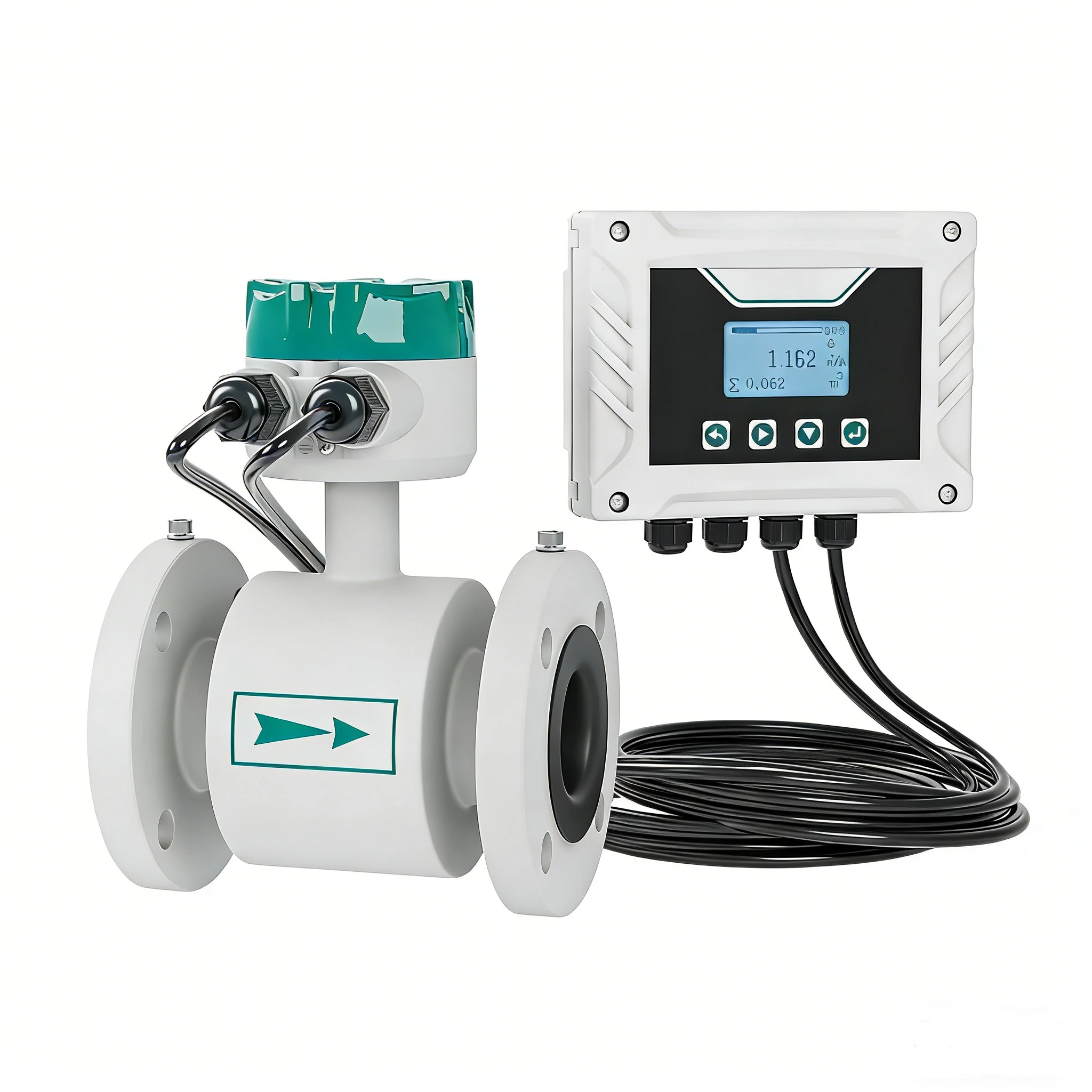
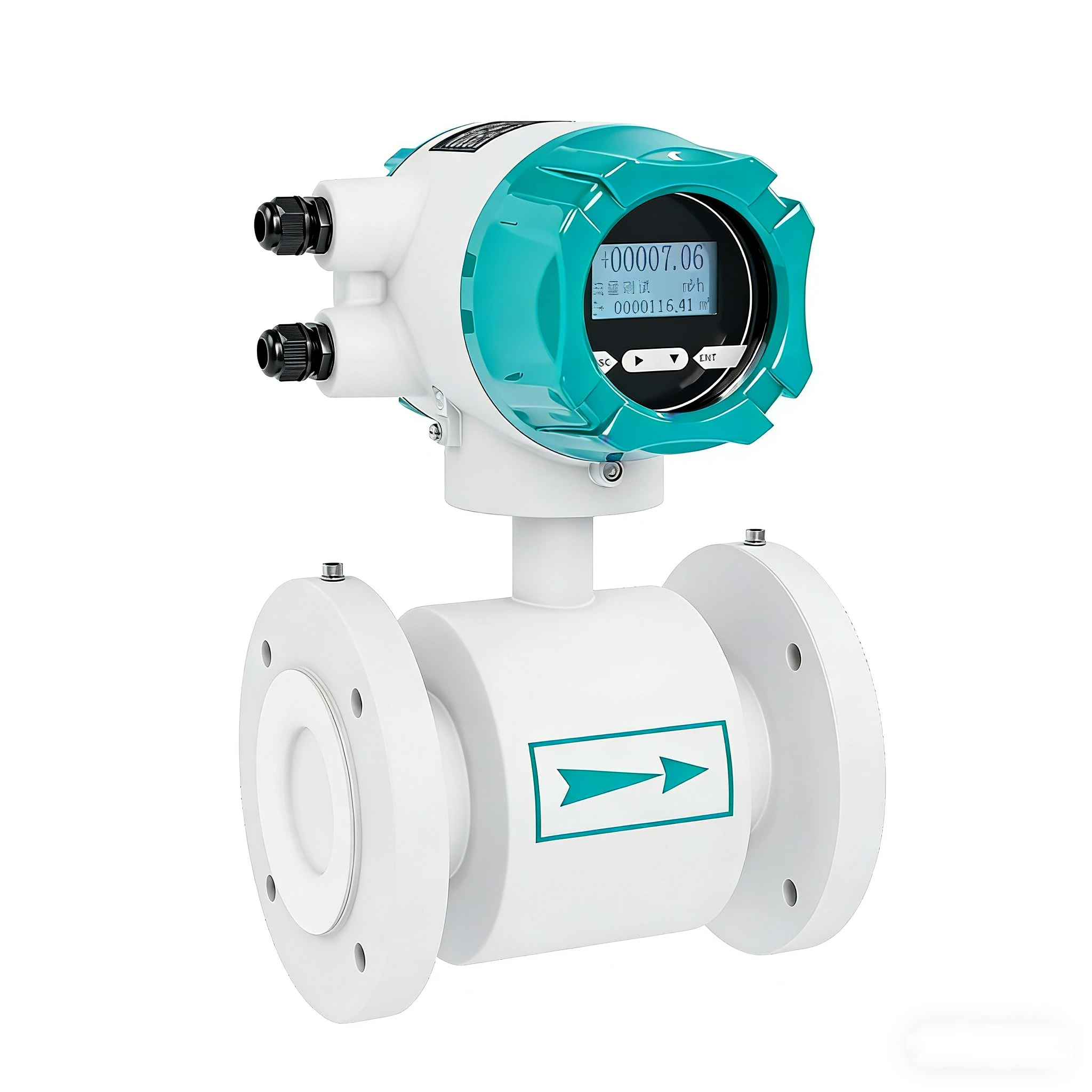
Compact type, Remote type |
| Ingress protection |
IP65, IP68(remote type only) |
| Product standard |
JB/T 9248-2015 |
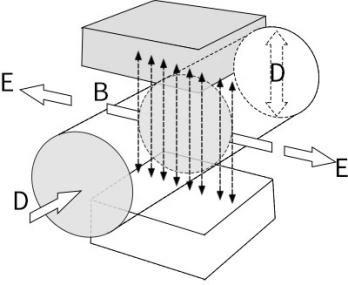
Mag meter works based on Faraday's law, when the liquid goes through the pipe at the flow rate of v with a diameter D, within which a magnetic flux density of B is created by an exciting coil, the following electromotive E is generated in proportion to flow speed v:
E=K×B×V×D
Where:
E-Induced electromotive force
K-Meter constant
B-Magnetic induction density
V-Average flow speed in cross-section of measuring tube
D-Inner diameter of measuring tube
1. What is the MIK-LDG carbon steel body electromagnetic flow meter?
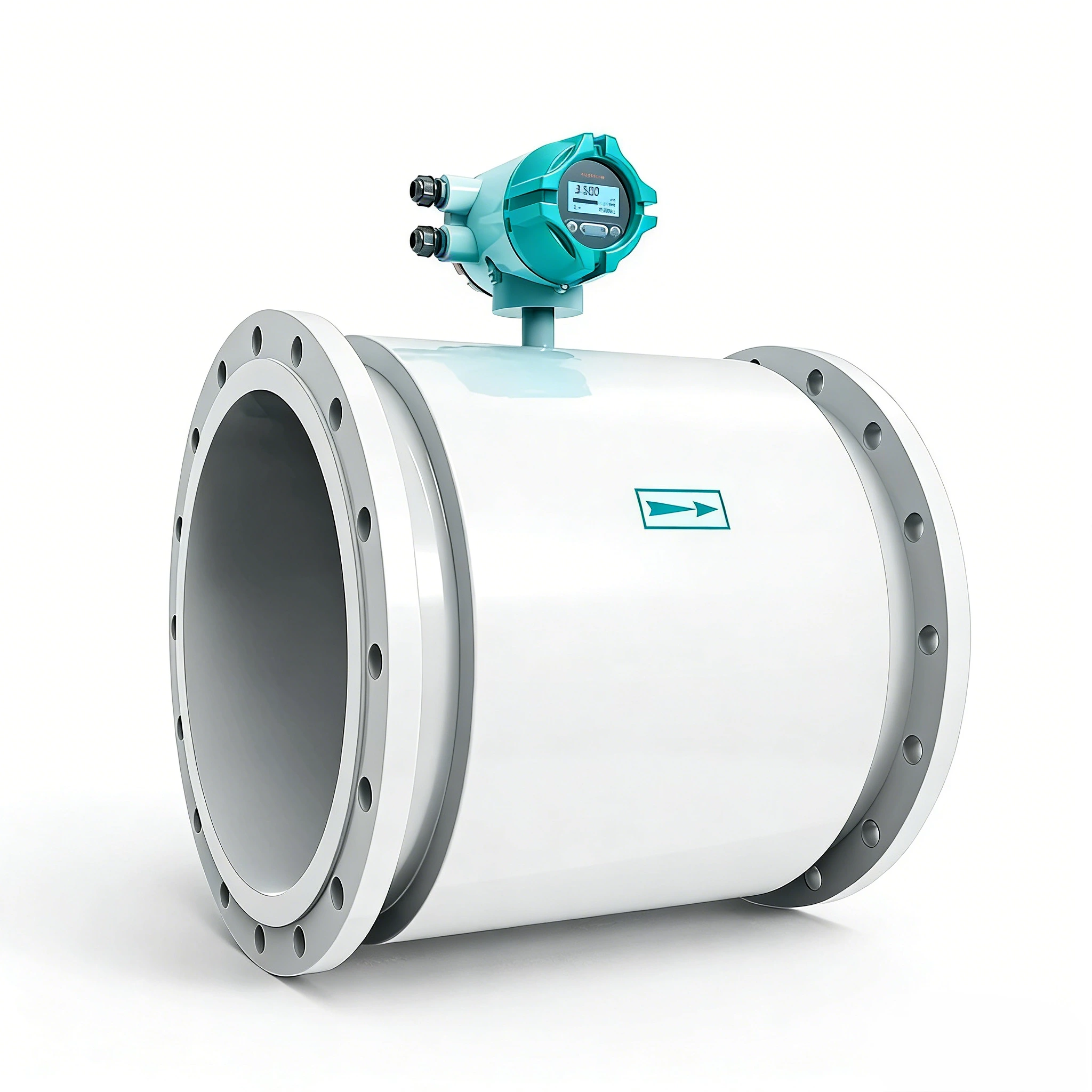
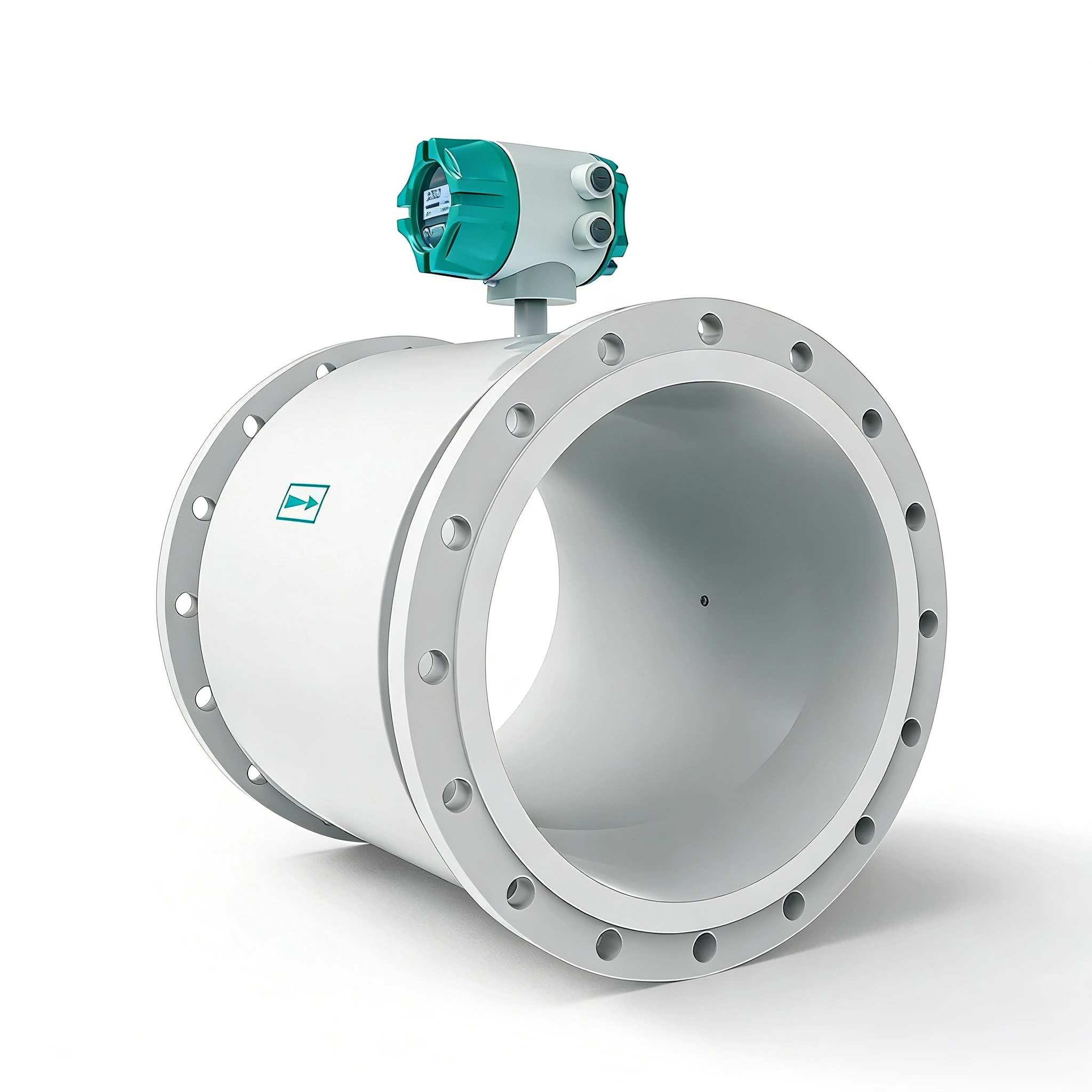
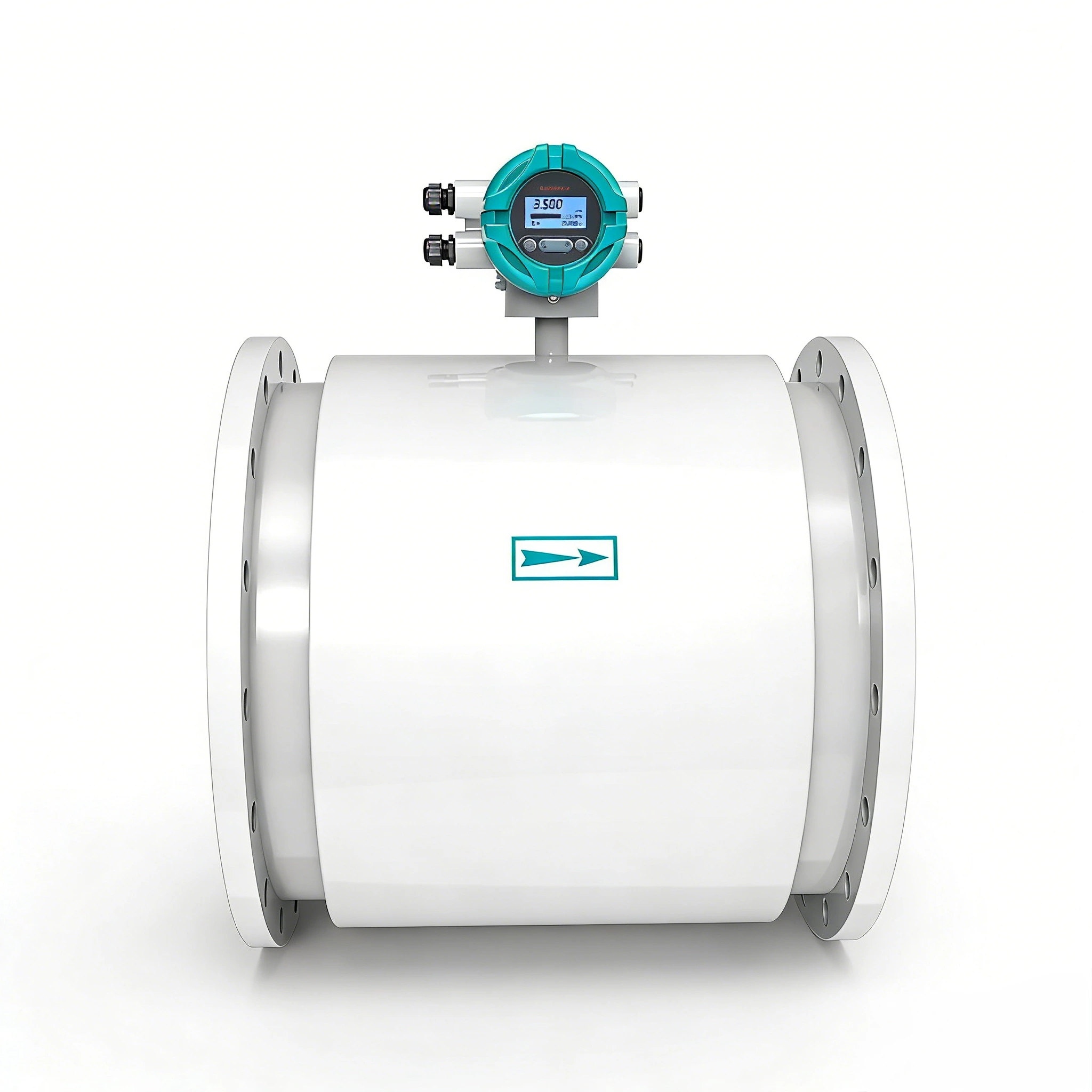
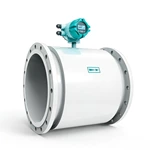
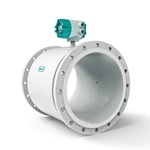
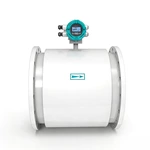
The MIK-LDG is a full-bore electromagnetic flow meter with a carbon steel body for measuring conductive liquids such as water, acids, alkalis and slurries. Typical uses include liquid monitoring, filling, dosing and precise measurement. It is available in compact and remote versions.
2. How does the MIK-LDG work?
It works on Faraday's law of electromagnetic induction. An exciting coil creates a magnetic field across the measuring tube. When a conductive liquid flows through it, an electromotive force is generated in proportion to the flow velocity:
E = K × B × V × D
where E is the induced electromotive force, K is the meter constant, B is the magnetic induction density, V is the average flow velocity and D is the inner diameter of the measuring tube.
3. What liquids can the MIK-LDG measure?
It can measure conductive liquids, including water, wastewater, acids, alkalis, slurries and many other process liquids. The liner and electrode materials must be selected to match the liquid. It cannot measure gases, steam or non-conductive liquids such as oils.
4. What is the minimum conductivity required?
5. What pipe sizes are available?
The MIK-LDG is available from DN15 to DN1200.
6. How accurate is the MIK-LDG?
- ±0.5% F.S. when flow velocity is above 1 m/s
- ±0.5% F.S. ±2 mm/s when flow velocity is below 1 m/s
- Repeatability: 0.16%
7. What is the turndown ratio?
The turndown ratio is 1:100.
8. What liner materials are available, and which should I choose?
- Neoprene (CR): -10 °C to +60 °C
- Polyurethane (PU): -10 °C to +60 °C
- PTFE (F4) / FEP (F46): -10 °C to +120 °C
- PFA: -10 °C to +120 °C
As a general guide, CR is commonly used for water and wastewater, PU for abrasive media such as slurries, and PTFE, FEP or PFA for corrosive chemicals and higher temperatures. Our engineers can confirm the best choice for your liquid.
9. What electrode materials are available?
Options include 316L stainless steel, Hastelloy C, Hastelloy B, titanium (Ti), tantalum (Ta) and platinum (Pt). 316L is commonly used for water and mildly corrosive liquids, while Hastelloy, titanium, tantalum and platinum are used for more corrosive media. Please send us the liquid name and concentration so we can recommend a suitable electrode.
10. What pressure ratings are available?
- DN15–DN250: PN ≤1.6 MPa
- DN300–DN1000: PN ≤1.0 MPa
- DN1200: PN ≤0.6 MPa
Higher pressure ratings can be customized.
11. What power supply does the MIK-LDG require?
AC: 85–245 VAC, 50/60 Hz. DC: 22–26 VDC.
12. Is it available in compact and remote versions?
Yes. The compact type has the transmitter mounted on the sensor. The remote type separates the transmitter from the sensor, which is useful when the measuring point is hard to access, subject to vibration, or located in a pit or flood-prone area. See also the MIK-LDG Remote Type Electromagnetic Flowmeter.
13. What is the ingress protection rating?
IP65 is standard. IP68 is available for the remote type only.
14. Why choose a carbon steel body, and when should I choose stainless steel?
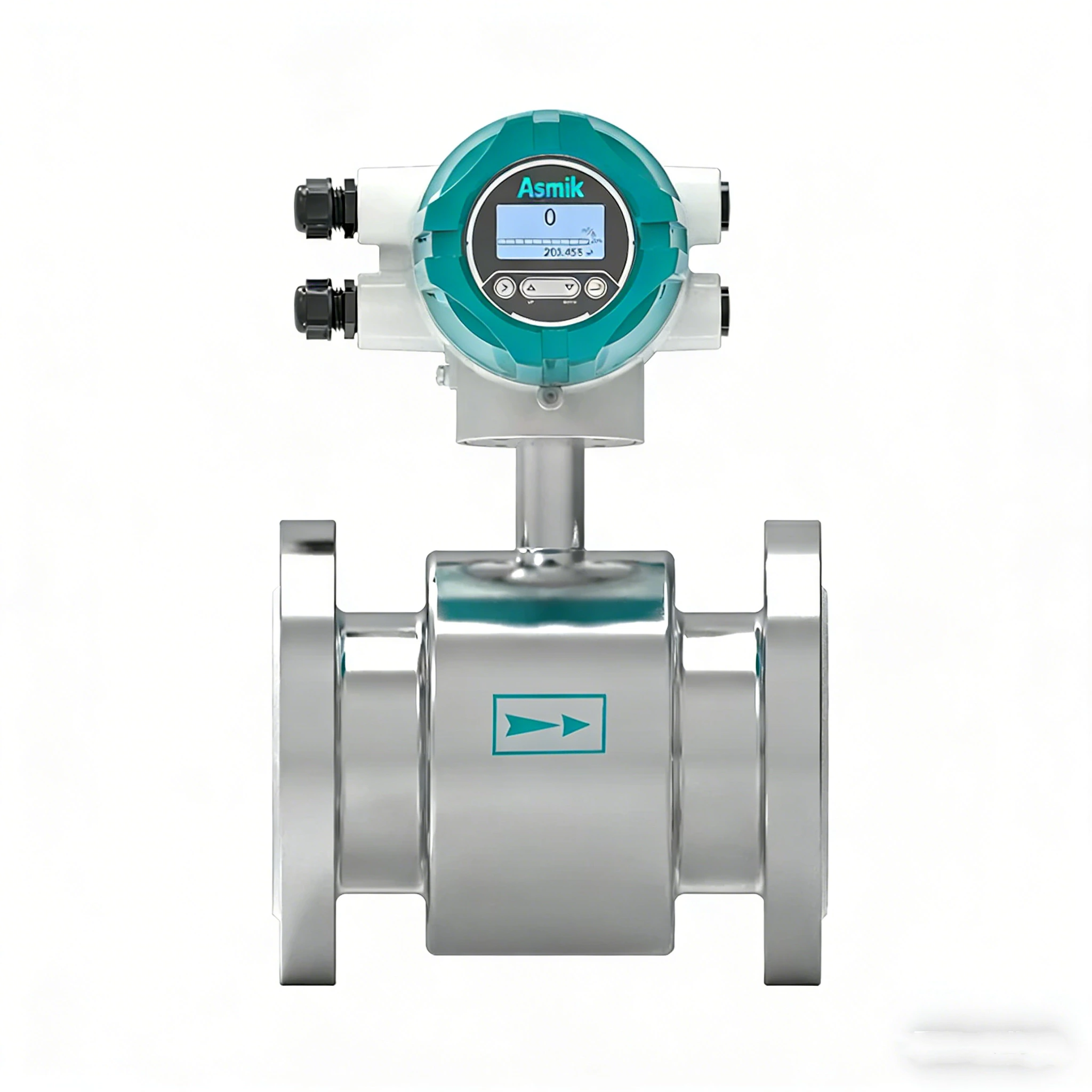
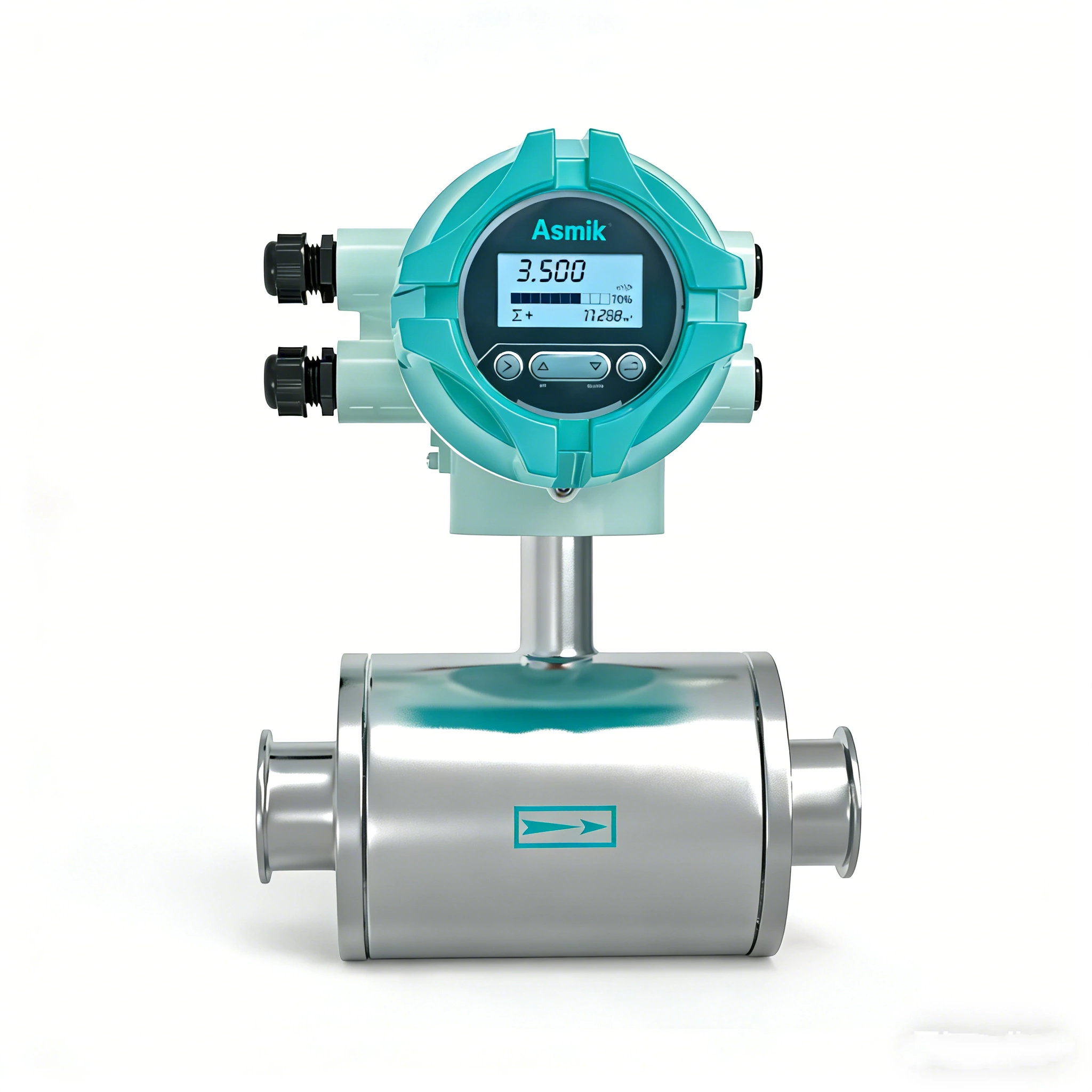
A carbon steel body is a cost-effective choice for water supply, wastewater and general industrial pipelines. For corrosive environments or where higher corrosion resistance of the body is required, consider the MIK-LDG Stainless Steel Body. For food processing, see the MIK-LDG Sanitary version. In all cases, the wetted parts (liner and electrodes) are selected according to the liquid.
15. Which standard does the MIK-LDG follow?
The MIK-LDG is manufactured according to the JB/T 9248-2015 standard for electromagnetic flowmeters.
16. Can the MIK-LDG be used for custody transfer?
The MIK-LDG is designed for precise measurement, including custody transfer applications. Custody transfer use usually requires metrological approval under local regulations. Please contact us to confirm the certificates available for your project.
17. What are the installation requirements?
- The measuring tube must always be completely full of liquid.
- Provide sufficient straight pipe upstream and downstream of the meter.
- Avoid the highest point of the pipeline; vertical pipes with upward flow are preferred.
- Ground the sensor properly for a stable signal.
- Keep away from strong magnetic fields and heavy vibration, or use the remote type.
Please follow the installation manual or contact our engineers for site-specific requirements.
18. Does the MIK-LDG need much maintenance?
No. It has no moving parts or flow obstructions, which virtually eliminates maintenance and pressure drop. It also supports bidirectional flow measurement. For liquids that form deposits, periodic electrode inspection is recommended.
19. What outputs and communication options are available?
Output and communication options depend on the configuration. Please tell us the signals your control system requires (for example 4–20 mA, pulse or digital communication), and we will confirm a suitable configuration.
20. Which industries use the MIK-LDG?
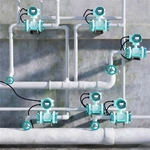
Typical industries include water and wastewater, chemical, food and beverage, power, pulp and paper, metals and mining, and pharmaceuticals.
21. What information should I provide to get a quotation?
To help us select the correct model, please provide:
- Liquid name, concentration and conductivity
- Flow range (min / normal / max)
- Pipe size and flange standard
- Liquid temperature and working pressure
- Presence of solids or abrasive particles
- Preferred liner and electrode materials (if known)
- Compact or remote type, and IP rating
- Power supply (AC or DC)
- Output and communication requirements, and quantity
Send your requirements to info@asmik.com or contact us via WhatsApp at +86 13325716921.