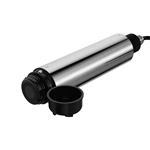
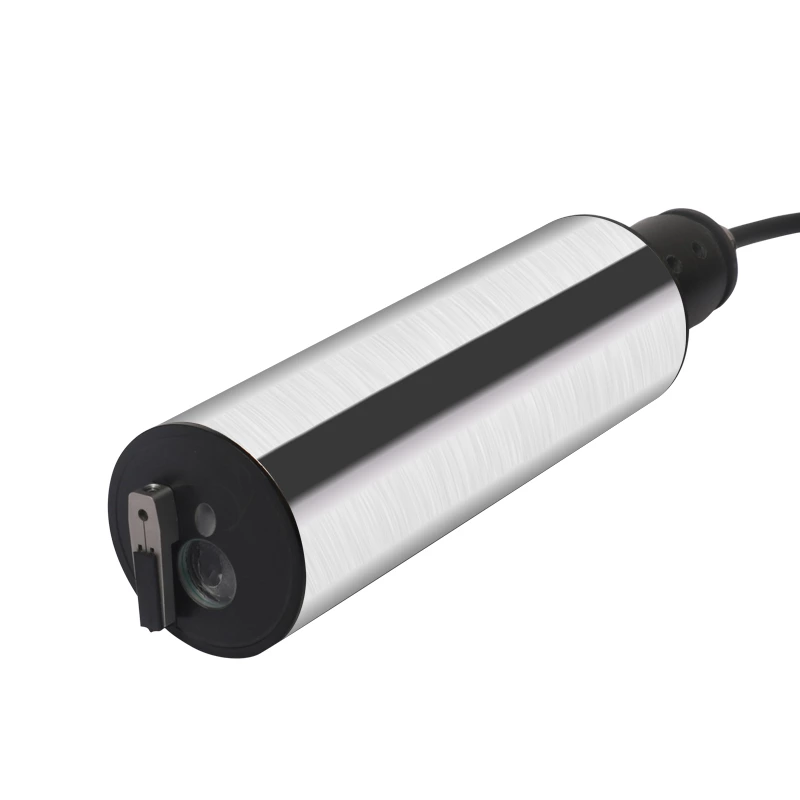
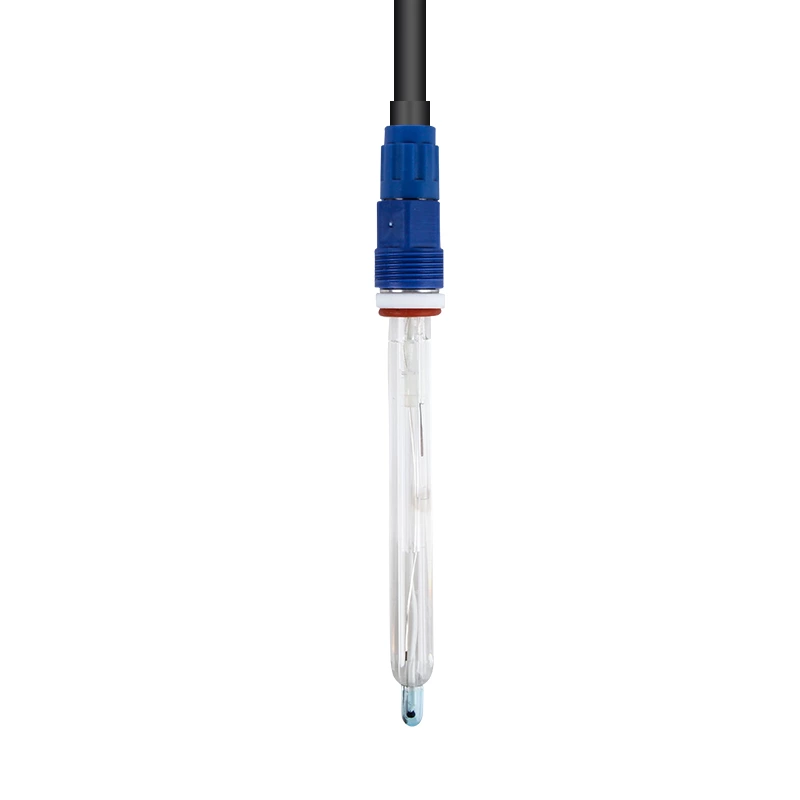
MIK-DO7012 Optical dissolved oxygen sensor

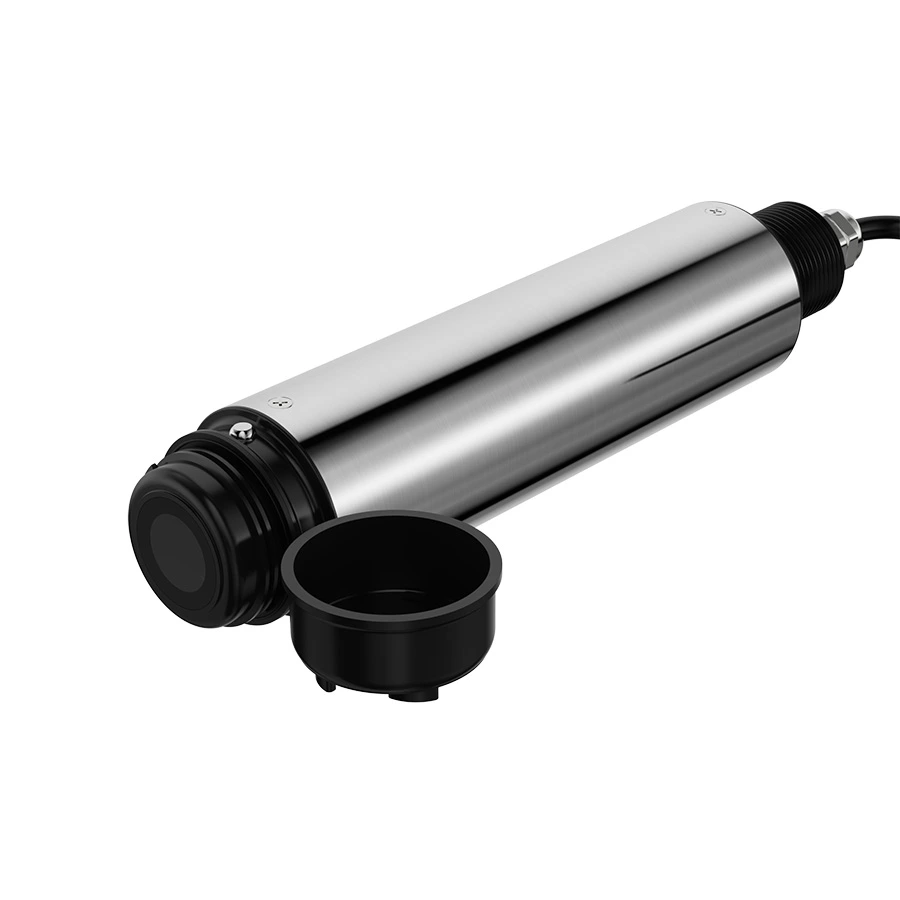
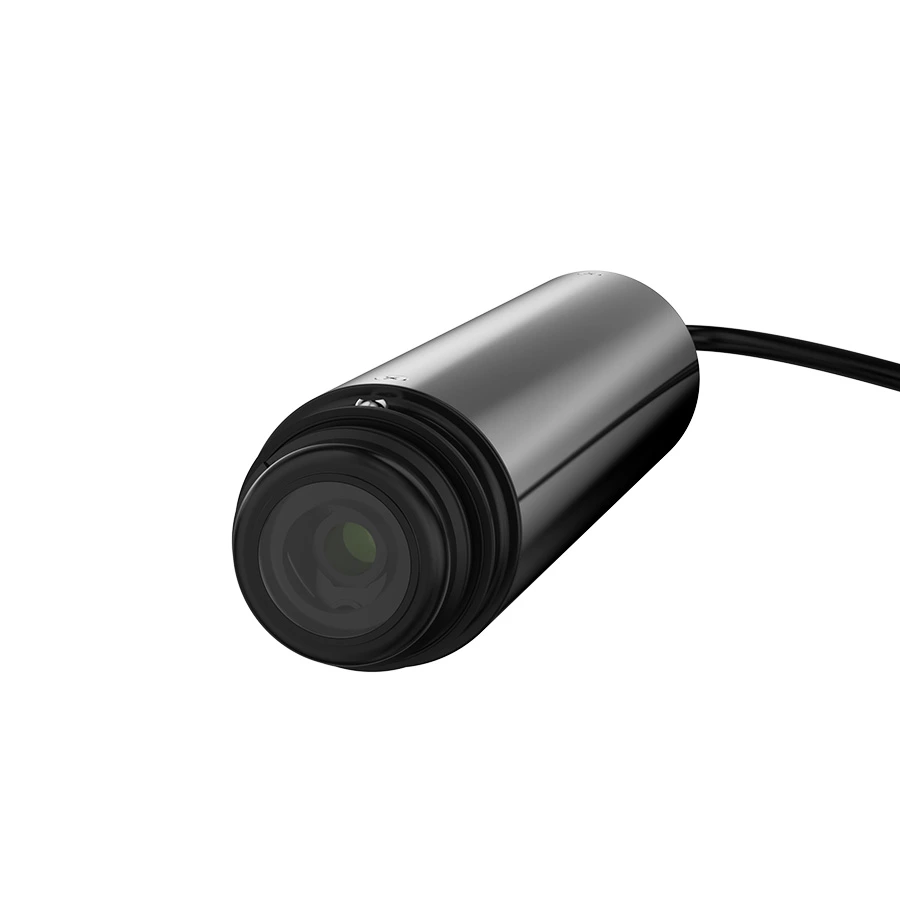
MIK-DO7012 Optical type dissolved oxygen sensor, an intelligent online chemical analyzer. The cap of the sensor is coated with a luminescent material. Blue light from an LED illuminates the luminescent chemical. The luminescent chemical instantly becomes excited and releases red light. The time and intensity of red light are inversely proportional to the concentration of oxygen molecules, So the concentration of oxygen molecules is calculated.

Characteristics

Range: 0-20mg/L,0~200%saturability,0-45deg C

Resolution: ±3%or±0.3mg/L, Temperature: ±0.5℃

Pressure range: ≤0.3Mpa

Power supply: (9~28)VDC
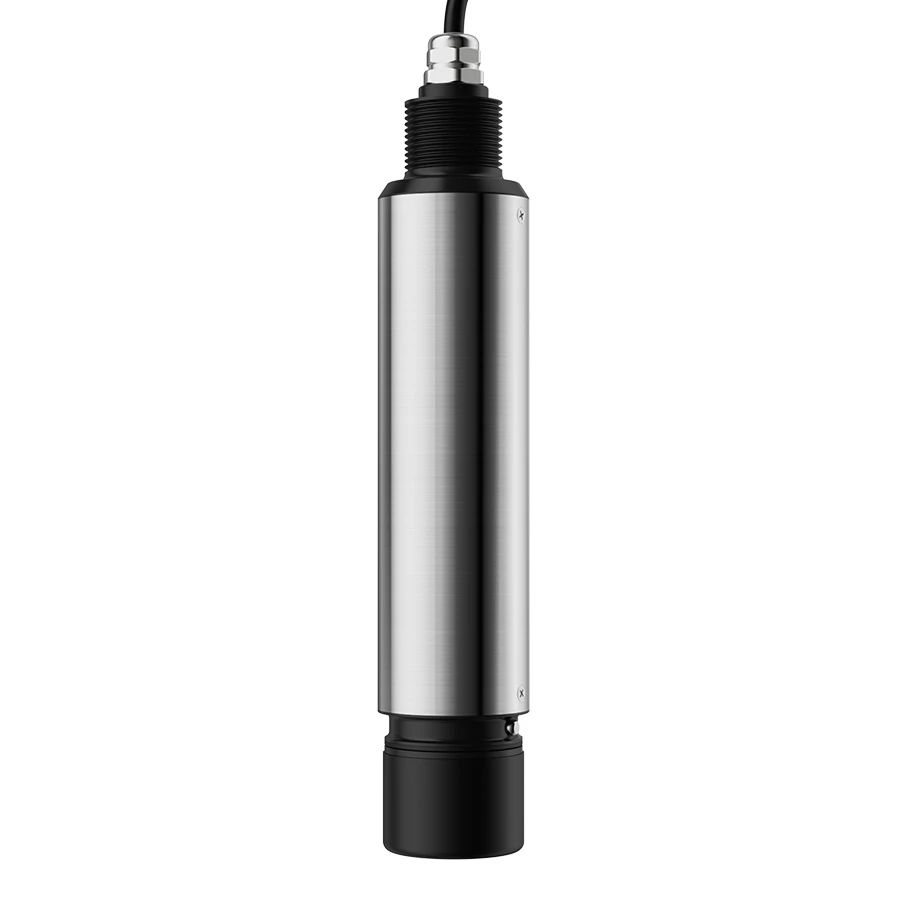
Specification

  • Specification

  Product  Dissolved oxygen sensor
  Model MIK-DO7012
  Measure range 0-20mg/L,0~200%saturability,0-45deg C
  Accuracy Resolution:±3%or±0.3mg/L, Temperature: ±0.5℃
  Pressure range ≤0.3Mpa
  Power supply  (9~28)VDC
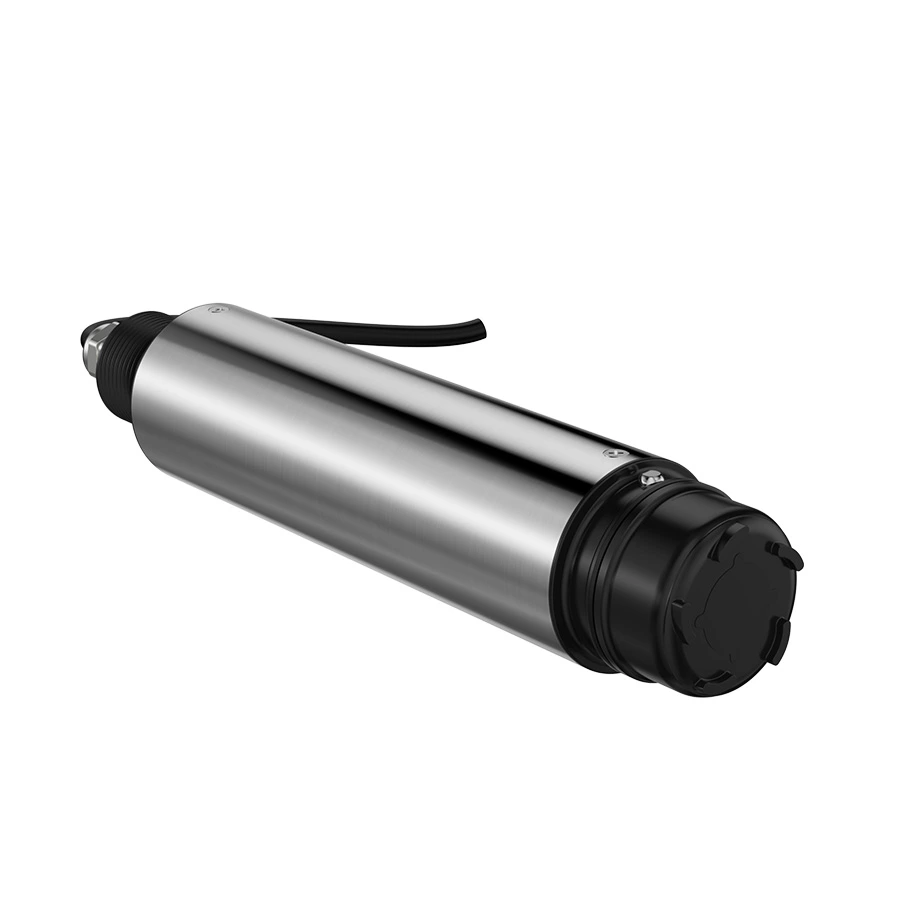
  Main material SUS316L(OrdinaryVersion) 
Titanium Alloy (Seawater Version)
Upanddowncover:PPS+glassfiber,Cable:PUR
  Cable length Standard 10-Meter Cable, Max : 100m
  Calibration Automatic air calibration,Sample calibration
  Storage Temperature -15~60℃
 Operation temperature 0~45℃
 Weight 1.4kg
 Ingress protection IP68/NEMA6P
 Communication Protocol MODBUSRS485


  • Communication Protocol

MODBUS-RTU
Baud Rate 4800/9600/19200/38400/57600
Data Bits 8 bit
Parity Check no
Stop Bit 1bit


Register Name Address Location Data Type Length Read/Write Description
Dissolved Oxygen Value 0 F(Float) 2 R(only read)  
Dissolved Oxygen Concentration 2 F 2 R  
Temperature 4 F 2 R  
Slope 6 F 2 W/R Range:0.5-1.5
Deviation Value 8 F 2 W/R Range:-20-20
Salinity 10 F 2 W/R  
Atmospheric Pressure 12 F 2 W/R  
Baud Rate 16 F 2 R  
Slave Address 18 F 2 R Range: 1-254
Response Time of Read 20 F 2 R  
Modift Baud Rate 16 Signed 1 W  
Modify Slave Address 17 Signed 1 W Range: 1-254
Modify Response Time 30 Signed 1 W 6-60s


  • FAQ

1. What is the MIK-DO7012 optical dissolved oxygen sensor?

The MIK-DO7012 is a digital optical (fluorescence) dissolved oxygen sensor with RS485 Modbus-RTU output. It measures DO, saturation and temperature, and is available in an ordinary SUS316L version and a titanium alloy seawater version.

2. How does the optical measurement work?

The sensor cap is coated with a luminescent material. Blue light from an LED illuminates it, and the material becomes excited and emits red light. The time and intensity of the red light are inversely related to the oxygen concentration, so the DO value can be calculated.

3. What are the measuring ranges?
  • Dissolved oxygen: 0–20 mg/L
  • Saturation: 0–200%
  • Temperature: 0–45 °C
4. How accurate is the MIK-DO7012?
  • Dissolved oxygen: ±3% or ±0.3 mg/L
  • Temperature: ±0.5 °C
5. What power supply does it need?

The sensor operates on 9–28 VDC.

6. What output and communication settings does it use?
  • Protocol: Modbus-RTU over RS485
  • Baud rate: 4800 / 9600 / 19200 / 38400 / 57600
  • Data bits: 8; parity: none; stop bits: 1
  • Slave address range: 1–254
7. What data can be read from the registers?
  • Address 0: dissolved oxygen value (float)
  • Address 2: dissolved oxygen concentration (float)
  • Address 4: temperature (float)
  • Address 6: slope (R/W, range 0.5–1.5)
  • Address 8: deviation value (R/W, range -20 to 20)
  • Address 10: salinity (R/W)
  • Address 12: atmospheric pressure (R/W)
  • Addresses 16, 18, 20: baud rate, slave address and read response time (read)
  • Addresses 17 and 30: modify slave address (1–254) and response time (6–60 s)

Please contact us for the complete communication manual.

8. Can salinity and atmospheric pressure compensation be set?

Yes. Salinity and atmospheric pressure are writable registers, so you can enter the salinity of your water and the local atmospheric pressure to improve DO accuracy in brackish water, seawater or at altitude.

9. How is the sensor calibrated?

The MIK-DO7012 supports automatic air calibration and sample calibration. Slope and deviation (offset) values can also be written via Modbus for fine adjustment.

10. What pressure can it withstand?

The pressure range is ≤0.3 MPa.

11. What materials are used?
  • Main body: SUS316L (ordinary version) or titanium alloy (seawater version)
  • Upper and lower covers: PPS + glass fiber
  • Cable: PUR
12. Can it be used in seawater?

Yes. Choose the titanium alloy seawater version, and set the salinity register to match your water for accurate readings.

13. What cable length is available?

A 10 m cable is standard, and cables up to 100 m are available.

14. What are the protection rating and environmental limits?
  • Ingress protection: IP68 / NEMA 6P
  • Operating temperature: 0–45 °C
  • Storage temperature: -15 to 60 °C
  • Weight: 1.4 kg
15. What are the advantages of an optical DO sensor?

Optical sensors consume no oxygen, have no flow rate requirement, need no electrolyte or membrane replacement, and offer stable output with low maintenance, which makes them well suited to long-term online monitoring.

16. What can the MIK-DO7012 be connected to?

It can be connected to any Modbus-RTU master, such as a PLC, SCADA system, data logger or IoT gateway. It can also be used with the MIK-DC2000 controller for Asmik digital sensors; please confirm compatibility with us.

17. How should the sensor be installed and maintained?
  • Immerse the sensor at a representative depth, away from direct aerator bubbles.
  • Use a mounting bracket and make sure the sensor can be removed for cleaning.
  • Clean the fluorescent cap regularly and check the reading with air or sample calibration.
  • Replace the fluorescent cap when needed.
18. Where is the MIK-DO7012 used?

Typical applications include aeration tanks and effluent in wastewater treatment, surface water monitoring, aquaculture and seawater applications.

19. What information should I provide to get a quotation?

To help us select the correct configuration, please provide:

  • Application and water type (fresh water or seawater)
  • DO range, water temperature and salinity
  • Cable length
  • Host system (PLC, IoT gateway or Asmik controller)
  • Quantity

Send your requirements to info@asmik.com or contact us via WhatsApp at +86 13325716921.

Features

Benefits

  • Optical/fluorescence measurement technology, oxygen-free
  • Automatic temperature compensation and stable output
  • Good communication compatibility (Modbus, standard signals)
  • Strong adaptability to field environments
  • High accuracy and fast response
  • Low maintenance cost and easy to use

Automated &factory

Need more information?

Contact us for more details about our solutions and services

This site uses cookies

We use cookies to collect information about how you use this site. We use this information to make the website work as well as possible and improve our services.