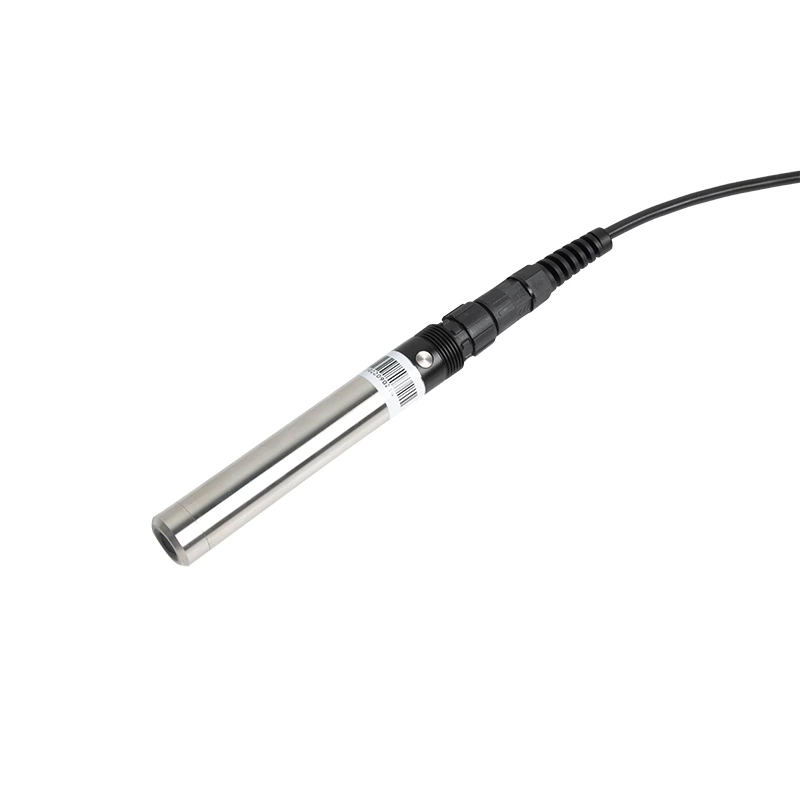
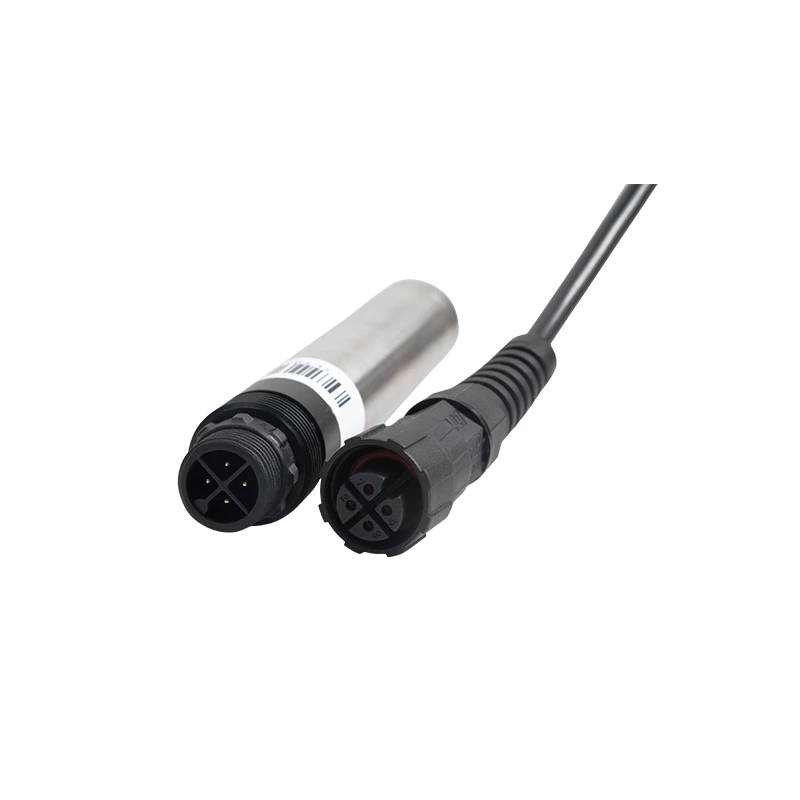
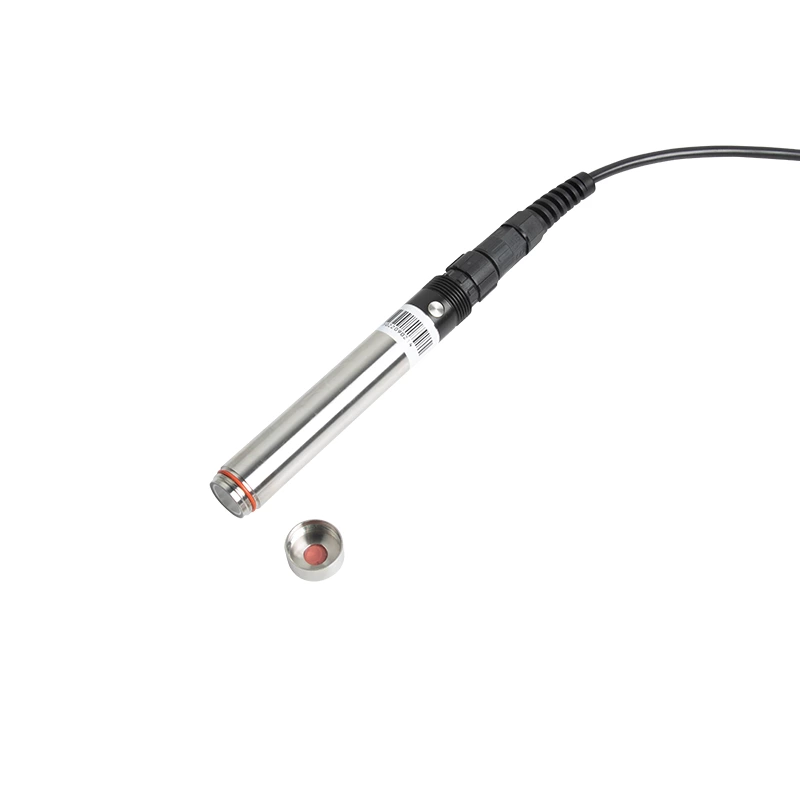
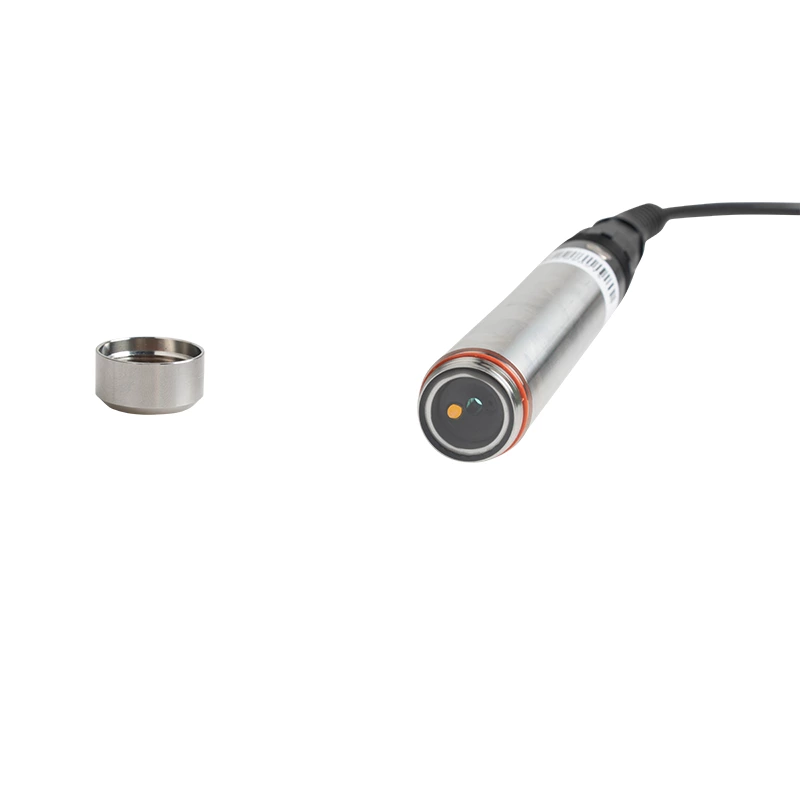
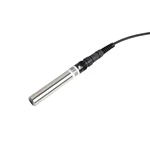
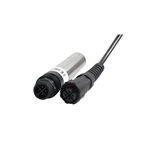
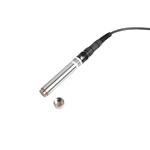
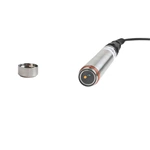
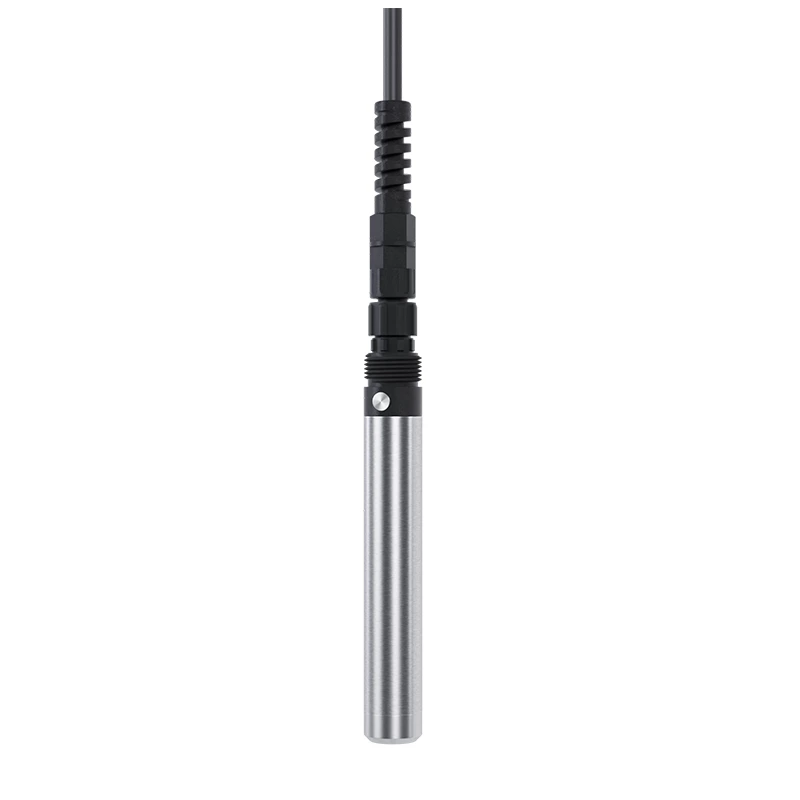
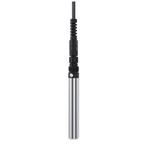
MIK-DO7019 Liquid analyzing meter dissolved oxygen transmitter

The fluorescent dissolved oxygen sensor adopts a new generation of fluorescence lifetime technology and self-developed high-performance fluorescent materials. No oxygen consumption, no flow rate limitation, no electrolyte required, no maintenance and calibration, no hydrogen sulfide interference, and excellent stability. Built-in temperature sensor, automatic temperature compensation. RS485 output, can be networked without a controller.

Characteristics

Accuracy:±3%FS

Signal interface: Modbus RS-485

No membrane and no electrolyte required

No need to consume oxygenAutomatic temperature compensation
Specification

  • Specification

  Product   Dissolved Oxygen sensor
  Model MIK-DO7019
  Accuracy  ±3%FS
  Measure range  0-20mg/L or 0-200% saturation
  Power supply  DC9~24V,current<50mA
  Operating temperature   0 ~ 50°C
  Temperature accuracy  ±0.5°C
  Communication  Modbus RS-485
  Sensor material  SS316L/Titanium alloy/POM
  Fluorescent cap life  One year (under normal use)
  Cable  10m(default), customizable
  Response Time 60 Sec
  Dimension Φ22mm*152.7mm
  Installation thread M22*1.5(optionallyconvertibletoNPT3/4 thread), submersible installation
  Calibrations One-pointor two-pointscalibration


  • FAQ

1. What is the MIK-DO7019 fluorescent dissolved oxygen sensor?

The MIK-DO7019 is a digital optical dissolved oxygen (DO) sensor based on fluorescence lifetime technology with self-developed fluorescent materials. It has a built-in temperature sensor with automatic temperature compensation and a Modbus RS-485 output, so it can be networked without a separate controller.

2. How does fluorescence lifetime technology work?

A fluorescent material on the sensor cap is excited by light and then emits fluorescence. Oxygen molecules shorten the fluorescence lifetime, so the sensor calculates the DO concentration by measuring this lifetime rather than only the light intensity, which provides stable long-term measurement.

3. What are the advantages of the MIK-DO7019?
  • No oxygen consumption and no flow rate limitation
  • No membrane and no electrolyte required
  • No hydrogen sulfide interference
  • Excellent stability
  • Built-in temperature sensor with automatic compensation
  • RS-485 output for direct networking
4. What is the measuring range?

The measuring range is 0–20 mg/L or 0–200% saturation.

5. How accurate is the MIK-DO7019?
  • DO accuracy: ±3% FS
  • Temperature accuracy: ±0.5 °C
6. What is the response time?

The response time is 60 seconds.

7. What power supply does it need?

The sensor operates on 9–24 VDC with a current consumption below 50 mA.

8. What output does it provide?

It provides Modbus RS-485 communication, so it can be connected directly to a PLC, data logger, SCADA system or IoT gateway without a controller.

9. Does it need calibration?

The fluorescence lifetime design greatly reduces calibration needs compared with membrane sensors. When required, one-point or two-point calibration is supported. Periodic checks against a reference are recommended to confirm accuracy.

10. How long does the fluorescent cap last?

The fluorescent cap lasts about one year under normal use. Replace the cap when it reaches the end of its service life or when readings become unstable.

11. What maintenance does it need?

No membrane or electrolyte replacement is needed. Routine maintenance consists of cleaning the fluorescent cap to remove deposits or biofilm, and replacing the cap about once a year.

12. What materials are used?

The sensor is made of SS316L, titanium alloy and POM. Please tell us your water type, such as seawater, so we can confirm the material configuration.

13. What are the dimensions and installation thread?
  • Dimensions: Φ22 × 152.7 mm
  • Installation thread: M22×1.5 (convertible to NPT 3/4)
  • Installation method: submersible
14. What cable length is available?

A 10 m cable is supplied by default, and custom lengths are available.

15. What is the operating temperature?

The operating temperature is 0–50 °C.

16. What can the MIK-DO7019 be connected to?

It can be networked directly with any Modbus RS-485 master. It can also be used with the MIK-DC2000 controller for Asmik digital sensors if local display and relay outputs are needed; please confirm compatibility with us.

17. Where is the MIK-DO7019 used?

Typical applications include wastewater treatment (aeration tanks and effluent), aquaculture and environmental monitoring.

18. What information should I provide to get a quotation?

To help us select the correct configuration, please provide:

  • Application and water type (fresh water, wastewater, seawater)
  • DO range and water temperature
  • Installation method and thread (M22×1.5 or NPT 3/4)
  • Cable length
  • Host system (PLC, IoT gateway or Asmik controller)
  • Quantity

Send your requirements to info@asmik.com or contact us via WhatsApp at +86 13325716921.

Features

Benefits

  • Optical/fluorescence measurement technology, oxygen-free
  • Automatic temperature compensation and stable output
  • Good communication compatibility (Modbus, standard signals)
  • Strong adaptability to field environments
  • High accuracy and fast response
  • Low maintenance cost and easy to use

Automated &factory

Need more information?

Contact us for more details about our solutions and services

This site uses cookies

We use cookies to collect information about how you use this site. We use this information to make the website work as well as possible and improve our services.