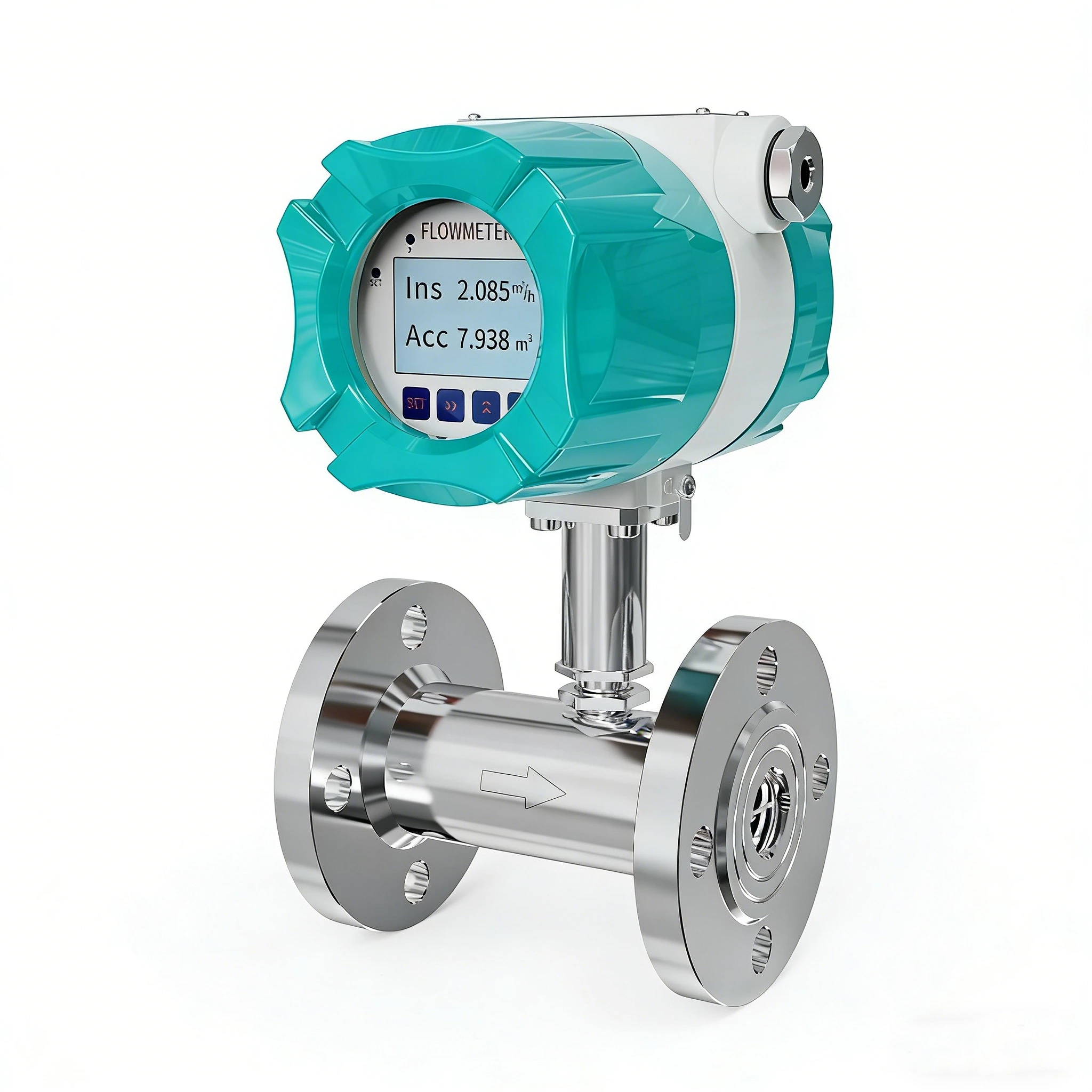
Specification
| Product |
Metal Tube Rotameter |
| Model |
MIK-LZ |
| Range |
Water (20℃) (01~200000) L/h Air (20,0.1013MPa) (0.05~2000) m³/h |
| Range ratio |
Standard 10:1 Optional 20:1 |
| Accuracy |
Standard type: Liquid: 1.5% Gas: 2.5% |
| Customized type: Liquid: 1.0% Gas: 1.5% |
| Pressure |
standard:DN15~DN50≤4.0MPa DN65~DN200≤1.6MPa
high pressure type: -80 ℃ ~ 200 ℃,DN15~DN100≤10MPa ;200 ℃ ~ 350 ℃,DN80~DN200≤6.3MPa
|
| Connection |
Flange, Clamp, Thread, Sanity thread |
| Medium temperature |
Standard: -20℃~120℃ PTFE -40℃~80℃ High temp: 120℃~450℃ low temp: -80℃~-20℃
|
| Environment temperature |
Remote type: -40℃~70℃ Pointer type/local alarm type -40℃~80℃
|
| Power supply |
Standard type: 24VDC two-wire system (4-20) mA (12VDC~32VDC) Alarm type: 24VDC multi-wire system (4-20) mA (12VDC~32VDC) AC type: (100~240) VAC 50Hz~60Hz Battery type: 3.6V@9AH lithium battery
|
| Load resistance |
RLmax: 600Ω |
| Alarm Output |
Instantaneous flow alarm for upper and lower limits, optocoupler-isolated Darlington output (internal 24VDC supply, max 8mA, external supply up to 250mA@ 36VDC) |
| Local alarm type: upper limit, lower limit, or both upper and lower limit instantaneous flow alarms, reed switch contact output (contacting rate1A @ 30VDC) Optional normally open/closed contacts. |
| Alarm holding range: Max 60% range of the full span, Min. Interval between upper and lower limit alarm: 10% of full scale |
| Pulse output |
Cumulative pulse output is output of optocoupler signal isolation Darlington tube (internal 24VDC power supply, maximum current
8mA) |
| Ingress protection |
IP65 |
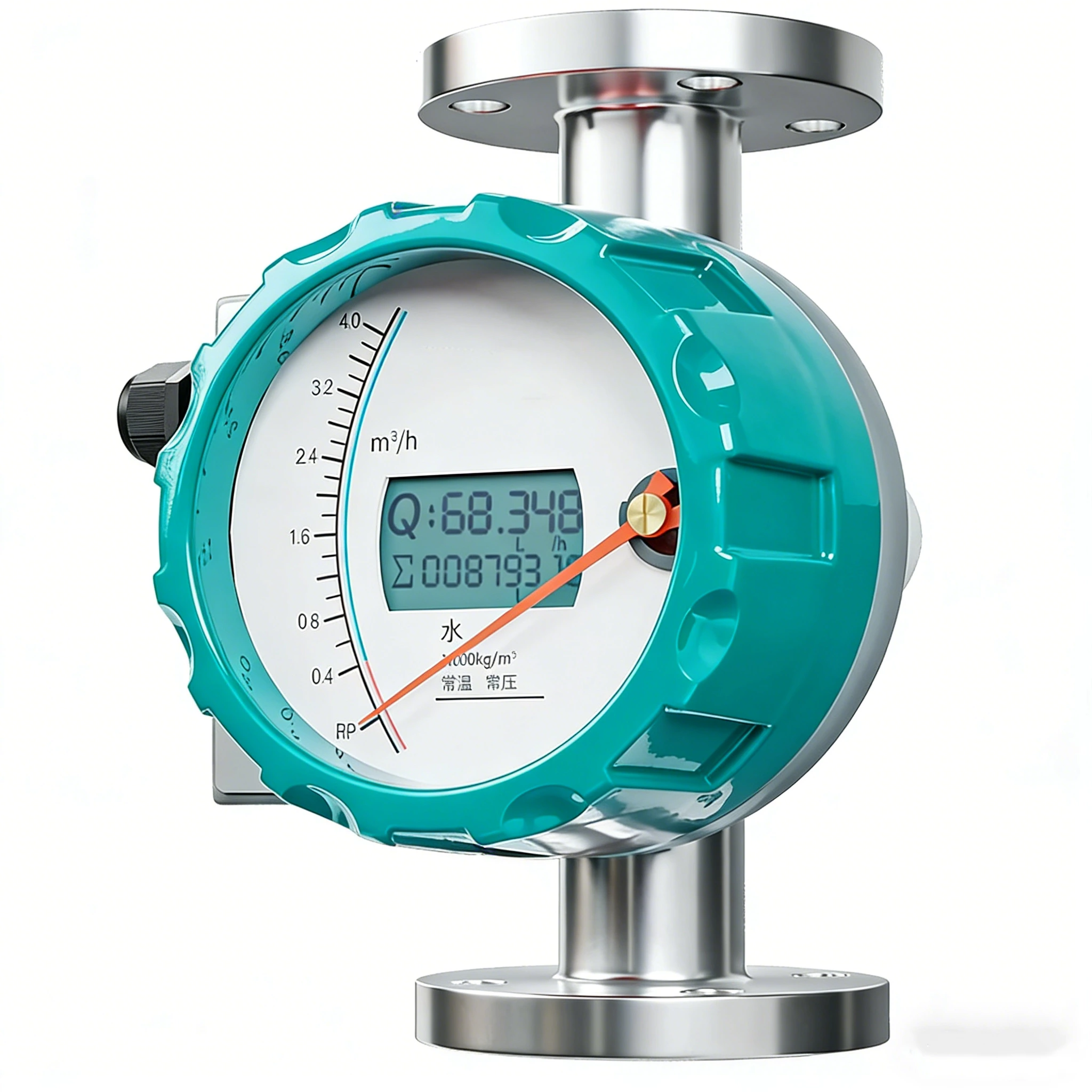
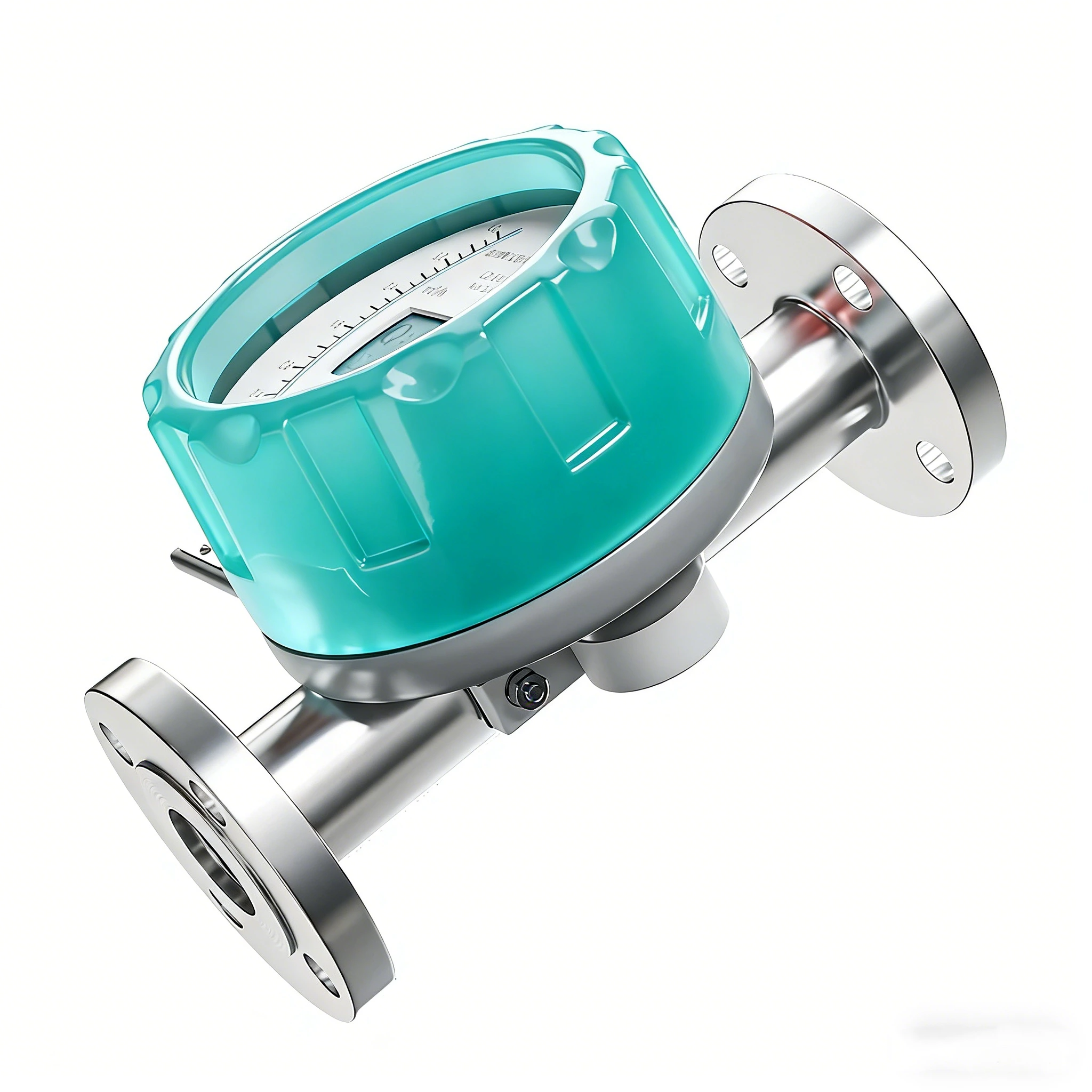
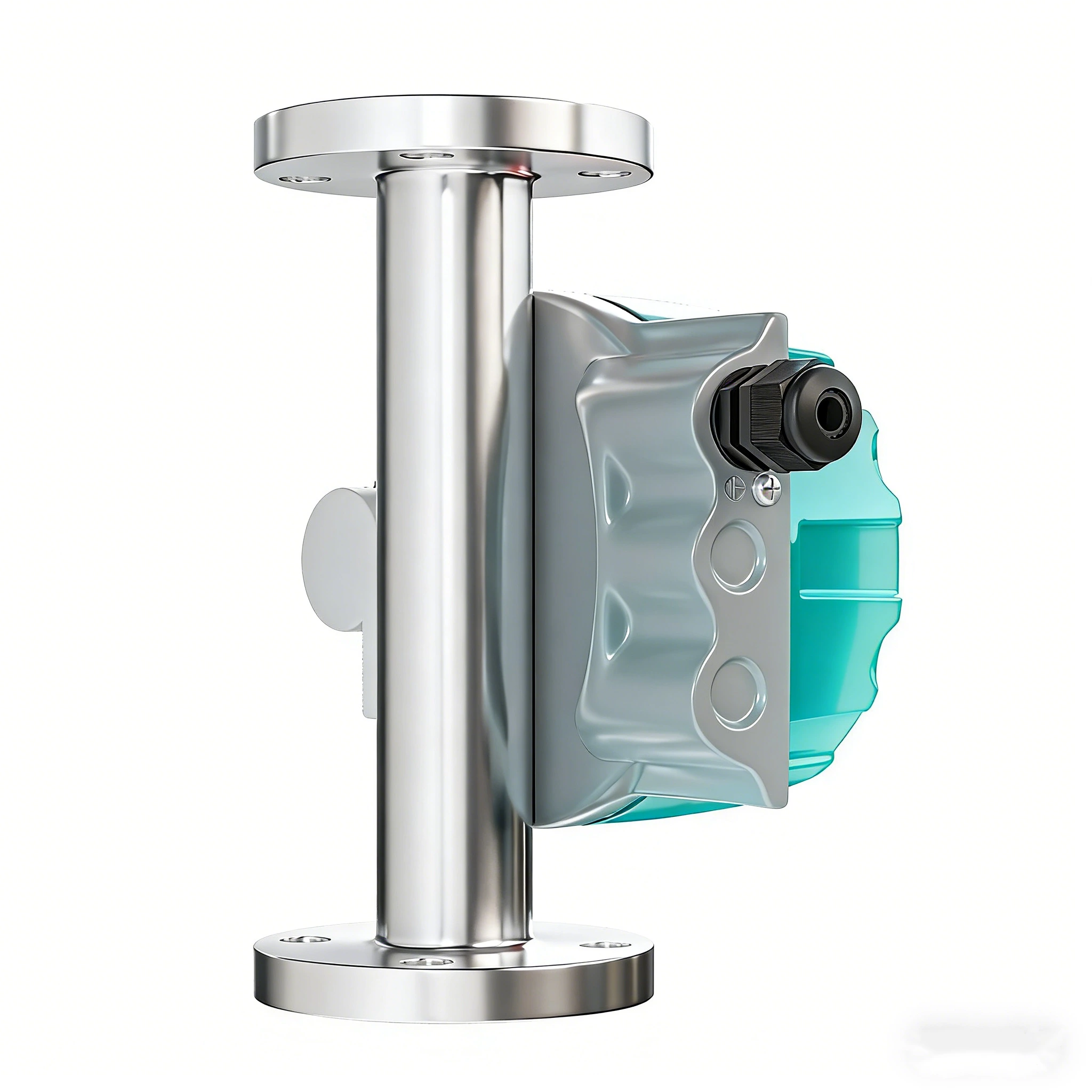
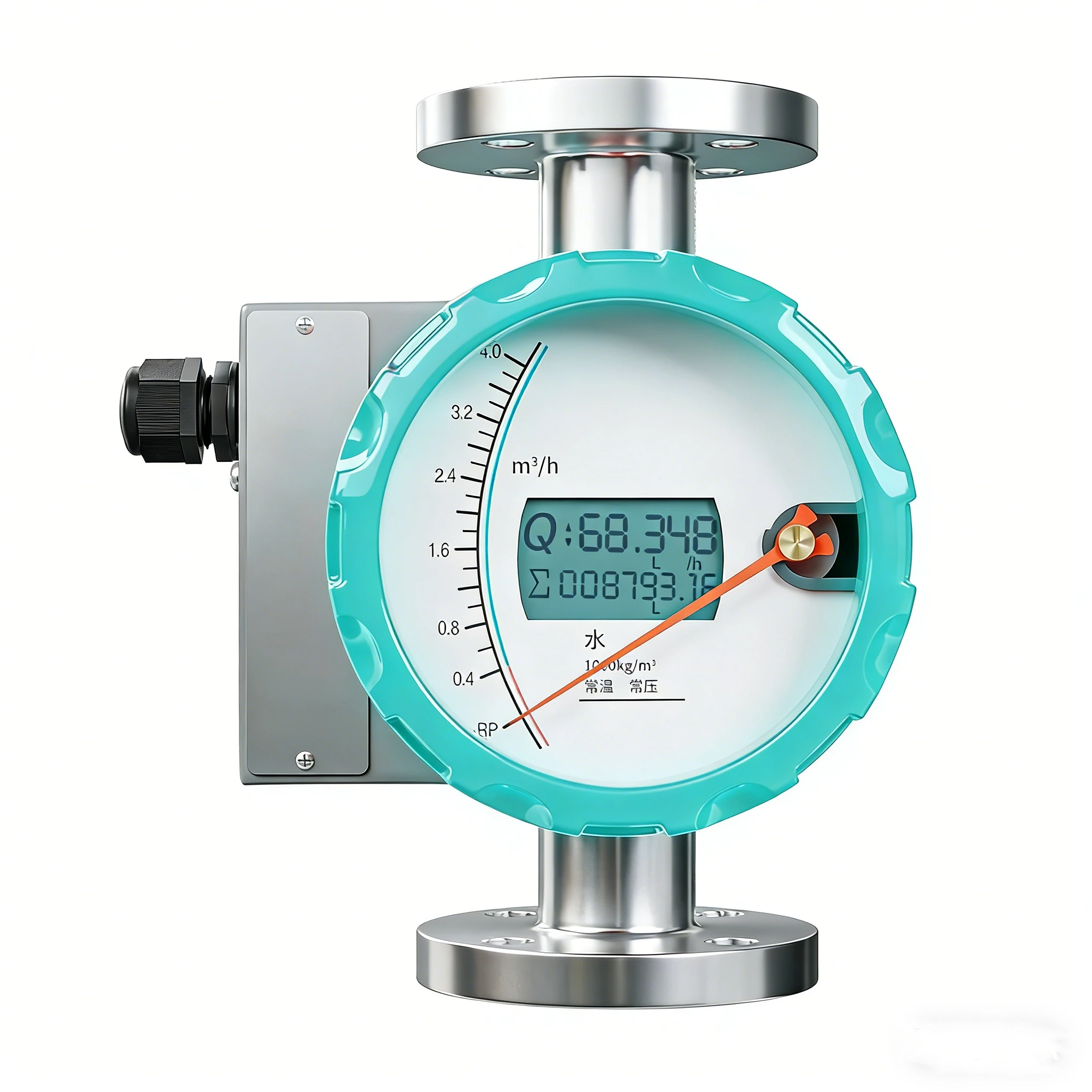
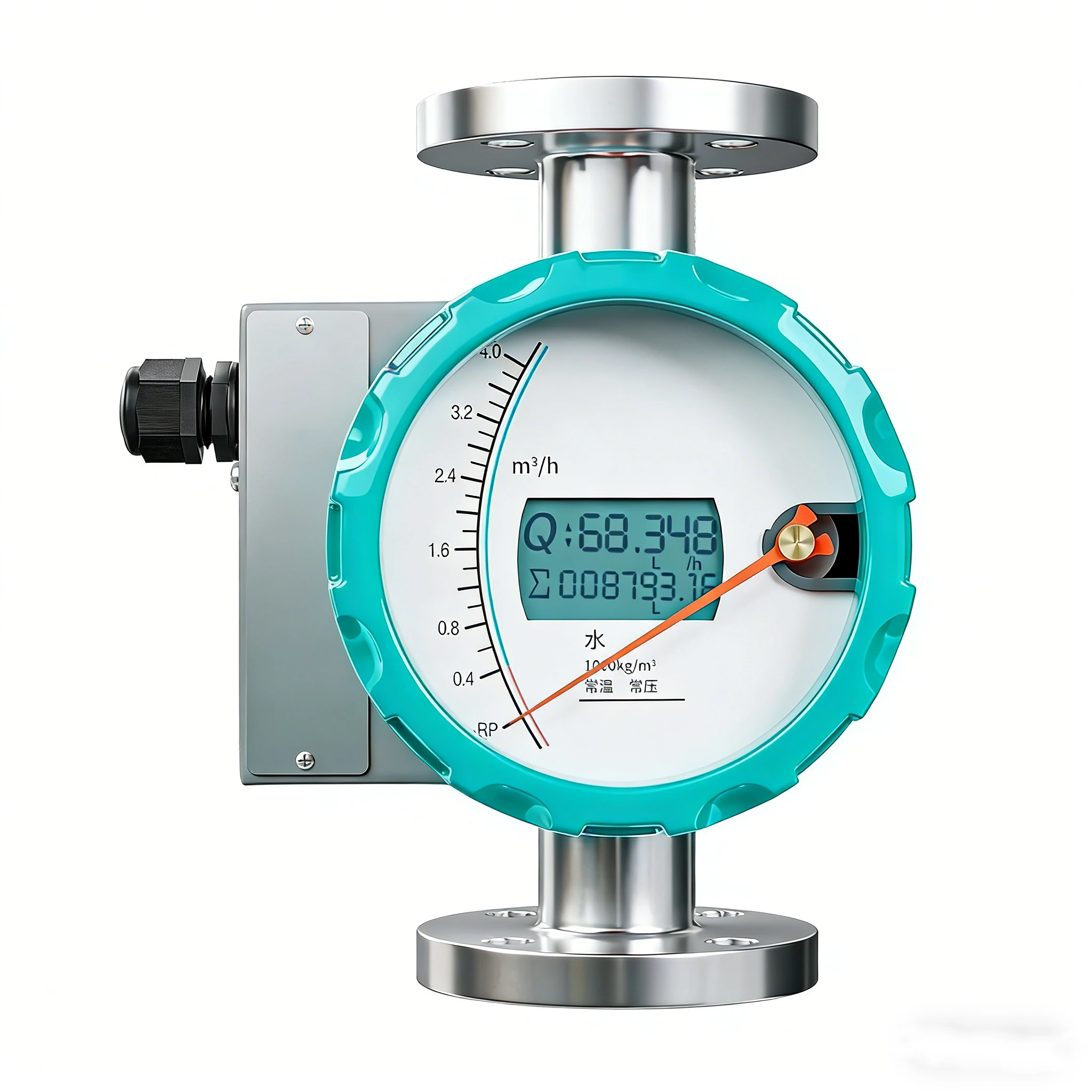
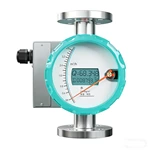
A metal tube Rotameter is a type of flow meter that measures the flow rate of a fluid, typically a gas or a liquid. It consists of a tapered metal tube, a float, and a scale. The tapered metal tube has a larger diameter at the bottom and gradually narrows towards the top. The float is a small metallic ball or cylinder that moves freely up and down inside the tube. The scale is marked with flow rate graduations and is attached to the outside of the tube.
The operation of a metal tube Rotameter is based on the principle of buoyancy. When fluid flows through the metal tube, the float rises or falls to a position where the force of the fluid flow is equal to the gravitational force acting on the float. The position of the float corresponds to the flow rate of the fluid, and this can be read off the scale. As the flow rate increases, the float rises and the reading on the scale increases. Conversely, as the flow rate decreases, the float falls and the reading on the scale decreases.
Metal tube Rotameters are commonly used in process industries to measure the flow of gases and liquids in pipes. They are simple and reliable, and can be used to measure a wide range of flow rates. However, they are not suitable for measuring very low flow rates or highly viscous fluids.
The MIK-LZ metal tube Rotameters are easy to install and maintain, with a simple design that requires minimal calibration and maintenance. They are also easy to read, with a clear scale that allows operators to quickly and accurately determine the flow rate.
1. What is the MIK-LZ metal tube rotameter?
The MIK-LZ is a metal tube rotameter that measures the volumetric flow rate of liquids and gases in closed pipes. It belongs to the family of variable-area flowmeters and is simple, reliable and easy to install and maintain.
2. How does a metal tube rotameter work?
The meter contains a tapered measuring tube and a float. The tube is narrower at the bottom and wider at the top. As fluid flows upward, the float rises until the upward force of the flow balances the weight of the float. Because the annular gap between the float and tube increases with height, each float position corresponds to a specific flow rate. In a metal tube rotameter, the float position is typically transmitted to the indicator through magnetic coupling, since the float cannot be seen directly.
3. Can the MIK-LZ measure both liquids and gases?
Yes. It is used to measure the flow of both liquids and gases in process industries.
4. Why choose a metal tube rotameter instead of a glass tube rotameter?
A metal tube is generally chosen for higher pressures and temperatures, opaque or corrosive media, and applications where a glass tube would be a safety concern. The MIK-LZ also offers electrical outputs and alarms, which a simple glass tube rotameter usually does not.
5. What flow range does the MIK-LZ cover?
- Water (20 °C): up to 200,000 L/h
- Air (20 °C, 0.1013 MPa): 0.05 to 2,000 m³/h
The actual range depends on the meter size and the fluid's density. Please send us your flow range and medium for sizing.
6. What is the range ratio?
The standard range ratio is 10:1, and 20:1 is optional.
7. How accurate is the MIK-LZ?
- Standard type: liquid 1.5%, gas 2.5%
- Customized type: liquid 1.0%, gas 1.5%
8. What pressure ratings are available?
- Standard: DN15–DN50 ≤4.0 MPa; DN65–DN200 ≤1.6 MPa
- High-pressure type: DN15–DN100 ≤10 MPa (for -80 °C to 200 °C); DN80–DN200 ≤6.3 MPa (for 200 °C to 350 °C)
9. What medium temperatures can it handle?
- Standard: -20 °C to 120 °C
- PTFE type: -40 °C to 80 °C
- High-temperature type: 120 °C to 450 °C
- Low-temperature type: -80 °C to -20 °C
10. What ambient temperatures are allowed?
- Remote type: -40 °C to 70 °C
- Pointer type and local alarm type: -40 °C to 80 °C
11. What process connections are available?
Flange, clamp, thread and sanitary thread connections are available.
12. What indicator and output versions are available?
- Pointer type: local mechanical indication
- Local alarm type: local indication with reed switch alarm contacts
- Standard (remote) type: 4–20 mA two-wire output
- Alarm type: 4–20 mA multi-wire output with alarm and pulse outputs
- AC type and battery type: for different power supply conditions
13. What power supply options are available?
- Standard type: 24 VDC two-wire, 4–20 mA (12–32 VDC)
- Alarm type: 24 VDC multi-wire, 4–20 mA (12–32 VDC)
- AC type: 100–240 VAC, 50–60 Hz
- Battery type: 3.6 V, 9 Ah lithium battery
The maximum load resistance for the current output is 600 Ω.
14. What alarm outputs are available?
- Instantaneous flow upper and lower limit alarms via optocoupler-isolated Darlington output (internal 24 VDC supply, max 8 mA; external supply up to 250 mA at 36 VDC)
- Local alarm type: upper, lower or both limit alarms via reed switch contacts (1 A at 30 VDC), normally open or normally closed
- Alarm setting range: up to 60% of full span; minimum interval between upper and lower alarms: 10% of full scale
15. Does the MIK-LZ provide a totalizer pulse output?
Yes. A cumulative pulse output is available through an optocoupler-isolated Darlington output (internal 24 VDC supply, max 8 mA), which can be connected to counters or PLCs.
16. What is the ingress protection rating?
The ingress protection rating is IP65.
17. Is it suitable for very small flows or viscous fluids?
Metal tube rotameters are not suitable for very low flow rates or highly viscous fluids. For small gas and liquid flows, see the FRM200 micro metal tube float flowmeter. For viscous liquids, please send us your medium details for a recommendation.
18. How should the MIK-LZ be installed?
- Rotameters are generally installed vertically with the flow going upward.
- Keep the meter away from strong magnetic fields and ferromagnetic objects that may affect the magnetic coupling.
- Install a filter upstream if the fluid may contain particles, especially magnetic particles.
- Avoid strong pipe vibration and pulsating flow.
Please follow the installation manual or contact our engineers for site-specific requirements.
19. How much maintenance does the MIK-LZ need?
The MIK-LZ has a simple design that requires minimal calibration and maintenance. Periodic inspection of the float and tube is recommended for fluids that may leave deposits.
20. Which industries use metal tube rotameters?
Metal tube rotameters are commonly used in process industries such as chemical, petrochemical, water treatment, pharmaceutical and power, wherever a simple and reliable local or remote flow indication is needed for liquids or gases.
21. What information should I provide to get a quotation?
To help us select the correct model, please provide:
- Medium name, state (liquid or gas), density and viscosity
- Flow range (min / normal / max)
- Medium temperature and working pressure
- Pipe size and connection type (flange, clamp, thread, sanitary thread)
- Required accuracy
- Indicator type (pointer, local alarm or remote)
- Power supply and output requirements (4–20 mA, alarm, pulse)
- Quantity
Send your requirements to info@asmik.com or contact us via WhatsApp at +86 13325716921.