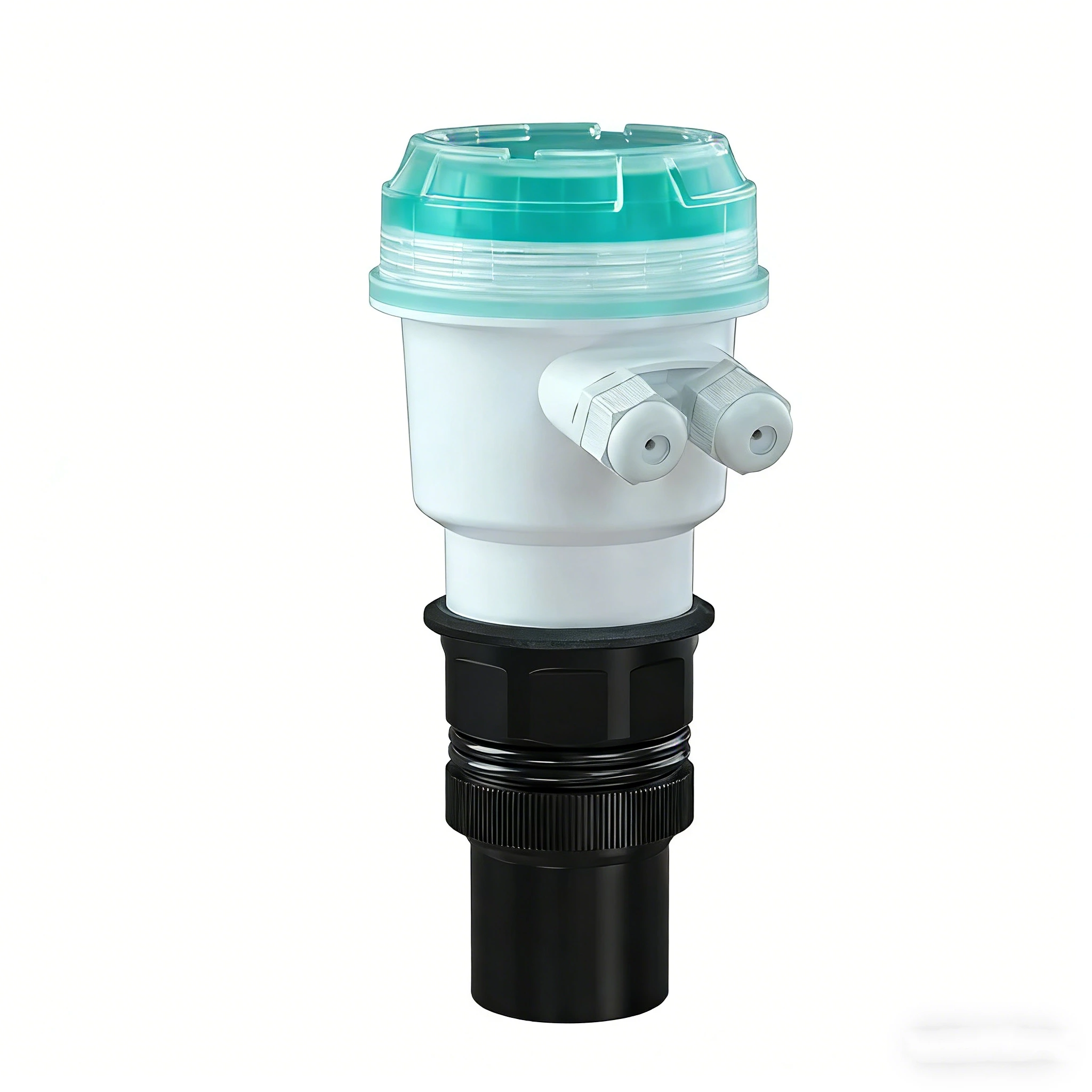
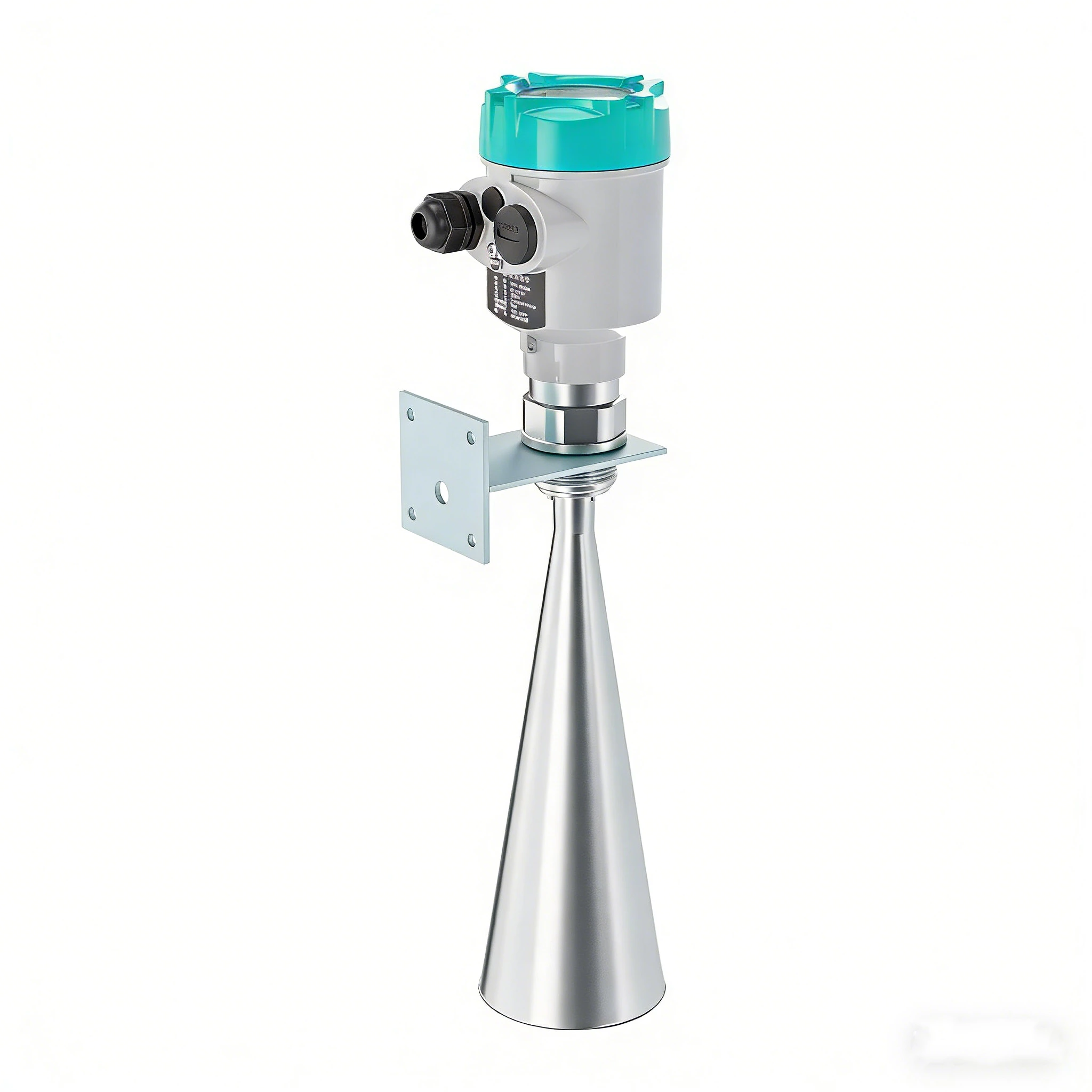
Specification
Specification
| Product |
Ultrasonic level transmitter |
| Model |
MIK-ULS-B |
| Measure range |
0-5m,0-10m,0-15m(optional) |
| Blind zone |
≤0.3m(range 5m)
≤0.35m(range 10m)
≤0.5m(range 15m) |
| Accuracy |
±0.3%FS, ±0.5%FS |
| Display |
Monochrome LCD screen |
| Output (optional) |
Isolated,4-20mA |
| Output precision:±0.2%FS |
| RL≤500Ω |
| Measuring variable |
Level/Distance |
| Power supply |
100-240 VAC,5W MAX,50/6Hz 18-28 VDC |
| Temperature range |
Converter:-20-60 ℃
Sensor:-20-80 ℃ |
| Humidity range |
10%-85% RH(no condensation) |
| Ingress protection |
Converter:IP65 Sensor:IP68 |
| Cable |
10m(Standard)
30m MAX(optional) |
| Alarm |
2 relays Capacitance AC250V/3A(Standard) 4 relays(optional) |
| Inatallation |
Wall-mounted |
| Communication |
Isolated RS485,Modbus-RTU |
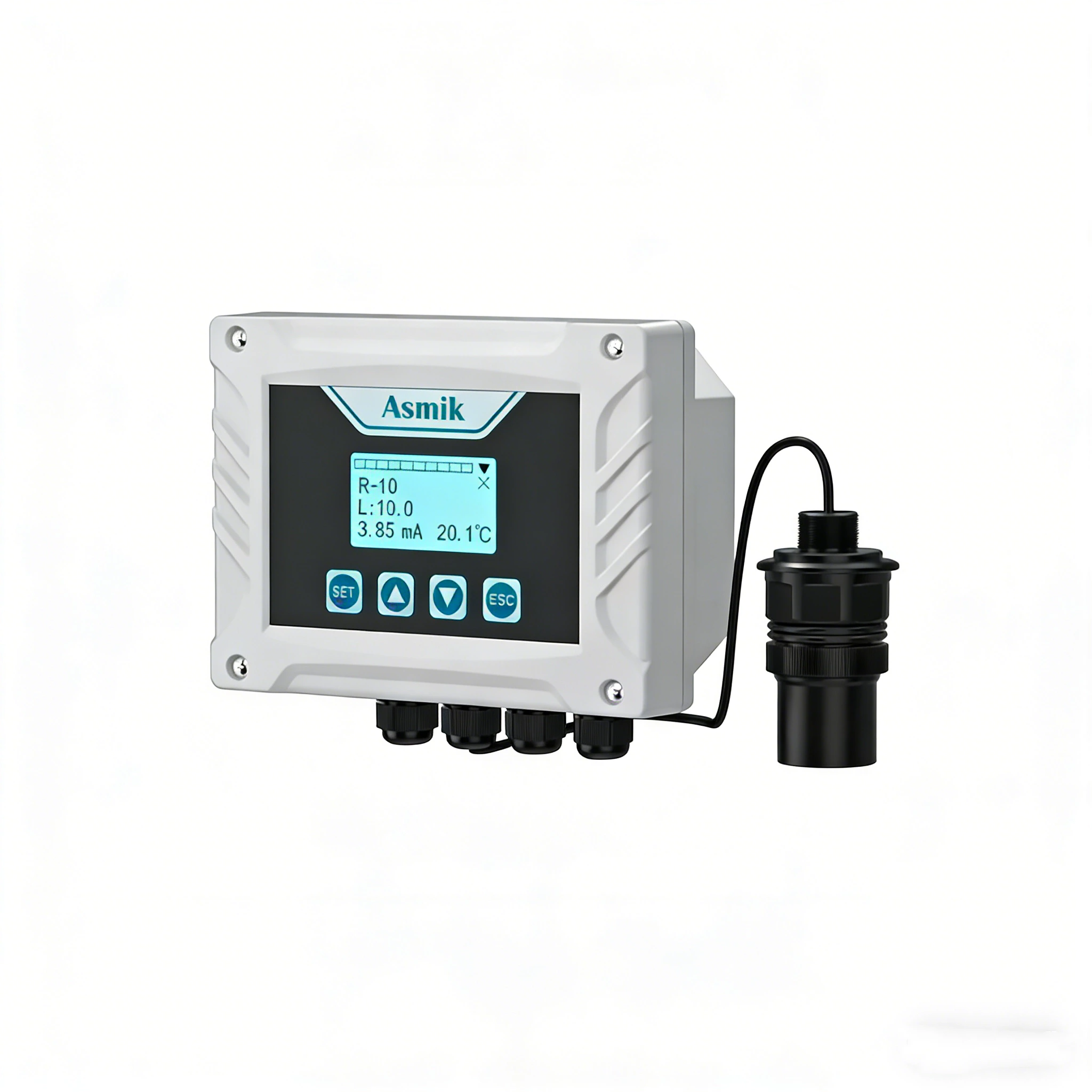
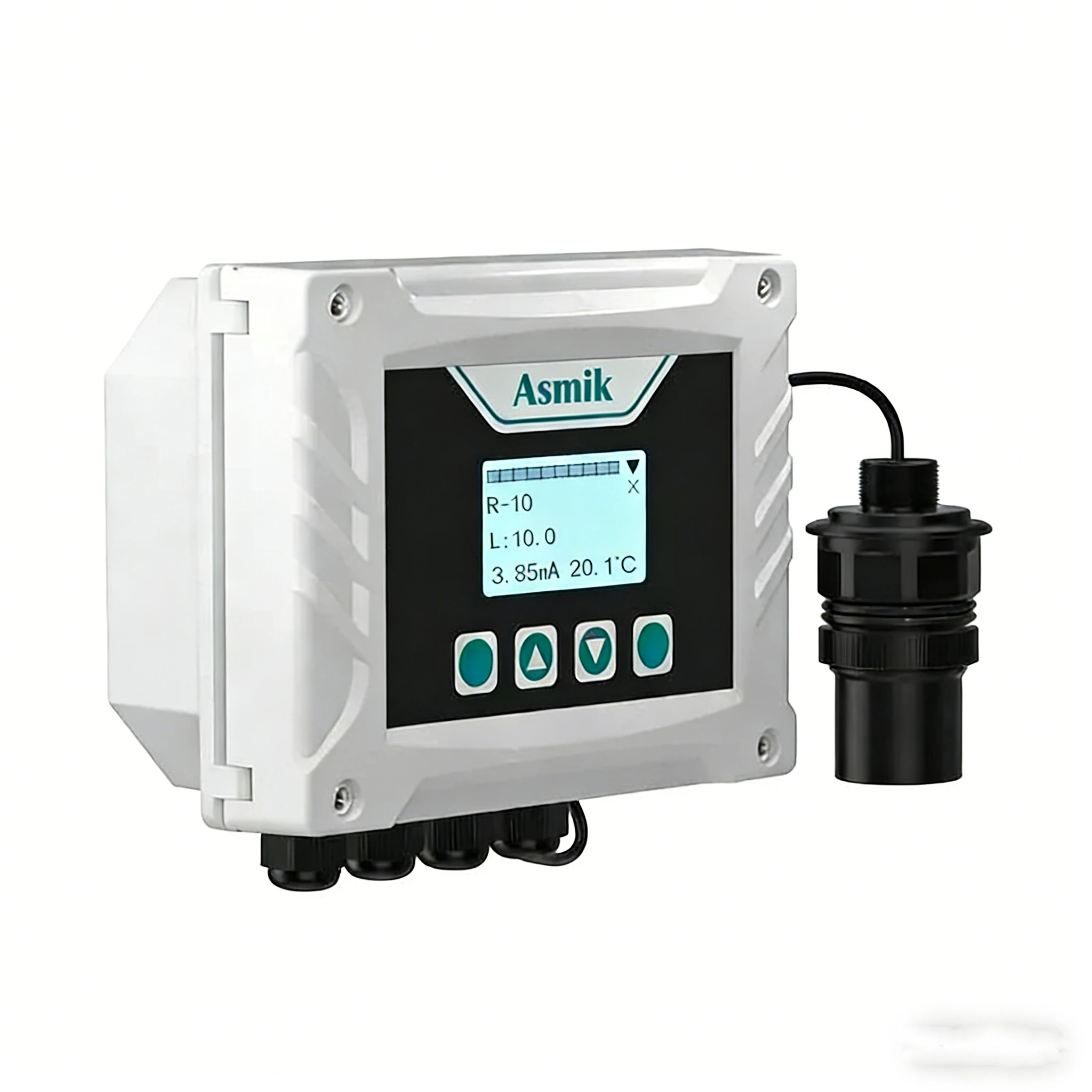
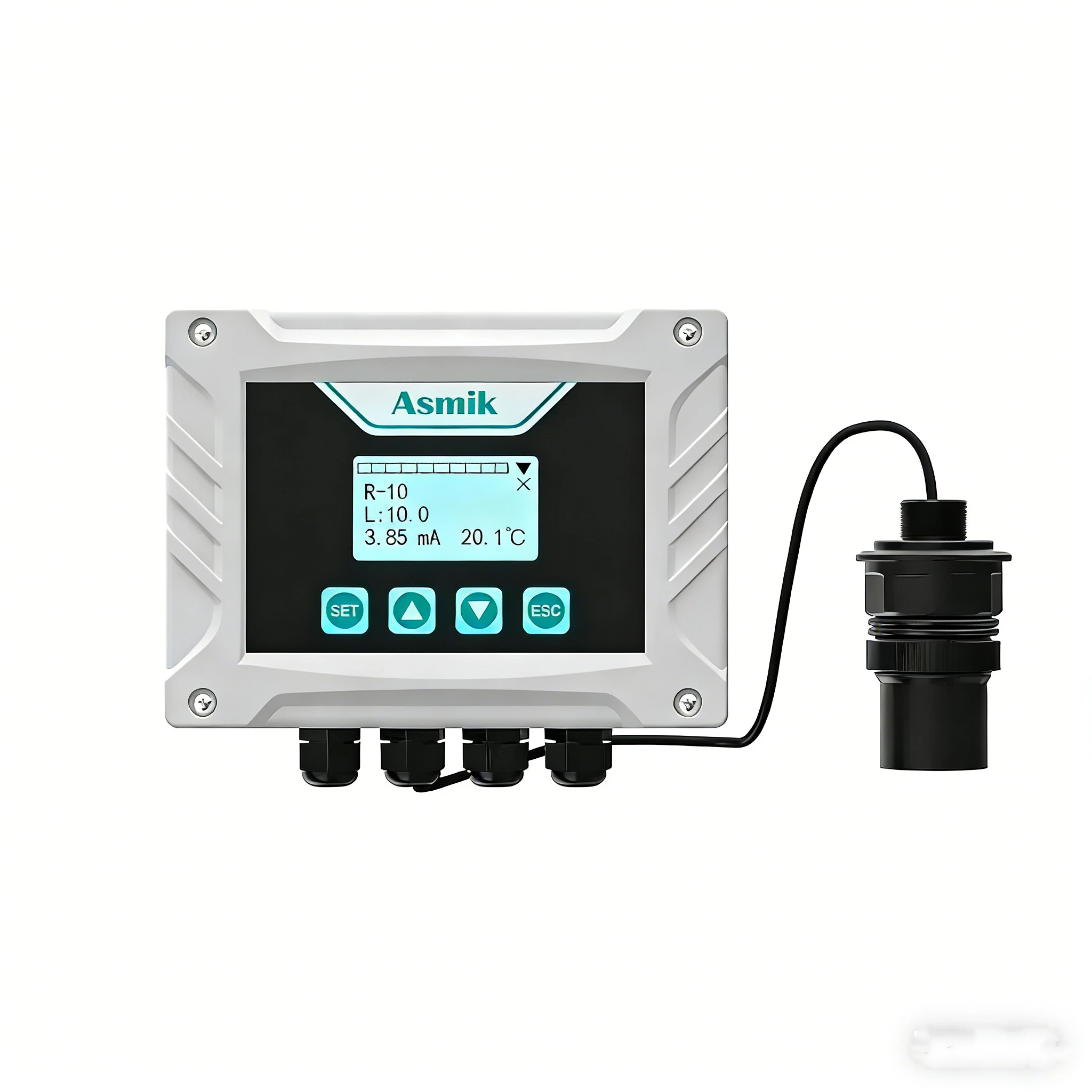
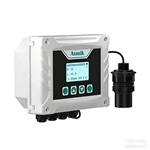
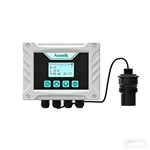
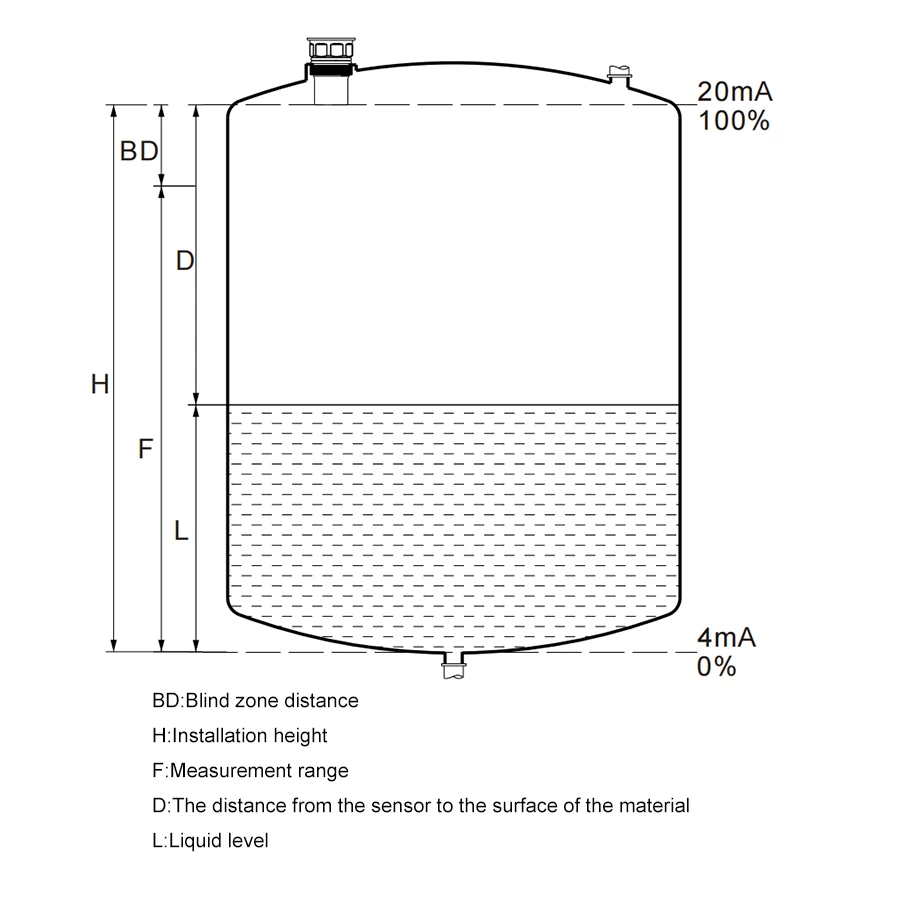
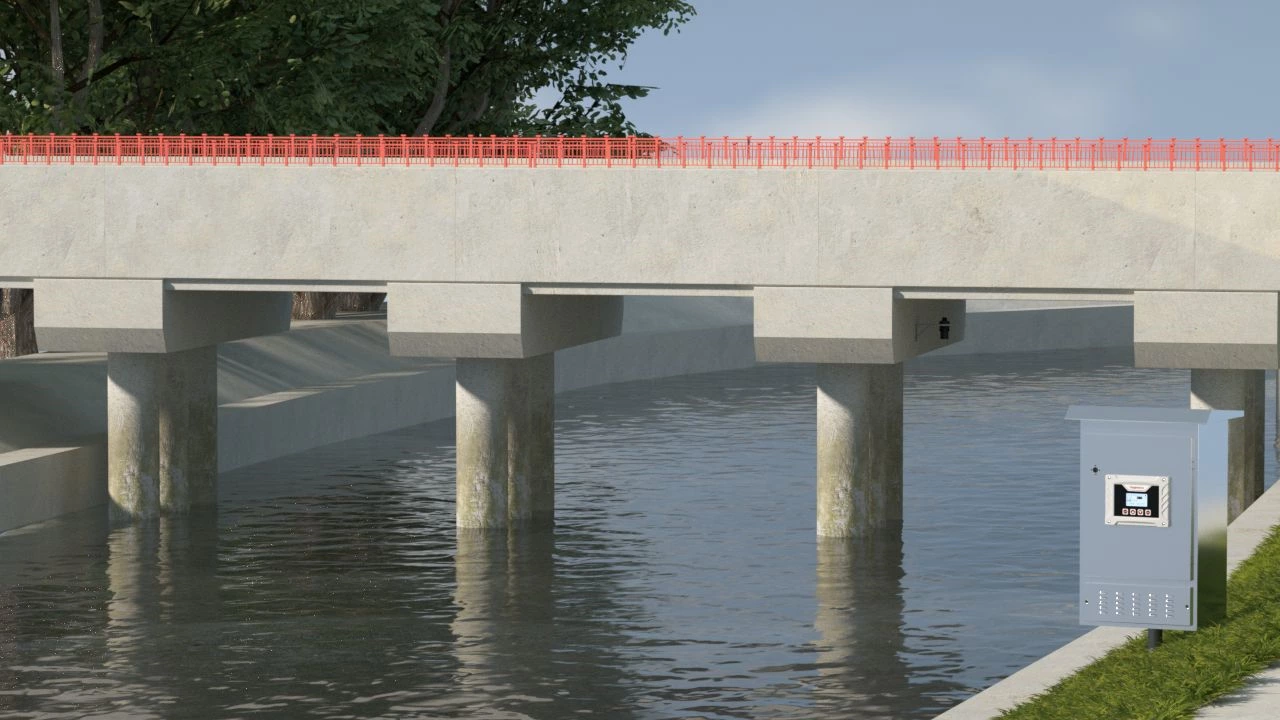
Ultrasonic level transmitters use ultrasonic waves to reflect when encountering the interface of liquid media (solid media) of different densities, and measure the liquid level/distance by measuring the transit time.
Convenient operation
Fault self-diagnosis technology
A variety of working conditions algorithm selection
Fast response time
Automatic temperature compensation
High precision
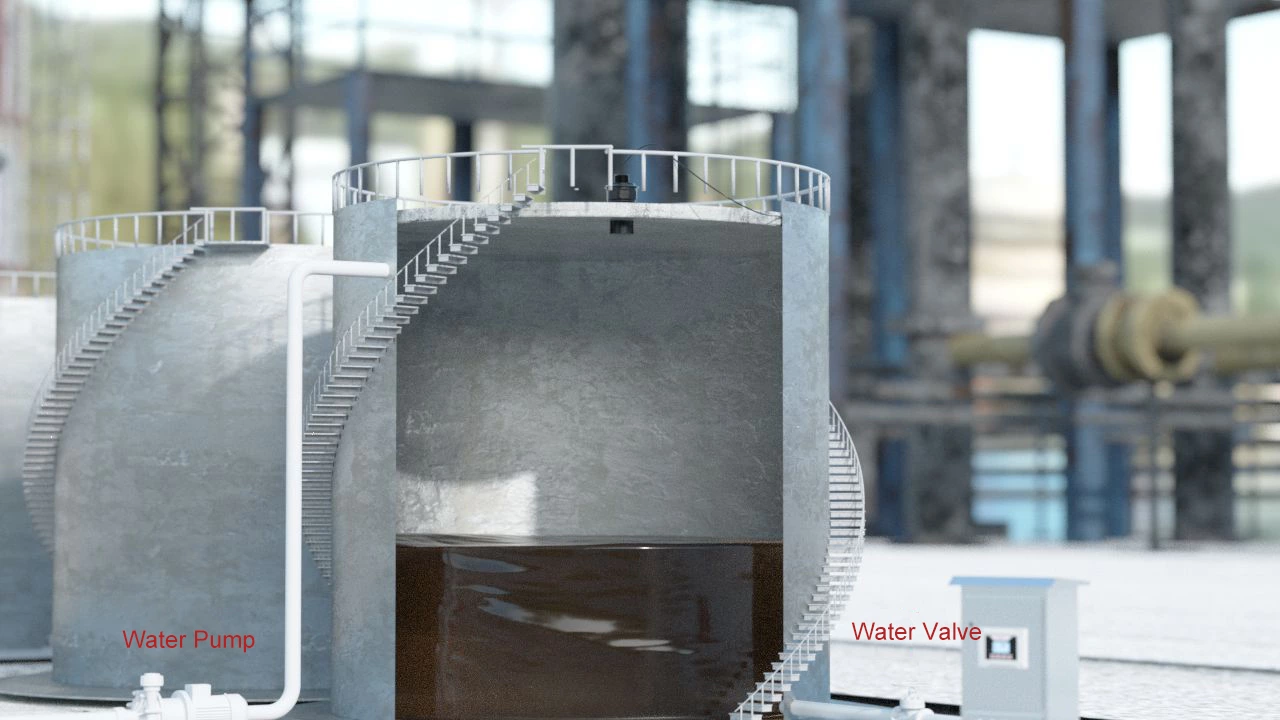
1. What is the MIK-ULS-B ultrasonic level transmitter?
The MIK-ULS-B is a non-contact ultrasonic level transmitter for liquid and solid level measurement. It is a cost-effective, reliable instrument that is easy to install and maintain, and measures without contacting the medium.
2. How does it work?
Ultrasonic waves are reflected at the interface between media of different densities. The transmitter measures the transit time of the reflected wave and converts it into level or distance. Automatic temperature compensation corrects for the effect of air temperature on the speed of sound.
3. What measuring ranges and blind zones are available?
- 0–5 m range: blind zone ≤0.3 m
- 0–10 m range: blind zone ≤0.35 m
- 0–15 m range: blind zone ≤0.5 m
The maximum level must stay below the blind zone of the selected range.
4. How accurate is the MIK-ULS-B?
Accuracy is ±0.3% FS or ±0.5% FS, depending on the version. The output precision of the 4–20 mA signal is ±0.2% FS.
5. What can it measure: level or distance?
Both. The measuring variable can be set to level or distance.
6. What outputs and communication are available?
- Isolated 4–20 mA output, RL ≤500 Ω (optional)
- Isolated RS485 with Modbus-RTU
- 2 relays as standard (AC 250 V / 3 A), 4 relays optional
7. What can the relays be used for?
The relays can be used for high and low level alarms or simple control tasks, such as starting and stopping pumps at set points. Four relays are available if more switching points are needed.
8. What power supply is required?
100–240 VAC (5 W max, 50/60 Hz) or 18–28 VDC.
9. What display does it have?
It has a monochrome LCD screen for on-site indication.
10. What temperature and humidity conditions are allowed?
- Converter: -20 to 60 °C
- Sensor: -20 to 80 °C
- Humidity: 10%–85% RH (no condensation)
11. What are the protection ratings?
- Converter: IP65
- Sensor: IP68
The IP68 sensor suits locations where it may be exposed to water.
12. How is it installed, and what cable length is available?
The converter is wall-mounted, and the sensor is connected by cable. A 10 m cable is standard, and up to 30 m is optional. Please tell us the distance between the sensor and the converter.
13. What functions help with commissioning and reliability?
- Convenient operation
- Fault self-diagnosis technology
- Several working-condition algorithms to choose from
- Fast response time
- Automatic temperature compensation
14. Can it be used in hazardous areas?
The measuring range is specified for non-explosive fluids. If your application is in a hazardous area, please tell us the area classification so we can confirm a suitable solution.
15. Do foam, vapour or dust affect the measurement?
Thick foam can absorb the sound signal, and heavy vapour, dust or strong turbulence can weaken or scatter the echo. Selecting a suitable working-condition algorithm helps in some cases; for difficult applications, a radar level transmitter may be more suitable.
16. How does the MIK-ULS-B compare with the MIK-MP and MIK-ZP?
- MIK-ULS-B: ranges 5, 10 and 15 m; accuracy ±0.3% or ±0.5% FS; wall-mounted remote converter (IP65) with IP68 sensor; 2 or 4 relays; 100–240 VAC or 18–28 VDC.
- MIK-MP: ranges up to 30 m; 0.35 m blind zone; adjustable pulse intensity; 4–20 mA, RS485 and 2 relays.
- MIK-ZP: ranges up to 15 m; accuracy 0.3% FS; OLED display; 4–20 mA, RS485, HART and voltage outputs.
Please tell us your range and output requirements so we can recommend the right model.
17. How should the sensor be installed?
- Mount the sensor perpendicular to the medium surface.
- Keep the maximum level below the blind zone of the selected range.
- Avoid inlets, agitators, ladders and other obstacles in the sound path.
- Keep a suitable distance from the tank wall.
- Install the converter in a dry, accessible position within the cable length.
Please follow the installation manual or contact our engineers for site-specific requirements.
18. How much maintenance does it need?
Measurement is non-contact and virtually maintenance-free. For media that build up on the sensor face, periodic inspection and cleaning is recommended.
19. What information should I provide to get a quotation?
To help us select the correct model, please provide:
- Medium (liquid or solid) and its properties
- Measuring range and tank or pit dimensions
- Process conditions (foam, vapour, dust, temperature)
- Distance between sensor and converter
- Output and relay requirements
- Power supply (AC or DC)
- Quantity
Send your requirements to info@asmik.com or contact us via WhatsApp at +86 13325716921.