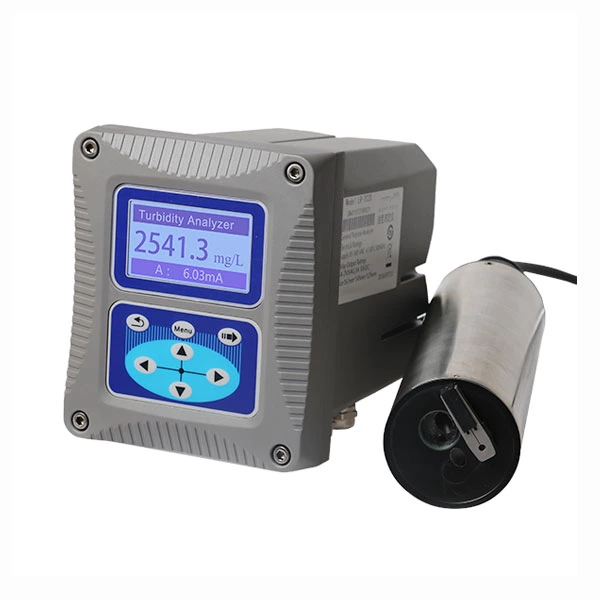
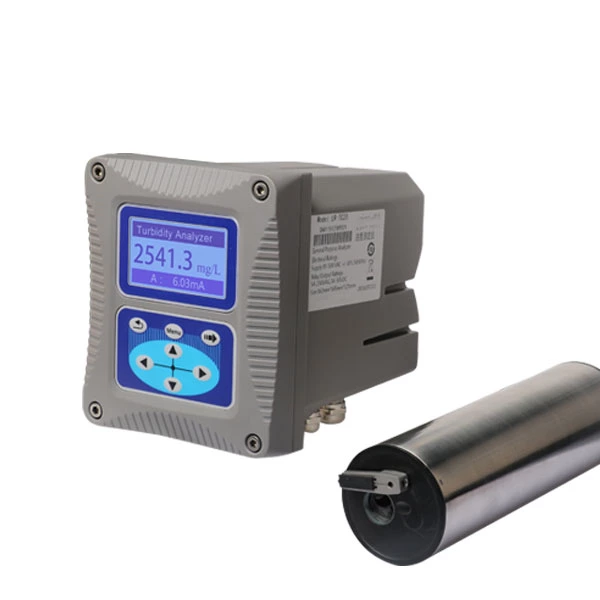
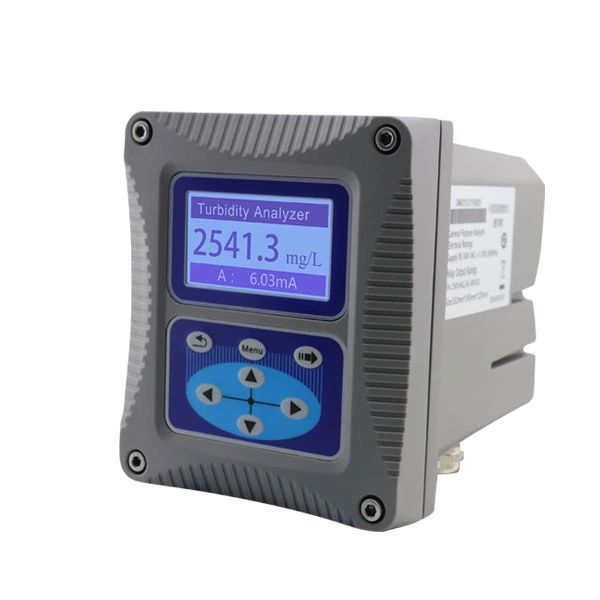
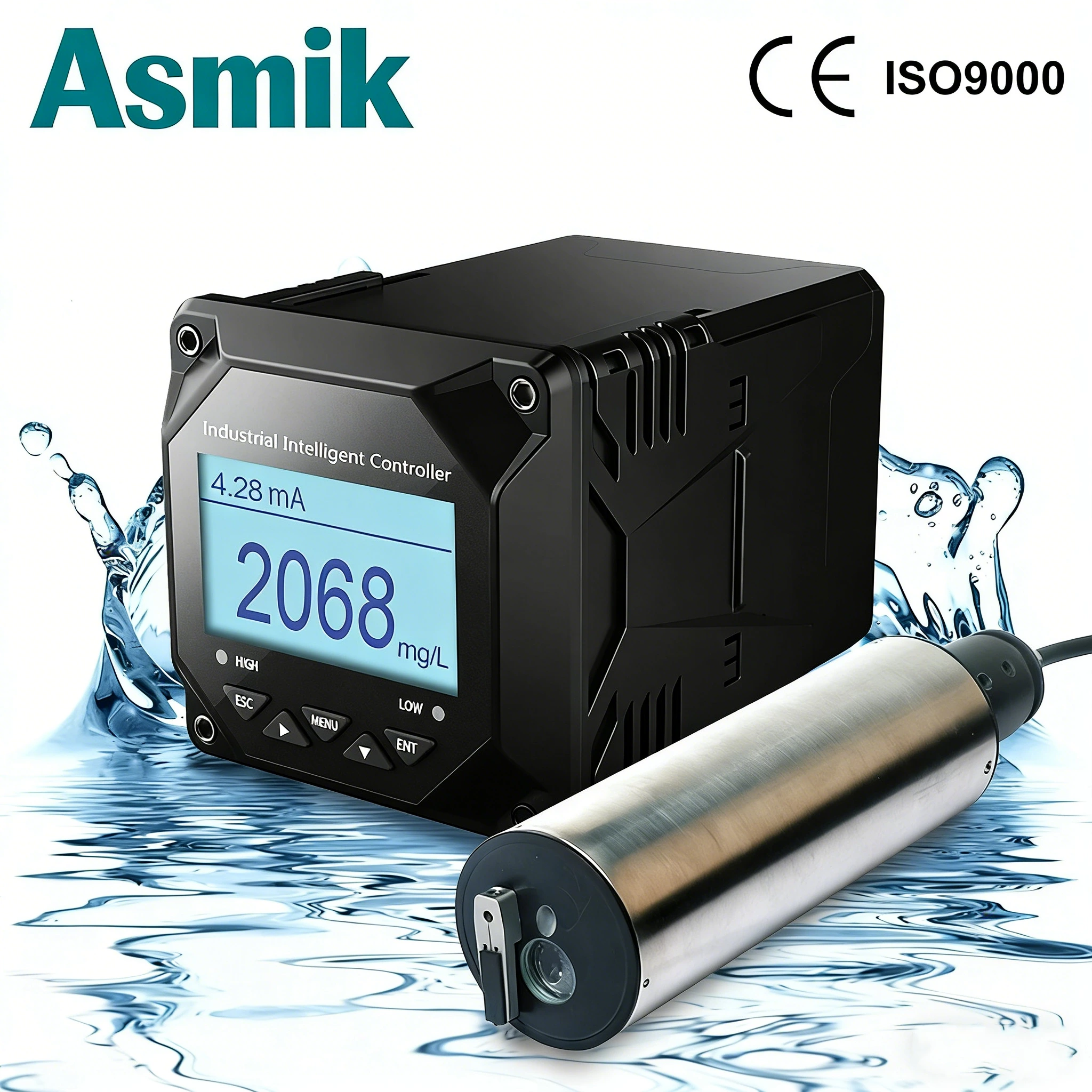
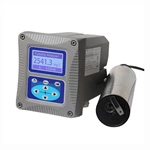
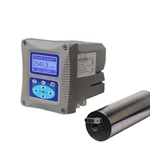
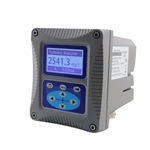
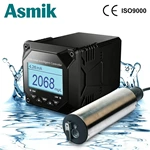
Specification
| Product |
Turbidity meter |
| Model |
MIK-PTU200 |
| Display |
128 * 64 dot matrix LCD with LED backlight, |
| |
which can be operated under the direct sunlight |
| Power supply |
AC:85~500V, 50Hz/60Hz; DC: 9~36VDC |
| Output |
Three-way analog output 4-20mA, |
| |
Note: the maximum load is 500 ohms |
| Relay |
Three-way relay can be set up |
Digital
communication |
MODBUS RS485 communication function,
which can transmit real-time measurements |
| Warranty period |
1 year |
Material of
outside shell |
Lower casing: Aluminum with powder covering |
| cover: PA66+GF25+FR |
| Storage temperature |
-20~70℃ |
| Operation temperature |
-15~60℃ |
| Ingress protection |
IP65/NEMA4X |
| Size |
145*125*162mm L*W*H |
| Weight |
1.35KG |
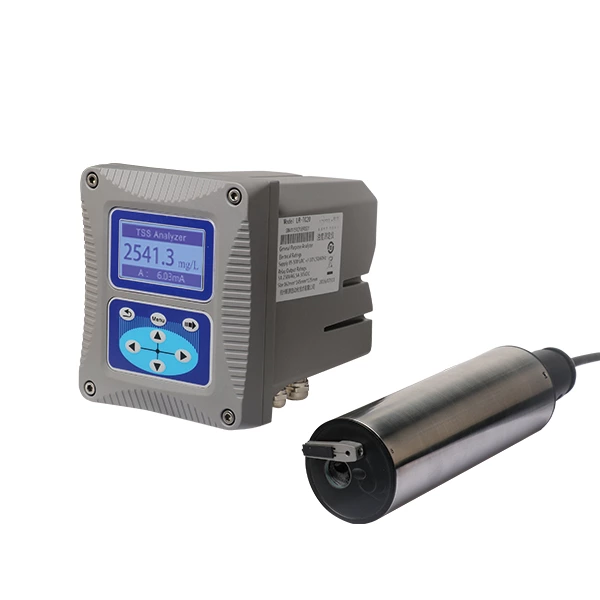
MIK-PTU200 Turbidity Analyzer based on the infrared absorption scattered light method and combined with the application of ISO7027 method, can guarantee the continuous and accurate detection of turbidity. Based on ISO7027, infrared double scattering light technology will not be affected by chroma for the measurement of turbidity value. According to the usage environment, self-cleaning function can be equipped with. It assures the stability of data and reliability of performance; with the built-in self-diagnosis function, it can make sure the accurate data be delivered; besides, the installation and calibration is quite simple.
In addition, the turbidity meters have several advantages, including their ability to provide quick and accurate measurements of turbidity in a wide range of samples, from drinking water to industrial wastewater. They are also relatively simple to use and require minimal sample preparation.
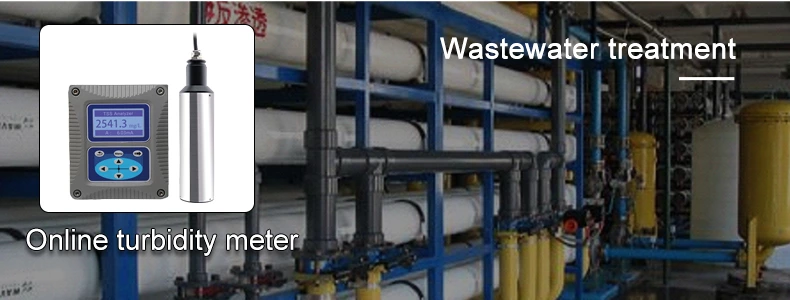
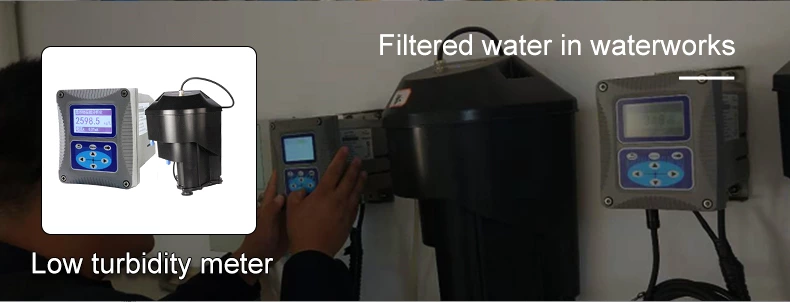
Turbidity meters can be used in a variety of applications, including monitoring water quality in swimming pools, drinking water treatment plants, and industrial processes such as food and beverage production. They can also be used to monitor the effectiveness of water filtration and treatment processes, as well as to detect changes in water quality that may indicate the presence of contaminants or other harmful substances.
1. What is the MIK-PTU200 turbidity meter?
The MIK-PTU200 is an online turbidity analyzer based on the infrared absorption scattered light method combined with ISO 7027. It provides continuous and accurate turbidity detection, with 4–20 mA, relay and RS485 Modbus outputs.
2. How does the MIK-PTU200 measure turbidity?
It uses infrared double scattering light technology based on ISO 7027. Infrared light is directed into the water, and the light scattered by suspended particles is measured to determine turbidity. Because infrared light is used, the measurement is not affected by the color (chroma) of the water.
3. What measuring ranges are available?
- 0.01–100 NTU
- 0.01–4000 NTU
Choose the lower range for clean water such as drinking water and filtered water, and the wider range for wastewater and process water.
4. How accurate is the MIK-PTU200?
The measurement deviation is less than ±2% of the measured value.
5. Is a self-cleaning function available?
Yes. Depending on the usage environment, the MIK-PTU200 can be equipped with a self-cleaning function to keep the optical window clean and reduce manual maintenance.
6. Does it have self-diagnosis?
Yes. The built-in self-diagnosis function helps ensure that accurate data is delivered and supports stable, reliable performance.
7. What outputs are available?
- Analog output: three 4–20 mA outputs (maximum load 500 Ω)
- Relay output: three configurable relays
- Digital communication: RS485 with Modbus, transmitting real-time measurements
8. What can the relays be used for?
The relays can be set up for high or low turbidity alarms and control tasks, for example signaling a filter breakthrough, starting a backwash, or controlling a cleaning device.
9. What power supply is required?
- AC: 85–500 V, 50/60 Hz
- DC: 9–36 VDC
10. What display does it have?
It has a 128 × 64 dot matrix LCD with LED backlight, which can be read under direct sunlight.
11. What pressure can it withstand?
The pressure range is ≤0.4 MPa.
12. What are the housing materials and protection rating?
- Lower casing: aluminum with powder coating
- Cover: PA66 + GF25 + FR
- Ingress protection: IP65 / NEMA 4X
13. What are the size and weight?
- Size: 145 × 125 × 162 mm (L × W × H)
- Weight: 1.35 kg
14. What operating and storage temperatures are allowed?
- Operating temperature: -15 to 60 °C
- Storage temperature: -20 to 70 °C
15. How is the MIK-PTU200 installed and calibrated?
Installation and calibration are designed to be simple. Install the sensor in a representative, well-mixed location away from heavy air bubbles, and calibrate with standard solutions or water samples as described in the manual.
16. What is the warranty period?
The warranty period is 1 year.
17. Where is the MIK-PTU200 used?
Turbidity meters are used to monitor water quality in drinking water treatment plants, swimming pools, industrial wastewater and processes such as food and beverage production. They also help check the effectiveness of filtration and treatment and detect changes in water quality.
18. Which low-turbidity option should I consider for drinking water?
19. What information should I provide to get a quotation?
To help us select the correct configuration, please provide:
- Application and expected turbidity range
- Installation method and water pressure
- Whether self-cleaning is required
- Number of analog outputs and relays
- Power supply (AC or DC)
- Quantity
Send your requirements to info@asmik.com or contact us via WhatsApp at +86 13325716921.