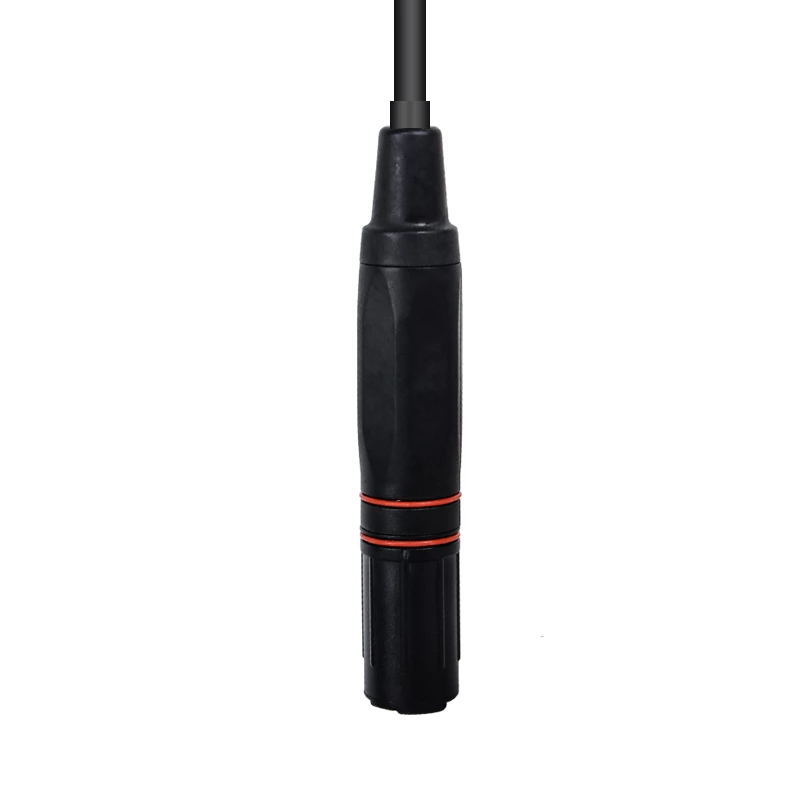
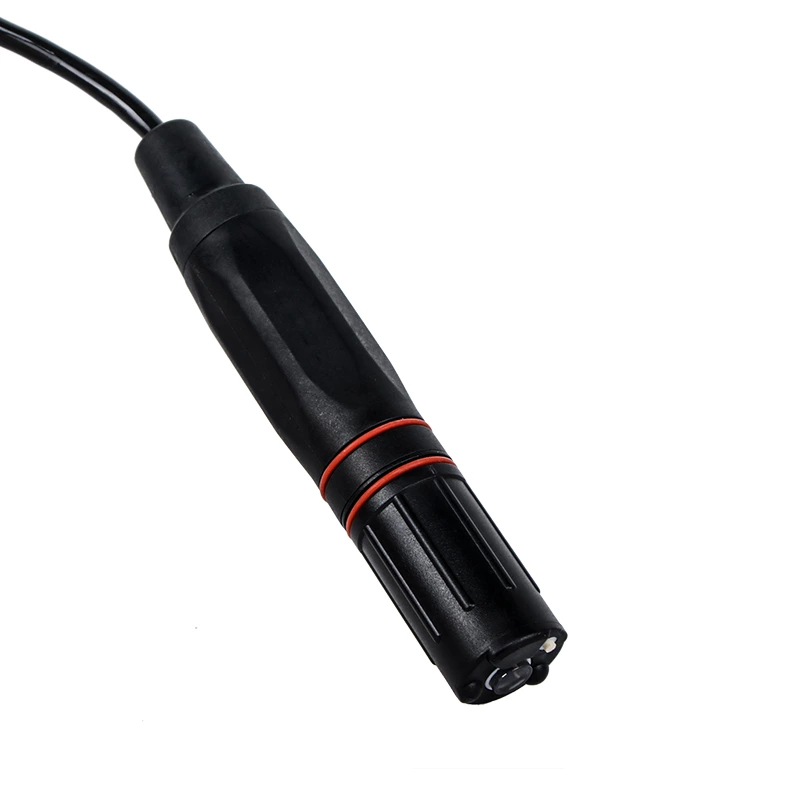
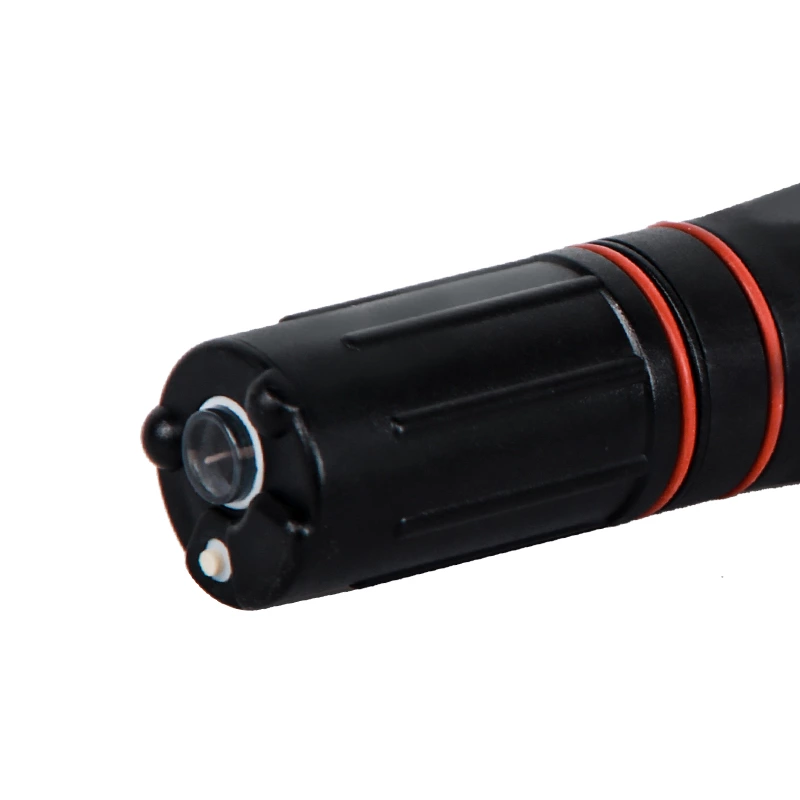
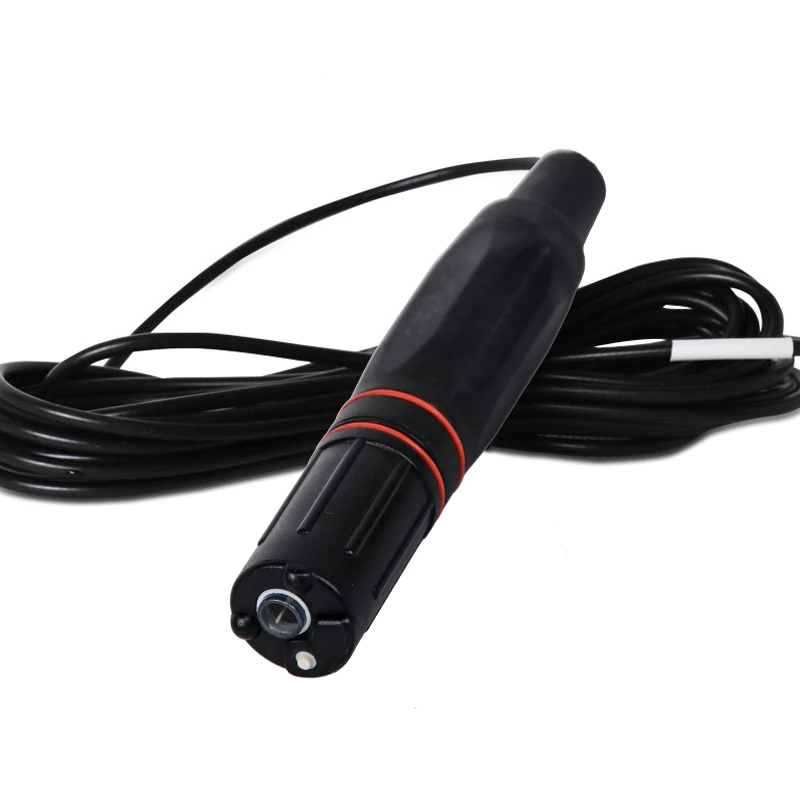
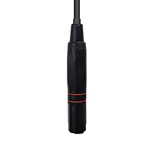
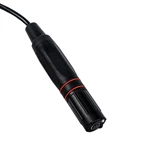
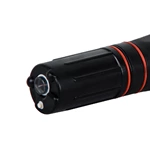
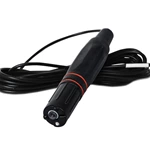
Specification
| Product |
Digital pH sensor |
| Model |
MIK-PH8001 |
| Measurement range |
0.00-14.00pH; ±1000.0mV |
| Resolution |
0.01 pH, 0.1 mV |
| Heat resistance |
0-60℃ |
| Accuracy |
0.02 pH 0.5℃ 0.2 mA |
| Output |
RS485 (MODBUS-RTU) |
| ID |
9600, 8, 1,N (Standard) 1-255 |
| Power supply |
6~30VDC |
| Power consumption |
30 mA @12VDC |
Communication interface: RS485
Port setting: 9600,N,8,1 (default)
Device address: 0x01 (default)
Protocol specification: Modbus RTU
Instruction support: 0x03 read into register
0x06 write register | 0x10 write register continuously
| Address |
Data name |
Conversion factor |
Status |
| 0 |
Temperature |
[0.1℃] |
R |
| 1 |
PH |
[0.01pH] |
R |
| 2 |
PH.mV |
[0.1mV] |
R |
| 3 |
PH. Zero |
[0.1mV] |
R |
| 4 |
PH. slope |
[0.1%S] |
R |
| 5 |
PH. Calibration points |
- |
R |
| 6 |
System status. 01 |
4*bits 0xFFFF |
R |
| 7 |
System status. 02 |
4* bits 0xFFFF |
R/W |
| 8 |
User command address |
- |
R |
| 9 |
User commands. Results |
[0.1mV] |
R |
| 11 |
ORP |
[0.1mV] |
R |
1. What is the MIK-PH8001 digital pH sensor?
The MIK-PH8001 is a digital pH sensor with an RS485 interface and standard Modbus RTU protocol. It measures pH (and ORP values within its range) in aqueous solutions and can communicate directly with a host computer, PLC or IoT system.
2. Where is the MIK-PH8001 used?
It is designed for aquaculture and IoT water quality detection, and can be used wherever pH data needs to be transmitted digitally to a monitoring system.
3. What are the measuring range and resolution?
- pH: 0.00–14.00 pH, resolution 0.01 pH
- mV: ±1000.0 mV, resolution 0.1 mV
- Zero potential point: 7 ± 0.5 pH
4. Can it measure both pH and ORP?
The sensor measures pH and provides mV values, and its register map includes an ORP value. Please tell us whether you need pH, ORP or both, so we can confirm the correct sensor version.
5. How accurate is the MIK-PH8001?
- pH: ±0.02 pH
- Temperature: ±0.5 °C
6. Does it measure temperature?
Yes. Temperature is available in the register map (resolution 0.1 °C) and is used for temperature compensation of the pH reading.
7. What output and protocol does it use?
The output is RS485 with Modbus RTU protocol, so no separate pH transmitter is required when connecting to a PLC, data logger or IoT gateway.
8. What are the default communication settings?
- Port setting: 9600 baud, no parity, 8 data bits, 1 stop bit (9600, N, 8, 1)
- Default device address: 0x01
- Address range: 1–255 (configurable)
9. Which Modbus function codes are supported?
- 0x03: read holding registers
- 0x06: write single register
- 0x10: write multiple registers
10. What data can be read from the registers?
- Address 0: temperature [0.1 °C]
- Address 1: pH [0.01 pH]
- Address 2: pH mV [0.1 mV]
- Address 3: pH zero [0.1 mV]
- Address 4: pH slope [0.1 %S]
- Address 5: pH calibration points
- Addresses 6–7: system status
- Addresses 8–9: user command address and command results
- Address 11: ORP [0.1 mV]
Please contact us for the full communication manual.
11. What power supply does it need?
The sensor operates on 6–30 VDC, with 12 VDC as a typical supply, and consumes about 30 mA at 12 VDC. The low power consumption makes it suitable for IoT systems.
12. What is the installation thread?
The installation size is G3/4.
13. What temperature range can it handle?
The heat resistance is 0–60 °C.
14. What can the MIK-PH8001 be connected to?
It can be connected to any Modbus RTU master, such as a PLC, SCADA system, data logger or IoT gateway. It can also be used with Asmik controllers that support digital sensors, such as the MIK-DC-P2 or MIK-DC2000; please confirm compatibility with us.
15. Can several sensors share one RS485 bus?
Yes. Each sensor can be given a unique Modbus address, so multiple sensors can be connected on one RS485 bus. Follow good RS485 wiring practice, such as a daisy-chain layout and proper termination.
16. How is the sensor calibrated?
The sensor stores its zero, slope and calibration point data, and calibration is performed through user commands over Modbus using standard buffer solutions, such as Asmik standard pH calibration solutions. Please contact us for the calibration command procedure.
17. How should the sensor be maintained?
- Clean the glass membrane regularly, especially in aquaculture ponds where biofouling occurs.
- Keep the membrane wet and store the sensor with its protective cap when not in use.
- Check the reading against buffer solutions and recalibrate when needed.
18. What information should I provide to get a quotation?
To help us select the correct configuration, please provide:
- Application (aquaculture, IoT monitoring, other)
- Parameter (pH, ORP or both)
- Water temperature
- Installation method and cable length
- Host system (PLC, IoT gateway, Asmik controller)
- Quantity
Send your requirements to info@asmik.com or contact us via WhatsApp at +86 13325716921.