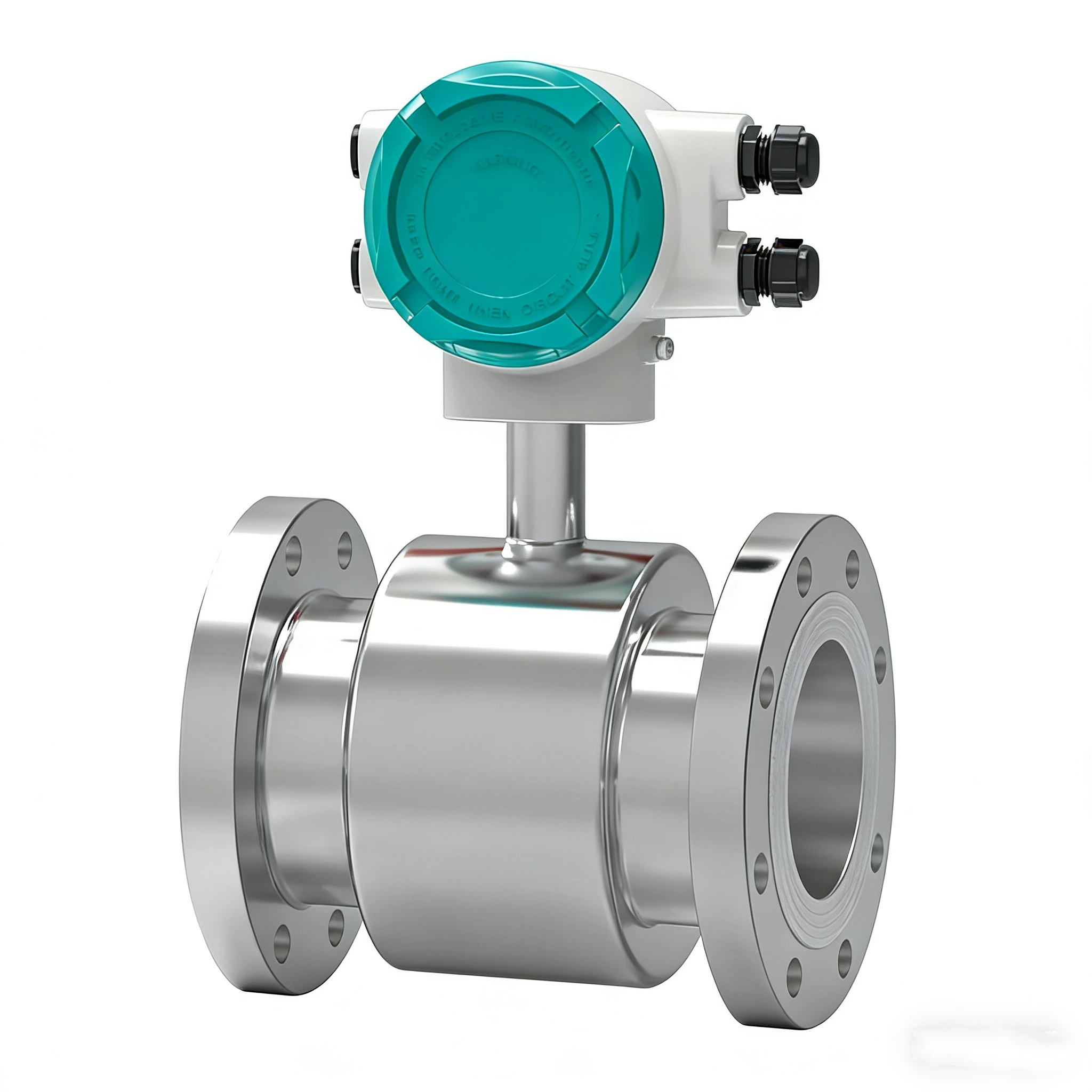
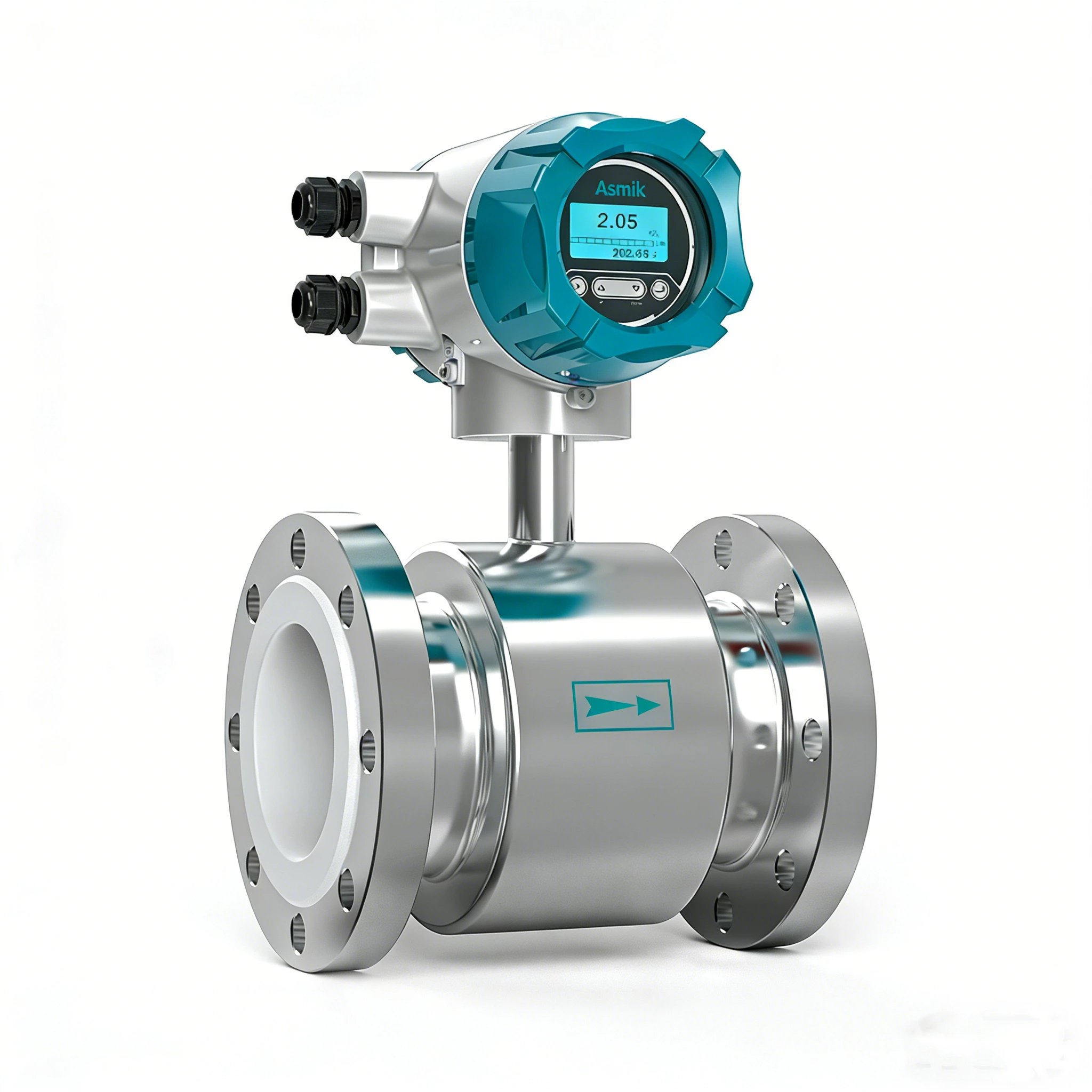
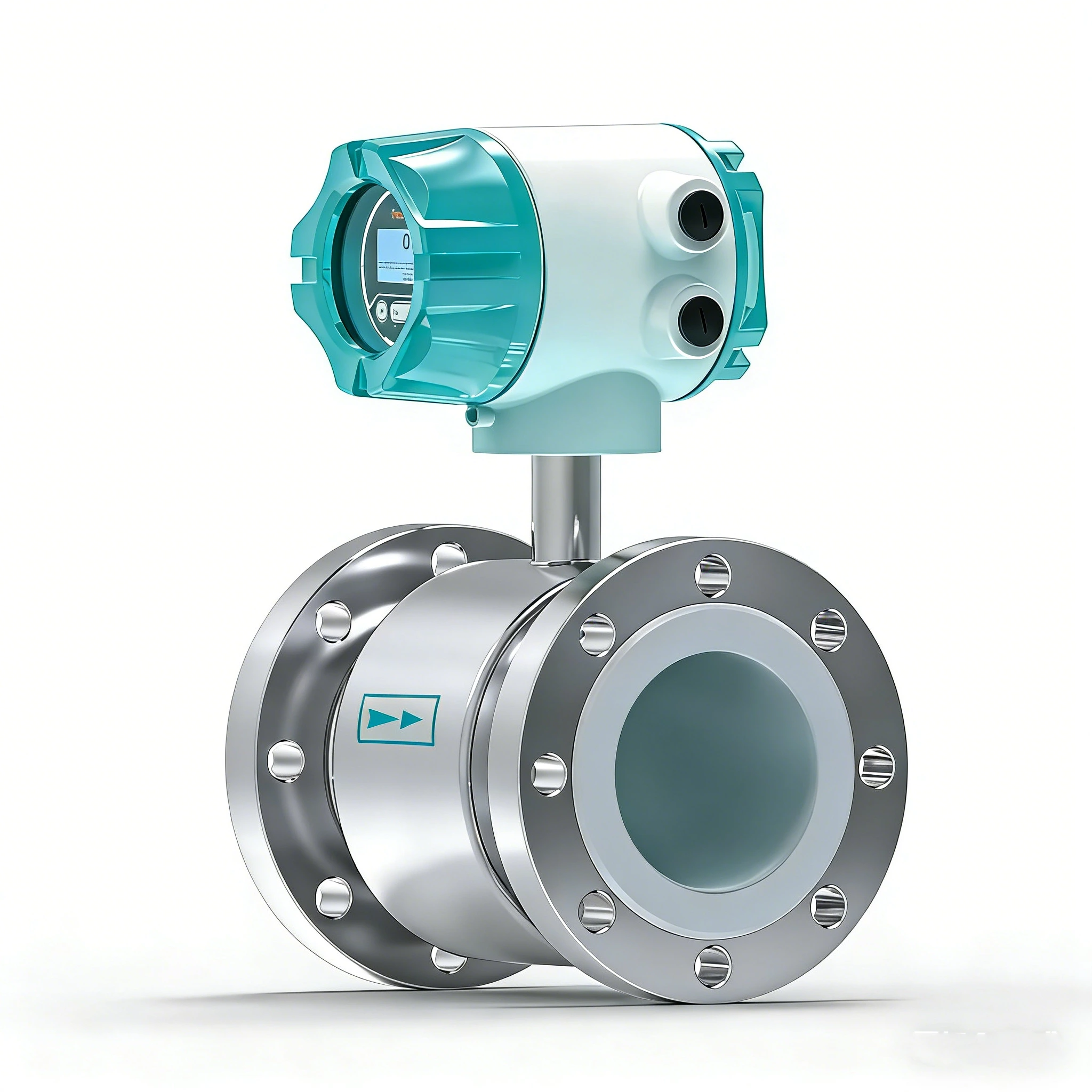
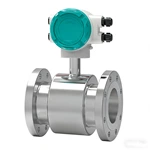
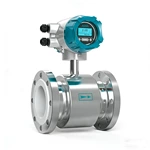
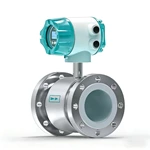
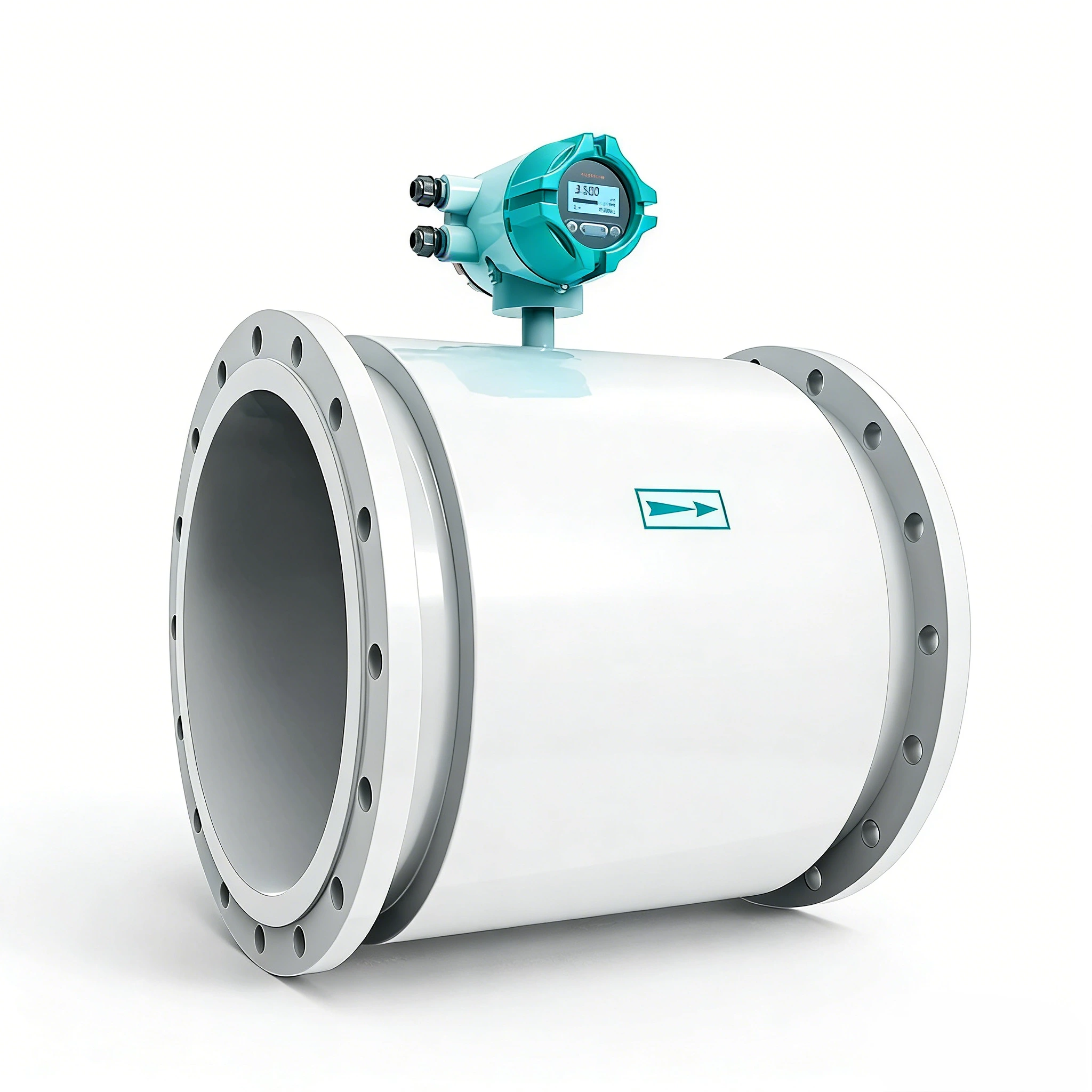
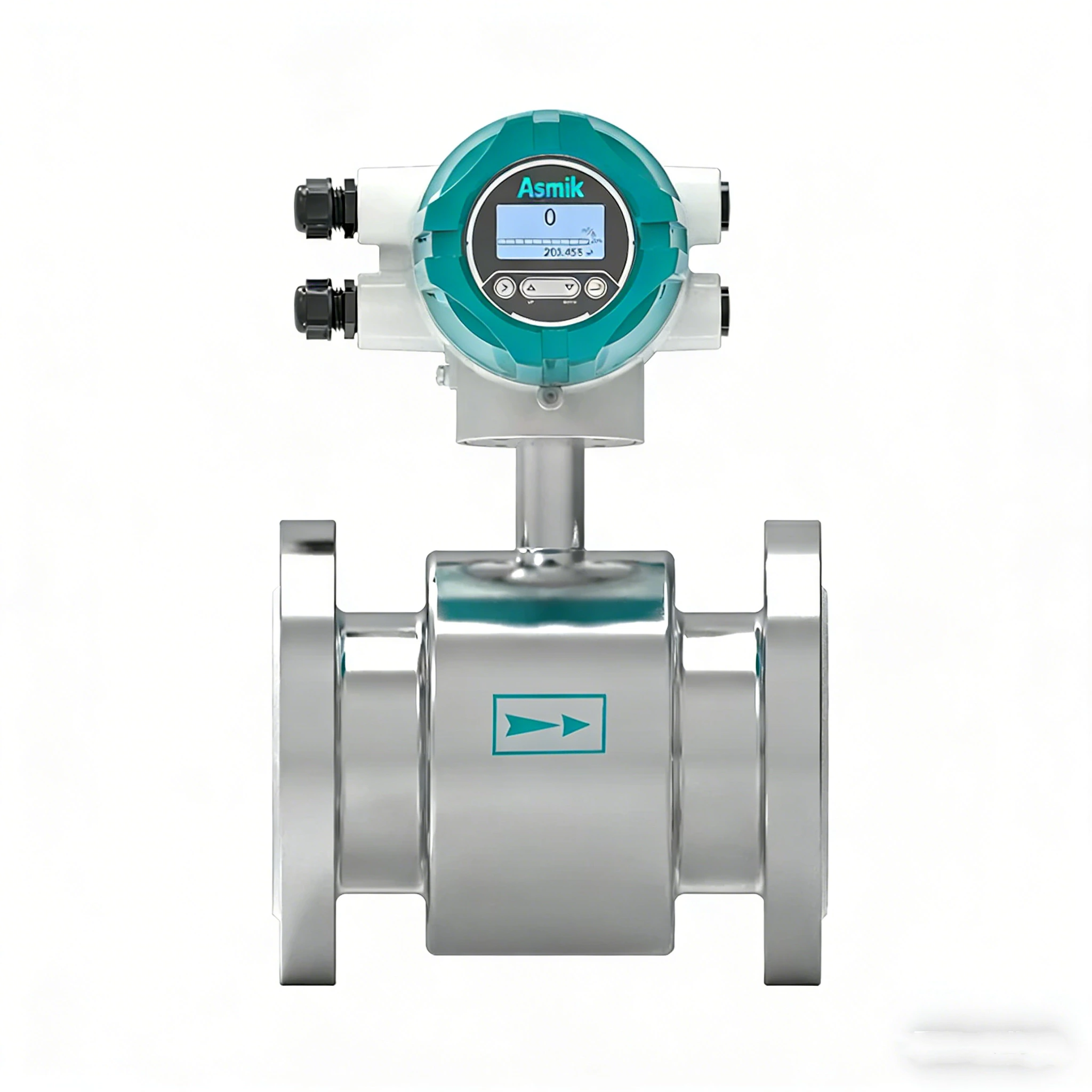
MIK-LDG Stainless steel body electromagnetic flowmeter

Magnetic flow meters operate under the principle of Faraday's Law of Electromagnetic Induction to measure liquid velocity. Following Faraday's Law, magnetic flowmeters measure the velocity of conductive liquids in pipes, such as water, acids, caustic, and slurries. In order of usage, magnetic flowmeter use in water/wastewater industry, chemical, food and beverage, power, pulp and paper, metals and mining, and pharmaceutical application.

Characteristics

Accuracy:  ±0.5%,±2mm/s(flowrate<1m/s)

Theoretical value: Water: Min. 20μS/cm; Other liquid: Min. 5μS/cm
Recommended value: >30μS/cm

Flange: ANSI/JIS/DIN DN10…1200

Ingress protection: IP65
 

Specification

  • Specification

 Product  Electromagnetic flow meter
 Model  MIK-LDG
 Diameter nominal  DN15~DN1200
 Nominal pressure  0.6~4.0MPa
 Accuracy  ±0.5%,±2mm/s(flowrate<1m/s)
 Liner material  PFA,F46,Neoprene,PTFE,FEP
 Electrode material  Stainless steel SUS316L, Hastelloy C, Titanium,
   Tantalum Platinum-iridium
 Medium temperature  Integral type: -10℃~80℃
   Split type: -25℃~180℃
 Ambient Temperature  -10℃~60℃
 Electrical conductivity  Water 20μS/cm other medium 5μS/cm
 Structure type  Tegral type, split type
 Ingress protection  IP65
 Product standard  JB/T 9248-1999 Electormagnetic Flowmeter


  • FAQ

1. What is the MIK-LDG stainless steel body electromagnetic flowmeter?

The MIK-LDG stainless steel body electromagnetic flowmeter measures the flow of conductive liquids such as water, acids, caustic solutions and slurries. It is available in integral and split (remote) versions, with ANSI, JIS or DIN flanges.

2. How does the MIK-LDG work?

It works on Faraday's law of electromagnetic induction. When a conductive liquid flows through the magnetic field inside the measuring tube, a voltage proportional to the flow velocity is induced. The meter measures this velocity and calculates the volume flow rate from the tube's cross-sectional area.

3. Why choose a stainless steel body?

A stainless steel body offers better corrosion resistance than a carbon steel body, making it suitable for corrosive environments, outdoor or humid locations, and installations where a clean appearance matters. For general water and wastewater pipelines, the MIK-LDG Carbon Steel Body is a cost-effective alternative. In both cases, the liner and electrodes are the parts in contact with the liquid and must be selected according to the medium.

4. Is the stainless steel body version suitable for food and beverage?

A stainless steel body alone does not make a meter hygienic. For food and beverage processing, see the MIK-LDG Sanitary Electromagnetic Flowmeter, which is designed for food processing applications.

5. What liquids can the MIK-LDG measure?

It measures conductive liquids, including water, wastewater, acids, caustic solutions and slurries. It cannot measure gases, steam or non-conductive liquids such as oils.

6. What is the minimum conductivity required?
  • Theoretical minimum: 20 μS/cm for water; 5 μS/cm for other liquids
  • Recommended: above 30 μS/cm

For liquids with lower conductivity, see the MIK-FMC400 Low Conductivity Electromagnetic Flow Meter.

7. What flow velocity range can it measure?

The measurable flow velocity range is 0.2 m/s to 15 m/s. Choose a meter size so that your normal flow falls within this range.

8. What pipe sizes and flange standards are available?

Pipe sizes range from DN15 to DN1200, with ANSI, JIS or DIN flanges.

9. How accurate is the MIK-LDG?

Accuracy is ±0.5%. When the flow velocity is below 1 m/s, the accuracy is ±0.5% ±2 mm/s.

10. What pressure ratings are available?

Nominal pressure ratings range from 0.6 MPa to 4.0 MPa, depending on the pipe size and flange. Please tell us your working pressure when ordering.

11. What liner materials are available?

Options include PFA, FEP (F46), PTFE and neoprene. As a general guide, neoprene is commonly used for water and wastewater, while PTFE, FEP and PFA are used for corrosive chemicals and higher temperatures.

12. What electrode materials are available?

Options include SUS316L stainless steel, Hastelloy C, titanium, tantalum and platinum-iridium. 316L is commonly used for water and mildly corrosive liquids; the other materials are used for more corrosive media. Send us the liquid name and concentration for a recommendation.

13. What medium temperatures can it handle?
  • Integral type: -10 °C to 80 °C
  • Split type: -25 °C to 180 °C

For high-temperature liquids, the split type is recommended because the converter is installed away from the hot pipeline. The maximum temperature also depends on the liner material.

14. What ambient temperature is allowed?

The ambient temperature range is -10 °C to 60 °C.

15. What is the difference between the integral and split types?

In the integral type, the converter is mounted directly on the sensor. In the split type, the converter is installed separately and connected to the sensor by cable. The split type supports higher medium temperatures and is suitable for locations that are hard to reach or subject to vibration. See also the MIK-LDG Remote Type Electromagnetic Flowmeter.

16. What is the ingress protection rating?

The standard rating is IP65. If the sensor may be submerged, for example in a pit or valve chamber, consider the MIK-LDG Remote Type, whose sensor has IP68 protection.

17. Does it measure volume flow or mass flow?

An electromagnetic flowmeter is a volumetric flowmeter: it measures flow velocity and calculates volume flow. If you need direct mass flow and density measurement, see our Coriolis mass flowmeters.

18. What power supply and output signals are available?

Power supply and output options depend on the configuration. Please tell us your available power (AC or DC) and the signals your control system requires, such as 4–20 mA, pulse or RS485, and we will confirm a suitable configuration.

19. Which standard does the MIK-LDG follow?

The MIK-LDG is manufactured according to the JB/T 9248 standard for electromagnetic flowmeters.

20. What should I consider during installation?
  • The measuring tube must always be completely full of liquid.
  • Provide sufficient straight pipe upstream and downstream of the meter.
  • Avoid the highest point of the pipeline; vertical pipes with upward flow are preferred.
  • Ground the sensor properly for a stable signal.
  • Keep away from strong magnetic fields and heavy vibration, or use the split type.

Please follow the installation manual or contact our engineers for site-specific requirements.

21. Does the MIK-LDG need much maintenance?

No. It has a full-bore design with no moving parts or throttling components, so maintenance needs and pressure loss are minimal. It also supports bidirectional flow measurement. For liquids that form deposits, periodic electrode inspection is recommended.

22. Which industries use the MIK-LDG?

In order of usage, typical industries include water and wastewater, chemical, food and beverage, power, pulp and paper, metals and mining, and pharmaceuticals.

23. What information should I provide to get a quotation?

To help us select the correct model, please provide:

  • Liquid name, concentration and conductivity
  • Flow range (min / normal / max)
  • Pipe size and flange standard (ANSI, JIS or DIN)
  • Liquid temperature and working pressure
  • Preferred liner and electrode materials (if known)
  • Integral or split type
  • Power supply (AC or DC)
  • Output and communication requirements
  • Special requirements and quantity

Send your requirements to info@asmik.com or contact us via WhatsApp at +86 13325716921.

Features

Benefits

  • Almost unaffected by fluid properties, it can perform stable measurements under a variety of complex operating conditions
  • Utilizing a full-bore structure, it has no moving parts and no throttling components
  • Long-term operation can achieve near-maintenance-free operation
  • Suitable for measuring pipes from small to large diameters (covering DN2–DN3000 levels)
  • Bidirectional measurement and strong adaptability
  • Widely applicable and highly compatible with various industries

Automated &factory

Need more information?

Contact us for more details about our solutions and services

This site uses cookies

We use cookies to collect information about how you use this site. We use this information to make the website work as well as possible and improve our services.