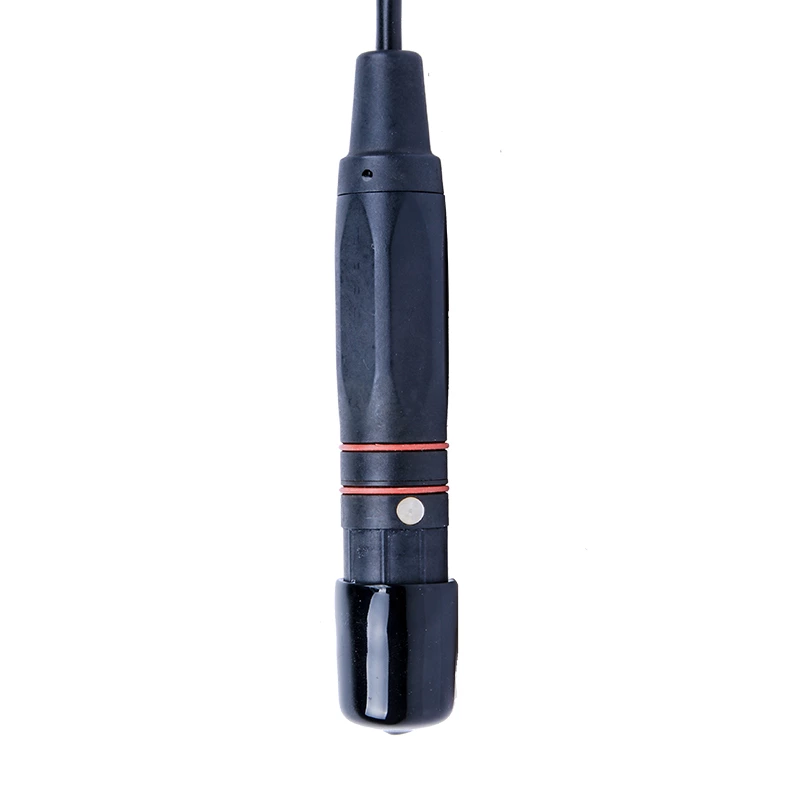
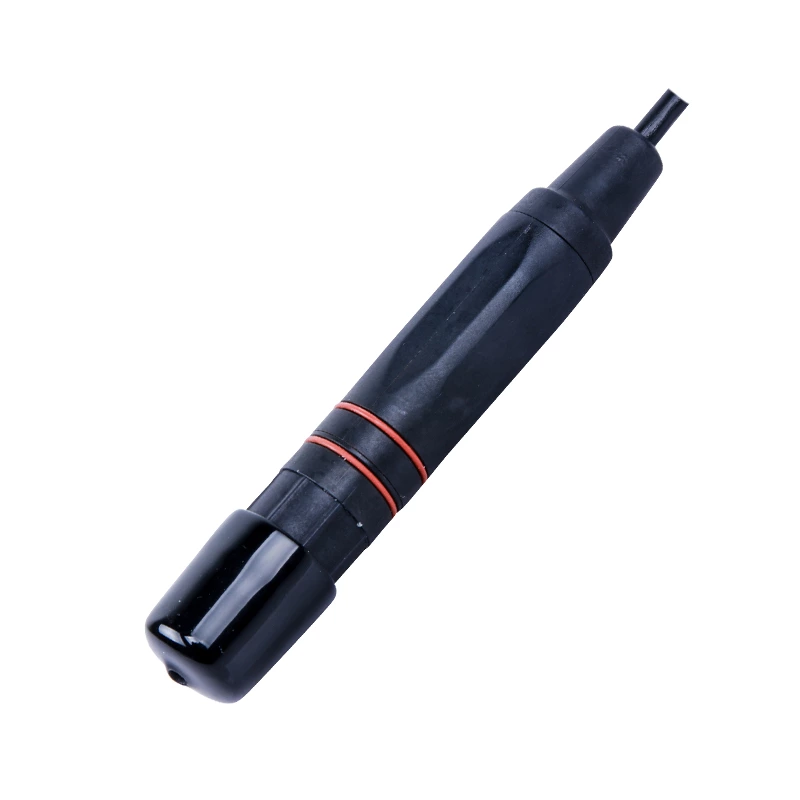
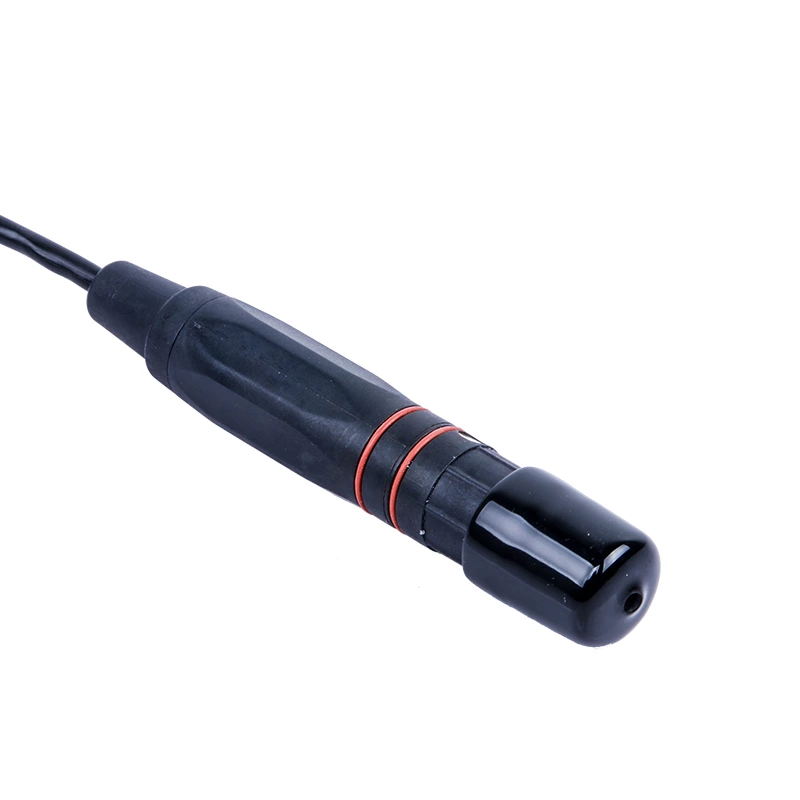
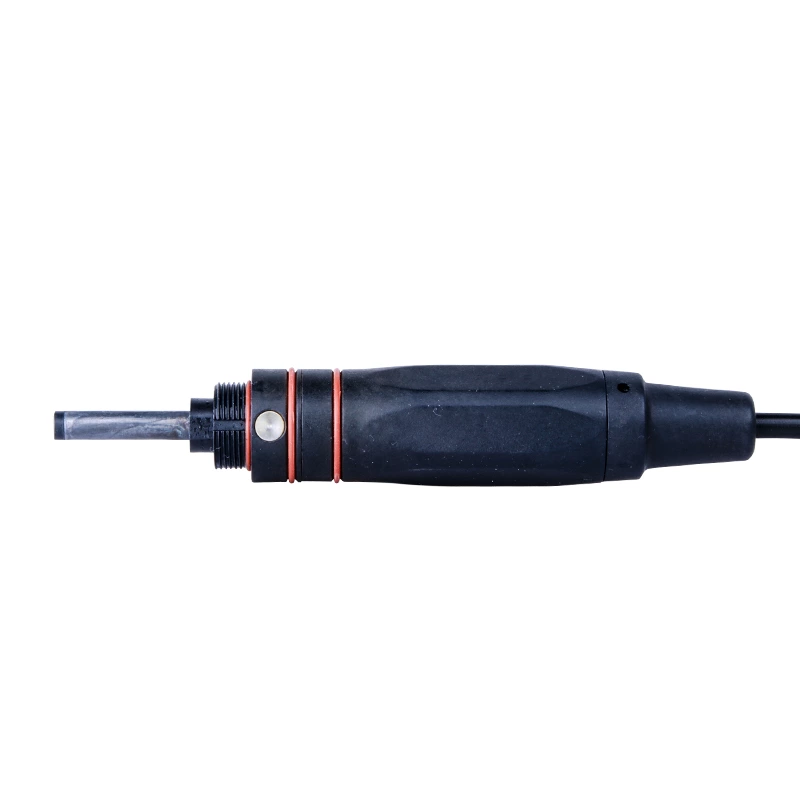
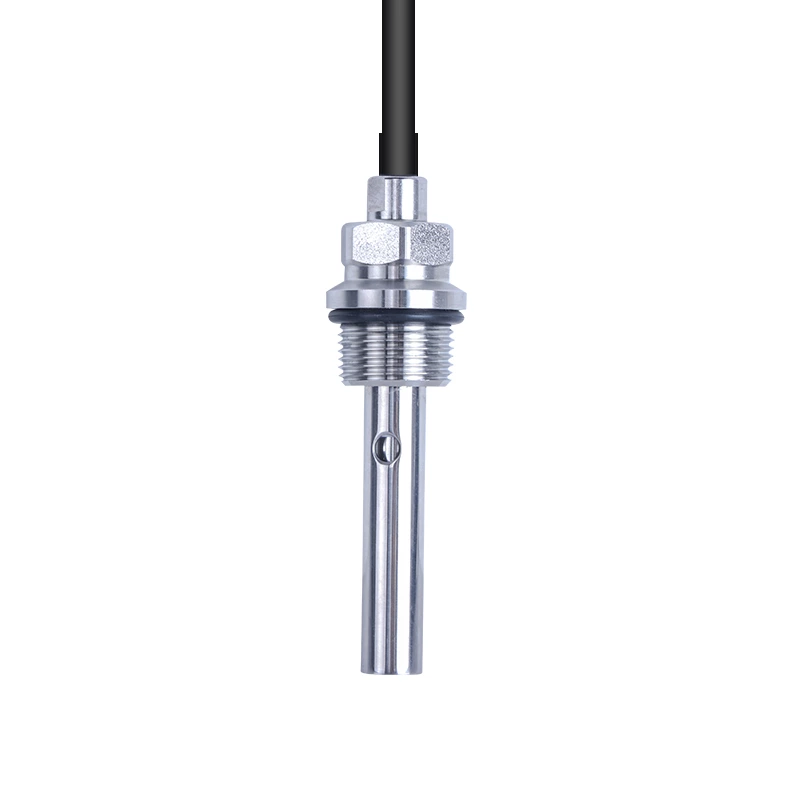
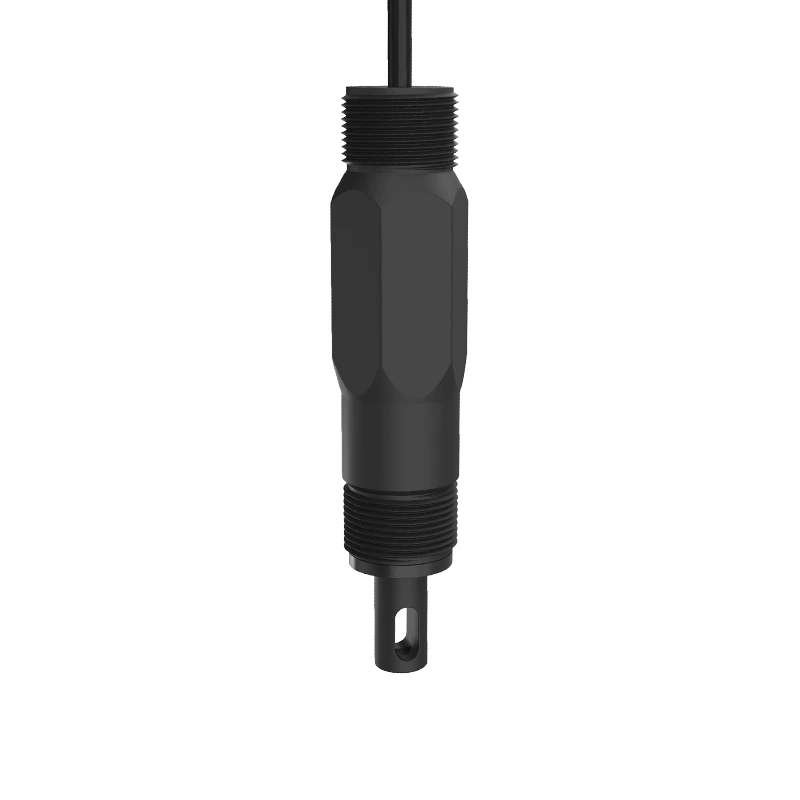
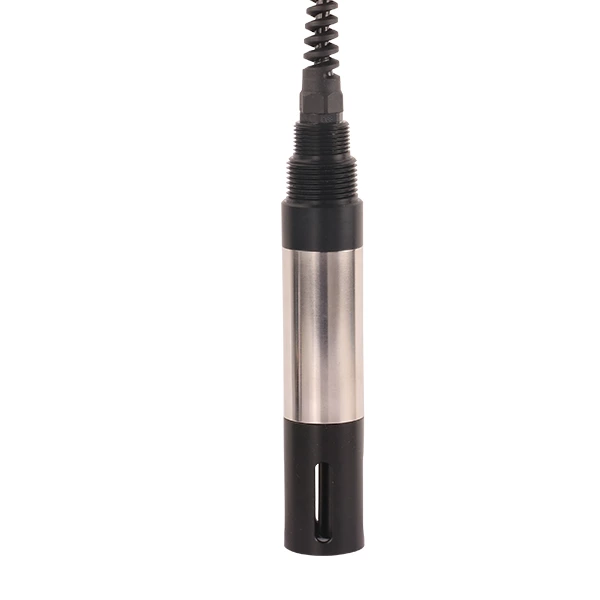
Specification
| Measurement |
DO value in water |
| Measure range |
0~20.00mg/l |
| Resolution |
0.01mg/l |
| Temperature range |
-20~60°C |
| Type of sensor |
Galvanic Cell sensor |
| Measuring accuracy |
<0.5mg/l |
| Output mode |
RS485 port*1 |
| Communication protocol |
Compatible with standard MODBUS-RTU protocol |
| Communication mode |
RS485 9600,8,1,N (by default) |
| ID |
1~255 Default ID 01 (0x01) |
| Fixing method |
RS485 remote setting calibration and parameters |
| Power supply mode |
12VDC |
| Power consumption |
30 mA @12VDC |
Communication port: RS485
Port setting: 9600,N,8,1 (by default)
Device address: 0x01 (by default)
Protocol specifications: Modbus RTU
Commands support: 0x03 read register
0X06 write register| 0x10 continuous write register
| 0x03 read data [HEX] |
| 01 |
03 |
×× ×× |
×× ×× |
×× ×× |
| Address |
Function code |
Data head address |
Data length |
Check code |
| 0x06 write data [HEX] |
| 01 |
06 |
×× ×× |
×× ×× |
×× ×× |
| Address |
Function code |
Data address |
Write data |
Check code |
Remarks: The check code is 16CRC with low byte ahead.
| 0x10 Continuous write data [HEX] |
| 01 |
10 |
×× ×× |
×××× |
| Address |
Function code |
Data address |
Register number |
| ×× |
×× ×× |
×× ×× |
|
| Byte number |
Write data |
Check code |
|
| Address |
Data name |
Switch coefficient |
Status |
| 0 |
Temperature |
0.1°C |
R |
| 1 |
DO |
0.01mg/L |
R |
| 2 |
Saturability |
0.1%DO |
R |
| 3 |
Sensor. null point |
0.1% |
R |
| 4 |
Sensor. slope |
0.1mV |
R |
| 5 |
Sensor. MV |
0.1%S |
R |
| 6 |
System status. 01 |
Format 4*4bit 0xFFFF |
R |
| 7 |
System status.02 User command address |
Format: 4*4bit 0xFFFF |
R/W |
Remarks:Data in each address is a 16-bit signed integer, the length is 2 bytes.
The real result=Register data * switch coefficient
Status:R=only read; R/W= read/write
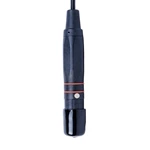
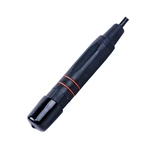
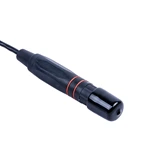
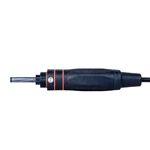
1. What is the MIK-DO7013 electrochemical dissolved oxygen sensor?
The MIK-DO7013 is a digital electrochemical (galvanic cell) dissolved oxygen sensor with RS485 Modbus-RTU output. It is widely used in aquaculture, water quality testing, data collection and IoT water quality monitoring.
2. What is a galvanic cell DO sensor?
A galvanic cell sensor uses two electrodes made of different metals in an electrolyte behind a membrane. Oxygen diffusing through the membrane is reduced at the cathode, generating a current proportional to the oxygen concentration. Unlike a polarographic sensor, a galvanic sensor generates its own voltage, so it is generally ready to measure quickly after power-up.
3. What does the MIK-DO7013 measure?
It measures dissolved oxygen (mg/L), DO saturation and temperature.
4. What are the measuring range, resolution and accuracy?
- Range: 0–20.00 mg/L
- Resolution: 0.01 mg/L
- Accuracy: <0.5 mg/L
- Temperature range: -20 to 60 °C
5. What power supply does it need?
The sensor is powered by 12 VDC and consumes about 30 mA at 12 VDC, which makes it suitable for low-power IoT systems.
6. What are the default communication settings?
- Interface: RS485 (one port)
- Protocol: Modbus RTU
- Port setting: 9600, N, 8, 1 (default)
- Device address: 0x01 (default); range 1–255
7. Which Modbus function codes are supported?
- 0x03: read registers
- 0x06: write single register
- 0x10: write multiple registers
The check code is CRC16 with the low byte first.
8. What data can be read from the registers?
- Address 0: temperature (×0.1 °C)
- Address 1: DO (×0.01 mg/L)
- Address 2: saturation (×0.1 %DO)
- Addresses 3–5: sensor zero point, slope and mV
- Addresses 6–7: system status and user command address
Each register is a 16-bit signed integer; the real value equals the register data multiplied by the coefficient. Please contact us for the complete communication manual.
9. How is the sensor calibrated?
Calibration and parameter settings are performed remotely via RS485 commands. Please contact us for the calibration command procedure.
10. Where is the MIK-DO7013 used?
Typical applications include aquaculture ponds and tanks, water quality testing, data collection systems and IoT water quality monitoring.
11. Is it suitable for aquaculture?
Yes. The MIK-DO7013 is widely used in aquaculture, where continuous DO monitoring helps protect stock and control aerators. Its low power consumption and Modbus output make it easy to integrate into pond monitoring systems.
12. Can it control aerators?
The sensor provides DO values via Modbus. A PLC, controller or IoT platform can use these values to switch aerators on and off at set points.
13. What can the MIK-DO7013 be connected to?
It can be connected to any Modbus-RTU master, such as a PLC, data logger or IoT gateway. It can also be used with the MIK-DC2000 controller for Asmik digital sensors; please confirm compatibility with us.
14. Does the sensor need water flow?
Like other membrane-type electrochemical sensors, a galvanic sensor consumes oxygen during measurement, so some water movement across the membrane is generally recommended for stable readings.
15. What maintenance does it need?
- Clean the membrane regularly, especially in aquaculture ponds where biofouling occurs.
- Replace the membrane and electrolyte when the response becomes slow or unstable.
- Check and recalibrate the sensor after maintenance.
16. Electrochemical or optical DO sensor: which should I choose?
The MIK-DO7013 electrochemical sensor is a cost-effective choice for aquaculture and IoT monitoring. For lower maintenance and no flow requirement, see the optical MIK-DO7012, which also offers salinity and atmospheric pressure compensation registers.
17. What information should I provide to get a quotation?
To help us select the correct configuration, please provide:
- Application (aquaculture, water quality testing, IoT monitoring)
- DO range and water temperature
- Cable length
- Host system (PLC, IoT gateway or Asmik controller)
- Quantity
Send your requirements to info@asmik.com or contact us via WhatsApp at +86 13325716921.