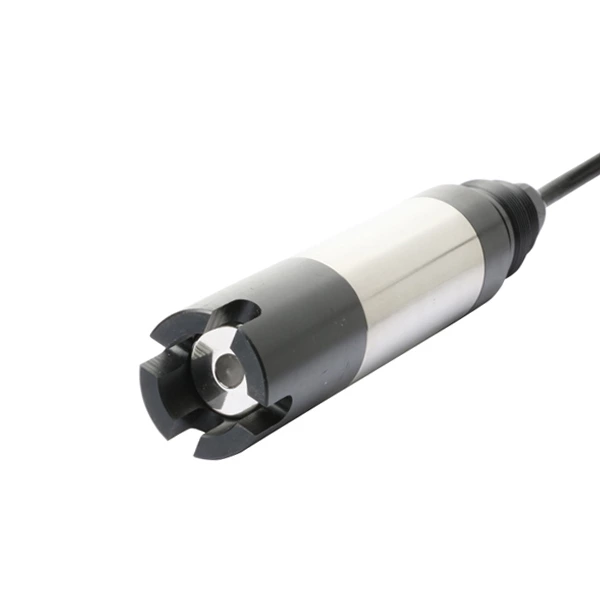
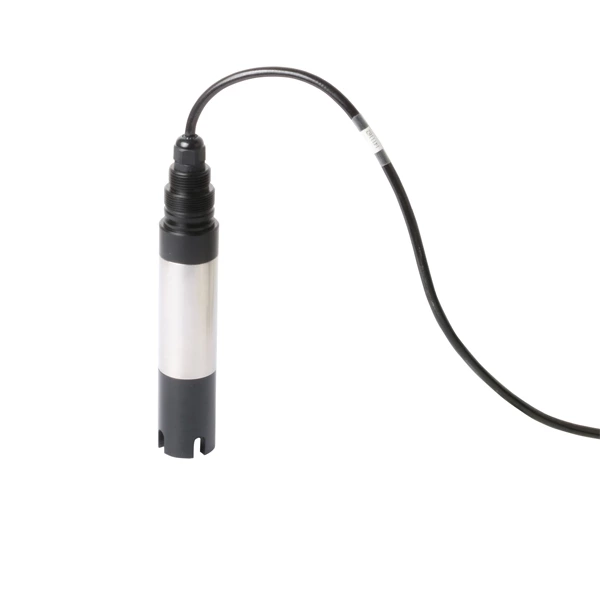
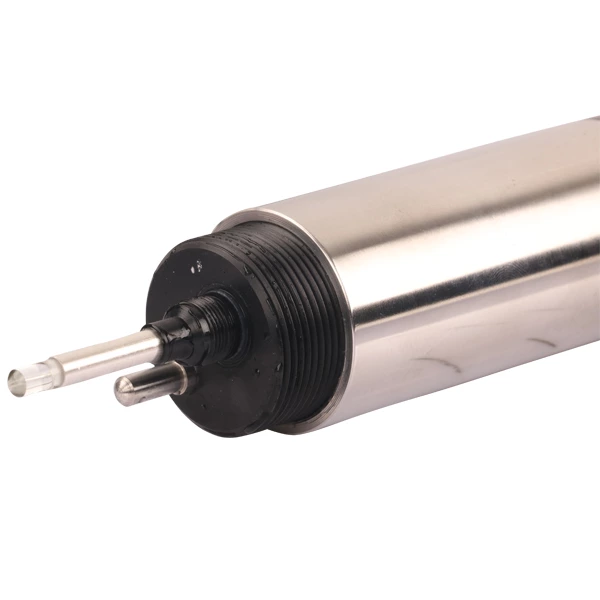
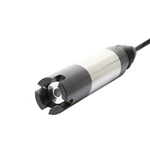
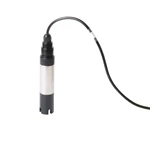
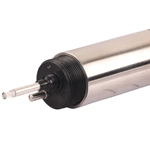
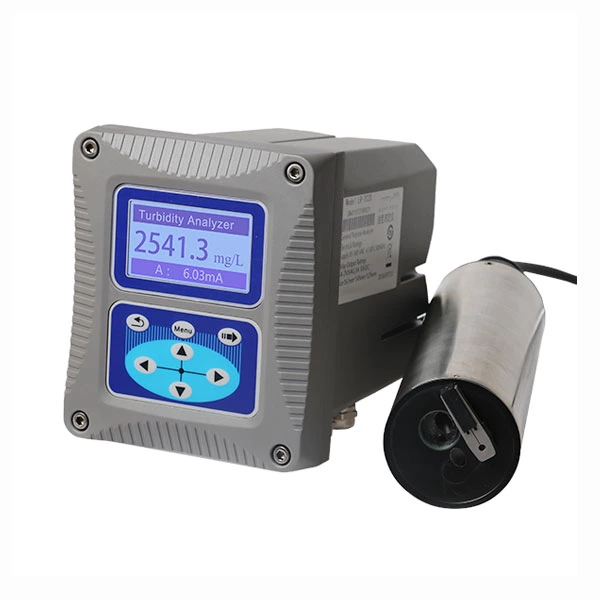
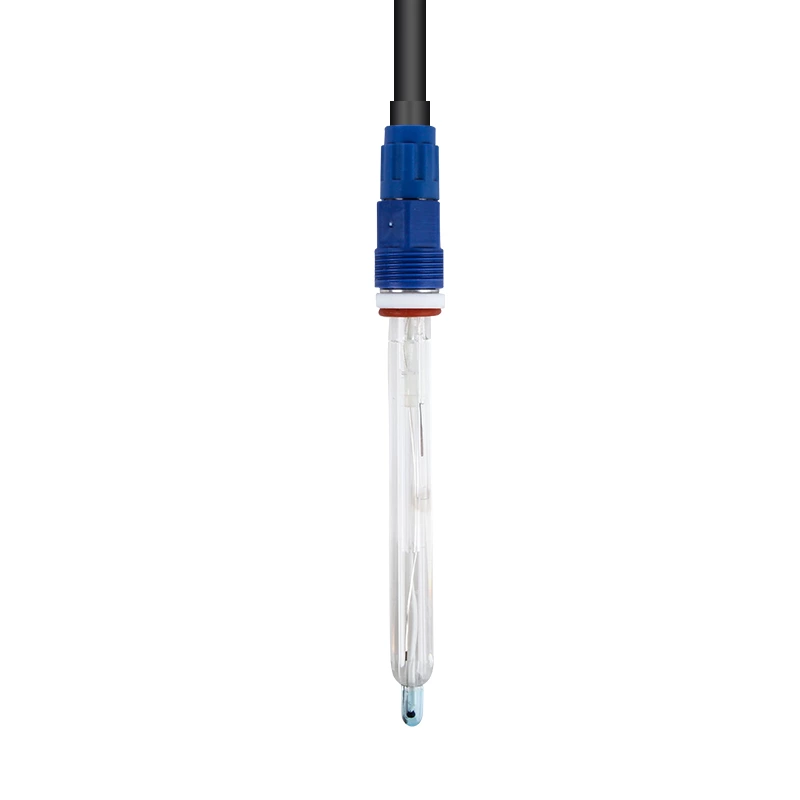
MIK-DO7011 Membrane dissolved oxygen sensor

MIK-DO7011 Membrane type dissolved oxygen sensor is the measure of oxygen dissolved in an aqueous solution. Polarographic measurement principle, the dissolution value depends on the temperature of the aqueous solution, pressure and salinity in solution.

Characteristics

Range: DO:0-20 mg/L、0.6MPa;Temperature:0-60℃

Resolution: DO:±3% of  the measured value;Temperature:±0.5℃

Output signal: 4~20mA

Temperature Type: Pt100、Pt1000、2.252K etc
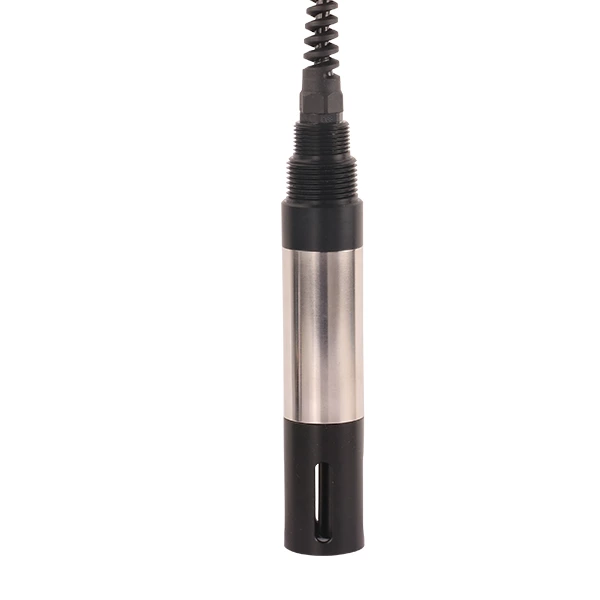
Specification

  • Specification

Product  Dissolved oxygen sensor
Model MIK-DO7011
Measure range DO: 0-20 mg/L, 0.6 MPa; Temperature: 0-60℃
Accuracy DO: ±3% of  the measured value; Temperature: ±0.5℃
Temperature Type Pt100、Pt1000、2.252K etc

Output Type 4-20mA output
Weight 1.85Kg
Cable length 5m(Doubleshielding)
ElectrodeShellMaterial PVCor316L
BreathableThickness 100um
MeasurementError ±<0.01mg/L
AirCurrent/MaximumCurrent 50-80nA/0.1mg/LMAX:3.5uA
ResponseTime 2min(90%,20℃)
MinimumFlowRate 2.5cm/s
Zero Oxygen <0.01mg/L
Drift <2%/month


  • FAQ

1. What is the MIK-DO7011 membrane dissolved oxygen sensor?

The MIK-DO7011 is a membrane-type dissolved oxygen (DO) sensor based on the polarographic measurement principle. A membrane separates the sample from the sensor's working electrode, and the sensor measures the oxygen dissolved in an aqueous solution.

2. How does a polarographic membrane sensor work?

Oxygen diffuses from the water through a gas-permeable membrane to the working electrode, where it is reduced and produces a small current. The current is proportional to the oxygen partial pressure. Because oxygen solubility depends on water temperature, pressure and salinity, these factors affect the DO value.

3. What is the measuring range?
  • Dissolved oxygen: 0–20 mg/L
  • Pressure: up to 0.6 MPa
  • Temperature: 0–60 °C
4. How accurate is the MIK-DO7011?
  • DO accuracy: ±3% of the measured value
  • Temperature accuracy: ±0.5 °C
  • Measurement error: <0.01 mg/L
  • Zero oxygen reading: <0.01 mg/L
  • Drift: <2% per month
5. What is the response time?

The response time is 2 minutes (T90 at 20 °C).

6. Does the sensor need water flow?

Yes. A membrane sensor consumes oxygen during measurement, so the minimum flow rate across the membrane is 2.5 cm/s. Install the sensor where there is sufficient water movement, or use a flow-through arrangement.

7. What are the membrane and current characteristics?
  • Membrane (breathable) thickness: 100 μm
  • Air current: 50–80 nA
  • Current at 0.1 mg/L; maximum current: 3.5 μA
8. Which temperature elements are available?

Pt100, Pt1000, 2.252K and other temperature elements are available. Choose the element that matches your DO meter.

9. What output does the sensor provide?

The specification lists a 4–20 mA output type. Please tell us whether you will connect the sensor to a DO meter or directly to a control system, so we can confirm the correct output configuration.

10. What materials, cable and weight apply?
  • Electrode shell: PVC or 316L
  • Cable: 5 m, double shielded
  • Weight: 1.85 kg
11. Which DO meter can be used with the MIK-DO7011?

Asmik offers the MIK-DM2800 membrane dissolved oxygen meter for membrane DO sensors. Please make sure the meter supports the selected temperature element, and confirm compatibility with us before ordering.

12. How is the sensor calibrated?

Membrane DO sensors are generally calibrated in water-saturated air (100% saturation) and, if required, in a zero-oxygen solution. Allow the sensor to polarize before calibration, and follow the procedure of your DO meter.

13. What maintenance does the sensor need?
  • Clean the membrane regularly; deposits and biofilm reduce oxygen diffusion.
  • Replace the membrane and electrolyte when the response becomes slow or unstable.
  • Allow a polarization period after installation or maintenance.
  • Recalibrate after maintenance.
14. How should the sensor be installed?
  • Install the sensor where water flow across the membrane is at least 2.5 cm/s.
  • Mount it at a representative depth, away from direct aerator bubbles.
  • Keep the membrane facing downward or at an angle to prevent bubbles from collecting on it.
  • Make sure the sensor can be removed easily for cleaning and maintenance.
15. Membrane or optical DO sensor: which should I choose?

The MIK-DO7011 membrane sensor is a proven, cost-effective technology, but needs periodic membrane and electrolyte maintenance and a minimum water flow. Optical sensors such as the MIK-DO7017 consume no oxygen, have no flow requirement and need less maintenance.

16. Where is the MIK-DO7011 used?

Typical applications include aeration tanks and effluent in wastewater treatment, water plants, aquaculture and industrial water monitoring.

17. What information should I provide to get a quotation?

To help us select the correct configuration, please provide:

  • Application and installation point
  • DO range, water temperature, pressure and salinity
  • Water flow conditions at the sensor
  • Shell material (PVC or 316L) and temperature element
  • Cable length and output requirement
  • Whether a DO meter is required
  • Quantity

Send your requirements to info@asmik.com or contact us via WhatsApp at +86 13325716921.

Features

Benefits

  • Optical/fluorescence measurement technology, oxygen-free
  • Automatic temperature compensation and stable output
  • Good communication compatibility (Modbus, standard signals)
  • Strong adaptability to field environments
  • High accuracy and fast response
  • Low maintenance cost and easy to use

Automated &factory

Need more information?

Contact us for more details about our solutions and services

This site uses cookies

We use cookies to collect information about how you use this site. We use this information to make the website work as well as possible and improve our services.