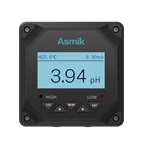
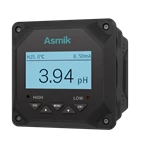
Specification
| Product |
ORP meter controller, Redox monitor |
| Model |
MIK-ORP6.0 |
| Measure range |
ORP: -1000 ~1000mV, ±1mV |
| Measuring medium |
Liquid |
| Input Resistance |
≥1012Ω |
| Temp compensation |
Manual/ Auto temperature compensation |
| Temperature Range |
-10~130℃, NTC10K or PT1000 |
| Communication |
RS485, Modbus-RTU |
| Signal output |
4-20mA, maximum loop 750Ω, 0.2%FS |
| Power supply |
220V±10%,24V±20%,50Hz/60Hz |
| Relay output |
250V, 3A |
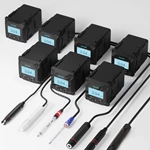
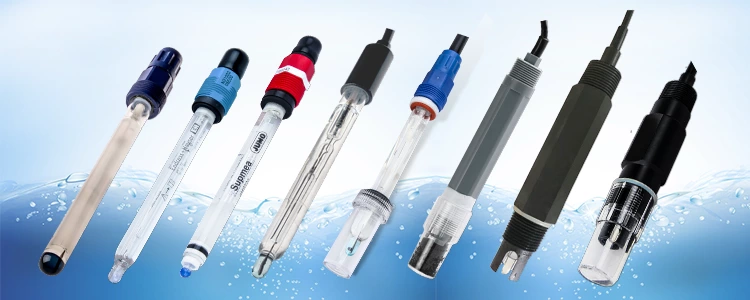
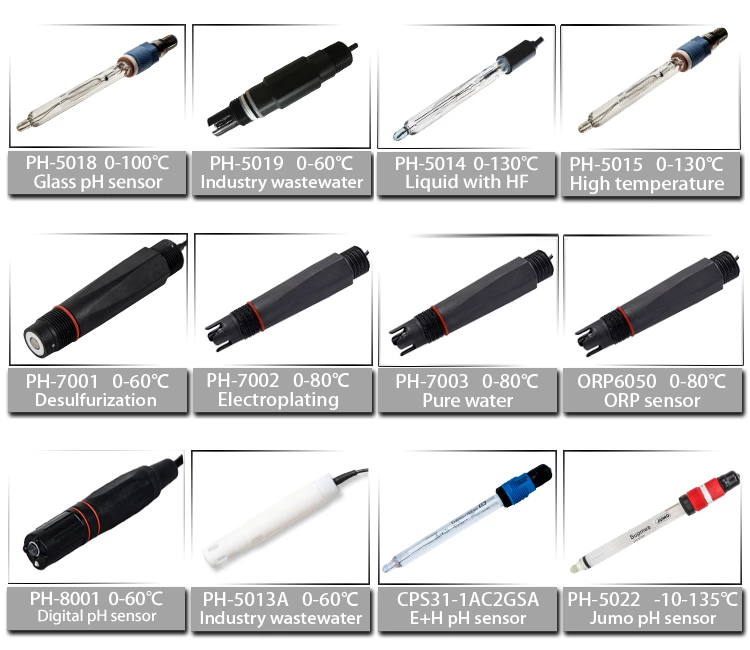
Offers a full range of ORP electrodes for measuring different media. Such as sewage, pure water, drinking water etc.
1. What is the MIK-PH6.5 pH/ORP meter?
The MIK-PH6.5 is an online industrial pH/ORP analyzer used in chemical, metallurgy, environmental protection, food, agriculture and water treatment applications. It provides 4–20 mA, RS485 (Modbus-RTU) and relay outputs for pH control and remote data transmission.
2. What can the MIK-PH6.5 measure?
It measures pH or ORP, together with temperature for compensation.
3. What are the measuring ranges and accuracy?
- pH: 0.00–14.00 pH, accuracy ±0.02 pH
- ORP: -2000 to +2000 mV; accuracy ±1 mV from -1000 to +1000 mV, and ±2 mV from -2000 to -1000 mV and +1000 to +2000 mV
4. Do I need a separate pH electrode?
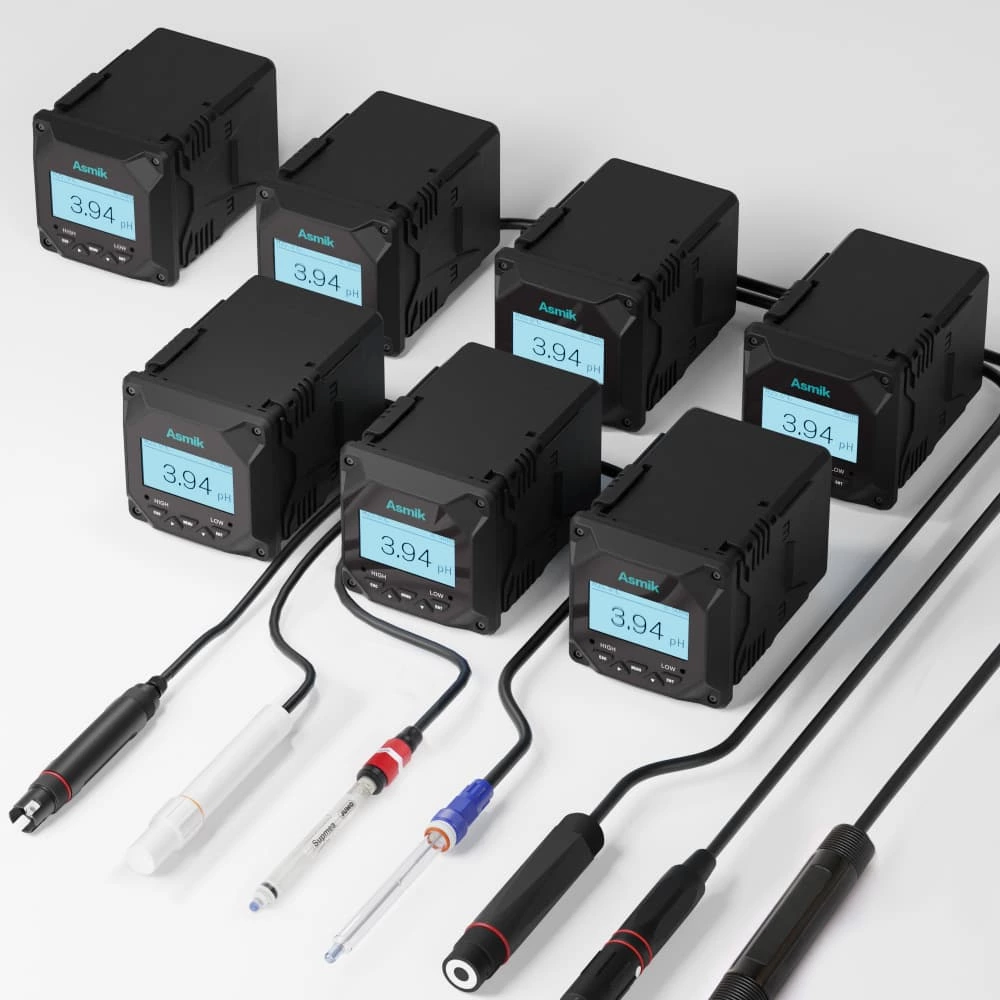
Yes. The MIK-PH6.5 is the analyzer (transmitter/controller) and works with a pH or ORP electrode. Asmik offers a full range of pH electrodes for different media such as sewage, pure water and drinking water, including the MIK-pH6001, MIK-pH6002 and MIK-PH5013A.
5. What does the input resistance of ≥10¹² Ω mean?
pH glass electrodes have a very high internal resistance. A high input resistance of at least 10¹² Ω ensures the meter draws almost no current from the electrode, so the measured potential is accurate and stable.
6. What temperature compensation is supported?
- NTC10K: -10 to 60 °C (accuracy ±0.3 °C); 60 to 130 °C (accuracy ±2 °C)
- Pt1000, or Pt100 (customized): accuracy ±0.3 °C
- Compensation range: -10 to 130 °C, manual or automatic
7. What outputs are available?
- Analog output: 4–20 mA, maximum loop 750 Ω, ±0.2% FS
- Digital output: isolated RS485, Modbus-RTU
- Relays: 2 channels, pickup/breakaway, AC 250 V / 3 A
8. Can the MIK-PH6.5 control dosing?
Yes. The two relays can be used for pH control, for example to start or stop acid or alkali dosing pumps at set points. The 4–20 mA output can also be used by a PLC or controller for proportional control. See our metering pumps for dosing.
9. Does it support remote data transmission?
Yes. The isolated RS485 Modbus-RTU interface allows the pH/ORP values to be transmitted to a PLC, SCADA or remote monitoring system.
10. What power supply options are available?
- AC: 220 V ±10%, 50/60 Hz
- AC: 110 V ±10%
- DC: 24 V ±10%
Input power is ≤6 W.
11. What display does it have?
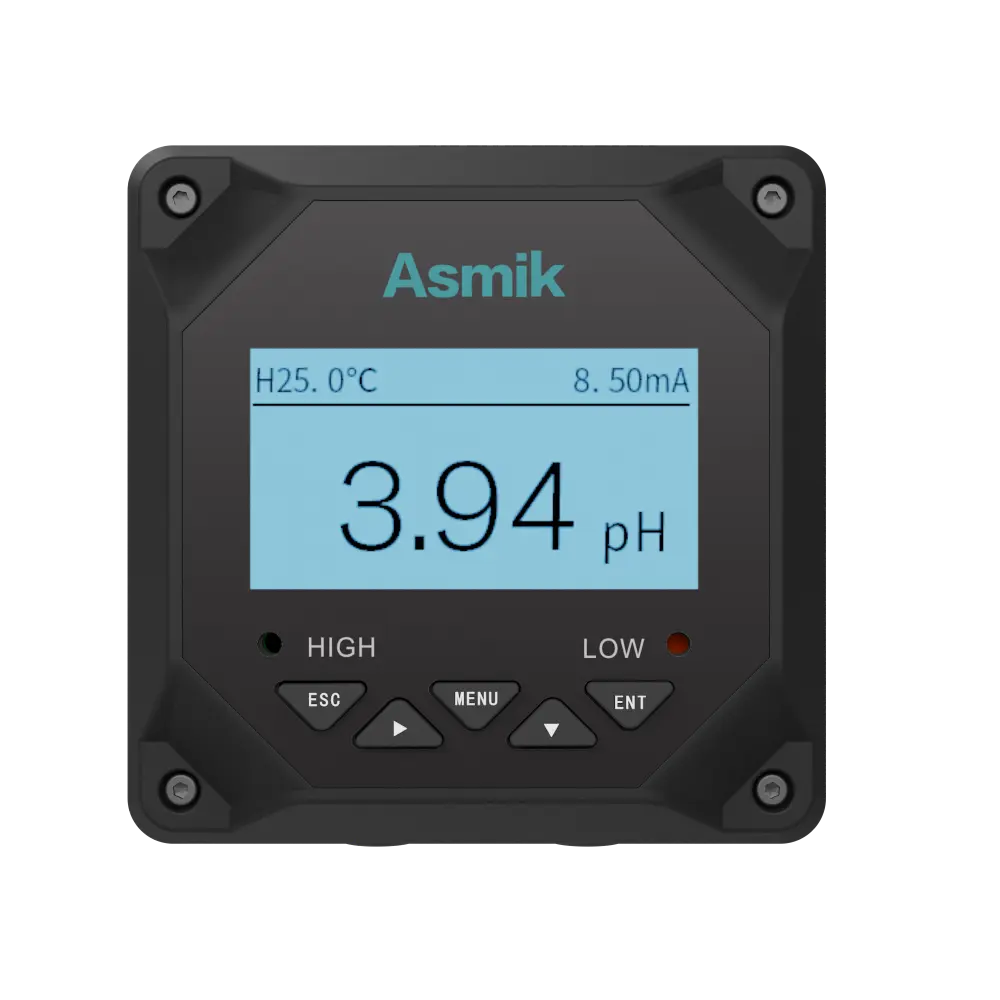
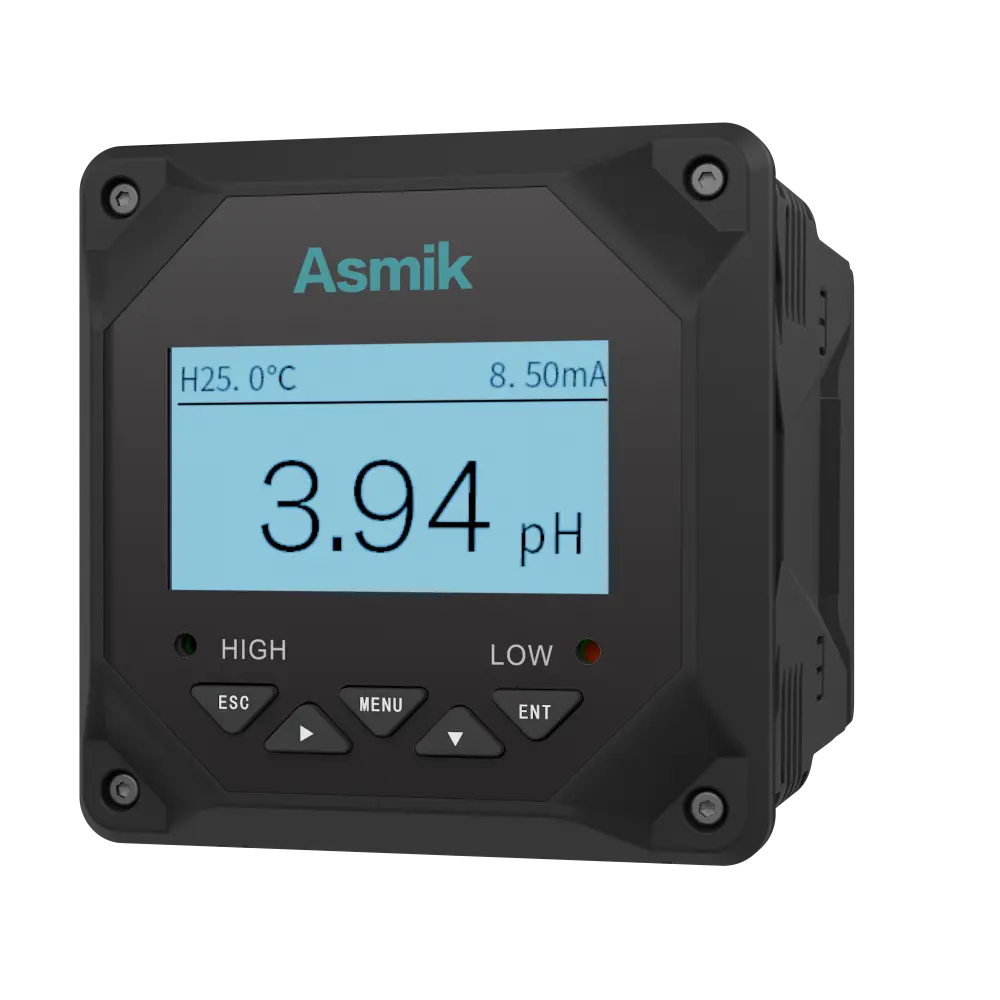
It has a 2.8-inch monochrome LCD with a resolution of 128×64.
12. What are the dimensions and panel cutout?
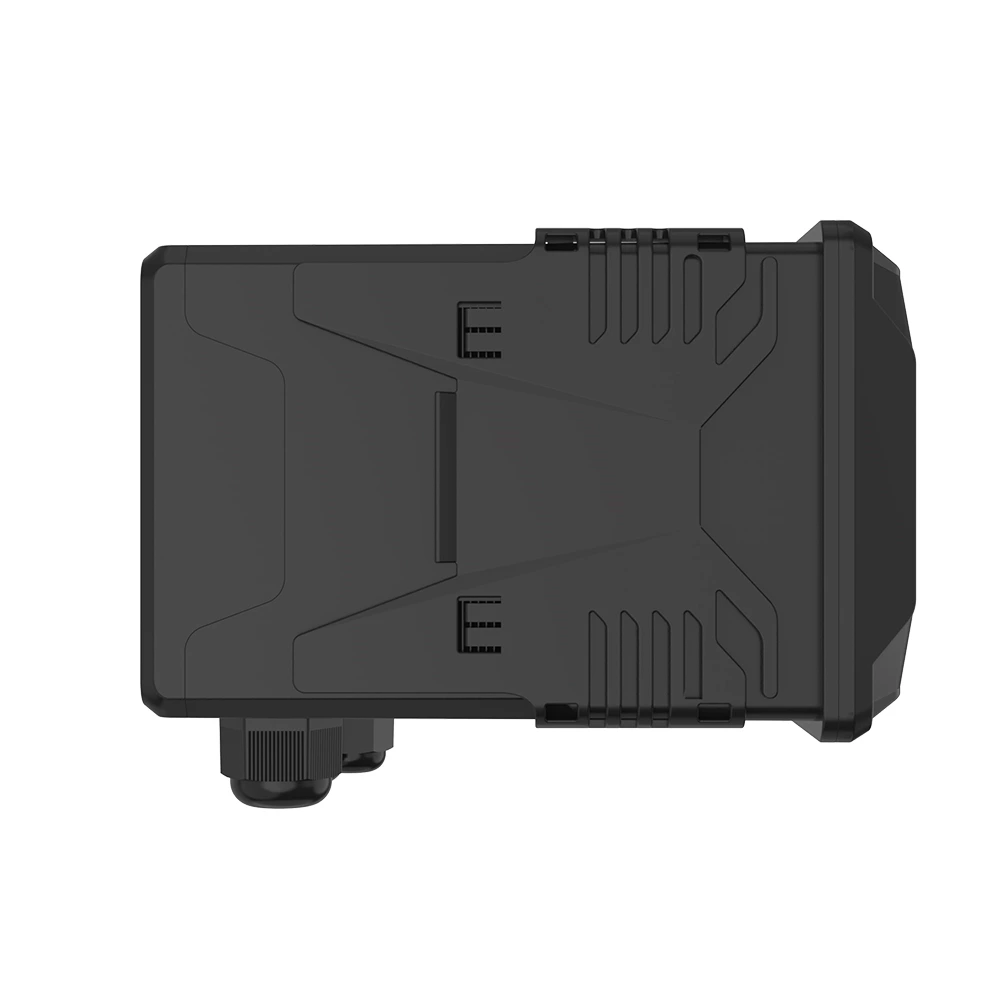
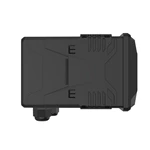
- Overall dimensions: 100 × 100 × 150 mm
- Panel cutout: 92.5 × 92.5 mm
- Weight: 0.58 kg
13. What is the ingress protection rating?
The ingress protection rating is IP5X. For outdoor or wet locations, please install the meter in a suitable protective enclosure and tell us your site conditions.
14. What environmental conditions are required?
- Working temperature: 0 to 60 °C
- Relative humidity: 10% to 85% (no condensation)
- Storage temperature: -15 to 65 °C; storage humidity 5% to 95% (no condensation)
- Altitude: below 2000 m
15. What is the difference between the MIK-PH6.5 and MIK-PH6.8?
Both share the same specification table, with slightly different overall dimensions (MIK-PH6.8: 100 × 100 × 150.5 mm). Please contact us to confirm which model best suits your project, or see the MIK-PH6.8 product page.
16. How is the pH meter calibrated?
Calibration is performed with standard buffer solutions that bracket your process pH. Asmik standard pH calibration solutions are available in sets of 4.00 / 7.00 / 10.00 or 4.00 / 6.86 / 9.18. Follow the calibration procedure in the manual.
17. How should the meter and electrode be installed?
- Mount the meter in a panel using the 92.5 × 92.5 mm cutout.
- Keep the electrode cable as short as practical and away from power cables and motors.
- Install the electrode where the sample is representative and the glass membrane stays wet.
- Wire the temperature sensor for automatic compensation.
Please follow the installation manual or contact our engineers for site-specific requirements.
18. Which industries use the MIK-PH6.5?
It is used in chemical, metallurgy, environmental protection, food, agriculture, and industrial and water treatment processes for pH monitoring and control.
19. What information should I provide to get a quotation?
To help us select the correct configuration, please provide:
- Measured parameter (pH or ORP) and medium
- Process temperature and required temperature sensor type
- Electrode requirements (if needed)
- Output and relay requirements
- Power supply (220 VAC, 110 VAC or 24 VDC)
- Installation environment
- Quantity
Send your requirements to info@asmik.com or contact us via WhatsApp at +86 13325716921.