Specification
Specification
| Analog sensor input |
| Measured variables |
pH / ORP / Antimony |
| Measuring ranges |
pH/Antimony:(-2.00 ~ 16.00) pH ORP:(-2000 ~ 2000) mV |
| Input impedance |
≥1012Ω |
| Temperature types |
NTC10K ,Pt1000 ,Pt100 |
| Temperature range |
(-10~130)℃ |
| Accuracy |
pH:±0.02pH |
| Antimony:±0.2pH |
| ORP:±2mV |
| NTC10K:(-10~60)℃, accuracy: ±0.3℃ (60~130)℃, accuracy: ±2℃ |
| Pt1000 accuracy: ±0.3℃ |
| Pt100 accuracy: ±0.3℃ |
| Resolution |
pH/Antimony:0.01pH; ORP:1mV |
| Repeatability |
0.02pH |
| Temperature compensation |
Manual compensation; |
| Automatic compensation: Linear, Acid, Base, Pure |
| Digital sensor input |
| Measured variables |
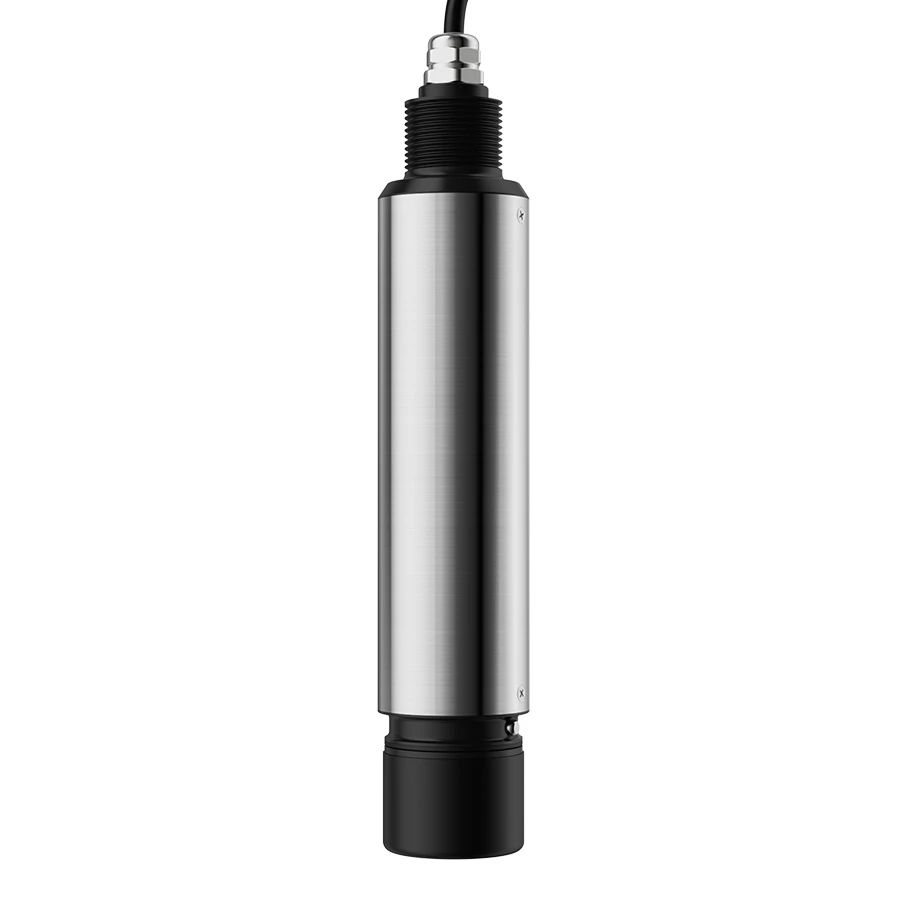
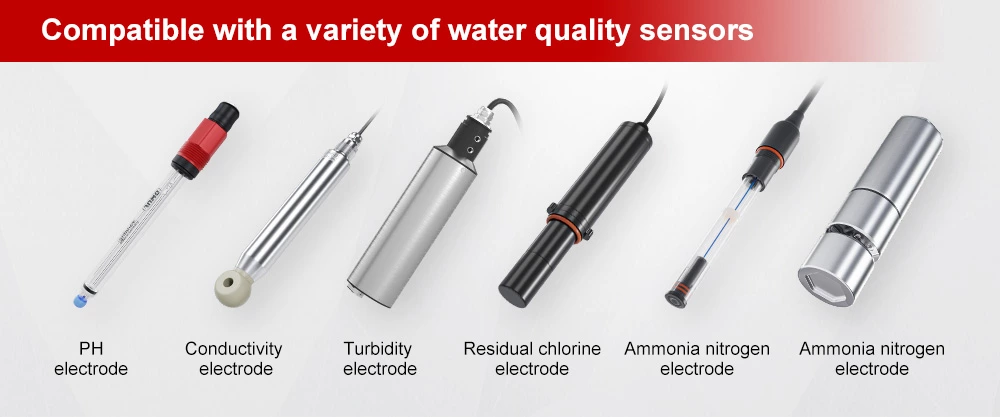
pH/ORP/Conductivity/Dissolved Oxygen/Turbidity/Sludge Concentration/Inductive Conductivity/Residual |
| Chlorine/Ammonia nitrogen/Nitrate nitrogen/COD, etc. |
| |
pH: (0.00 ~ 14.00) pH |
| Measuring ranges |
ORP: (-2000 ~ 2000) mV |
| Dissolved oxygen: (0~40) mg/L |
| Saturation: (0~200)% |
| Conductivity: (0~500) mS/cm |
| Turbidity: (0~4000) NTU |
| Sludge concentration: (0~120000) mg/L |
| Inductive conductivity: (0~2000) mS/cm |
| Residual chlorine: (0~ 100) mg/L |
| Ammonia nitrogen: (0~ 1000) mg/L |
| Nitrate nitrogen: (0~ 1000) mg/L |
| COD: (0~ 1500) mg/L |
| Note: Actual measurement ranges should refer to the technical data of the connected sensors. |
| Output |
| |
Isolated,2-channel (0/4~20) mA configurable to corresponding measurement ranges, load capacity 750Ω,output accuracy ±0.1%FS,compliant with NAMUR NE 43 |
| Current output |
| |
standards. |
| Communication output |
Isolated, RS485 interface,Modbus-RTU communicationprotocol. |
| Alarm output |
3-channel SPST (2 alarms + 1 cleaning), NO/NC type, capacity 250VAC, 5A. |
| Alarm relay delay |
0~9999 seconds, adjustable. |
| Electrical specifications |
| Power supply |
AC:(85~265)V,50/60Hz |
| DC:(21.6~26.4) V |
| Power consumption |
≤28W |
| Cable entries |
M20*1.5 cable gland |
| Cable specification |
Spring terminals: suitable for AWG16~AWG24(0.2mm2~ 1.5mm2 )cables; |
| Plug-in terminals: suitable for AWG12~AWG28(1mm2~ 2.5mm2 )cables; |
| Environment |
| Operating environment |
Temperature:(0 ~ 60)℃ |
| Relative Humidity:10 %~85%( non-condensing) |
| Storage environment |
Temperature:(-15~65)℃ |
| Relative Humidity:5%~95%(non-condensing) |
| Altitude :<2000m |
| Ingress protection |
IP66 |
| Flame Retardancy |
UL94V-0 |
Benefits
- Versatile controller eliminates the need for multiple specialized controllers and automatically recognizes digital sensors for plug-and-play convenience.
- IP66 ingress protection, suitable for more complex working conditions.
- Dual-channel design allows connection of one or two sensors, reducing user costs and providing a cost-effective solution for adding a second sensor in the future.
- Optional NB-IoT wireless communication and mobile APP for real-time data viewing.
- Power ground and signal ground design enhances anti-interference capabilities.
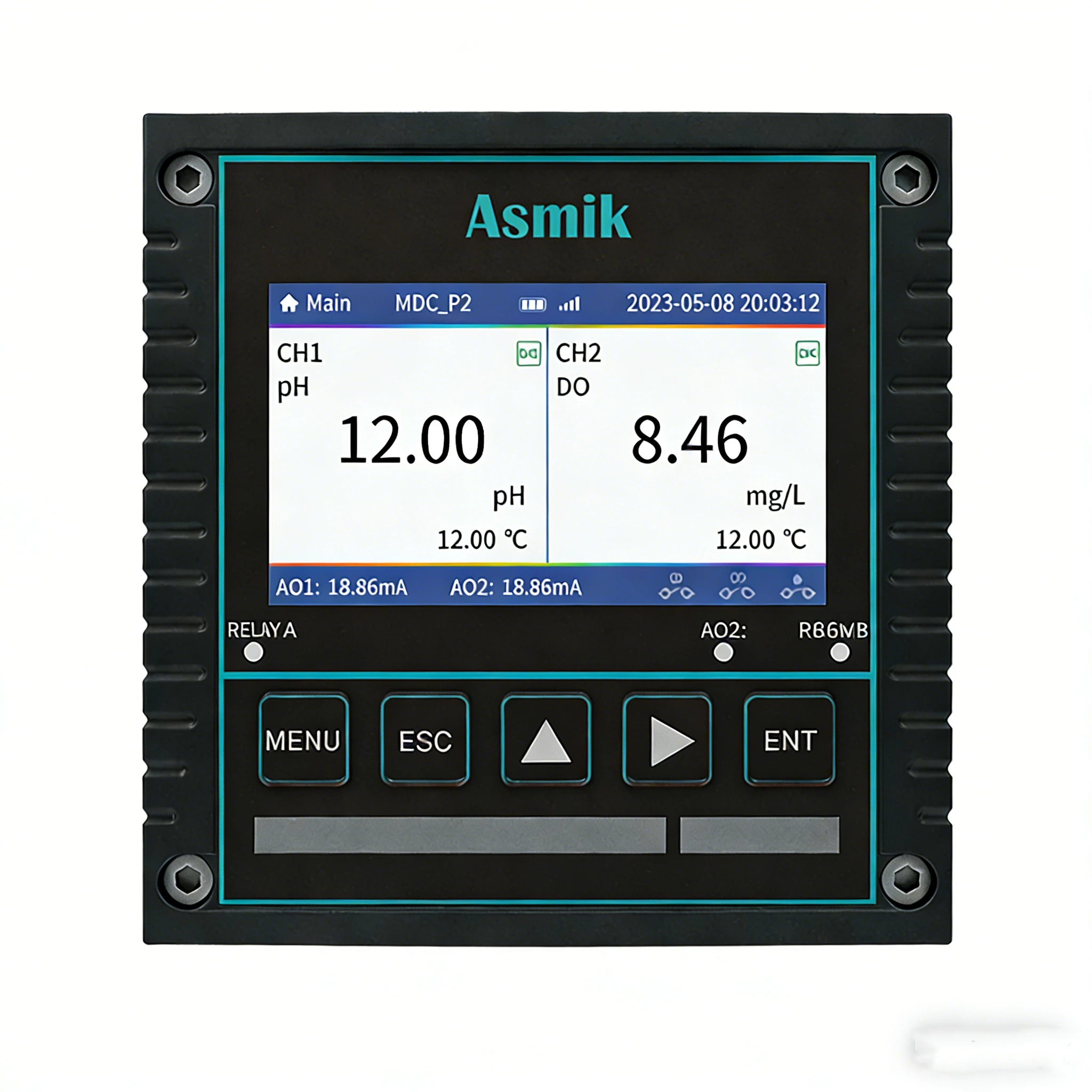
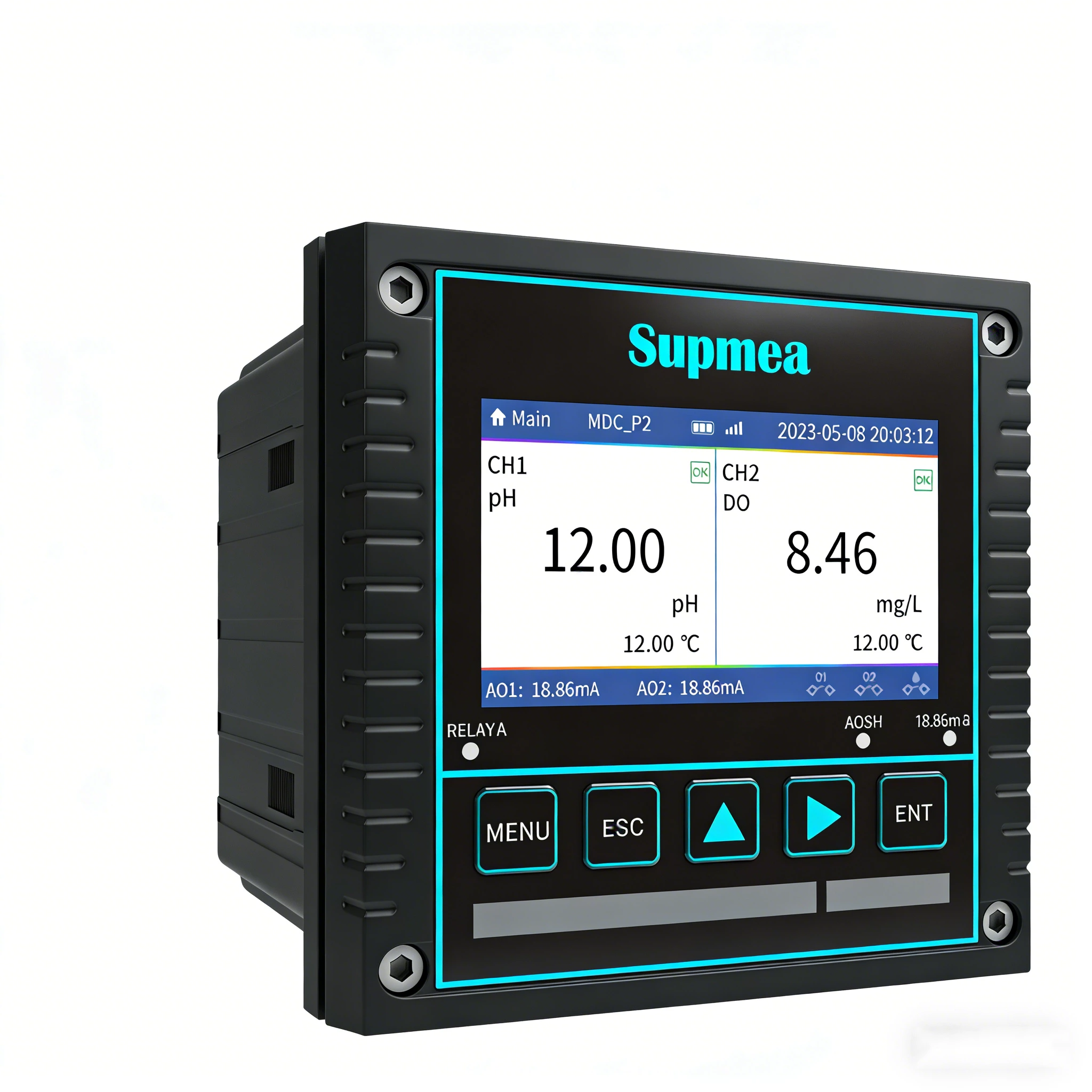
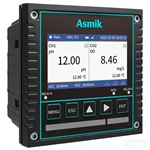
- 4.3-inch full-view color screen, with quick switching between digital display and real-time curve modes, facilitates monitoring of data fluctuations.
- Optoelectronic isolation (0/4~20) mA transmission output with strong interference resistance, high precision output circuit design, achieves 0.1% accuracy, and complies with the NAMUR NE43 international technical standard.
- Features manual and automatic temperature compensation, including linear, pure water, acid, and alkali solution compensation, adaptable to more conditions.
- pH electrode health self-diagnostic alert function advises users on the electrode condition post-maintenance, helping to optimize maintenance actions.
- Current simulation function enhances the maintainability of the instrument.
- Optoelectronic isolated RS485 communication.
- Storage for up to 500,000 data records.
- High and low alarm functions, hysteresis amount and hysteresis time are adjustable.
- Supports four languages: Chinese, English, Spanish, and Korean, offering more language options.
- Rack-mounted and wall-mounted installation methods available, providing flexible installation options.
Field of application
MDC-P2 controller can measure a variety of parameters including pH, ORP, conductivity, dissolved oxygen, turbidity, sludge concentration, residual chlorine, ammonia nitrogen, nitrate nitrogen, COD, and more. Its continuous monitoring data can be transmitted to a DCS system via output transmission or communicated with a computer using the Modbus-RTU protocol via RS485 interface for remote monitoring and logging. It can also control cleaning systems or pumps. The controller offers an optional NB-IoT wireless transmission module,users can access real-time site conditions on mobile devices.
1. What is the MIK-DC-P2 dual channel universal controller?
The MIK-DC-P2 is an intelligent online multi-parameter controller with up to two measuring channels. It can measure pH, ORP, conductivity, dissolved oxygen, turbidity, sludge concentration, residual chlorine, ammonia nitrogen, nitrate nitrogen, COD and more, transmit data to a DCS or computer, and control cleaning systems or pumps.
2. How do the two channels work?
The first channel works in hybrid mode and accepts either an analog sensor or a digital sensor. The second channel connects a digital sensor. You can start with one sensor and add a second one later, which avoids buying a second controller.
3. What is the difference between the MDC-P1 and MDC-P2?
The MDC-P1/P2 series supports up to two channels, and the P2 is the dual-channel version. Please tell us how many sensors you need to connect so we can confirm the right model.
4. Which parameters can be measured with digital sensors?
- pH: 0.00–14.00 pH; ORP: -2000 to 2000 mV
- Dissolved oxygen: 0–40 mg/L; saturation 0–200%
- Conductivity: 0–500 mS/cm; inductive conductivity: 0–2000 mS/cm
- Turbidity: 0–4000 NTU; sludge concentration: 0–120,000 mg/L
- Residual chlorine: 0–100 mg/L
- Ammonia nitrogen: 0–1000 mg/L; nitrate nitrogen: 0–1000 mg/L
- COD: 0–1500 mg/L
Actual measuring ranges depend on the technical data of the connected sensor.
5. What analog sensors can be connected?
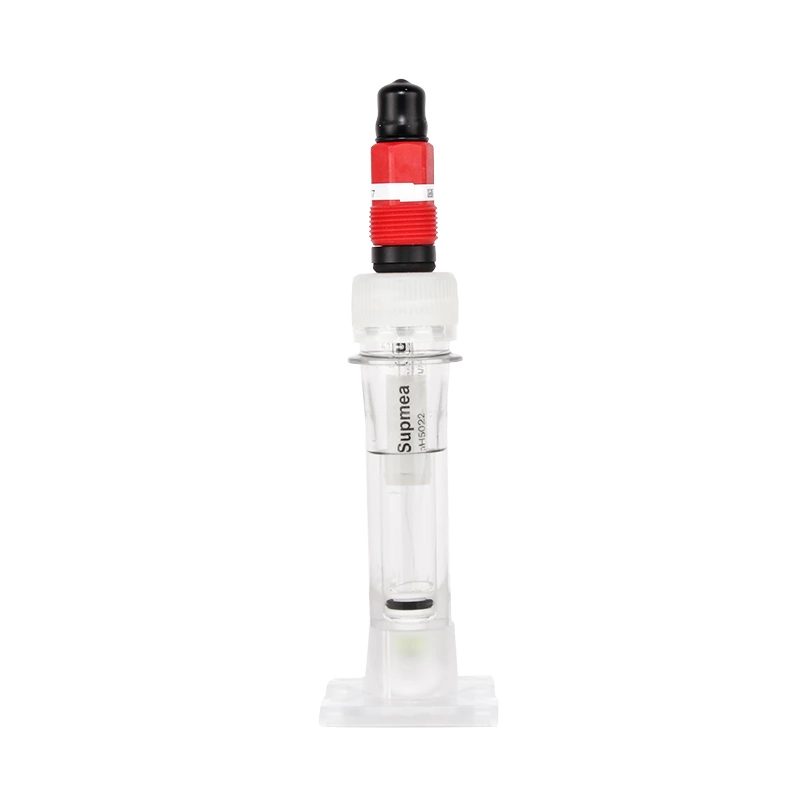
- Measured variables: pH, ORP and antimony electrodes
- Range: pH/antimony -2.00 to 16.00 pH; ORP -2000 to 2000 mV
- Accuracy: pH ±0.02 pH; antimony ±0.2 pH; ORP ±2 mV
- Resolution: 0.01 pH; 1 mV
- Repeatability: 0.02 pH
- Input impedance: ≥10¹² Ω
6. What is an antimony electrode used for?
An antimony electrode is a metal pH electrode without a glass membrane. It is generally used in applications where glass electrodes are unsuitable, such as media that attack glass or where breakage is a concern, although its accuracy is lower than a glass electrode (±0.2 pH on this controller).
7. Which temperature sensors are supported?
- NTC10K: ±0.3 °C from -10 to 60 °C; ±2 °C from 60 to 130 °C
- Pt1000: ±0.3 °C
- Pt100: ±0.3 °C
- Temperature range: -10 to 130 °C
8. What temperature compensation modes are available?
Manual compensation is supported, as well as automatic compensation with linear, acid, base (alkali) and pure water modes, so the controller can adapt to different solutions.
9. Are digital sensors plug-and-play?
Yes. The controller automatically recognizes Asmik digital sensors for plug-and-play convenience, so one controller can replace several specialized controllers.
10. What current outputs are available?
Two isolated 0/4–20 mA outputs, each configurable to a measurement range, with a load capacity of 750 Ω and output accuracy of ±0.1% FS. The outputs comply with NAMUR NE 43, which defines standard current signal levels for failure indication.
11. What communication does it support?
It has an optoelectronically isolated RS485 interface with Modbus-RTU protocol for connection to a DCS, PLC or computer for remote monitoring and logging.
12. What relay outputs are available?
- 3 SPST relays: 2 alarms + 1 cleaning
- NO/NC type, capacity 250 VAC, 5 A
- Adjustable relay delay: 0–9999 seconds
- High and low alarms with adjustable hysteresis amount and time
13. Can it control cleaning systems or dosing pumps?
Yes. The dedicated cleaning relay can control a sensor cleaning system, and the alarm relays can switch pumps at set points. The current outputs can also be used for proportional control through a PLC. See our metering pumps for dosing.
14. Can I view data on my phone?
Yes. An optional NB-IoT wireless communication module and mobile app allow real-time data viewing on mobile devices.
15. What display and data storage does it have?
It has a 4.3-inch full-view color screen with quick switching between digital display and real-time curve modes. It can store up to 500,000 data records.
16. What languages are supported?
The controller supports Chinese, English, Spanish and Korean.
17. What power supply is required?
- AC: 85–265 V, 50/60 Hz
- DC: 21.6–26.4 V
Power consumption is ≤28 W.
18. What is the protection rating and housing?
The controller has IP66 protection and a UL94 V-0 flame-retardant housing, making it suitable for demanding working conditions. Cables enter through M20×1.5 cable glands.
19. What wiring terminals are used?
- Spring terminals: AWG16–AWG24 (0.2–1.5 mm²) cables
- Plug-in terminals: AWG12–AWG28 cables
20. How can it be mounted?
Rack-mounted (panel) and wall-mounted installation methods are available.
21. What environmental conditions are required?
- Operating temperature: 0 to 60 °C; relative humidity 10% to 85% (non-condensing)
- Storage temperature: -15 to 65 °C; relative humidity 5% to 95% (non-condensing)
- Altitude: below 2000 m
22. What diagnostic and maintenance functions are included?
- pH electrode health self-diagnostic alert after maintenance
- Current simulation function for loop testing
- Separate power ground and signal ground design for better anti-interference
23. What information should I provide to get a quotation?
To help us select the correct configuration, please provide:
- Parameters to measure and number of sensors (one or two)
- Analog or digital sensors, and whether sensors are also required
- Medium and process temperature
- Output, relay and communication requirements
- Whether NB-IoT wireless is needed
- Power supply and mounting method
- Quantity
Send your requirements to info@asmik.com or contact us via WhatsApp at +86 13325716921.