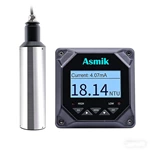
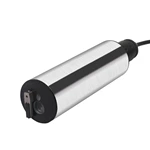
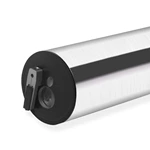
MIK-PSS9010 Turbidity Sensor

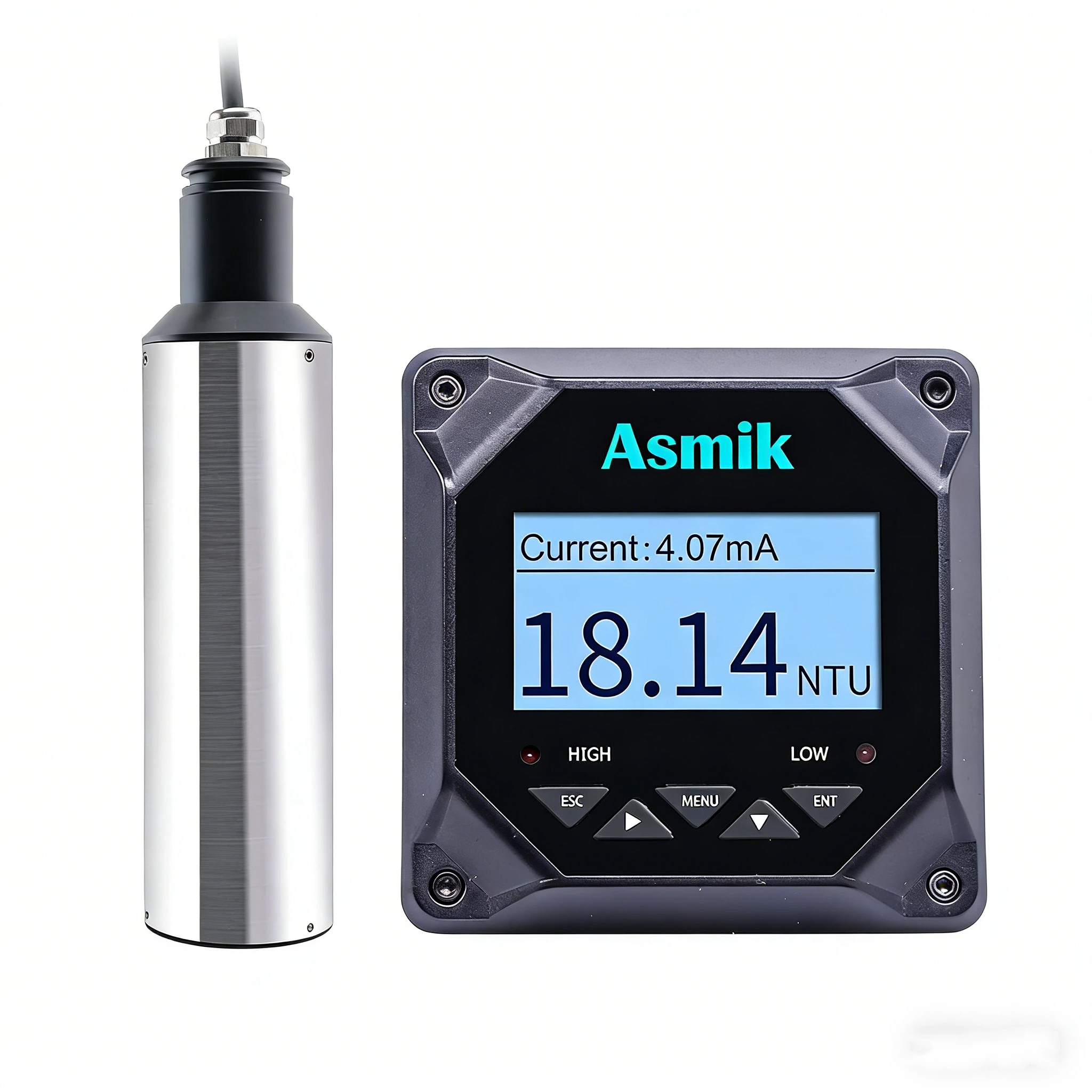
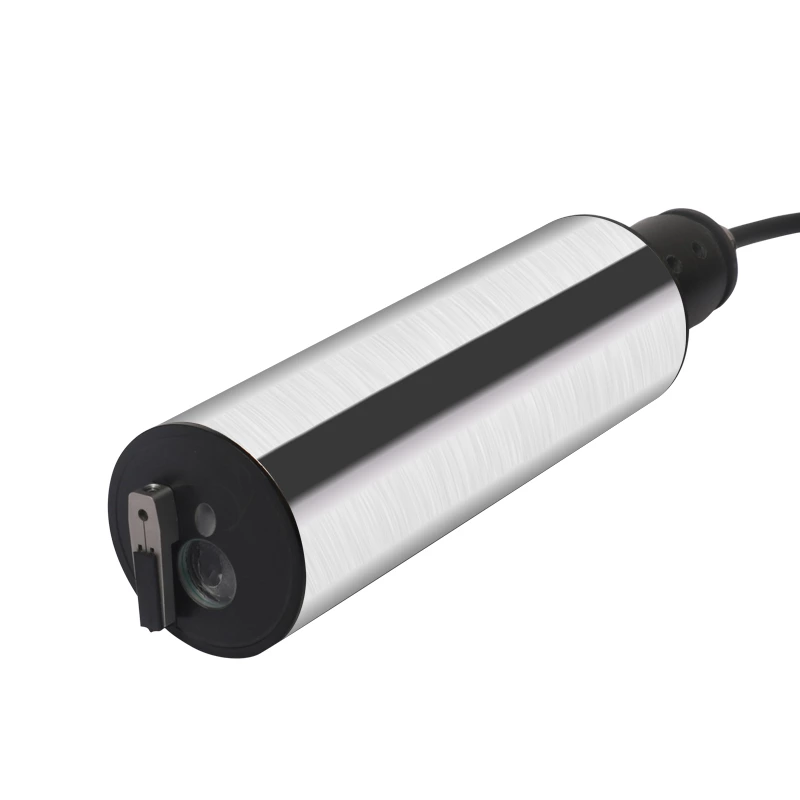
The MIK-PSS9010 turbidity sensor measures suspended solids concentration through infrared light scattering, offering high accuracy and long-term stability. It features a self-developed optical path, real-time compensation algorithm, and optional cleaning brush for continuous online monitoring. Suitable for water plants, stations, and industrial applications, it supports RS485 output, 12VDC power supply, and various cable lengths with 316LSS housing.

Characteristics

Utilizes Infrared Absorption Scattered Light Technology for Accurate Suspended Solids Concentration Measurement

Self-Developed Optical Path and Receiving Structure Ensures High Precision and Stability

Real-Time Compensation Algorithm for Long-Term Stable Online Monitoring

Equipped with an Optional Cleaning Brush to Reduce Maintenance and Ensure Continuous Accuracy

High Accuracy Turbidity Measurement Suitable for Various Applications Including Sewage Plants, Water Plants, and Surface

Water Monitoring

Standard RS485 Output for Easy Integration and Networking
Specification

Specification Detail
Measuring Range (20~30000)mg/L
Output Protocol RS485 (Modbus RTU)
Power Supply ( 9~36 ) VDC
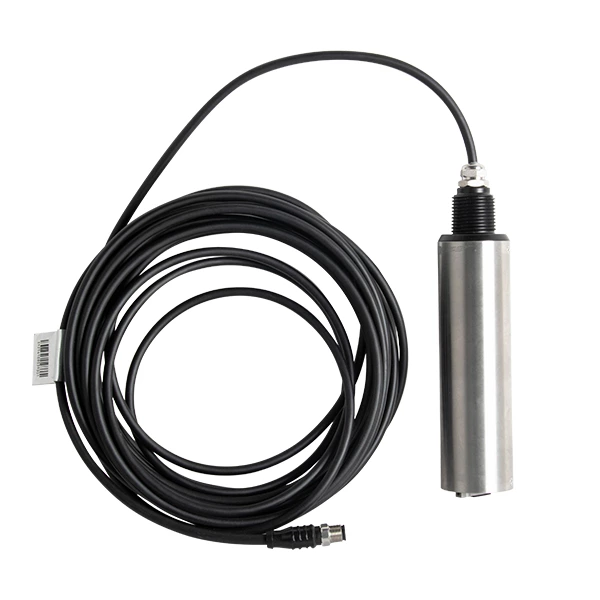
Cable Length Standard 10m cable, can be extended to 100m
Housing Material and Thread Type Body:SUS316L; Upperandlowercovers:PPS+glassfiber Cable:PUR

Extended Features & Key Parameters

  • Small Reagent Consumption: No reagents required for direct ammonia measurement, making it economical and eco-friendly.
  • Automatic Compensation: pH and temperature compensation ensures accuracy under various conditions.
  • Liquid Detection Alarm: Alerts when there is insufficient liquid for reliable measurements.
  • Double Optical Path Detection: Dual optical paths enhance accuracy in challenging environments.
  • Key Parameter Upload: Automatically uploads critical data to a central system for real-time analysis.
  • Friendly Interface: Intuitive design simplifies operation and maintenance.
  • IPv4 Network Support: Enables seamless integration with existing infrastructure for remote monitoring.
  • Direct Ammonia Measurement: Simplifies the process by eliminating expensive sample pre-treatment.
  • Independent Electrode Replacement: Minimizes downtime and simplifies maintenance.
  • Automatic Range Switching: Adapts to detected concentrations between 0-100 mg/L and 0-1000 mg/L.
  • FAQ

1. What is the MIK-PSS9010 sensor?

The MIK-PSS9010 is a digital online sensor that measures suspended solids concentration using infrared light scattering. It features a self-developed optical path and receiving structure, a real-time compensation algorithm, an optional cleaning brush, RS485 (Modbus RTU) output and a SUS316L housing.

2. Does it measure turbidity or suspended solids?

The MIK-PSS9010 measures suspended solids concentration in mg/L, based on the infrared light scattering of particles in the water. Turbidity and suspended solids are related but not identical. For turbidity in NTU, see the MIK-PTU200 or MIK-PTU-8010.

3. How does infrared scattered light measurement work?

Infrared light is directed into the water, and the light scattered by suspended particles is detected by the receiver. The amount of scattered light is related to the concentration of suspended solids. Infrared light is generally less affected by the color of the water.

4. What is the measuring range?

The measuring range is 20–30,000 mg/L.

5. What output does it provide?

It provides RS485 output with Modbus RTU protocol for easy integration and networking with PLCs, data loggers, SCADA systems and controllers.

6. What power supply does it need?

The sensor operates on 9–36 VDC; 12 VDC is a typical supply.

7. Is a cleaning brush available?

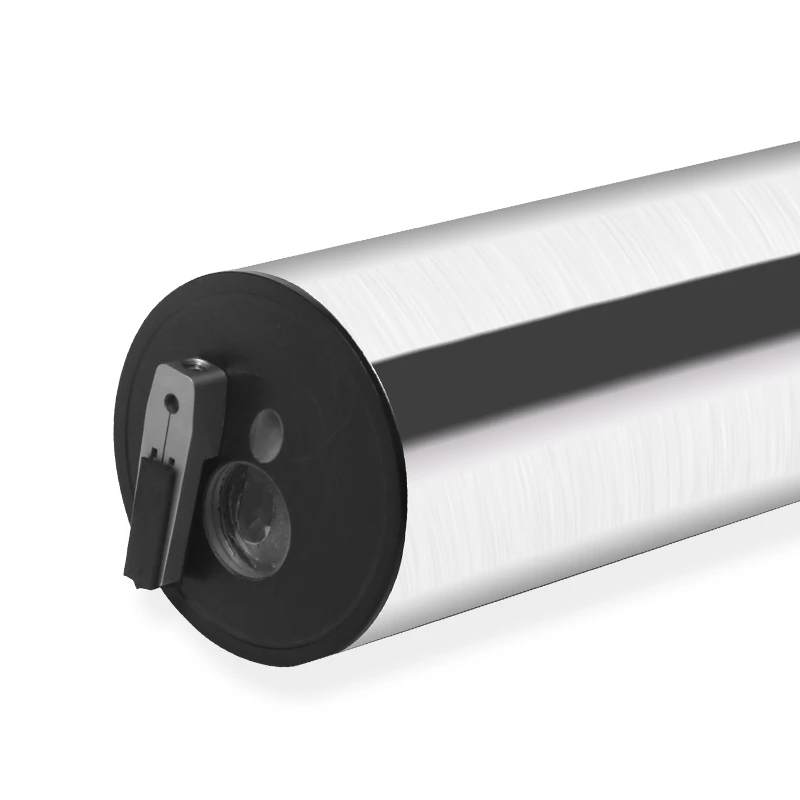
Yes. An optional cleaning brush keeps the optical window clean, reduces maintenance and helps maintain accuracy during continuous online monitoring, especially in sewage and sludge applications.

8. What makes the measurement stable?

The self-developed optical path and receiving structure, together with a real-time compensation algorithm, support high precision and long-term stable online monitoring.

9. What materials are used?
  • Body: SUS316L
  • Upper and lower covers: PPS + glass fiber
  • Cable: PUR
10. What cable length is available?

A 10 m cable is standard, and the cable can be extended up to 100 m.

11. Where is the MIK-PSS9010 used?

Typical applications include sewage plants, water plants, water stations, surface water monitoring and industrial processes.

12. What can the MIK-PSS9010 be connected to?

It can be connected to any Modbus RTU master. For local display and relay outputs, it can be used with the MIK-DC2000 controller, which supports suspended solids up to 120,000 mg/L with suitable sensors; please confirm compatibility with us.

13. How is the sensor calibrated?

Suspended solids sensors are generally calibrated against laboratory measurements of samples taken from the same process, because particle properties differ between applications. Please contact us for the calibration procedure.

14. How should the sensor be installed?
  • Immerse the sensor in a representative, well-mixed location.
  • Avoid positions with heavy air bubbles, such as directly above aerators.
  • Keep the optical window away from tank walls and the bottom.
  • Use a mounting bracket and make sure the sensor can be removed for cleaning.
15. How is the MIK-PSS9010 different from the MIK-PSS200?

The MIK-PSS9010 is a digital sensor with RS485 output and a range of 20–30,000 mg/L. The MIK-PSS200 is a complete suspended solids meter with display, three 4–20 mA outputs and three relays, with ranges up to 120,000 mg/L.

16. What information should I provide to get a quotation?

To help us select the correct configuration, please provide:

  • Application (sewage, sludge, surface water, industrial process)
  • Expected suspended solids range (mg/L)
  • Whether a cleaning brush is required
  • Cable length
  • Host system (PLC, controller or Asmik DC2000)
  • Quantity

Send your requirements to info@asmik.com or contact us via WhatsApp at +86 13325716921.

Features

Benefits

  • Fast response and stable measurement
  • High accuracy and wide measuring range
  • Strong compatibility with standard outputs
  • Rugged structure, suitable for field installation
  • Easy maintenance and low operating costs
  • Wide range of applications

Automated &factory

Related Products

Need more information?

Contact us for more details about our solutions and services

This site uses cookies

We use cookies to collect information about how you use this site. We use this information to make the website work as well as possible and improve our services.