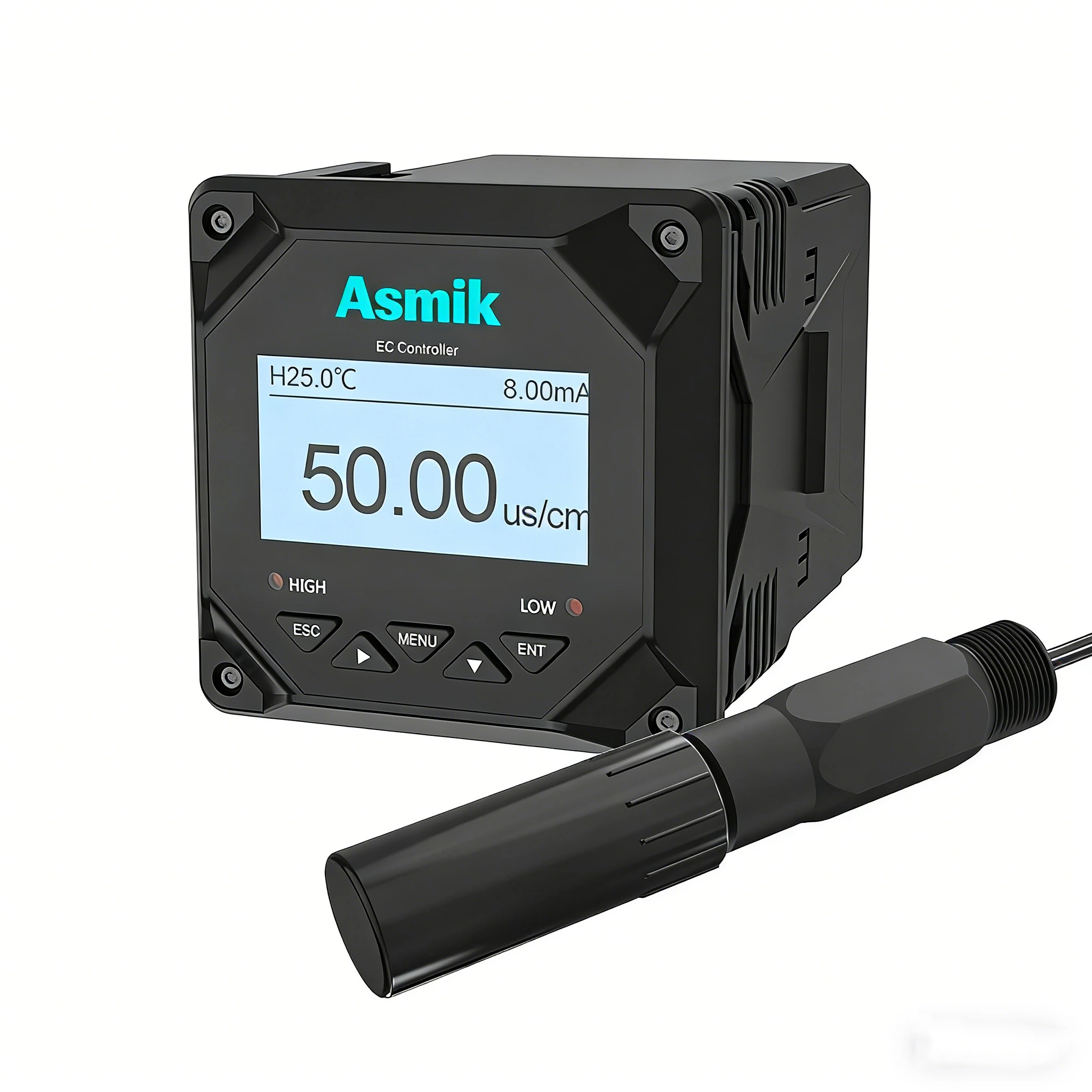
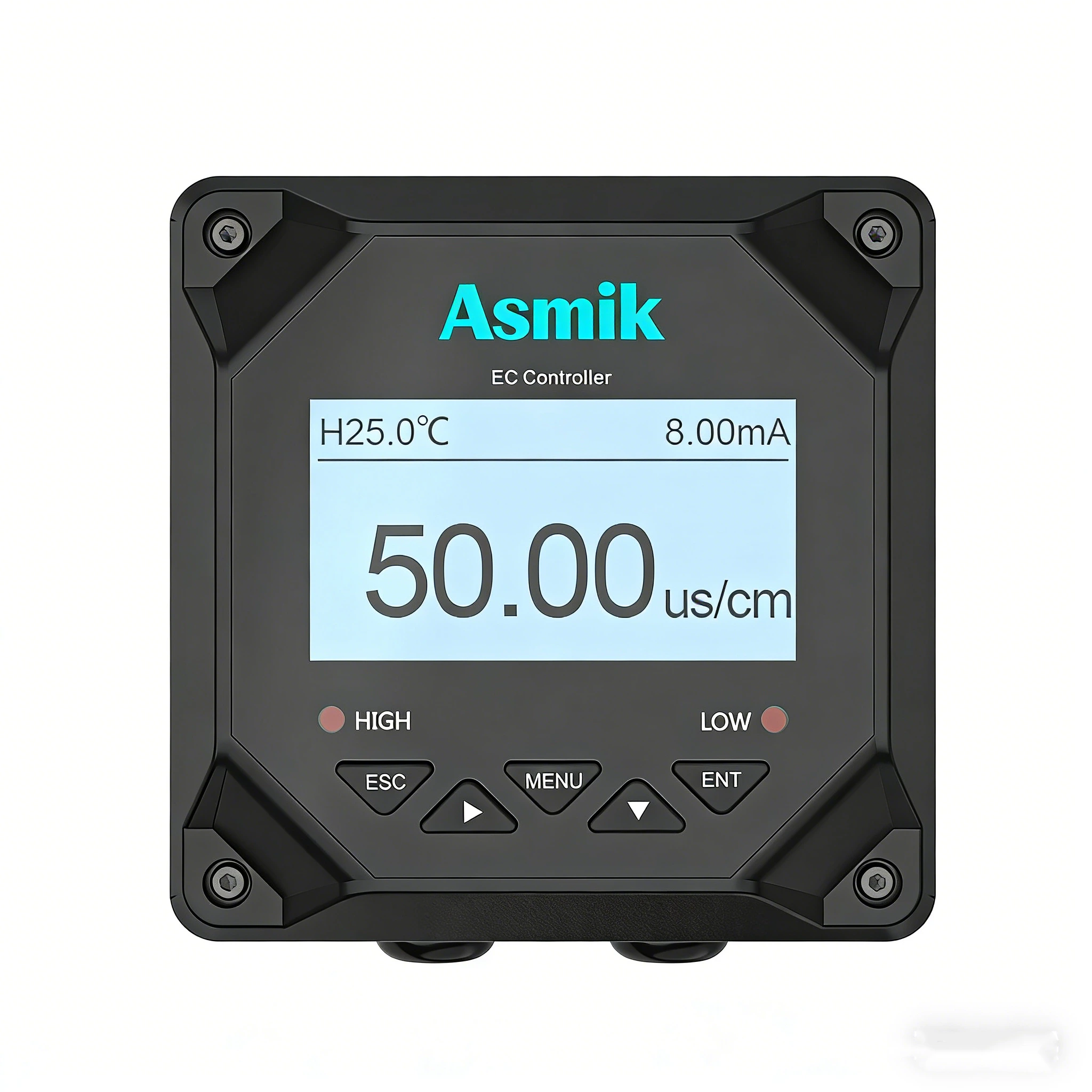
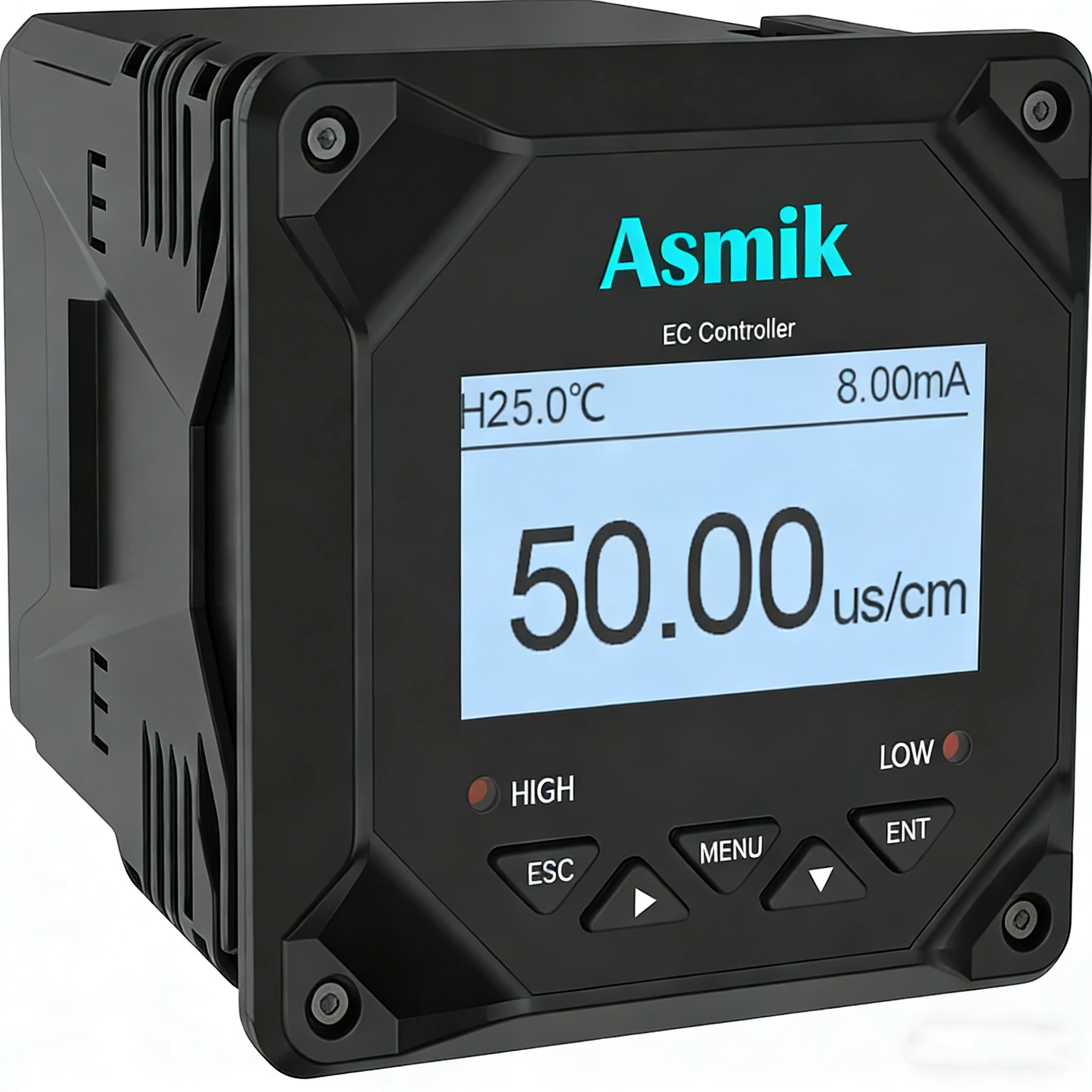
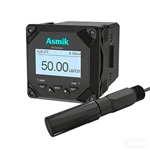
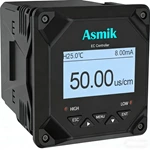
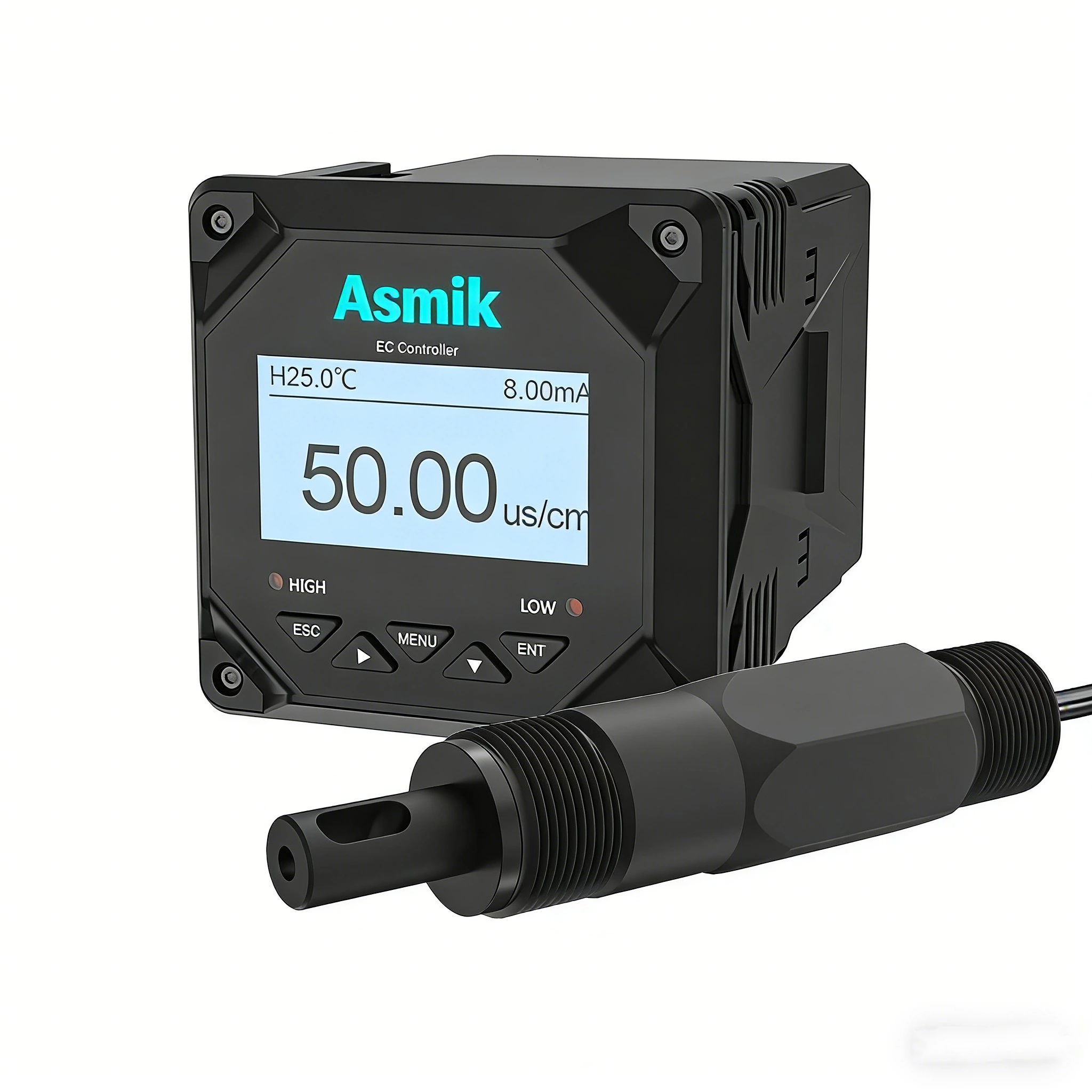
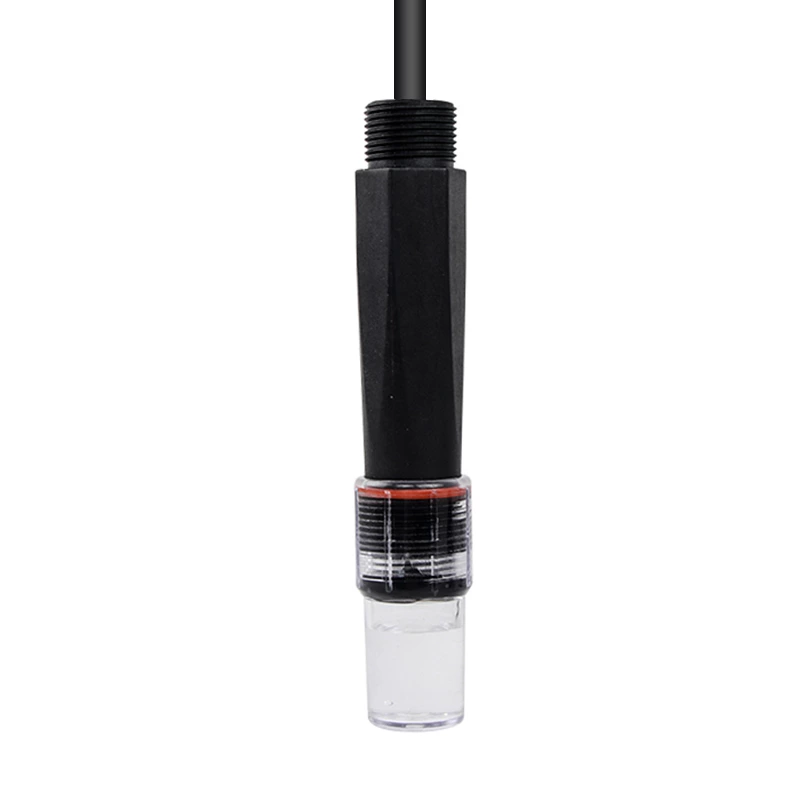
MIK-DC2000 Liquid analyzing meter turbidity transmitter

Nephelometers and turbidimeters work by shining a light source, usually a laser or LED, through a sample of water and measuring the amount of light that is scattered or absorbed by the particles in the water.

Characteristics

Range: pH: (0~14)pH
ORP:(-2000~2000)mV
DO:(0~40)mg/L
TDS: (0~600)mS/cm
Turbidity: (0~4000)NTU
Suspended solids: (0~120000)mg/L

Output signal: 4~20mA; Relay; RS485

Power supply: AC:(100~240)VAC; DC:24VDC(Optional)
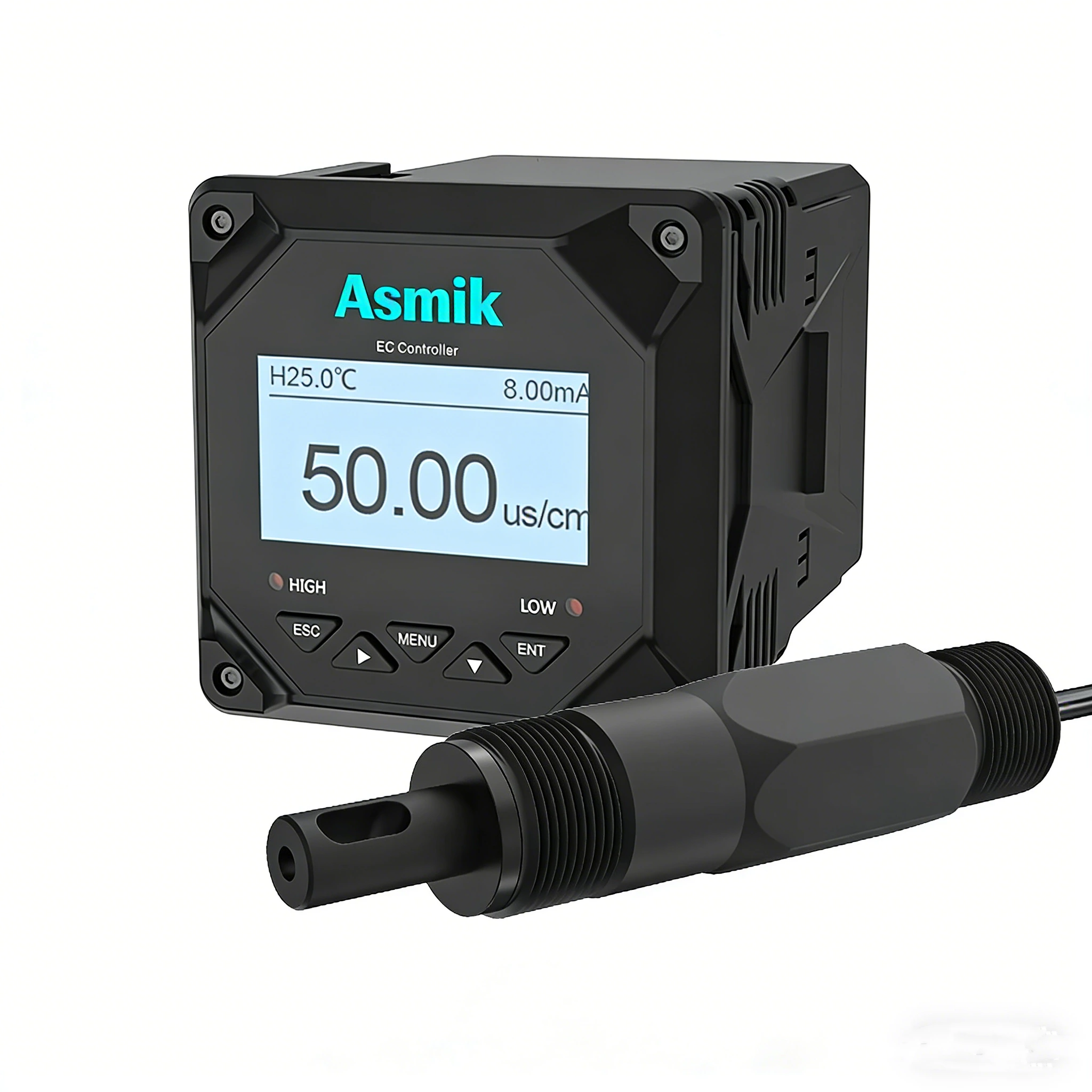
 

Specification

  • Specification

  Product   Liquid analyzing meter turbidity transmitter
  Model MIK-DC2000
  Dimension 100mm*100mm*150mm
   Range pH: (0-14) pH
ORP: (-2000-2000) mV
DO: (0-40) mg/L
TDS: (0-600) mS/cm
Turbidity: (0-4000) NTU
Suspended solids: (0-120000) mg/L
  Relative humidity (10~85)%
  Temperature range  (0 ~ 60)℃
  Communication  RS485, Modbus-RTU
  Signal output  4-20mA, maximum loop 500Ω, 0.2%FS
  Power supply AC: (100-240) VAC
DC: 24VDC (Optional)
  Relay output  250VAC, 3A


  • FAQ

1. What is the MIK-DC2000 turbidity transmitter?

The MIK-DC2000 is a universal digital analyzer monitor for Asmik digital sensors. On this page it is presented as a turbidity transmitter: connected to a compatible turbidity sensor, it displays turbidity and provides 4–20 mA, RS485 and relay outputs.

2. How is turbidity measured?

Turbidity sensors (nephelometers and turbidimeters) shine a light source, usually a laser or LED, into the water and measure the amount of light scattered or absorbed by the suspended particles. The MIK-DC2000 receives the measurement from the sensor, displays it and outputs it to your control system.

3. What turbidity range does it support?

The turbidity range is 0–4000 NTU. The actual range at your measuring point depends on the connected sensor.

4. Which turbidity sensors can be connected?

The MIK-DC2000 works with Asmik digital sensors. Asmik turbidity sensors include the MIK-PTU-8010 with self-cleaning and digital output, the MIK-PTU-8011 and the MIK-PTU8012 low turbidity sensor. Please confirm which sensor is compatible with the MIK-DC2000 before ordering.

5. Can it also measure suspended solids?

Yes. The MIK-DC2000 supports suspended solids from 0 to 120,000 mg/L with a suitable sensor, such as the MIK-PSS9010. Please confirm sensor compatibility with us.

6. Which instrument should I use for low-turbidity drinking water?

For drinking water after membrane treatment and other very low-turbidity applications, see the MIK-PTU300 laser low-turbidity meter, or ask us about the MIK-PTU8012 low turbidity sensor.

7. What other parameters can the MIK-DC2000 monitor?
  • pH: 0–14 pH
  • ORP: -2000 to 2000 mV
  • Dissolved oxygen: 0–40 mg/L
  • Conductivity: 0–600 mS/cm

Using the same controller for different parameters simplifies spare parts and operator training.

8. How accurate is the measurement?

Measurement accuracy depends mainly on the connected sensor. The 4–20 mA output accuracy of the MIK-DC2000 is 0.2% FS.

9. What outputs are available?
  • Current output: 4–20 mA, maximum loop 500 Ω, 0.2% FS
  • Communication: RS485, Modbus-RTU
  • Relay output: 250 VAC, 3 A
10. What can the relays be used for?

The relays are generally used for high-turbidity alarms and simple control tasks, for example signaling a filter breakthrough, starting a backwash, or controlling a sensor cleaning device.

11. What power supply is required?

100–240 VAC as standard, with 24 VDC optional.

12. What are the dimensions?

The MIK-DC2000 measures 100 × 100 × 150 mm.

13. What environmental conditions are required?
  • Operating temperature: 0 to 60 °C
  • Relative humidity: 10% to 85%

For outdoor or wet locations, please tell us your site conditions so we can recommend suitable protection.

14. How is the turbidity system calibrated?

Calibration is performed for the connected turbidity sensor, generally with formazin standards or secondary standards. Please follow the procedure in the manual for your sensor and monitor.

15. Where is the MIK-DC2000 used for turbidity monitoring?

Typical applications include waterworks, filtered water monitoring, sewage treatment, surface water and industrial process water.

16. What information should I provide to get a quotation?

To help us select the correct configuration, please provide:

  • Application and expected turbidity range
  • Whether a turbidity sensor is required, and whether self-cleaning is needed
  • Output and relay requirements
  • Power supply (AC or DC)
  • Installation environment
  • Quantity

Send your requirements to info@asmik.com or contact us via WhatsApp at +86 13325716921.

Features

Benefits

  • Fast response and stable measurement
  • High accuracy and wide measuring range
  • Strong compatibility with standard outputs
  • Rugged structure, suitable for field installation
  • Easy maintenance and low operating costs
  • Wide range of applications

Automated &factory

Need more information?

Contact us for more details about our solutions and services

This site uses cookies

We use cookies to collect information about how you use this site. We use this information to make the website work as well as possible and improve our services.