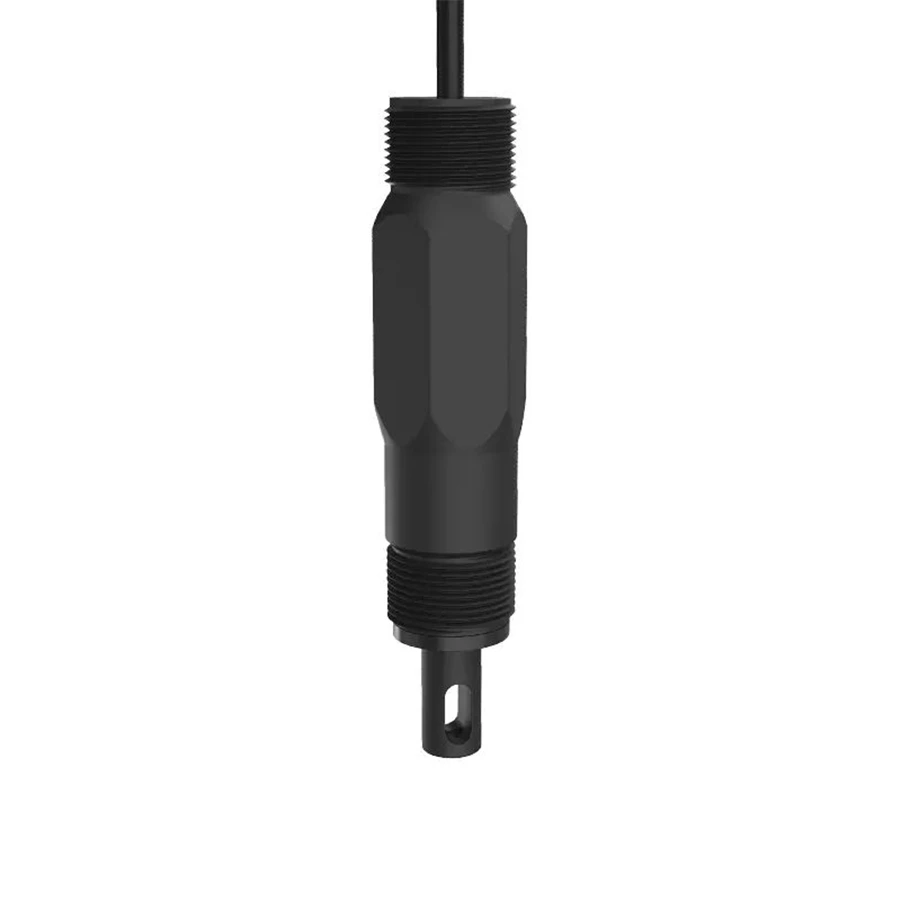
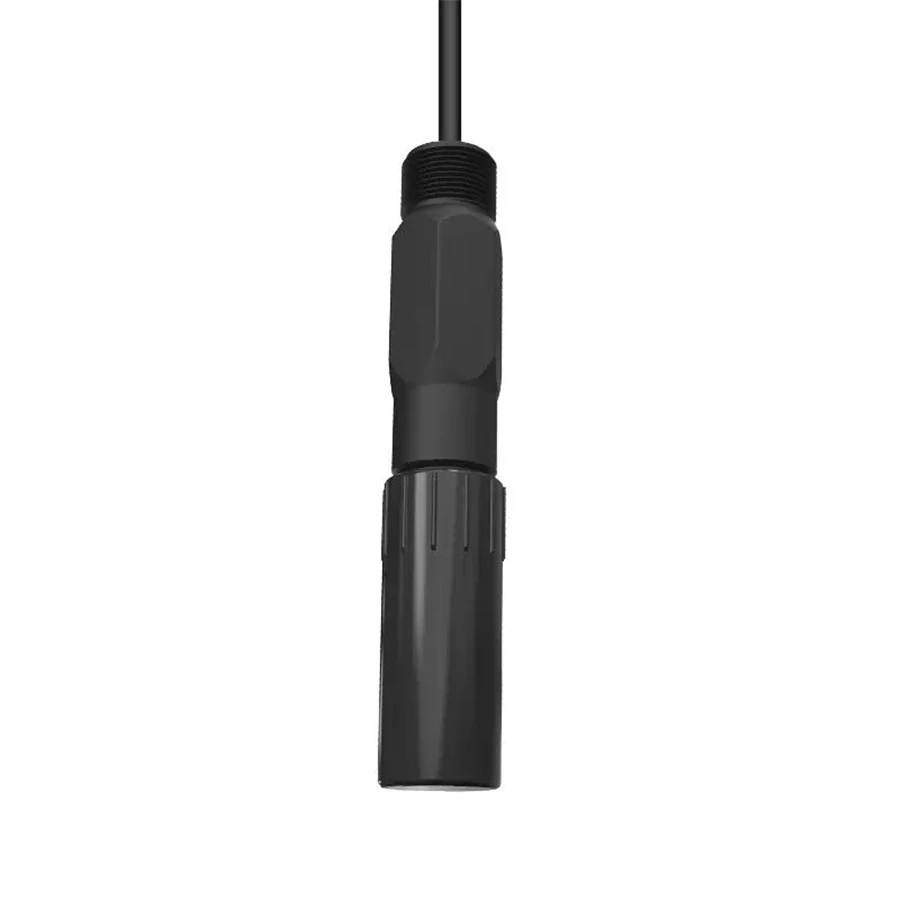
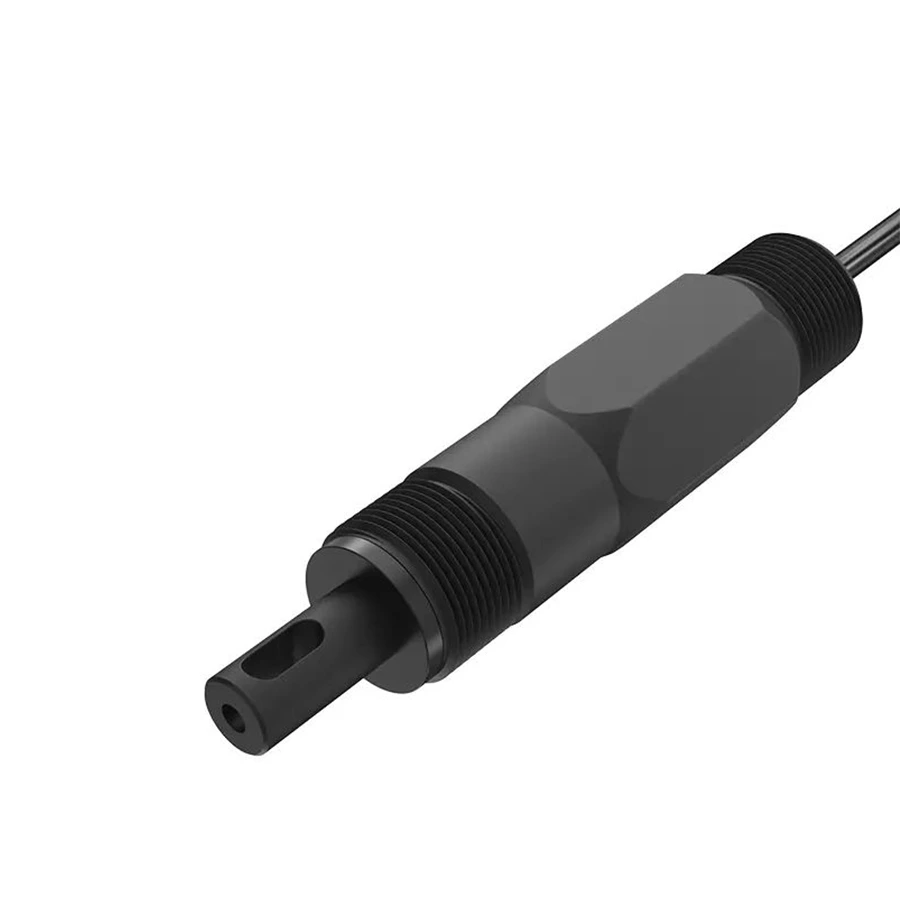
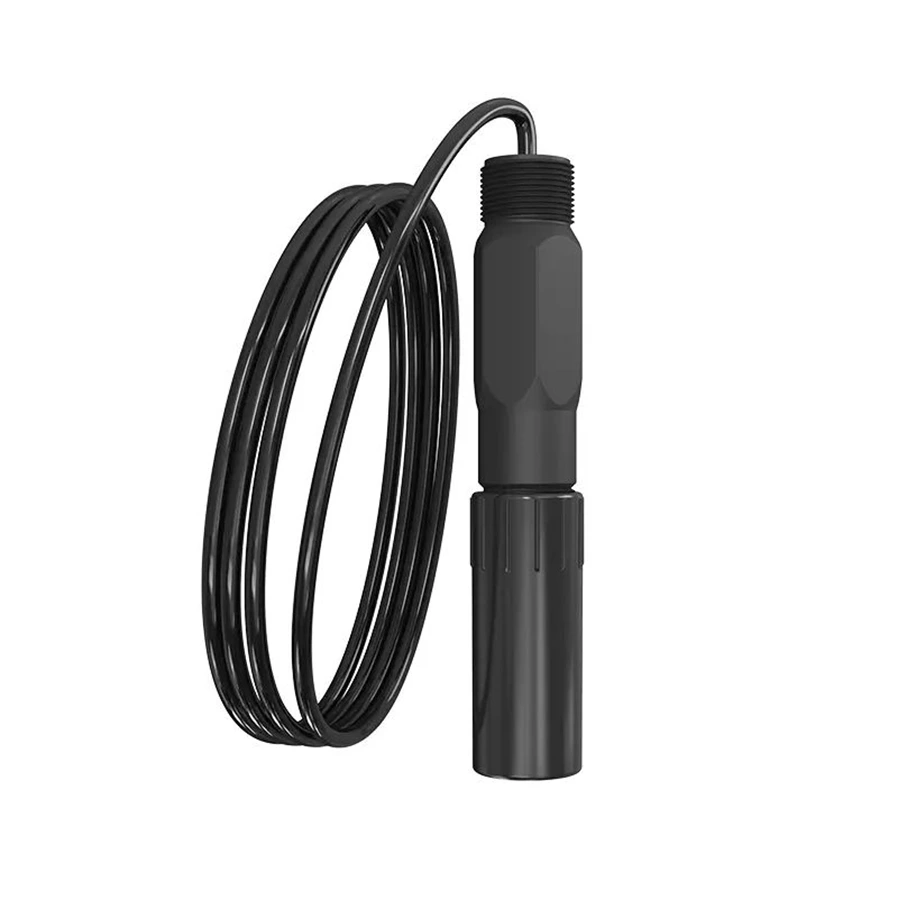
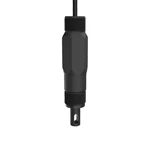
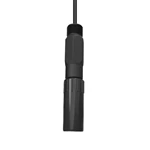
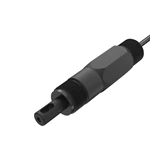
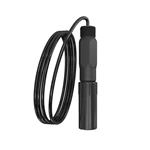
Specification
| Product |
Digital conductivity sensor |
| Model |
MIK-TDS8002 |
| Measure range |
(100~60000)uS/cm;
(0.1~500.00)mS/cm; |
| Accuracy |
±1.5% |
| Solution |
1uS/cm;0.01mS/cm;1ppm;0.01ppt |
| Material |
POM(wet part) |
| Temperature range |
(0~60.0)℃ |
| Protocol |
MODBUS-RTU |
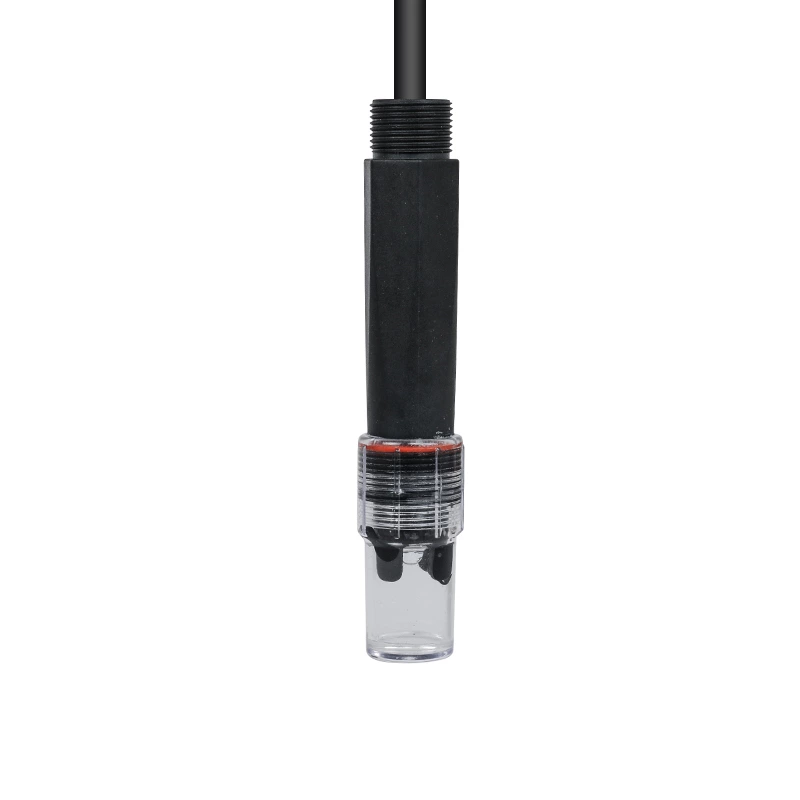
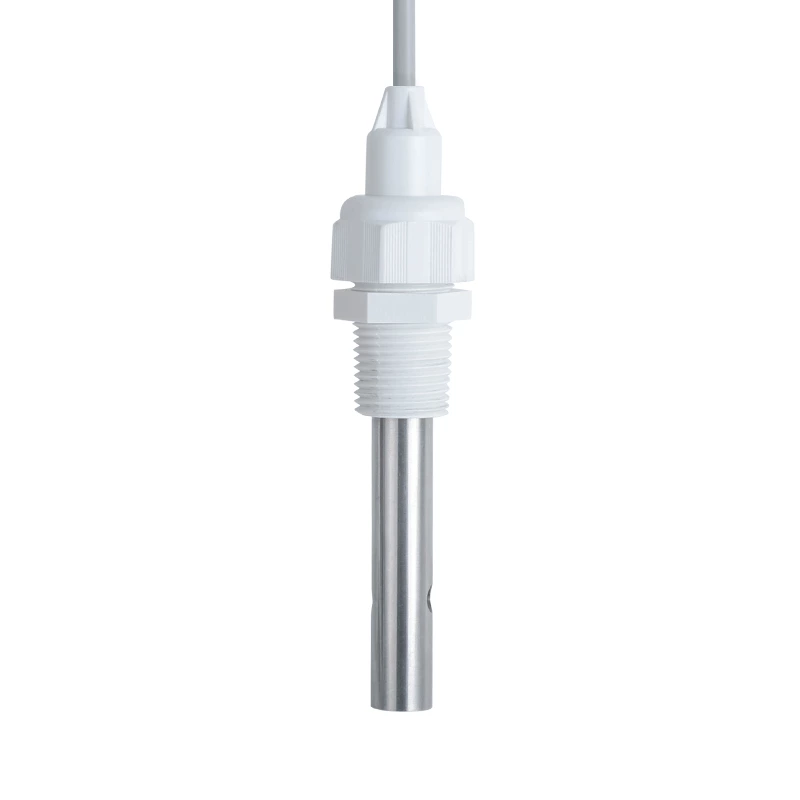
TDS8002 conductivity and salinity digital sensor is designed for aquaculture, river sewage, seawater salinity, environmental protection engineering and other industries. It is equipped with a special quadrupole alloy sensor for breeding, which can be used to measure the changes of conductivity and salinity in the aqueous system within the range of (0~500) mS/cm. It has a standard RS485 Modbus RTU protocol interface function, which can communicate with the host computer remotely.
Isolated power supply design, data stability, strong anti-interference ability
4-pole stainless steel, corrosion-resistant alloy conductivity/salinity sensor
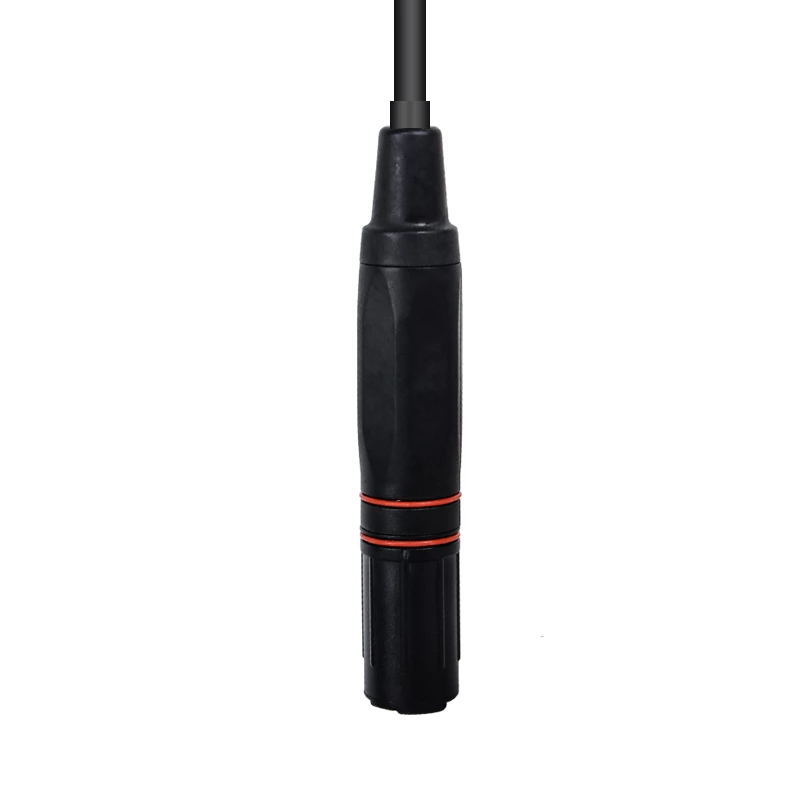
Shell material: POM (wet part material)
Corrosion resistance, high stability, suitable for continuous monitoring of fresh water and sea water
Built-in temperature sensor
1. What is the MIK-TDS8002 digital conductivity sensor?
The MIK-TDS8002 is a digital conductivity and salinity sensor with a quadrupole (4-pole) corrosion-resistant alloy electrode, a POM wetted body, a built-in temperature sensor and an RS485 Modbus RTU interface. It is designed for aquaculture, river sewage, seawater salinity and environmental protection engineering.
2. What does the MIK-TDS8002 measure?
It measures conductivity and salinity in aqueous systems, together with temperature. Readings can be expressed in μS/cm or mS/cm, with ppm and ppt resolution also listed for concentration and salinity values.
3. What is the measuring range?
- 100–60,000 μS/cm
- 0.1–500.00 mS/cm
The sensor covers conductivity up to 500 mS/cm, which makes it suitable for seawater and high-salinity water.
4. What is the resolution?
- 1 μS/cm
- 0.01 mS/cm
- 1 ppm
- 0.01 ppt
5. How accurate is the MIK-TDS8002?
6. What is a quadrupole (4-pole) electrode?
A 4-pole sensor uses separate electrodes to apply current and to measure voltage. This design generally reduces the influence of electrode polarization and fouling, and allows a wide measuring range, which is useful for high-conductivity water such as seawater.
7. Can it measure pure water or RO water?
The lower limit of the MIK-TDS8002 is 100 μS/cm, so it is not intended for pure water or RO permeate. For low-conductivity water, see the MIK-TDS7001 or MIK-TDS6012 with low cell constants.
8. What output and protocol does it use?
The sensor provides a standard RS485 interface with Modbus RTU protocol and can communicate remotely with a host computer, PLC, data logger or IoT gateway.
9. Does it have temperature compensation?
Yes. The built-in temperature sensor provides the temperature value used for compensation of the conductivity reading.
10. What temperature range can it handle?
The temperature range is 0–60.0 °C.
11. What materials are used?
- Wetted body: POM
- Electrodes: 4-pole stainless steel, corrosion-resistant alloy
12. How is the MIK-TDS8002 different from the MIK-TDS8001?
- MIK-TDS8002: 4-pole alloy electrode; POM body; 100 μS/cm to 500 mS/cm; accuracy ±1.5%.
- MIK-TDS8001: 2-pole graphite electrode; PPS body; 0–9999 μS/cm and 10–70 mS/cm; accuracy ±2.5%; G3/4 thread.
13. What can the MIK-TDS8002 be connected to?
It can be connected to any Modbus RTU master. It can also be used with the MIK-DC2000 controller for Asmik digital sensors; please confirm compatibility with us.
14. What power supply, thread and communication settings does it use?
Please contact us for the power supply requirement, installation thread, default communication settings and register map of the MIK-TDS8002.
15. How should the sensor be installed and maintained?
- Install the sensor so the electrodes are fully immersed and free of air bubbles.
- Keep enough distance from pipe walls and tank walls, as nearby surfaces can affect 4-pole measurements.
- Clean the electrodes regularly, especially in aquaculture ponds and river water where biofouling occurs.
- Check the reading against a conductivity standard solution after cleaning.
16. What information should I provide to get a quotation?
To help us select the correct configuration, please provide:
- Application (aquaculture, river sewage, seawater, environmental monitoring)
- Expected conductivity or salinity range
- Water temperature
- Host system (PLC, IoT gateway or Asmik controller)
- Cable length and installation method
- Quantity
Send your requirements to info@asmik.com or contact us via WhatsApp at +86 13325716921.