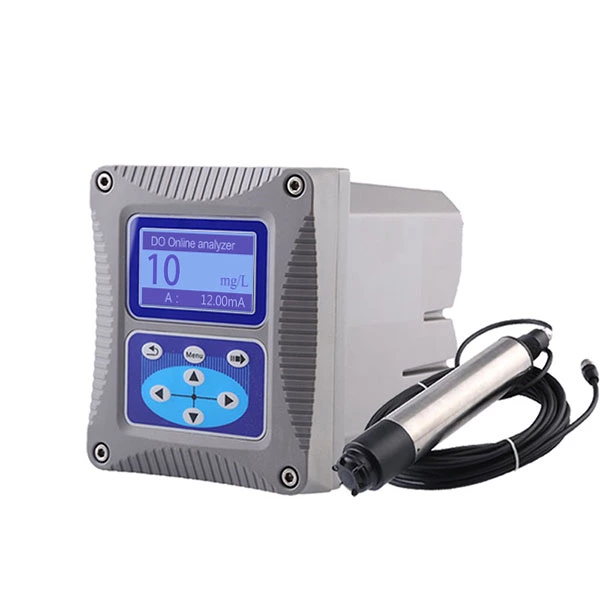
Specification
| Product |
Dissolved oxygen meter |
| Model |
MIK-DO700 |
| Measure range |
0-20mg/L, 0-20ppm, 0-45deg C |
| Accuracy |
Resolution:±3%, Temperature: ±0.5℃ |
| Pressure range |
≤0.3Mpa |
| Calibration |
Automatic air calibration,Sample calibration |
| Sensor material |
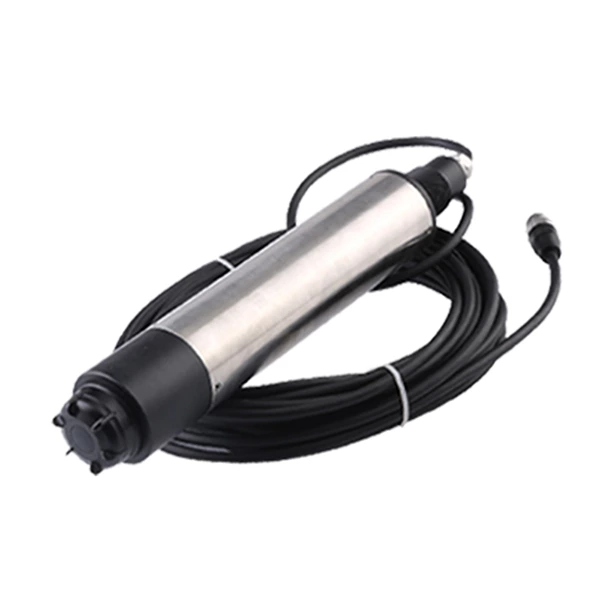
SUS316L+PVC (Ordinary Version), |
| Titanium Alloy (Seawater Version) |
| O-ring: Fluoro-rubber; Cable: PVC |
| Cable length |
Standard 10-Meter Cable, Max : 100m |
| Display |
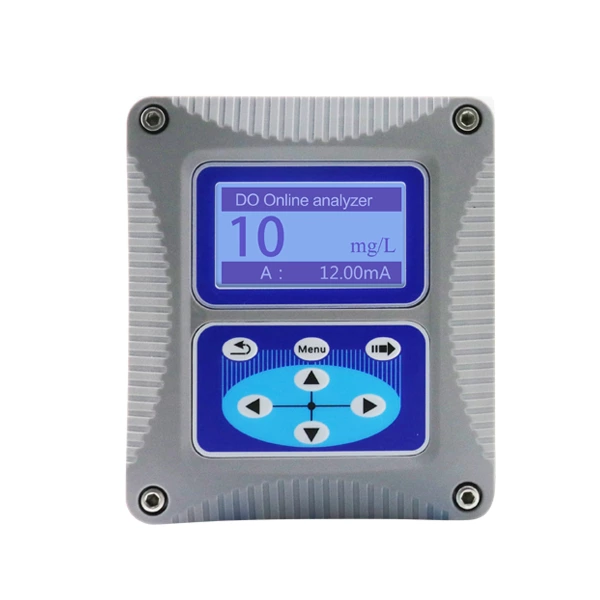
128 * 64 dot matrix LCD with LED backlight |
| Output |
4-20mA(Max three-way); |
| RS485 MODBUS; |
| Rlay output(Max three-way); |
| Power supply |
AC220V, 50Hz,(optional 24V) |
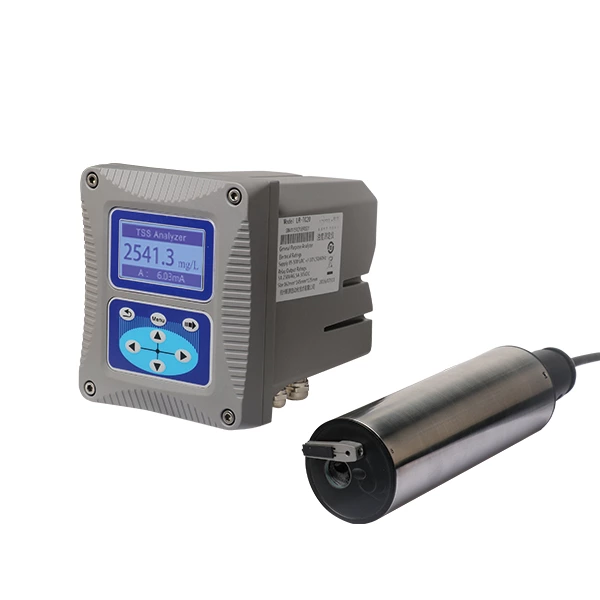
MIK-DO700 Dissolved oxygen meter measures the dissolved oxygen by the fluorescence method, and the emitted blue light is irradiated on the phosphor layer. The fluorescent substance is stimulated to emit red light, and the oxygen concentration is inversely proportional to the time when the fluorescent substance returns to the ground state. By using this method to measure the dissolved oxygen, it will not produce oxygen consumption, thus assuring data stability, reliable performance, no interference, and simple installation and calibration.
1. What is the MIK-DO700 optical dissolved oxygen meter?
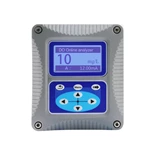
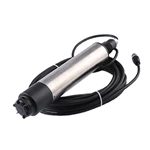
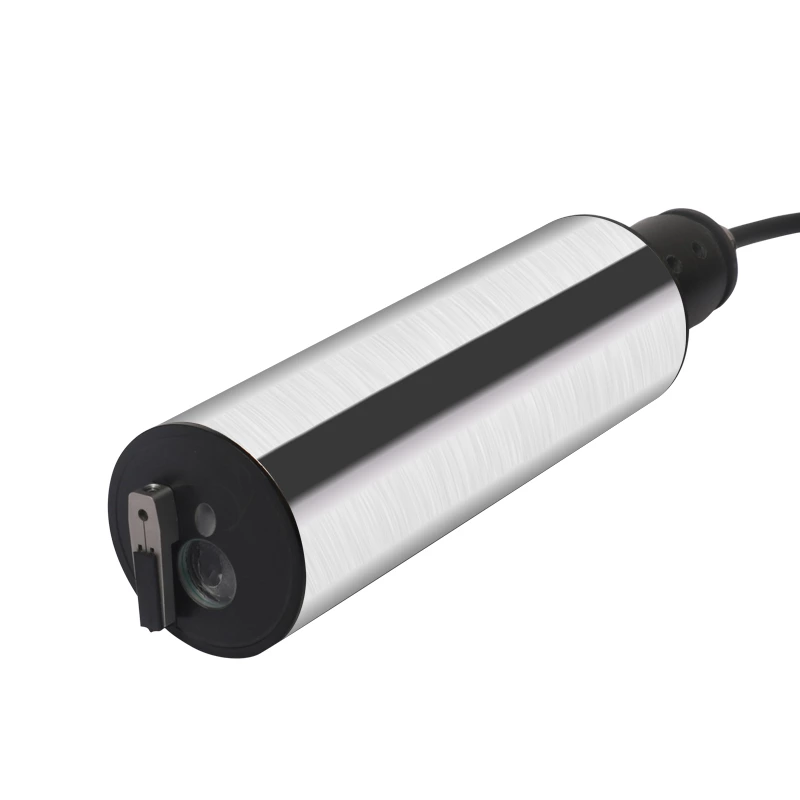
The MIK-DO700 is an online dissolved oxygen (DO) meter that uses the fluorescence (optical) method. It includes a DO sensor with a luminescent cap and a meter with an LCD display, 4–20 mA, RS485 Modbus and relay outputs.
2. How does the fluorescence method work?
The sensor cap is coated with a luminescent material. Blue light from an LED illuminates it, and the material becomes excited and emits red light. The time it takes to return to the ground state, and the intensity of the red light, are inversely related to the oxygen concentration, so the DO value can be calculated.
3. What are the advantages of optical DO measurement?
The fluorescence method does not consume oxygen, so there is no flow rate requirement at the sensor. It provides stable data, reliable performance and freedom from interference, with simple installation and calibration. It also needs no electrolyte or membrane replacement, which reduces maintenance.
4. What is the measuring range?
- Dissolved oxygen: 0–20 mg/L (0–20 ppm)
- Temperature: 0–45 °C
5. How accurate is the MIK-DO700?
- Dissolved oxygen: ±3%
- Temperature: ±0.5 °C
6. What pressure can the sensor withstand?
The pressure range is ≤0.3 MPa.
7. How is the MIK-DO700 calibrated?
It supports automatic air calibration and sample calibration. Air calibration is a quick check against water-saturated air, while sample calibration adjusts the reading to a reference measurement of the process water.
8. What sensor materials are available?
- Ordinary version: SUS316L + PVC
- Seawater version: titanium alloy
- O-ring: fluoro-rubber
- Cable: PVC
9. Can it be used in seawater?
Yes. A seawater version with a titanium alloy sensor body is available. Please tell us your salinity so we can confirm the configuration.
10. What cable length is available?
A 10 m cable is standard, and cables up to 100 m are available.
11. What outputs are available?
- 4–20 mA: up to three channels
- RS485 Modbus
- Relay output: up to three channels
12. Can it control aeration?
Yes. The relays can switch blowers or aerators at DO set points, and the 4–20 mA outputs can be used by a PLC or VFD for continuous aeration control, helping save energy in wastewater treatment.
13. What display does it have?
It has a 128 × 64 dot matrix LCD with LED backlight.
14. What power supply is required?
AC 220 V, 50 Hz as standard, with 24 V optional.
15. How much maintenance does it need?
Optical DO sensors need no electrolyte or membrane replacement, which greatly reduces maintenance. Periodically clean the sensor cap, check the reading with air or sample calibration, and replace the fluorescent cap when needed.
16. Optical or membrane DO meter: which should I choose?
Choose the MIK-DO700 optical meter for long-term online monitoring with low maintenance and no flow requirement. A membrane system such as the MIK-DM2800 is a proven, cost-effective technology, but requires periodic membrane and electrolyte maintenance.
17. Where is the MIK-DO700 used?
Typical applications include aeration tanks and effluent in wastewater treatment, water plants, surface water monitoring and aquaculture, including seawater applications with the titanium alloy version.
18. What information should I provide to get a quotation?
To help us select the correct configuration, please provide:
- Application and installation point
- DO range, water temperature and salinity
- Sensor version (ordinary or seawater)
- Cable length
- Number of 4–20 mA outputs and relays
- Power supply (220 VAC or 24 V)
- Quantity
Send your requirements to info@asmik.com or contact us via WhatsApp at +86 13325716921.