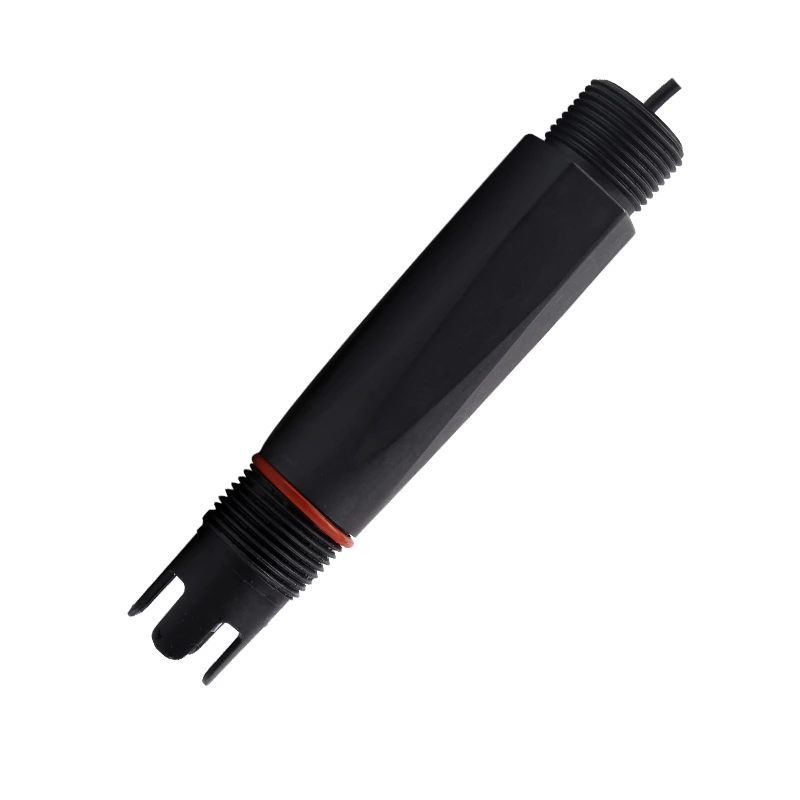
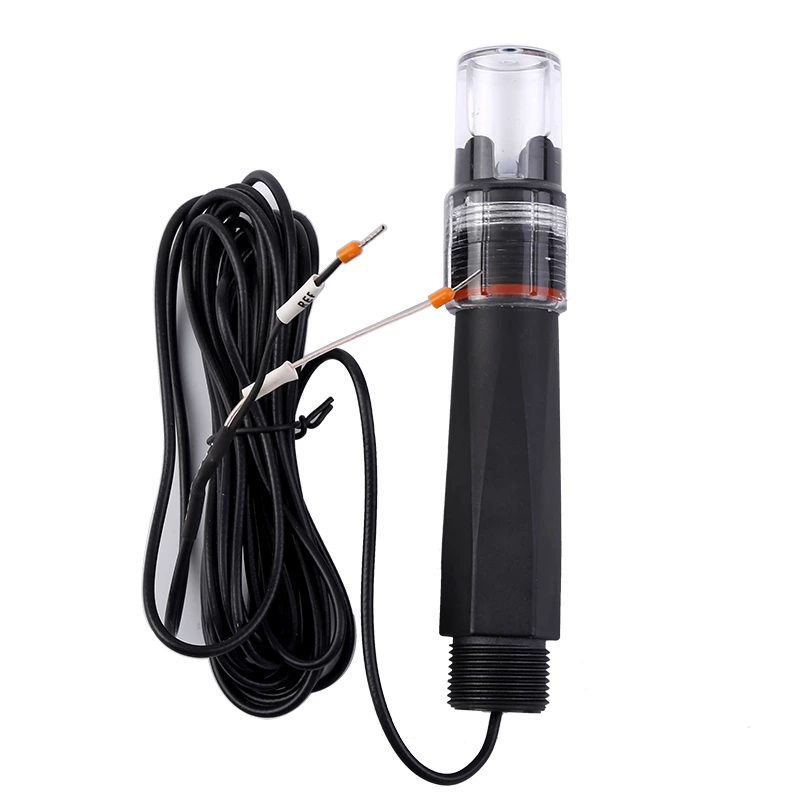
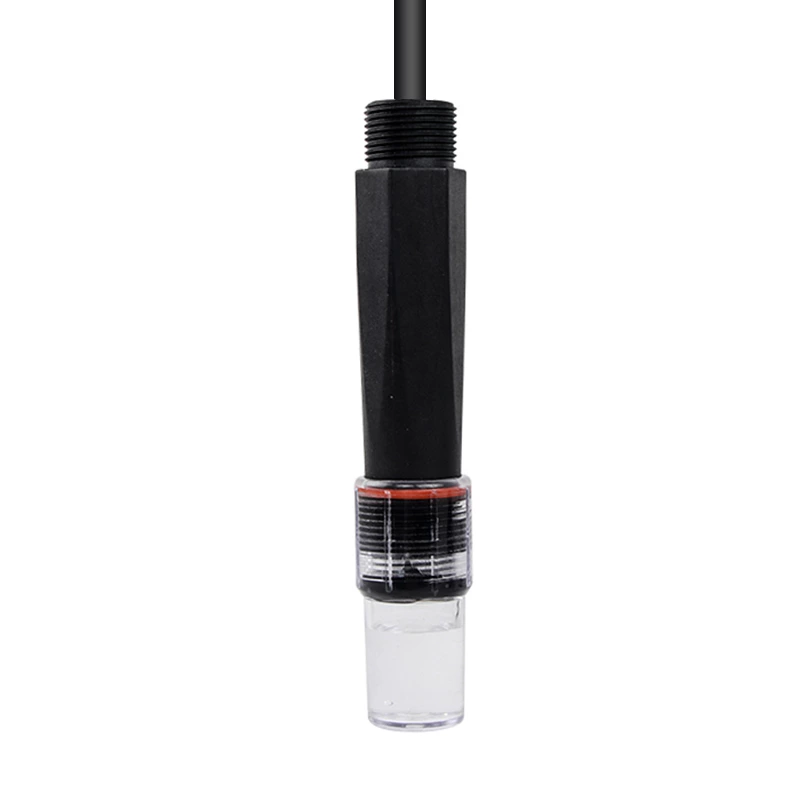
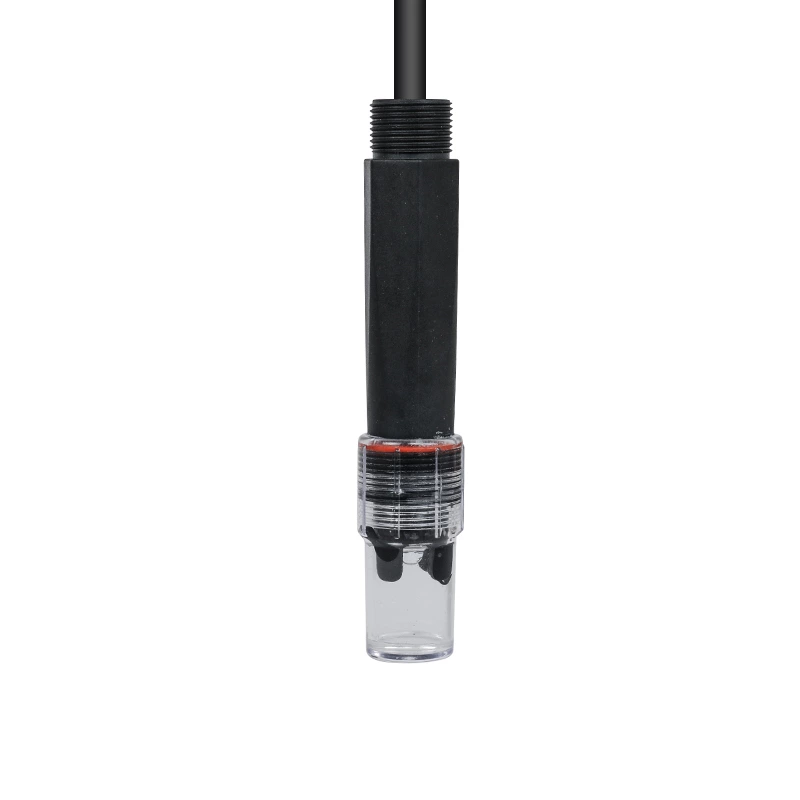
MIK-ORP6050 ORP sensor

MIK-ORP-6050 pH sensor used in ORP measurement is also called primary cell. The primary battery is a system whose function is to convert chemical energy into electrical energy. The voltage of this battery is called electromotive force (EMF). This electromotive force (EMF) consists of two half-cells.

Characteristics

Range: -2000~+2000 mV

Installation size:  3/4NPT

Pressure: 6 Bar at 25 ℃

Temperature: 0 ~ 60℃ for general cables
Specification

  • Specification

  Product    Plastic ORP sensor
  Model  MIK-ORP6050
  Measurement range   -2000mV ~ 2000mV
  Membrane resistance  ≤10KΩ
  Stability   ±4mV/24h
  Installation size   NPT3/4
  Heat resistance   0 ~ 60℃
  Pressure resistance   0 ~ 6 Bar


  • FAQ

1. What is the MIK-ORP6050 ORP sensor?

The MIK-ORP6050 is a plastic-body ORP (oxidation-reduction potential) sensor with a measuring range of -2000 to +2000 mV and a 3/4" NPT installation thread, for online ORP measurement in industrial and water treatment applications.

2. What is ORP?

ORP (oxidation-reduction potential) indicates the oxidizing or reducing ability of a solution, measured in millivolts (mV). A positive value indicates an oxidizing solution, and a negative value indicates a reducing solution.

3. How does an ORP sensor work?

An ORP sensor works as a primary (galvanic) cell, which converts chemical energy into electrical energy. Its voltage, called the electromotive force (EMF), is formed by two half-cells: a measuring electrode and a reference electrode. The measuring electrode has a sensitive layer of inert metal that can absorb or release electrons, and the potential difference between the two half-cells is the ORP value.

4. What is the sensing material?

The sensitive layer of an ORP electrode is an inert metal, usually platinum or gold. Please tell us your application so we can confirm the sensing material for your sensor.

5. What is the measuring range?

The measuring range is -2000 mV to +2000 mV.

6. How stable is the MIK-ORP6050?
  • Stability: ±4 mV / 24 h
  • Membrane resistance: ≤10 kΩ
7. What temperature and pressure can it withstand?
  • Temperature: 0 to 60 °C (with general cables)
  • Pressure: 0 to 6 bar at 25 °C
8. What is the installation connection?

The sensor has a 3/4" NPT thread for mounting in suitable fittings, flow cells or immersion assemblies.

9. Where is ORP measurement used?

ORP is commonly used to monitor disinfection and oxidation processes (for example with chlorine or ozone), reduction processes in electroplating and industrial wastewater treatment, swimming pool and cooling water treatment, and biological wastewater processes.

10. What is the difference between ORP and pH measurement?

pH measures hydrogen ion activity (acidity or alkalinity), while ORP measures the oxidizing or reducing ability of the solution. ORP sensors use an inert metal measuring element instead of a pH-sensitive glass membrane. For pH measurement, see the MIK-pH6001 or MIK-pH6002.

11. Can ORP be used to measure chlorine concentration?

ORP reflects the overall oxidizing ability of the water and is often used to monitor disinfection, but it does not directly give a chlorine concentration in mg/L. For chlorine concentration, see our chlorine sensors and transmitters.

12. Which meter can be used with the MIK-ORP6050?

Use a meter with an ORP input, such as the MIK-PH6.5, MIK-PH163S, MIK-PH8.0 or MIK-DC-P2, all of which support ORP measurement.

13. Does an ORP sensor need temperature compensation?

ORP readings are not usually temperature-compensated in the same way as pH, because the temperature effect depends on the specific chemical system. For consistent results, compare readings at similar temperatures and follow the recommendations of your meter.

14. How is an ORP sensor checked or calibrated?

ORP sensors are generally checked with an ORP standard solution of known potential. If the reading deviates beyond your tolerance, clean the sensor and check again. Please follow the procedure of your meter.

15. How should the sensor be maintained?
  • Keep the metal sensing surface clean; deposits and oils affect the response.
  • Keep the reference junction wet and store the sensor with its protective cap when not in use.
  • Check the reading regularly against a standard solution.
16. What information should I provide to get a quotation?

To help us select the correct configuration, please provide:

  • Application and medium
  • Expected ORP range
  • Process temperature and pressure
  • Installation method and fittings
  • Cable length
  • Matching meter (if required)
  • Quantity

Send your requirements to info@asmik.com or contact us via WhatsApp at +86 13325716921.

Features

Benefits

  • The sensor has high sensitivity and fast response
  • High measurement accuracy, suitable for various media
  • Stable signal and strong anti-interference capability
  • Supports temperature compensation and standard signal output
  • Facilitates remote transmission and system integration

Automated &factory

Need more information?

Contact us for more details about our solutions and services

This site uses cookies

We use cookies to collect information about how you use this site. We use this information to make the website work as well as possible and improve our services.