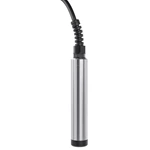
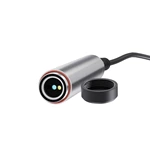
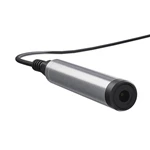
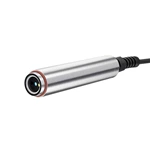
Specification
| Product |
Dissolved Oxygen sensor |
| Model |
MIK-DO7017 |
| Accuracy |
Dissolved oxygen: measured value ±3% or ±0.3mg/L
Temperature: ±0.5℃ |
| Measure range |
Dissolved oxygen: (0~20) mg/L or 0~200% saturation
Temperature: (0~45)℃ |
| Resolution |
0.01 |
| Power supply |
(10-25) VDC |
| Operating temperature |
0°C to 45°C (unfrozen) |
| Stocking temperature |
-15°C to + 60°C |
| Signal interface |
Modbus RS-485 |
| Repeatability |
±0.3 |
| Ingress protection |
IP68/NEMA6P |
| Material |
Stainless steel 316L |
| Maximum pressure |
0.1 MPa |
| Cable |
10m (standard),100m(optional) |
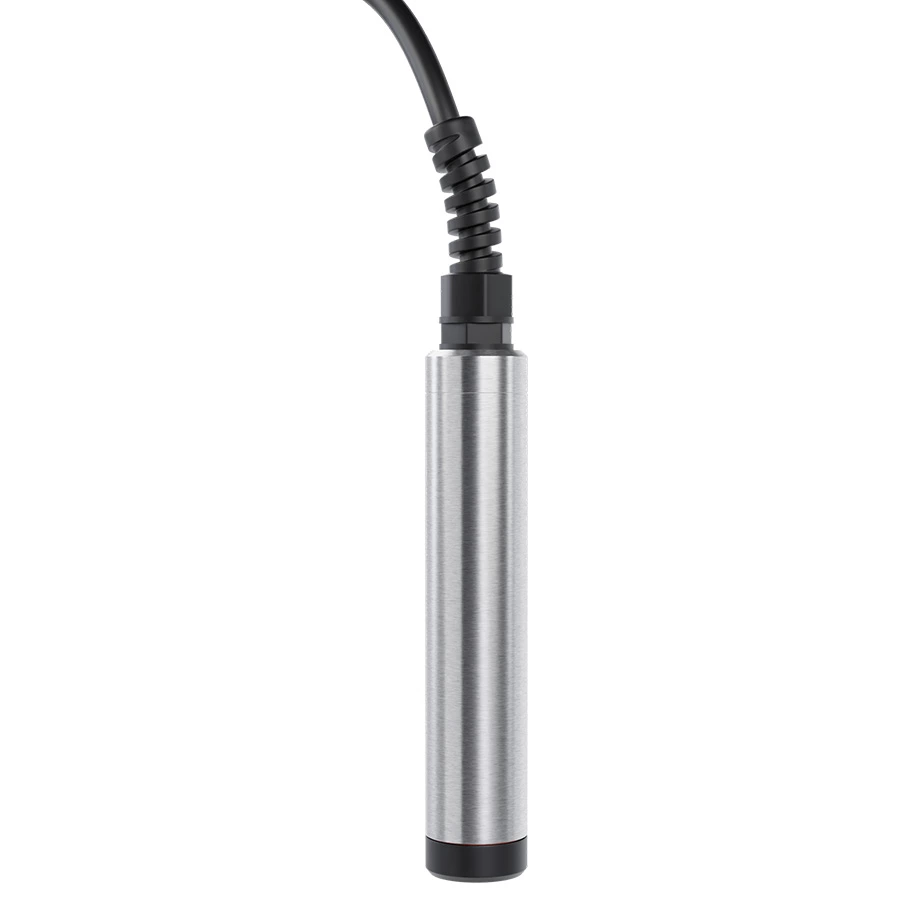
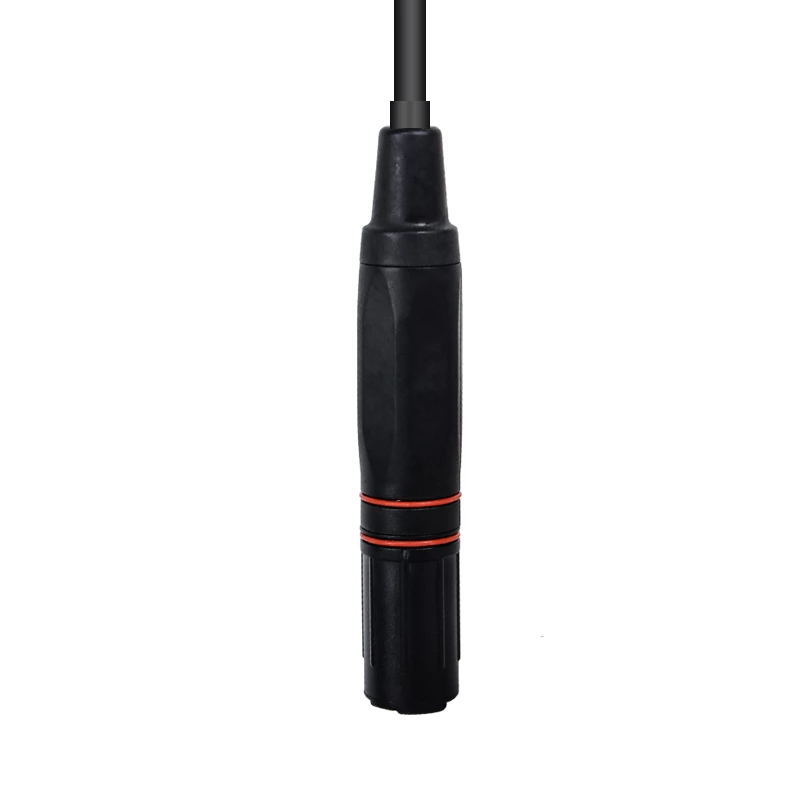
MIK-DO7017 Optical dissolved oxygen sensor is widely used in DO on-line monitoring of various technological processes such as regulating pools, biochemical ponds, and effluent in sewage treatment plants; DO on-line monitoring in waterworks, surface water, water in various industrial production processes, aquaculture and other industries.
1. What is the MIK-DO7017 optical dissolved oxygen sensor?
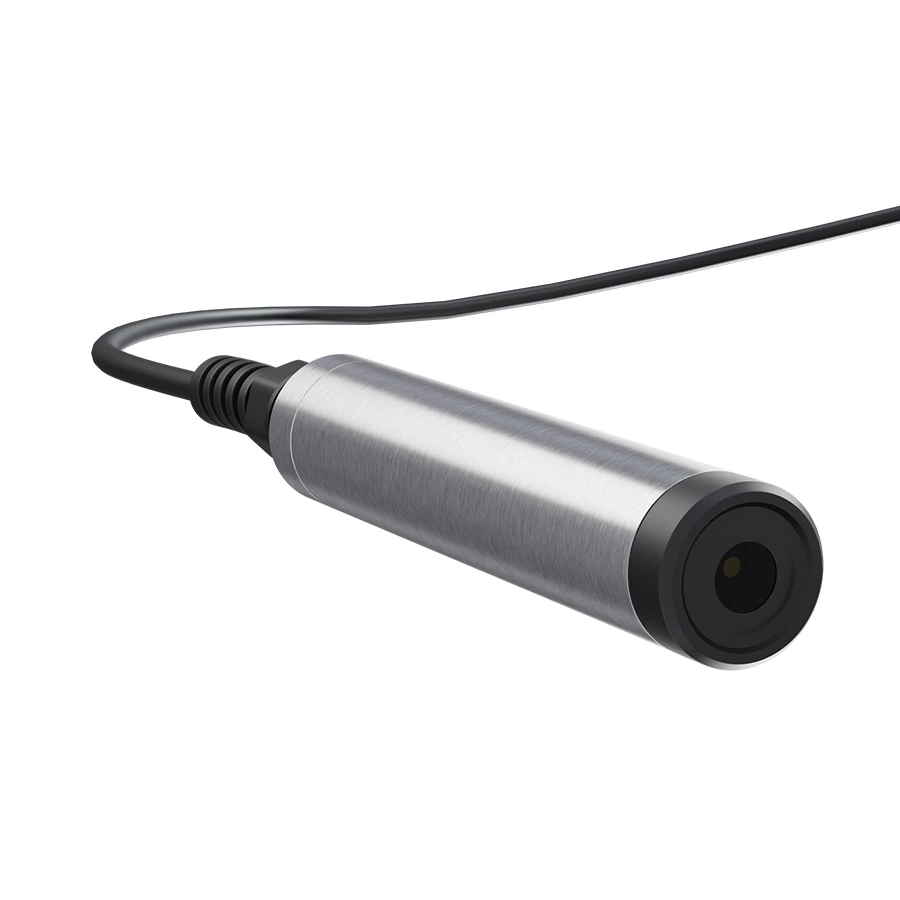
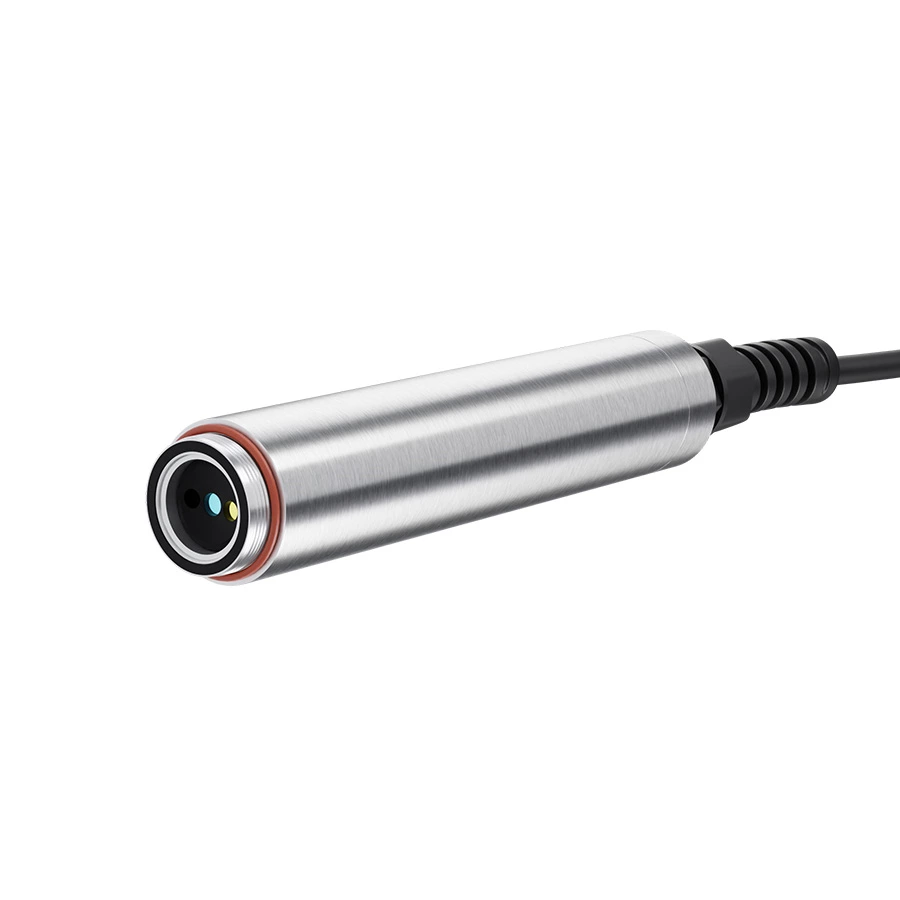
The MIK-DO7017 is a digital optical dissolved oxygen (DO) sensor with Modbus RS-485 output and a stainless steel 316L body. It is used for online DO monitoring in sewage treatment plants, waterworks, surface water, industrial process water and aquaculture.
2. How does an optical DO sensor work?
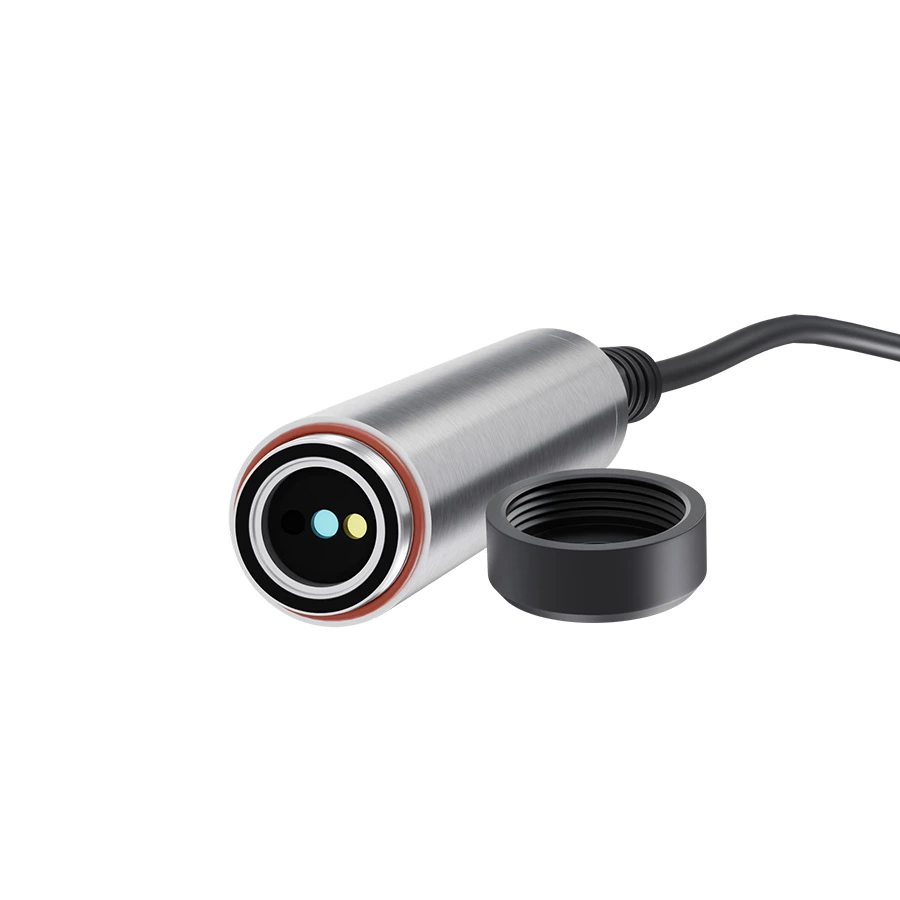
A luminescent material on the sensor cap is excited by light and emits fluorescence. Oxygen molecules reduce the fluorescence in proportion to their concentration, so the sensor calculates DO from the fluorescence signal. The method consumes no oxygen and needs no electrolyte.
3. Where is the MIK-DO7017 used in sewage treatment?
It is widely used for online DO monitoring in regulating pools, biochemical (aeration) ponds and effluent in sewage treatment plants. DO readings from the aeration tanks can be used to control blowers and save energy.
4. What are the measuring ranges?
- Dissolved oxygen: 0.00–20.00 mg/L, or 0–200% saturation
- Temperature: 0–45 °C
5. How accurate is the MIK-DO7017?
- Dissolved oxygen: ±3% of measured value or ±0.3 mg/L
- Temperature: ±0.5 °C
- Resolution: 0.01
- Repeatability: ±0.3
6. What power supply does it need?
The sensor operates on 10–25 VDC.
7. What output does it provide?
It provides Modbus RS-485 communication for direct connection to a PLC, SCADA system, data logger or IoT gateway. Please contact us for the communication settings and register map.
8. What pressure can it withstand?
The maximum pressure is 0.1 MPa. The sensor is intended for open tanks, ponds and channels; for pressurized installations, please tell us your conditions.
9. What are the operating and storage temperatures?
- Operating temperature: 0–45 °C (unfrozen)
- Storage temperature: -15 to +60 °C
10. What is the material and protection rating?
- Material: stainless steel 316L
- Ingress protection: IP68 / NEMA 6P
11. What cable length is available?
A 10 m cable is standard, and a 100 m cable is optional.
12. What maintenance does it need?
Optical sensors need no membrane or electrolyte replacement, which greatly reduces maintenance. Clean the sensor cap regularly, check the reading against a reference, and replace the fluorescent cap when needed. Please contact us for the cap service life and calibration procedure.
13. What can the MIK-DO7017 be connected to?
It can be connected to any Modbus RS-485 master. For local display and relay outputs, it can be used with the MIK-DC2000 controller for Asmik digital sensors; please confirm compatibility with us.
14. How is the MIK-DO7017 different from the MIK-DO7012 and MIK-DO7019?
- MIK-DO7017: SS316L body; max pressure 0.1 MPa; 10–25 VDC; 10 m or 100 m cable.
- MIK-DO7012: SS316L or titanium alloy (seawater) versions; max pressure 0.3 MPa; 9–28 VDC; published register map with salinity and pressure compensation.
- MIK-DO7019: fluorescence lifetime technology; Φ22 × 152.7 mm; M22×1.5 thread; 9–24 VDC; about one-year cap life.
15. How should the sensor be installed?
- Immerse the sensor at a representative depth, away from direct aerator bubbles.
- Use a mounting bracket or pipe to keep the sensor stable.
- Make sure the sensor stays in unfrozen water.
- Keep the sensor accessible for cleaning.
16. What information should I provide to get a quotation?
To help us select the correct configuration, please provide:
- Application and installation point
- DO range and water temperature
- Cable length (10 m or 100 m)
- Host system (PLC, IoT gateway or Asmik controller)
- Quantity
Send your requirements to info@asmik.com or contact us via WhatsApp at +86 13325716921.