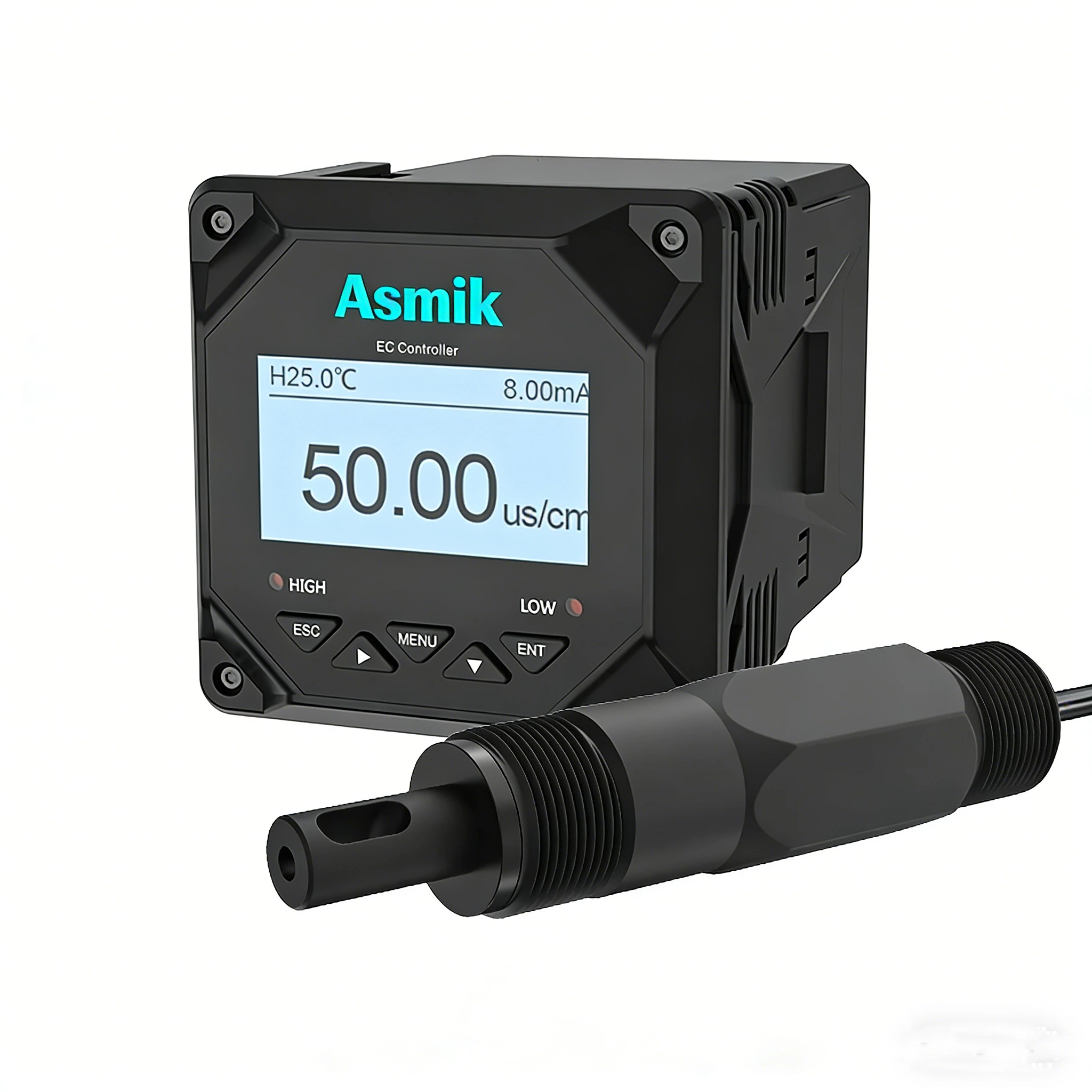
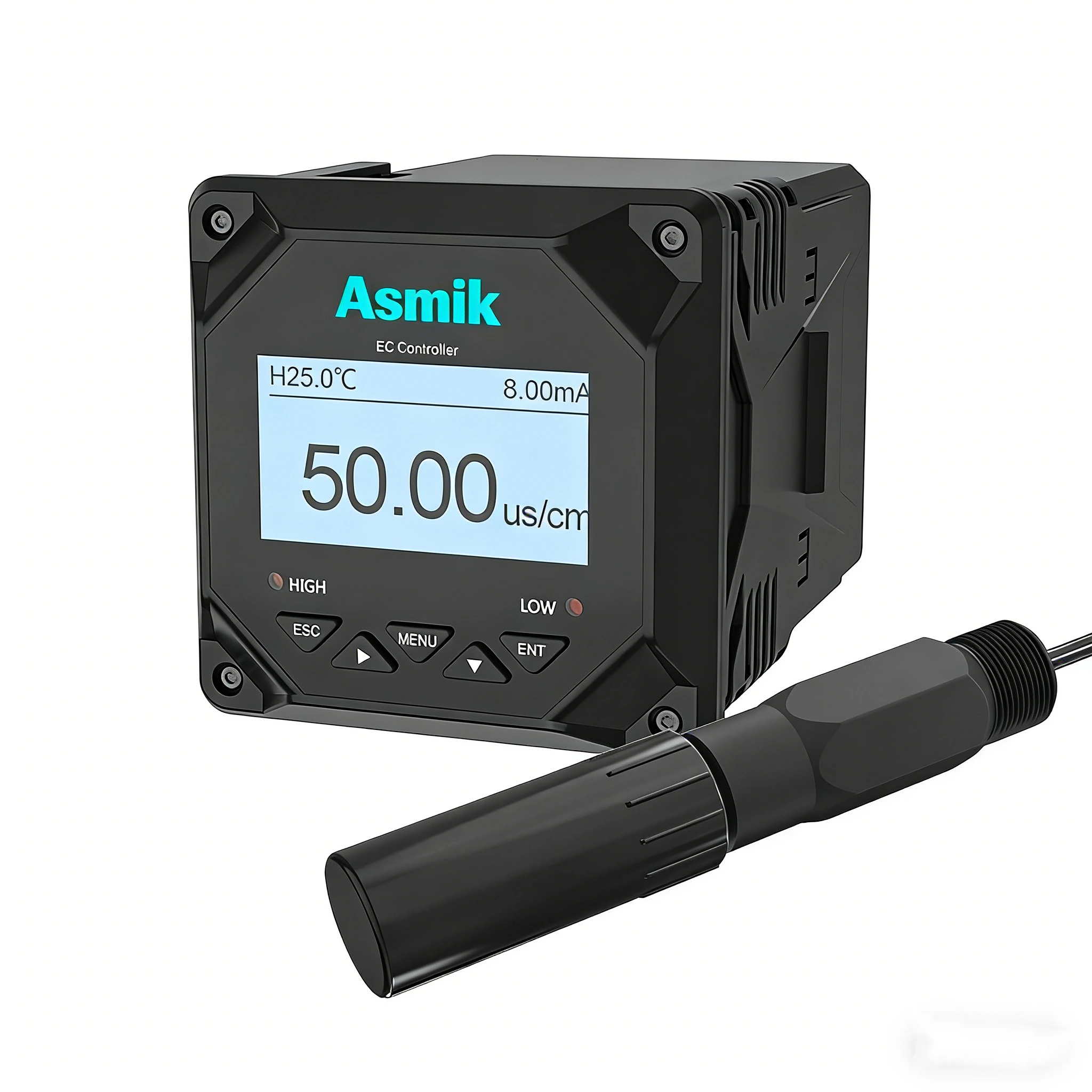
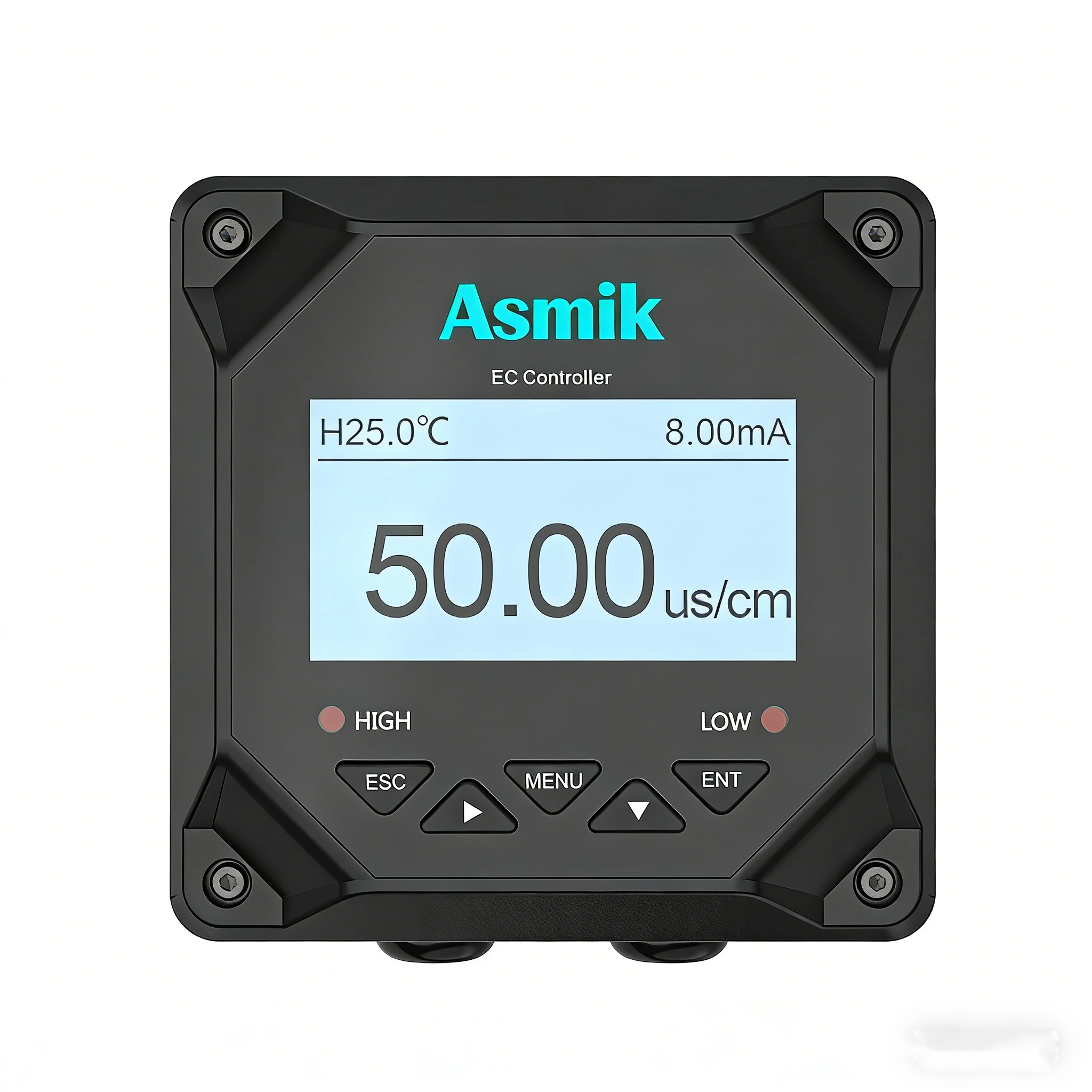
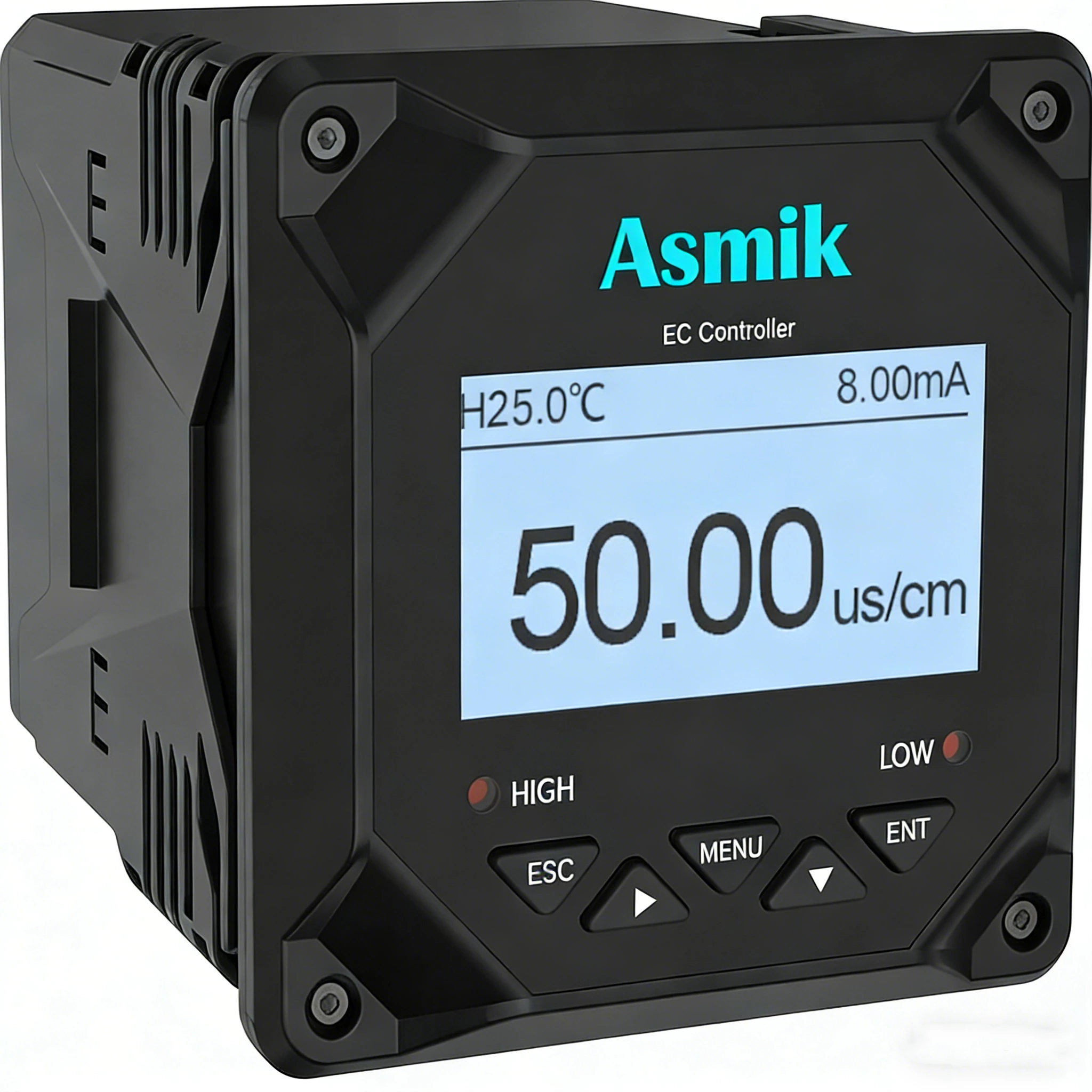
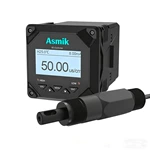
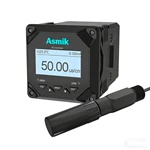
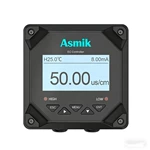
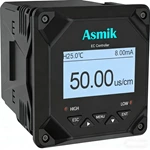
Specification
| Product |
Liquid TSS/SS analyzing meter |
| Model |
MIK-DC2000 |
| Dimension |
100mm*100mm*150mm |
| Range |
pH: (0~14) pH
ORP: (-2000~2000)mV
Dissolved oxygen: (0~40)mg/L
Saturation: (0~200)%
Conductivity: (0~600)mS/cm
Turbidity: (0~4000)NTU
MLSS: (0~120000)mg/L
|
| Relative humidity |
(10~85)%(no condensation) |
| Temperature range |
(0 ~ 60)℃ |
| Communication |
RS485, Modbus-RTU |
| Signal output |
4-20mA, maximum loop 500Ω, 0.2%FS |
| Power supply |
AC: (100-240)VAC
DC: 24VDC(Optional) |
| Relay output |
250VAC, 3A |
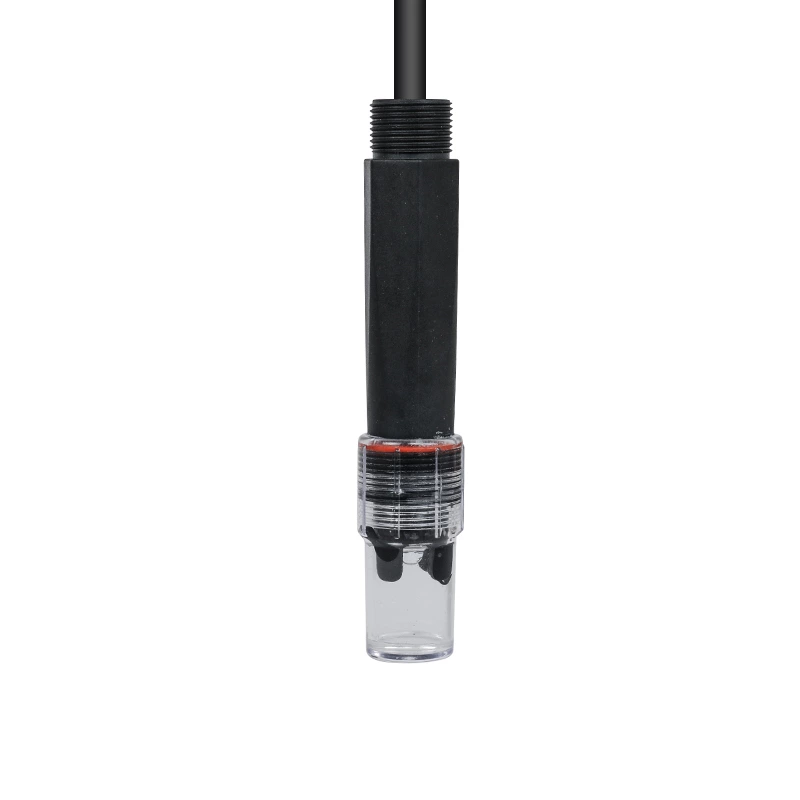
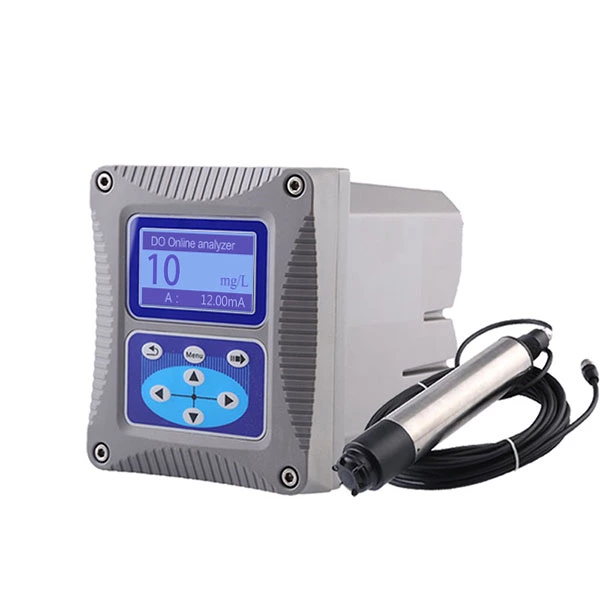
MIK-DC2000 Digital analyzer monitor is a general-purpose water quality controller. It is suitable for use with Asmik's multiple water quality series digital sensors. It is used to monitor water quality parameters including pH, ORP, conductivity, dissolved oxygen, turbidity, sludge concentration, etc.
Advantages
Isolating transmitting output, with little interference.
Isolating RS485 communication.
EC/TDS measurement, temperature measurement,
top/bottom limit control, transmitting output, RS485 communication.
Configurable manual and auto temperature offset function.
Configurable upper/lower limit warning and delay.
Configurable hummer and LCD backlight switch.
Addition of universal password.
Industrial controlled door keep, to avoid instrument halted.
1. What is the MIK-DC2000 liquid TSS/SS analyzing meter?
The MIK-DC2000 is a general-purpose water quality controller for Asmik digital sensors. On this page it is presented as a TSS/SS analyzing meter: connected to a compatible suspended solids sensor, it displays sludge concentration and provides 4–20 mA, RS485 and relay outputs.
2. What TSS / MLSS range does it support?
The MLSS (sludge concentration) range is 0–120,000 mg/L. The actual range at your measuring point depends on the connected sensor.
3. Which suspended solids sensors can be connected?
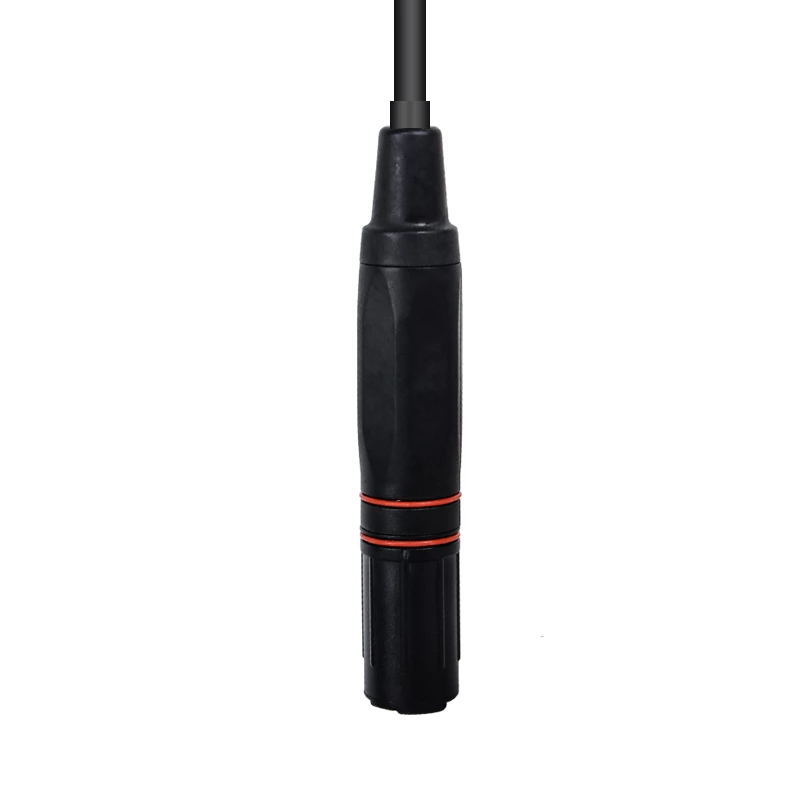
The MIK-DC2000 works with Asmik digital sensors. For suspended solids, see the MIK-PSS9010 digital sensor (20–30,000 mg/L, RS485 Modbus). Please confirm sensor compatibility with us before ordering.
4. What if I need a complete suspended solids meter?
The MIK-PSS200 is a dedicated suspended solids / TSS / MLSS meter with ranges up to 120,000 mg/L, three 4–20 mA outputs, three relays and an optional self-cleaning function.
5. What other parameters can the MIK-DC2000 monitor?
- pH: 0–14 pH
- ORP: -2000 to 2000 mV
- Dissolved oxygen: 0–40 mg/L; saturation 0–200%
- Conductivity: 0–600 mS/cm
- Turbidity: 0–4000 NTU
Using the same controller for different parameters simplifies spare parts and operator training.
6. What outputs are available?
- Current output: 4–20 mA, maximum loop 500 Ω, 0.2% FS
- Communication: isolated RS485, Modbus-RTU
- Relay output: 250 VAC, 3 A
The transmitting output is isolated, which reduces interference.
7. What alarm and control functions are included?
- Configurable upper and lower limit control
- Configurable alarm delay
- Configurable buzzer and LCD backlight switch
- Universal password protection
- Industrial watchdog design to prevent the instrument from halting
8. Can the relays control sludge pumps or valves?
Yes. The upper and lower limit relays can switch equipment such as sludge pumps or valves at your set points, and the 4–20 mA output can be used by a PLC for continuous control.
9. Does it have temperature compensation?
Yes. Manual and automatic temperature offset functions are configurable.
10. How accurate is the measurement?
Measurement accuracy depends mainly on the connected sensor. The 4–20 mA output accuracy of the MIK-DC2000 is 0.2% FS.
11. What power supply is required?
100–240 VAC as standard, with 24 VDC optional.
12. What are the dimensions?
The MIK-DC2000 measures 100 × 100 × 150 mm.
13. What environmental conditions are required?
- Operating temperature: 0 to 60 °C
- Relative humidity: 10% to 85% (no condensation)
For outdoor or wet locations, please tell us your site conditions so we can recommend suitable protection.
14. How is the TSS measurement calibrated?
Suspended solids measurement is generally calibrated against laboratory results for samples from the same process, because particle properties differ between applications. Please follow the procedure in the manual for your sensor and monitor.
15. Where is the MIK-DC2000 used for TSS monitoring?
Typical applications include aeration tanks (MLSS), return and waste sludge lines, thickeners and effluent monitoring in wastewater treatment, as well as industrial process water.
16. What information should I provide to get a quotation?
To help us select the correct configuration, please provide:
- Application (MLSS, return sludge, effluent, industrial process)
- Expected concentration range (mg/L)
- Whether a sensor is required, and whether self-cleaning is needed
- Output and relay requirements
- Power supply (AC or DC)
- Installation environment
- Quantity
Send your requirements to info@asmik.com or contact us via WhatsApp at +86 13325716921.