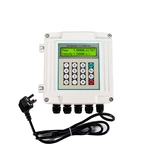
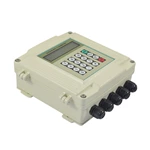
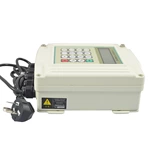
Specification
| Product |
Wall-mounted (clamp on) ultrasonic flowmeter |
| Model |
MIK-1158S |
| Pipe Size |
DN32-DN6000 |
| Accuracy |
±1% |
| Signal output |
1 way 4-20mA output |
| 1 way OCT pulse output |
| 1 way replays output |
| Interface |
RS485, support MODBUS |
| Liquid Types |
Virtually all liquids |
| Working Temperature |
Convertor: -20~60℃; Flow Transducer: -30~160℃ |
| Working humidity |
Convertor: 85%RH |
| Power Supply |
DC8~36V or AC85~264V(optional) |
| Date Logger |
Built-in data logger can store over 2000 lines of data |
| Case Material |
ABS |
| Dimension |
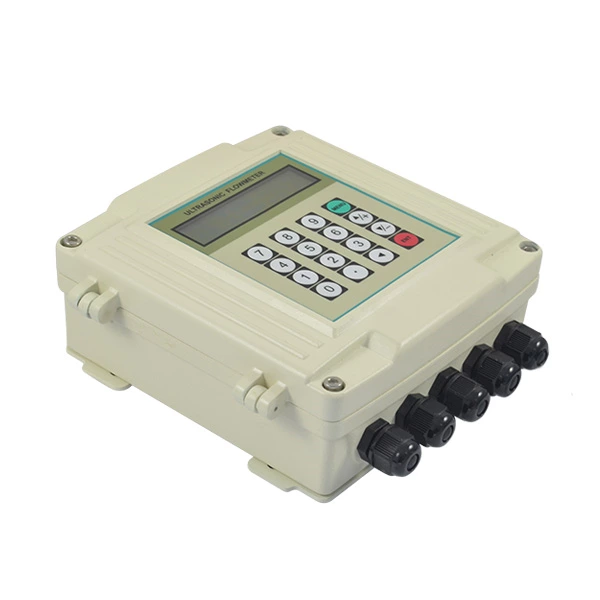
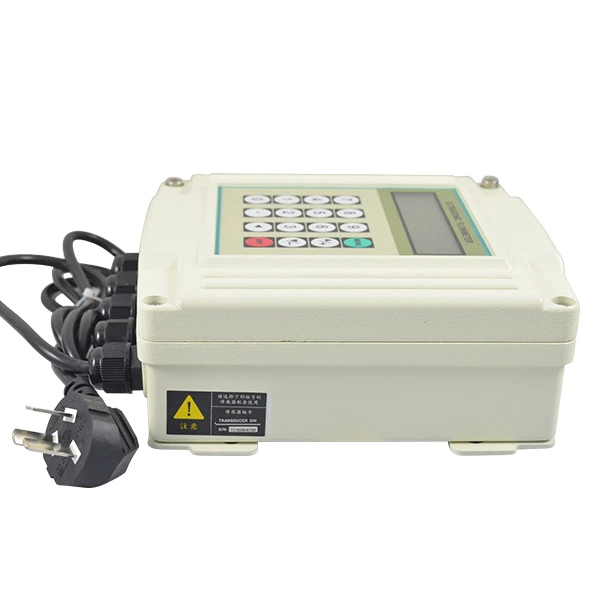
170*180*56mm(Convertor) |
The clamp on ultrasonic flow meter is a non-invasive device that measures the flow rate of a fluid by using ultrasonic waves. This type of flow meter is particularly useful for applications where the fluid is difficult to access or where it is not possible to interrupt the flow.
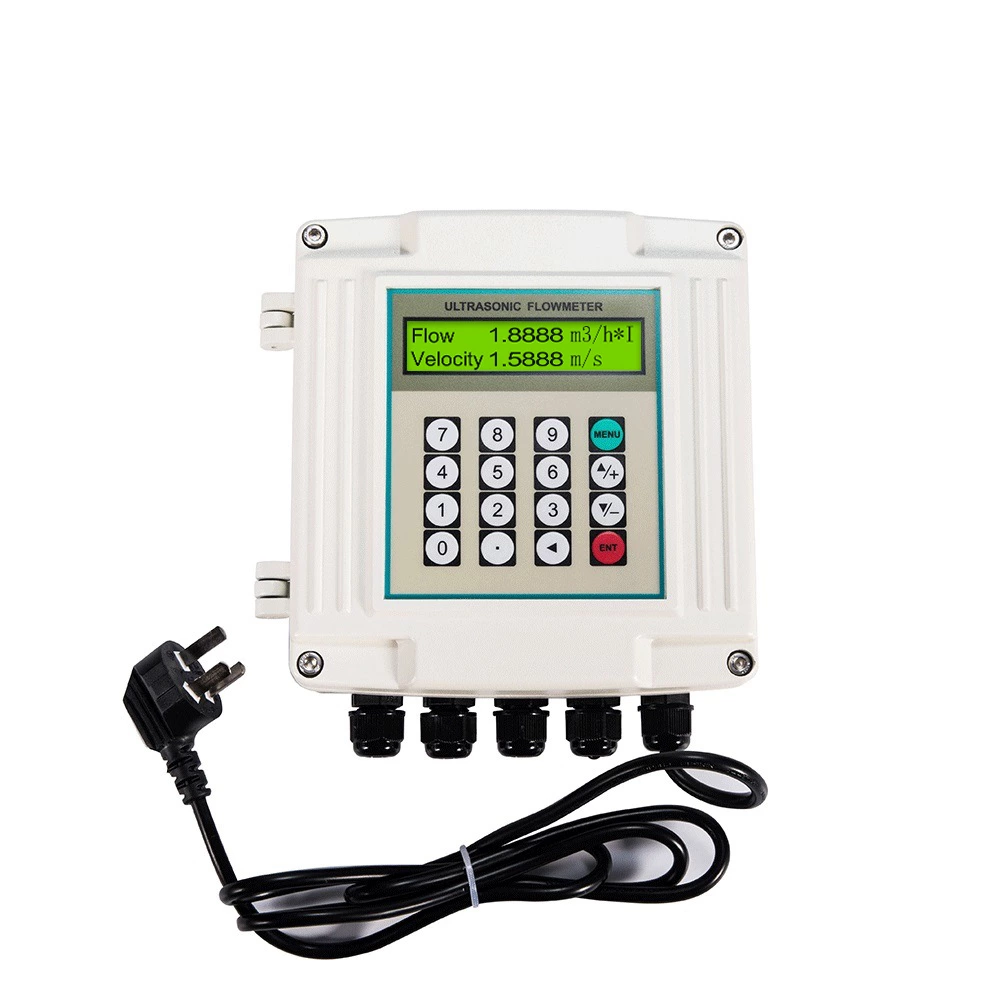
MIK-1158S Wall-mounted Ultrasonic flow meter uses advanced circuit design coupled with excellent hardware designed in English for liquid flow detection and comparison testing in pipes. It has the characteristics of simple operation, convenient installation, and stable performance.
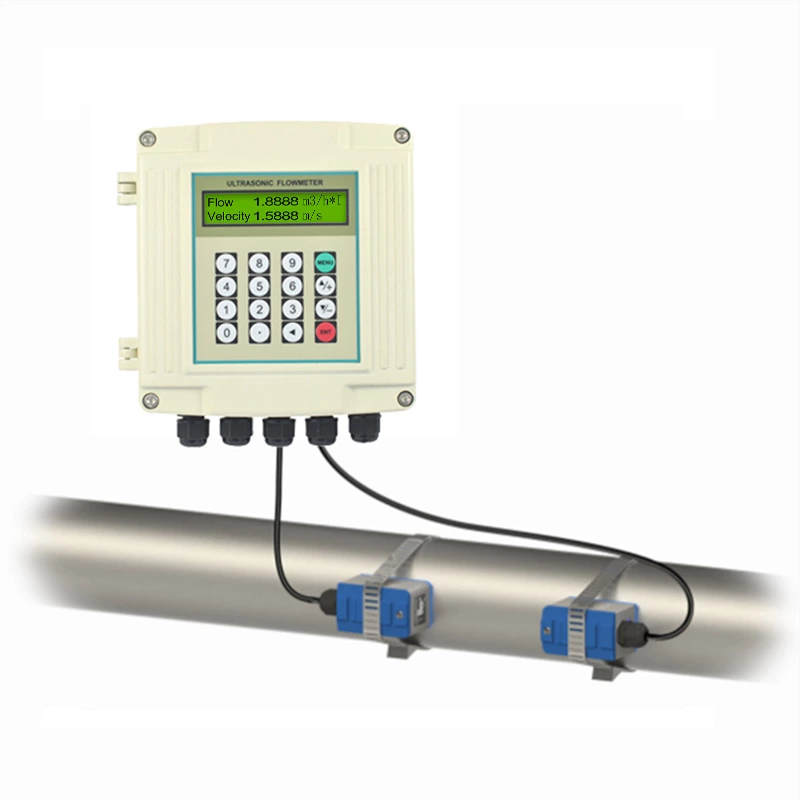
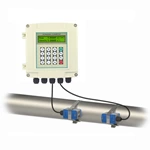
The MIK-1158S clamp-on ultrasonic flow meter consists of two main components: the transducers and the electronics. The transducers are attached to the outside of the pipe and emit ultrasonic waves into the fluid. These waves are then reflected back to the transducers, and the time it takes for them to travel is measured. By using the speed of sound in the fluid, the flow rate can be calculated.
One of the main advantages of the clamp-on ultrasonic flow meter is that it does not require any cutting or drilling of the pipe, which can be expensive and time-consuming. The installation process is quick and easy, and the device can be removed and reinstalled on another pipe if needed.
Another advantage of a clamp-on ultrasonic flow meter is that it can be used for a wide range of fluids, including liquids and gases. It is also accurate and reliable, with a high level of repeatability.
In summary, the MIK-1158S clamp-on ultrasonic flow meter is a valuable tool for measuring the flow rate of fluids in applications where traditional flow meters are not suitable. Its non-invasive design, ease of installation, and versatility make it a popular choice for many industries.
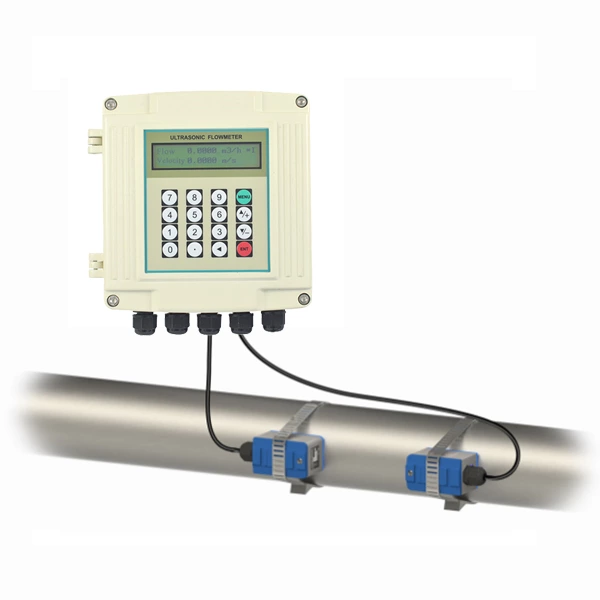
1. What is the MIK-1158S wall-mounted ultrasonic flowmeter?
The MIK-1158S is a wall-mounted, clamp-on ultrasonic flowmeter for continuous liquid flow measurement in pipes. It consists of transducers attached to the outside of the pipe and a wall-mounted converter, and provides 4–20 mA, pulse, relay and RS485 (Modbus) outputs.
2. How does the MIK-1158S work?
The transducers are attached to the outside of the pipe and send ultrasonic signals through the pipe wall into the liquid. The electronics measure the signal travel time between the transducers; because the flow speeds up the signal in one direction and slows it down in the other, the time difference is used to calculate the flow velocity and flow rate.
3. Do I need to cut or drill the pipe?
No. The MIK-1158S is non-invasive: the transducers are clamped on the outside of the pipe, so no cutting, drilling or process shutdown is needed. The transducers can also be removed and reinstalled on another pipe if needed.
4. What fluids can the MIK-1158S measure?
It is designed for liquid flow measurement and can be used with a wide range of liquids. For best results, the liquid should be homogeneous and fill the pipe, as large amounts of bubbles or solids can weaken the signal. For gas measurement, consider our vortex flowmeters or MIK-MF thermal mass flowmeter.
5. What pipe sizes can it measure?
The MIK-1158S covers pipe sizes from DN32 to DN6000.
6. How accurate is the MIK-1158S?
The accuracy is ±1%. Actual accuracy depends on correct pipe parameters, transducer installation and site conditions.
7. What output signals are available?
- 1 × 4–20 mA output
- 1 × OCT pulse output
- 1 × relay output
- RS485 interface with Modbus protocol
8. What can the pulse and relay outputs be used for?
The OCT pulse output is typically used to send flow totals to counters, PLCs or data loggers. The relay output is typically used for alarms or simple control functions. Please tell us your application so we can confirm the configuration.
9. What power supply options are available?
DC power (8–36 VDC) is standard, and AC power (85–264 VAC) is optional.
10. What temperatures can it handle?
- Converter: -20 °C to 60 °C
- Flow transducer: -30 °C to 160 °C
11. What humidity and protection ratings apply?
The converter operating humidity is up to 85% RH. For outdoor or wet installations, please tell us the site conditions so we can confirm suitable protection for the converter and transducers.
12. Does it have a data logger?
Yes. The built-in data logger can store over 2000 lines of data.
13. What are the converter dimensions and housing material?
The converter measures 170 × 180 × 56 mm and has an ABS case designed for wall mounting.
14. What pipe information is needed for setup?
You need to enter the pipe outer diameter, wall thickness, pipe material and lining (if any), and select the liquid type. Correct parameters are essential for accurate measurement.
15. How should the transducers be installed?
- Choose a straight pipe section away from pumps, valves and elbows.
- Make sure the pipe is always completely full of liquid at the measuring point.
- Clean the pipe surface and apply coupling compound between the transducers and the pipe.
- On horizontal pipes, avoid mounting at the very top or bottom of the pipe.
- Install the converter in a location protected from direct rain and heat.
Please follow the user manual for transducer spacing and mounting method.
16. Wall-mounted or handheld ultrasonic flowmeter: which should I choose?
Choose the wall-mounted MIK-1158S for permanent, continuous monitoring with outputs to a control system. For temporary measurement and comparison testing at multiple sites, see the MIK-2100H handheld ultrasonic flowmeter. If you also need insertion installation or heat measurement, see the MIK-FSC400.
17. Where is the MIK-1158S typically used?
It is used where the pipe is difficult to access or where the flow cannot be interrupted for installation, such as water supply, HVAC, industrial process and retrofit projects.
18. What information should I provide to get a quotation?
To help us select the correct configuration, please provide:
- Liquid name and temperature
- Pipe outer diameter, wall thickness, material and lining
- Flow range (min / normal / max)
- Power supply (DC or AC)
- Output requirements (4–20 mA, pulse, relay, RS485)
- Installation environment (indoor or outdoor)
- Quantity
Send your requirements to info@asmik.com or contact us via WhatsApp at +86 13325716921.